
A mobile casino is a licensed online casino platform accessible via smartphone or tablet. It run HTML5 game engines, certified RNGs, and regulated payment infrastructure, offering the same games and security as desktop.
Mobile devices generated 58% of Europe’s online gambling revenue in 2024, yet most players have little idea what is actually powering the casino in their pocket. Is a mobile casino just a shrunken version of a desktop site, or something built entirely differently?
This guide answers that. From how mobile casinos work under the hood to the games available and the online casino software behind them, here is everything you need to know.
Understanding a Mobile Casino
A mobile casino is a licensed online casino that you can open up via a mobile browser or through a dedicated mobile app. It is not a “lite” version of the “real”. The same RNG-certified game engines, payment systems and regulations are used for a desktop casino, only optimised for a smaller touch screen.
All your accounts, game libraries, deposits, withdrawals, and bonuses are transferred in a smooth manner. There is no “trimming” of material or attempts to make it “easier.” The biggest difference is that it’s not a physical casino.
No place to go, no codes of dress, no closing date. Mobile casinos operate around-the-clock via any internet-connected device — that’s why they’re the preferred gambling platform for most players now a days.
How Big Is the Mobile Gambling Market?
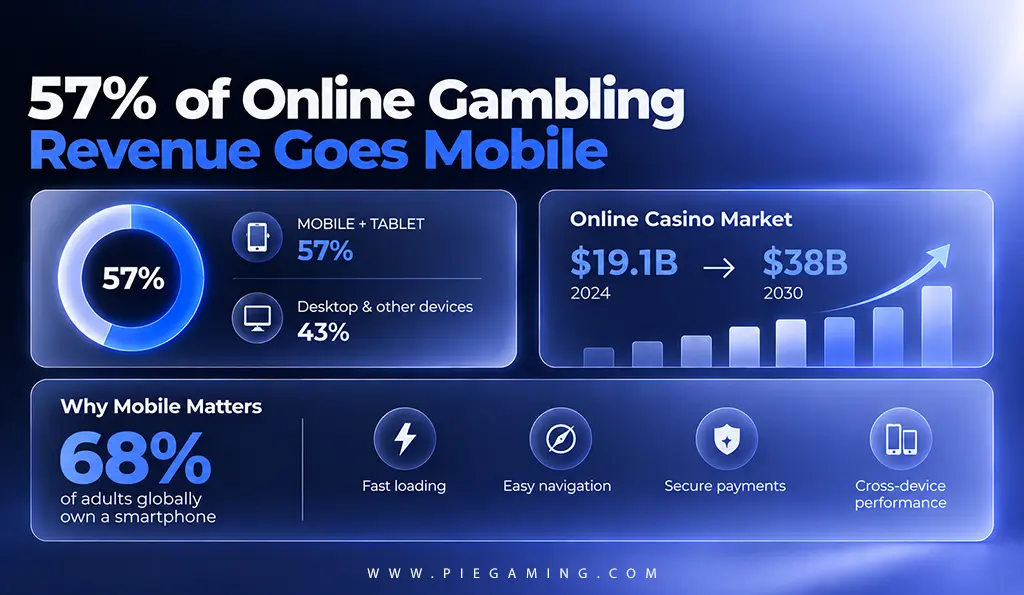
Online Gambling Revenue Goes Mobile
The mobile gambling market is expanding rapidly, though estimates vary depending on how research firms define the category. The skyquest valued the global mobile gaming market at $97.81 billion for 2024 and is expected to grow to $193.9 billion by 2033 with a CAGR of 7.9% during the forecast period of 2026 to 2033.
One significant and important part of the bigger picture is online casinos. Grand View Research estimated the global online casino market at $19.1 billion in 2024, and projected it would hit $38 billion in 2030, with the mobile device segment seeing the highest growth rate.
That growth is player-driven. Mobile casinos now load faster, pay out faster, and offer the same full game libraries as desktop. For most players today, the phone is simply the better way to play.
How Does a Mobile Casino Work?
Most players never think about what happens between tapping a button and seeing the reels spin. The answer involves several layers of technology working together in the background.
HTML5 Game Engines
Mobile casinos were made possible at scale thanks to the transition from Flash to HTML5. In the past, games needed to be downloaded or installed as a plugin and then played the corresponding version for each respective device.
In the present-day games can actually be played in the browser, without downloading and without requiring a separate version for each device. With a single code base, the same game file can be played across iOS, Android and the desktop, and the game automatically adapts to the screen size and touch controls provided. This is why a slot from Pragmatic Play displays and functions properly on Samsung Galaxy and iPhone.
Game Aggregation Layer
Operators do not integrate with each game provider individually. Instead, they connect to an aggregation platform through a single API, which acts as a gateway to hundreds of titles from providers like Pragmatic Play, Evolution, and NetEnt simultaneously.
That one integration handles game loading, session management, and transaction data across the entire library. Adding a new provider or title does not require a new technical build on the operator’s side.
RNG Certification
Every outcome in a mobile casino, every spin, every card dealt, every dice roll, is generated by a certified Random Number Generator. These are not self-certified.
The RNG algorithms are tested by independent third-party testing labs such as eCOGRA, iTech Labs, and GLI, to ensure that the results are mathematically random and cannot be controlled. This certification is a prerequisite to the operators’ licence and is subject to ongoing audits.
Payment Gateway
The payment layer supports real-time deposits, withdrawals, bonus crediting, and balance updates on various payment methods such as cards, E-Wallets, and mobile payments. As a player deposits, the gateway interacts with the operator’s platform, verifies the deposit, adjusts the player’s wallet balance, and if the amount is eligible for a bonus, it activates any bonus logic programmed into the operator’s system, accomplishing all these actions in mere seconds.
The same happens with withdrawals, where the gateway triggers the withdrawal to the player’s preferred payment method at the same time as a compliance check is carried out.
Mobile Casino App Vs. Browser — What’s the Difference?
Most mobile casinos offer two ways to play: a dedicated native app or a browser-based experience. Neither is universally better. The right choice depends on how a player uses the platform and what their device supports.
Native Apps
A native app is built specifically for iOS or Android, which means it can access device-level features that a browser cannot. That includes Face ID and fingerprint login, Apple Pay and Google Pay at checkout, and push notifications for promotions, deposit confirmations, and account alerts.
Browser-Based
Browser-based mobile casinos are HTML5, and they don’t require a download. It supports all devices with modern browsers, updates automatically without players’ intervention and does not leave traces on device storage.
| Feature | Native App | Browser-Based |
| Installation required | Yes | No |
| Performance | Faster, smoother | Near-equivalent on modern devices |
| Push notifications | Yes | Limited |
| Biometric login | Yes (Face ID, fingerprint) | Not supported |
| Storage use | Uses device storage | None |
| Cross-device access | Device-specific | Any browser, any device |
| Update method | Manual via App Store / Google Play | Automatic |
What Games Can You Play at a Mobile Casino?
You won’t find a shortage of casino games on a mobile platform. While slots are the most popular games, table games, live dealer games, and newer slots such as crash slots can all be enjoyed on a mobile device. It isn’t available – it’s how each of these game types has been designed and optimised for a smaller screen and touch controls.
| Game Type | Format | Key Providers / Titles | Mobile Features |
| Slots | Portrait mode, single-tap spin | Pragmatic Play, NetEnt, Play’n GO | Autoplay, turbo spin, touch-optimised bonus rounds |
| Table Games | RNG-based, landscape preferred | Blackjack, roulette, baccarat, poker | Thumb-friendly tap targets, full betting interface |
| Live Dealer | HD video stream, real dealers | Evolution Gaming: Lightning Roulette, Crazy Time, Live Blackjack | Requires ~4 Mbps; runs on 4G, 5G, stable Wi-Fi |
| Video Poker | Single-hand and multi-hand variants | Standard across most platforms | Fast round-based format, minimal interface |
| Crash Games | Multiplier-based, one-tap cash-out | Aviator, JetX | Short rounds, simple controls, mobile-optimised |
| Virtual Sports | Pre-rendered, continuous availability | Standard across most platforms | No dependence on real-world event schedules |
Is It Safe to Gamble on Your Phone?
The short answer is yes, but safety is determined by the operator’s licensing status, not the device you are playing on. A licensed mobile casino carries the same regulatory obligations as any other licensed platform. The phone is just the access point.
Licensing and Regulation
Licensed operators are independently audited monthly by recognised operators like the MGA, UKGC, New Jersey Division of Gaming Enforcement, or Pennsylvania Gaming Control Board, and must adhere to rigorous standards of fairness and strict requirements for player funds segregation. A licence from any of these bodies means the operator has met a defined compliance threshold and continues to be monitored against it.
Encryption and Account Security
All reputable mobile casinos use SSL or TLS encryption to protect data in transit between your device and the operator’s servers. Account access is protected by password authentication, with biometric login available on supported devices through Face ID or fingerprint recognition. These are not optional extras but standard requirements under most licensing frameworks.
Game Fairness
The results of RNGs are independently verified by third-party testing laboratories such as eCOGRA, iTech Labs, and GLI. Certification is a process of auditing and verifying every algorithm used for each spin, card deal, and dice roll that is mathematically random. The operator is not able to perform any operations on the certified platform.
Responsible Gambling Tools
Responsible gambling tools will be directly available within the licensed mobile casino platform. In the mobile environment, these include deposit limits, loss limits, session reminders, cooling off periods, and self-exclusion.
Self-exclusion is in effect in the UK via GamStop and affects all UKGC licensed operators at once. The equivalent schemes are available at the state level in the US regulated states, via their own gaming control boards.
How to Start Playing at a Mobile Casino?
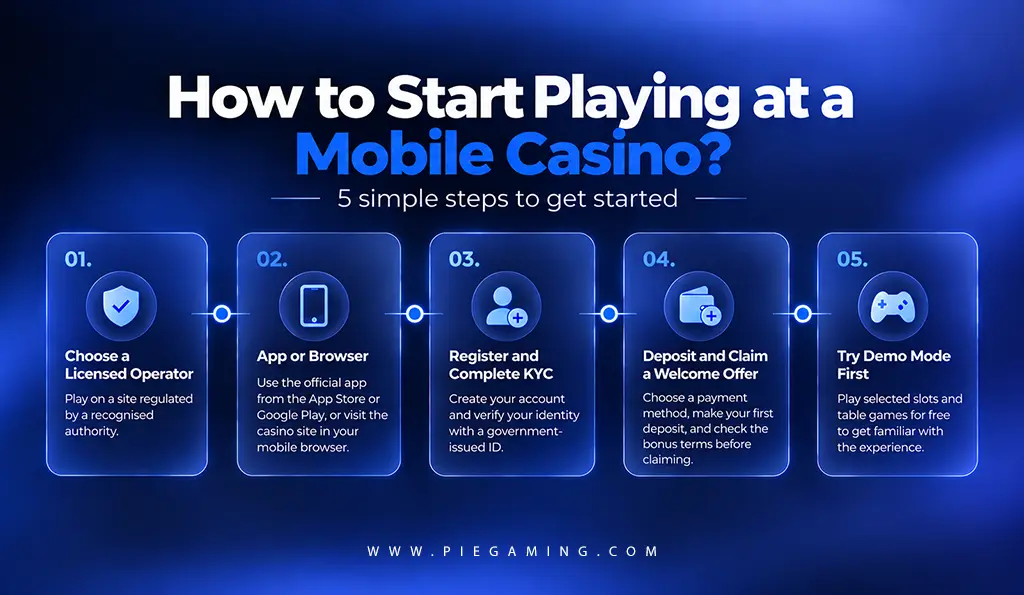
How to Start Playing at a Mobile Casino
Getting started is straightforward, but a few checks before you deposit will save you problems later.
Choose a Licensed Operator
Look for a licence number in the site footer from a recognised body such as the MGA, UKGC, or a US state regulator. Verify it is active on the regulator’s public register. The presence of providers like Evolution, Pragmatic Play, and NetEnt in the lobby is a further positive signal, as they supply only licensed operators in regulated markets.
App or Browser
Install the app from the App Store / Play Store. Don’t download third party apk, as they may be outdated or cheated. You can also open the casino link in Safari or Chrome on your cell phone. Major sites automatically recognize mobile browsers and provide the mobile version without needing to download.
Register and Complete KYC
A user has to register with an email address, password, date of birth, and country of residence. KYC verification is a prerequisite before your first withdrawal, where you need to upload an ID card and proof of address (POA).
In minutes, documents can be cleared using automated tools such as Onfido, Veriff, or Jumio. Manual reviews generally take 24 hours but may take up to 72 hours depending on the operator and document quality.
Deposit and Claim a Welcome Offer
Most mobile deposits are accepted via Visa, Mastercard, Paypal, Skrill, Neteller, Apple Pay and Google Pay, depending on the operator and the jurisdiction. Minimum deposits range from $10 to $20. Typically, welcome bonuses are set to activate automatically at the time of the first deposit, although some casinos will require a welcome bonus code or manual activation.
Please review wagering requirements prior to claiming. In most markets, a bonus amount of between 20x and 40x is typical, while a bonus amount in excess of 50x is considered unfavorable. As of January 2026, the limit for UKGC licensed operators is 10x.
Try Demo Mode First
On most platforms, RNG slots and table games can be played for free, and many sites offer this option without the need for any sort of registration, although some require registration for demo play as well.
Demo versions are similar to real money and can be helpful to make sure that a game works on your device before you place a bet. However, there is no demo version for live dealer games, which only accept real money wagers and a funded account.
What to Look for in a Mobile Casino?
Not every licensed casino delivers a good mobile experience. Here is what separates a platform worth using from one that looks like the part but falls short in practice.
A Valid, Verifiable Licence
The licence number should be visible and not mentioned in the terms and conditions. Do a cross-check on the registrar public register before registering. By being licensed by an MGA or UKGC or a state in the USA, the operator is subject to constant audits, segregation of player funds and standards of fairness. A licence that cannot be verified on the register is not a licence worth trusting.
A Meaningful Game Library
A library of 500 or more titles across slots, table games, and live dealer is a reasonable baseline for a fully stocked mobile casino. More important than the number is the provider mix.
Content from at least three to five established game providers such as Evolution, Pragmatic Play, NetEnt, Play’n GO, or Playtech indicates that the operator has real supplier relationships rather than a padded lobby of low-quality filler titles.
Mobile UX That Actually Works
Page load times under three seconds, intuitive lobby navigation, and compatibility across both portrait and landscape orientations are the minimum standard. If the lobby is difficult to navigate on a small screen, tap targets are too small, or games stutter on a mid-range device, the platform has not been built with mobile as a priority regardless of what the marketing says.
Payment Options Worth Having
Look for at least one instant deposit method, such as a major e-wallet like Skrill or Neteller, or a locally supported option like Apple Pay or Google Pay where available, alongside at least one fast withdrawal option.
Platforms that offer only card deposits and bank transfer withdrawals with three-to- five business day processing times are not optimised for mobile players who expect the same speed from their casino wallet as they do from any other financial app.
Responsible Gambling Tools
Deposit limits, loss limits, session time reminders, cooling-off periods, and Self-exclusion should all be accessible directly from the account menu. If locating these tools requires navigating through multiple pages or contacting support, that is a product decision, not an oversight. A properly built mobile casino surfaces these controls where players can actually use them.
Live Chat Support on Mobile
Email-only support is not adequate for a real-money platform. Live chat should be available and functional on mobile, with response times measured in minutes rather than hours. If a platform’s support channel requires switching to a desktop browser or opening a separate app, that is a gap worth noting before you deposit.
What’s Next for Mobile Casinos?
Mobile casino technology is already shifting, and several developments in motion now will define how platforms are built over the next few years.
5G Rollout
In markets where standalone 5G is deployed, urban cells are delivering radio latencies under 10ms compared to 30 to 50ms on 4G. The immediate benefit for operators is more stable live dealer streaming and fewer interruptions during fast-paced games. As coverage expands, it also makes real-time multiplayer formats more viable on mobile.
Crypto Payments
Bitcoin, USDT, and ETH deposits are already standard on crypto-licensed operators and expanding into regulated markets through processors like CoinsPaid and NOW Payments. Stablecoins lead adoption among licensed platforms. Rollout into tightly regulated markets such as the UK and EU is slower, as operators must meet full AML and KYC requirements, including wallet screening and source-of-funds checks.
AI-Driven Lobby Personalisation
Already live on some platforms. Operators are using AI systems to serve personalised game recommendations, dynamic bonus offers based on individual player behaviour, and session-pacing alerts that flag extended play or escalating stakes. Several iGaming vendors now offer this as a live product rather than a roadmap feature.
AR and VR Casino Environments
Augmented and virtual reality casino applications are still at early-pilot stage. High headset costs, development complexity, regulatory uncertainty, and responsible gambling considerations remain the main barriers to mainstream adoption.
Wrapping Up…
Mobile casinos are no longer a secondary channel. They are where most players engage with online gambling today, and the technology behind them, from HTML5 game engines to RNG certification and licensed payment infrastructure, is the same standard as any regulated desktop platform. For players, understanding what powers the experience makes it easier to choose platforms worth trusting. For operators, building mobile-first is not optional.

Contact Us
FAQ's
-
Do I need to download an app to play at a mobile casino?
No. Most mobile casinos run directly in your browser via HTML5. Open the casino URL in Safari or Chrome, and the mobile version loads automatically. A native app is optional, not a requirement.
-
How much data does a mobile casino use?
RNG slots and table games use minimal data. Live dealer games are more intensive, requiring a stable connection of around 4 Mbps for HD streaming. Wi-Fi or a strong 4G or 5G connection is recommended for live play.
-
Is it more expensive to play at a mobile casino?
No. Game odds, RTP percentages, and betting limits are identical across mobile and desktop on the same platform. Some operators offer mobile-exclusive bonuses, but the underlying cost of play does not change based on device.
-
How do I withdraw winnings from a mobile casino?
Go to the cashier section in your account, select your preferred withdrawal method, and enter the amount. KYC verification must be completed before your first withdrawal. Processing times vary by method, with e-wallets typically faster than bank transfers.
-
What should players look for before choosing a mobile casino?
A verifiable licence from a recognised regulator, a game library from established providers, fast mobile load times, at least one instant deposit method, accessible responsible gambling tools, and live chat support available directly on mobile.

Palak Madan has been writing about the iGaming industry since 2024. She focuses on helping operators and founders understand their options when launching an online casino, from choosing the right software provider to figuring out costs and compliance requirements across different markets. At PieGaming, she covers topics like white label casino solutions, platform selection, and market entry, turning complex industry information into practical guidance for people building iGaming businesses. She also keeps a close eye on licensing and regulatory changes; particularly how new rules shape the way operators enter and grow in different jurisdictions.
Casino gamification refers to the inclusion of goals, levels, rewards, and other video game elements around the core gambling area. Learn how operators can use gamification in igaming to create more engaging player journeys while managing costs.
Stake.Us, PlayFame, McLuck, MegaBonanza and Zonko are social casino platforms that are free-to-play casino games using virtual coins. These platforms offer hundreds of slots, tables, and instant-win games with daily free coins, tournaments, and bonus features.
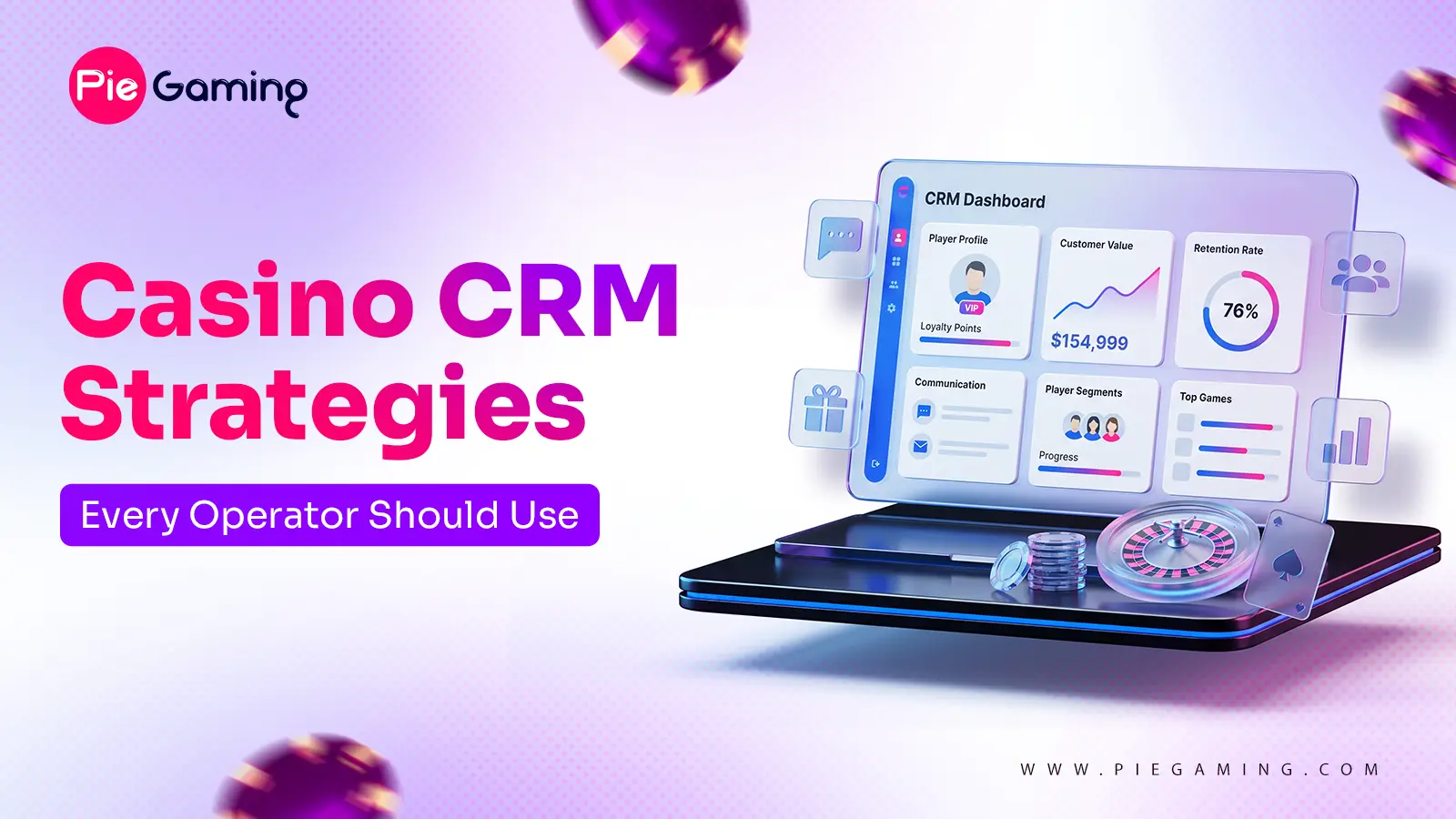
Casino CRM strategies help operators to personalize campaigns, improve player retention, reduce churn rate, and maximize player lifetime value.
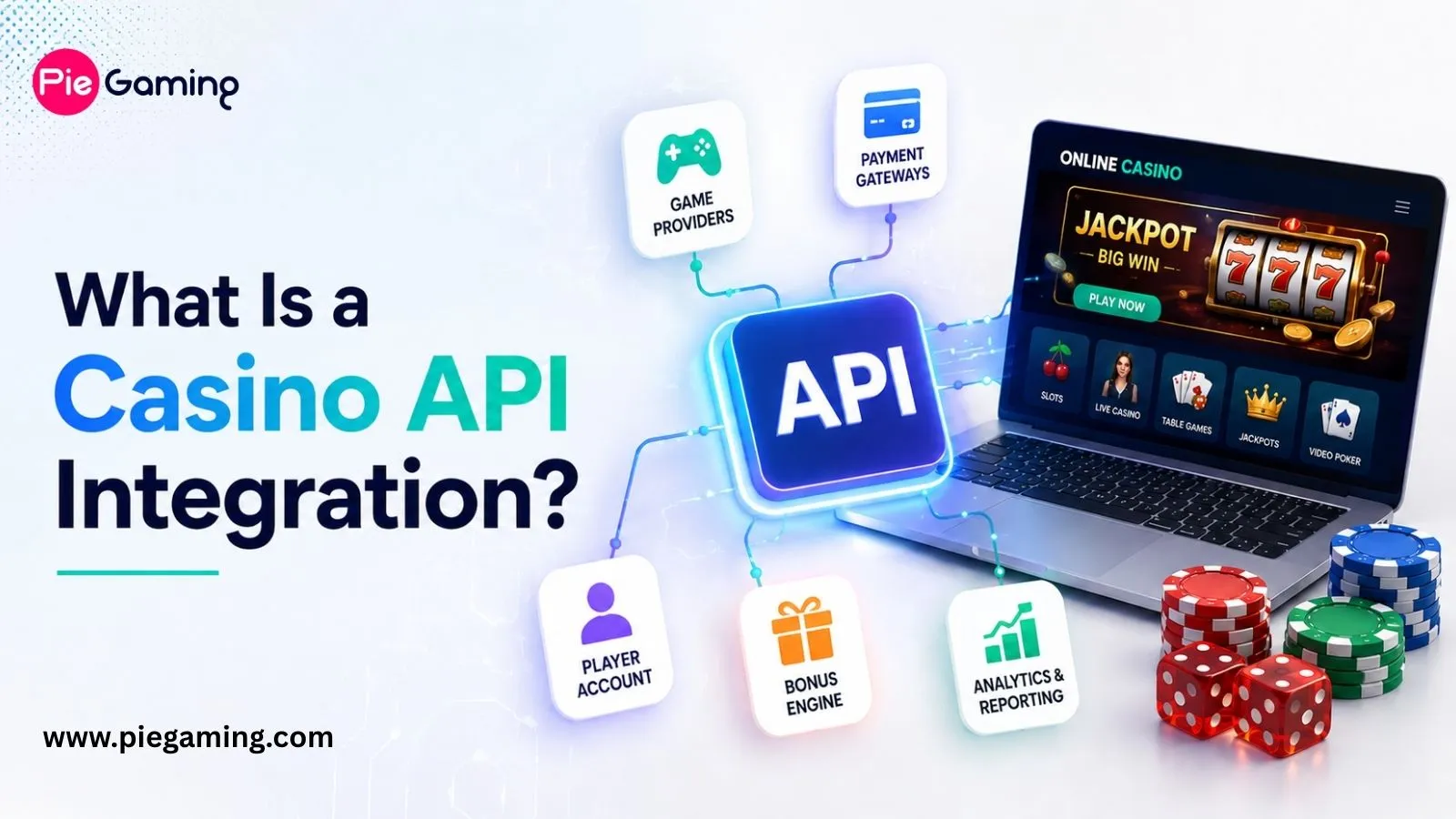
A casino API integration is a software solution that connects your platform with games, payment gateways, wallets, KYC tools and other third-party solutions. It allows data to be exchanged between systems in real-time. This way you can launch quicker, automate tasks, and provide a smooth playable experience.
House Edge is the mathematical advantage built into online casino games and all other forms of gambling. It shapes the odds, influences your winnings and losses, and constitutes the cornerstone of any online casino or sportsbook operator’s overall financial strategy.
The Hi-Lo casino game is a simple card game where players predict whether the next card will be higher, lower, or equal to the current card. This guide explains how Hi-Lo works, its rules, betting options, payouts, gameplay, and strategies players can use when making predictions.
Casino CRM software is a specialized platform for online and land-based gambling operators that tracks player behavior, automates targeted promotions, manages VIP loyalty and supports regulatory compliance.

See you in your inbox soon!

Stay ahead of the game. Subscribe for exclusive content, updates, and insiders!