
Policies, tools, and practices that address gambling harm by keeping betting safe, controlled, and strictly for entertainment are called responsible gambling. Stakeholders such as regulators, operators, and players collectively set the financial boundaries, provide self-exclusion options, and verify the right age for gambling.
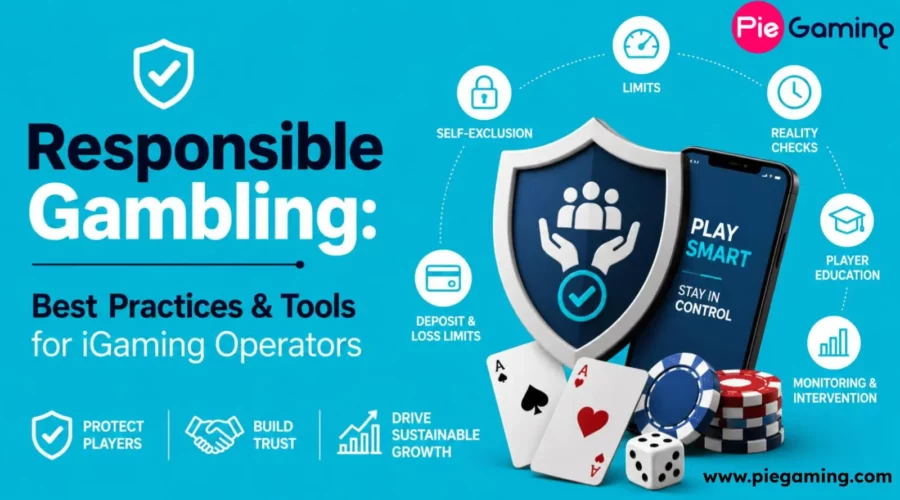
The online gambling market is flourishing. Navigating casinos, sportsbooks, and lottery sites via mobile devices and digital networks has become very easy. This has provided operators with several opportunities. But has also raised questions about player safety and gambling-related harm. With more competition, regulators are establishing more stringent laws to safeguard consumers.
An estimated 2.5 million adults in the U.S. experienced severe gambling problems. Whereas 5–8 million were classified as moderate risk. Therefore, proactively protecting players is needed.
For iGaming operators, responsible gambling is no longer about compliance. This has become essential to the construction of a sustainable and trustworthy business.
Responsible gambling practices are crucial in protecting the interests of players and brands. This includes avoiding regulations, ensuring your business’s regulatory risks are reduced, and improving long-term customer relations.
This guide will talk about responsible gambling, tools, and the best practices to work on how to make the gaming world safer.
What Is Responsible Gambling?
Responsible gambling is the set of policies, tools, and social responsibility practices. It is implemented at an operator’s level to ensure that gambling is safe, fair, controlled, and fun. It aims to minimize damage from gambling while allowing players to engage in the gaming experience.
It is important to understand the distinction between “responsible gambling” and “gambling responsibly”. In responsible gambling, operators ensure player protection through monitoring systems and support mechanisms. While gambling responsibly refers to the actions taken by players such as gambling habits, play time limit, budget limits, etc.
A robust responsible gambling framework relies on four main aspects:
- Prevention of underage gambling by age verification and identity checks.
- Protection of vulnerable players to enable early identification of risk-taking behaviors and assist them.
- Player awareness and education to guide users in selecting the appropriate means of gambling experience.
- Operator accountability via well-defined policy, ethical gaming devices, employee training, and continued enforcement.
Responsible gambling involves fostering safe play and recognizing risk at an early stage. There has never been a greater demand for responsible gambling.
Based on The Lancet (2024), almost 80% of the world’s territories now have legal regulations on gambling. And the gambling rates are highest among online casino & slot players.
Read Blog – What is PAM software in iGaming
Why Responsible Gambling Matters More Than Ever
The regulatory tide is quickly turning. Regulators throughout the UK, the EU, the US, Brazil, and Australia are working to tighten their gambling laws. Several US states now require operators to implement algorithmic triggers. These states include Colorado, Massachusetts, New Jersey, and North Carolina. This is not a regional trend anymore; it’s a global shift.
The stakes are rising too. Online gambling revenue surged to $121 billion in 2025, accounting for around 20% of all gambling activity around the globe. More money is passing through digital platforms, making regulators take note. Online sports bettors are 17% more likely to meet the threshold for problem gambling. Multi-problem gambling is even more prevalent among online casinos (56%) and online slot players (67%).
Responsible Gambling Regulatory Landscape: A Global Overview
The global gambling industry is being regulated more than it has ever been. Nearly 80% of global territories currently have legal gambling provisions. This has opened huge opportunities and has also raised player protection as a key concern.
Currently, responsible gambling in most regulated areas, a basic necessity. Regulators are no longer content to simply monitor players for compliant behaviours. But also to provide meaningful protection tools to players.
Regulators require operators to show how they safeguard vulnerable players, deter underage gamblers, and support informed decision-making. Specifics vary by region, but overall, the direction is clear. It’s tighter oversight, enhanced consumer protection, and operator accountability.
Global Responsible Gambling Requirements: Key Markets Compared
|
Jurisdiction |
Regulator |
Key Requirements |
| United Kingdom | UKGC | GamStop self-exclusion (mandatory), KYC before first deposit, affordability checks, reality checks, advertising restrictions, fund segregation |
| Malta / EU | MGA | Self-exclusion, deposit limits, reality checks, staff training, player protection resource access |
| United States | State-level (AGA) | Algorithmic intervention triggers (CO, MA, NJ, NC), advertising restrictions (5 states), self-exclusion programs |
| Australia | ACMA + State | Identity verification before account opening (Sept 2024), credit card ban, mandatory player cards (Victoria) |
| Brazil | SPA (from Jan 2025) | Strict KYC/AML from Jan 1, 2025; secure identity verification; credit card gambling ban from April 2026 |
Core Responsible Gambling Tools Every iGaming Operator Must Deploy
Responsible gambling laws are only effective when they have tangible tools behind them to help players stay in control. The majority of regulated markets expect operators to introduce various forms of player protection. In order to make decision-making more informed and reduce the threat of gambling-linked harm.
Deposit & Loss Limits
The most commonly used responsible gambling tools include deposit and loss limits. They let players establish daily, weekly, or monthly limits on either deposits or losses. These limits also prevent impulsive behavior and are meant to help players limit spending during their gambling sessions. It also allows them to monitor their spending and try to minimize the opportunities for impulsive spending on their play.
Operators are already required to provide these controls in most of the various licensed jurisdictions (including UKGC and MGA-regulated jurisdictions). To prevent impulsive spending decisions, any increase to a player’s limit typically takes effect only after a 24-hour cooling-off period, while limit reductions are applied immediately.
Self-Exclusion Programs
Self-exclusion programs enable players to voluntarily deny their gambling accounts access for a certain period. Exclusions are not legally binding – they can span from days to months or permanently, depending on where a player lives.
Many markets have centralized exclusion mechanisms. GamStop, for example, allows players in the UK to self-exclude from participating in all UKGC-licensed gambling institutions with a single registration. If a player’s behavior shows a serious risk of harm, operators may also have to introduce exclusions. Exclusion records are required to be stored for several years in many jurisdictions, and to serve as a basis for compliance measures.
Another option that has this protective layer is to block gambling websites and apps from multiple devices (through the use of platforms such as Gamban, BetBlocker, etc).
Reality Checks
Reality checks are automatic prompts displayed in a gambling session. These notifications display data including hours spent playing, deposits made, and net wins or losses. Instead of termination, they recommend that players pause and evaluate their activity.
Session Time Limits
Session limits can be set by the players to define how long they can stay logged in and stay gambling. If the limit is reached, the system will immediately terminate the session. This feature is particularly effective at avoiding protracted play and promoting healthier gambling techniques.
Cooling-Off Periods
Cooling-off periods provide a short break from gambling without requiring full self-exclusion. Players have no access to games, deposits, or promotional messages during this time. These are designed to be temporary breaks, so players can return to control before gambling becomes an issue.
Account Verification (KYC and Age Verification)
A robust KYC and age verification process is key to responsible gambling. They have the added benefit of preventing underage gambling; they will support anti-money laundering, and they will ensure operators can identify high-risk users. Global regulators are tightening the verification requirements. The UKGC requires customers to verify before they can start gambling, and Australia and Brazil have done likewise recently, passing stronger identity verification requirements.
Spend & Loss Transparency Dashboards
Transparency tools allow players to have a clear view of their gambling activity. Dashboards normally show total deposits, withdrawals, wins, losses, and session history all under one roof. They help players comprehend their spending behavior and thus guide them in making better decisions, thereby promoting responsible gambling behavior over the long term.
Read Blog – How to Start An Online Casino Business In 2026
Responsible Gambling Best Practices for iGaming Operators
Providing responsible tools in gambling is just the beginning. To ensure a safer gaming atmosphere, operators should incorporate responsible gambling into all aspects of the business model, from product design and customer support to compliance and marketing.
Implementing Responsible Gambling in Product Design
Responsible gambling needs to be built into the player experience from the start. Deposit limits, reality checks, spending dashboards, and self-exclusion tools should be easy to find and use. Moreover, industry experts see 2026 as the dawn of a new era where responsible gambling has become a fundamental design principle and not simply a compliance addendum.
Staff Customer-Facing with Training
Technology is no less important to protect players, and so are skilled employees. Regulators like the Malta Gaming Authority require responsible gambling training for all involved staff members. The teams will be able to identify signs of at-risk behaviour, know how to intervene, and follow escalation processes when concerns arise.
Advocate for Tools on a Proactive basis
Player protection tools should not be buried within accounts. Operators should actively advertise these features throughout the player path. That is, from the point of sign-up, deposit, to in-game activities and account management. It’s no longer surprising that many regulators now want responsible gambling regulations to be visible and easily obtainable at all times.
Utilize Intervention Policies Based on Data
Current responsible gambling interventions use behavioural information to great effect. Operators can employ algorithmic monitoring systems to detect risk signals such as higher deposit levels, prolonged gaming hours, or loss-chasing. Automated intervention triggers are already finding a home in several U.S. states and are becoming an accepted part of regulatory expectations. Using data-driven insights in conjunction with direct player engagement, facilitates early and effective interventions.
Chase Third-Party Certification
Independent certifications help restore an operator’s credibility of the business and show evidence of a player protection role. Organizations like the G4 (Global Gaming Guidance Group) hold audits, investigate responsible gambling frameworks, and check staff training programmes. Accreditation is the best way to get ahead – and one can gain a competitive edge, especially in heavily regulated markets.
Follow Responsible Marketing Guidelines
Marketing should promote gambling as entertainment while never using it as a means to make money. Operators must not make the mistake of making misleading claims, setting unrealistic winning targets for others, or advertising to minors. Many regulated U.S. markets have already implemented rigid responsible advertising demands.
Document Everything and Stay Ahead of Regulatory Changes
There should be extensive documentation of responsible gambling. It is based on player interactions, interventions, self-exclusions, and operator-initiated restrictions. Regulators can ask for such records during audits or investigations.
Simultaneously, operators need to keep a vigil to track the regulatory developments and regulations around the world, including affordability testing in Britain. It is in the process of growing awareness, along with new KYC and advertising requirements, as well as regulations in the form of KYC, which are also changing around the region. Creating an up-scalable compliance infrastructure enables businesses to swiftly adapt and be compliant as regulations evolve.
Read Blog – Top 10 Online Casino Software Providers
Conclusion
Responsible gambling is no longer just a regulatory requirement. Running a sustainable and trusted iGaming business requires this fundamental approach. As regulations become stricter and player expectations continue to evolve, operators must take a proactive approach to player protection.
Operators that invest in robust responsible gambling frameworks get the best of both worlds: sustainable growth and player well-being as the industry grows.

FAQ's
-
What is responsible gambling?
Responsible gambling refers to the policies, tools, and practices implemented by gambling operators to minimize gambling-related harm and ensure players can gamble in a safe, informed, and controlled manner.
-
What does responsible gambling mean for operators?
For operators, responsible gambling means providing player protection tools, monitoring risky behavior, preventing underage gambling, promoting informed decision-making, and complying with regulatory requirements.
-
What are the lottery’s responsible gambling guidelines?
Lottery responsible gambling guidelines typically include age verification, spending limits, responsible advertising, player education, self-exclusion options, and measures to prevent excessive play and jackpot chasing.
-
What tools must iGaming operators provide for responsible gambling?
Common responsible gambling tools include deposit limits, loss limits, reality checks, session time limits, cooling-off periods, self-exclusion programs, age verification systems, and spend-tracking dashboards.
-
Which jurisdictions have the strictest responsible gambling regulations?
The United Kingdom, Ontario (Canada), Australia, Malta, and several regulated U.S. states are widely considered among the strictest jurisdictions due to their comprehensive player protection, monitoring, and compliance requirements.
-
How do online casinos identify at-risk players?
Online casinos use behavioral monitoring systems and data analytics to detect warning signs such as frequent deposits, loss chasing, extended gaming sessions, increasing wager sizes, and sudden changes in gambling patterns. These insights help operators intervene before gambling-related harm escalates.


Jaya Swaroop has been covering iGaming and betting technology since 2019, with a specialization in online casino platforms, sportsbook solutions, and licensing frameworks. Her work involves analyzing platform capabilities and evaluating cost structures, compliance requirements, payment integrations, market strategies, and regulatory updates that impact operators entering or scaling in the iGaming space. With a background in B2B marketing and content strategy, she has contributed to SEO-led growth and demand generation initiatives for global businesses. Jaya holds a Bachelor’s degree in Science (Chemistry & Mathematics) and is certified in content writing, email marketing (HubSpot), project management, and Google Analytics.
What are prediction markets, and why is everyone in iGaming suddenly talking about them? The answer may be just one number: $44.8 billion….

This blog walks you through the top eSports games, most played and watched by the audience. Stay tuned to find out about the best eSports betting games available worldwide.

This blog covers everything from success keys to case studies of successful Asian iGaming operators to help start your dream business.

Choosing between a land-based vs. online casino business model is the primary decision that any operator must make. Both options possess unique characteristics in terms of costs, profit, market reach, and other factors.

This blog is a comprehensive guide on key success strategies for European iGaming Operators. Read on to build your iGaming empire in the European market.

Explore top iGaming events 2025 in this blog. Learn why you need to be part of gambling conferences and what you can learn from them.

Find out why SiGMA Asia 2025 is a must-visit event for iGaming operators, startups, and investors. See what’s happening, who’s coming, and how it can help grow your iGaming business in Manila.

See you in your inbox soon!

Stay ahead of the game. Subscribe for exclusive content, updates, and insiders!