
When it comes to marketing an online casino, it’s most effective when you take on multiple approaches. Use the levers your casino platform has: an affiliate program, bonuses designed to keep players on the platform and a live casino that’s marketed as your casino. Social media and influencer collaborations expand your reach, and CRM and behavioral data allow you to personalize it for every player. Localized payments are just as important as their raw acquisition numbers – players in different countries want different payment options. Then add in to the larger channels: SEO and content marketing, paid campaigns that you’re licensed for, and a measurement system for trimming the fat.
Thousands of online casino software are live right now, all competing for the same pool of players. With customer acquisition costs for first-time depositors often reaching $250 to $650 in mature markets, operators cannot afford to rely on visibility alone.
Sustainable growth depends on finding the right players, converting them efficiently, and keeping them engaged. Here are nine strategies that consistently drive growth in the online casino industry.
Strategy 1 — Build an Affiliate Program Before You Buy Traffic
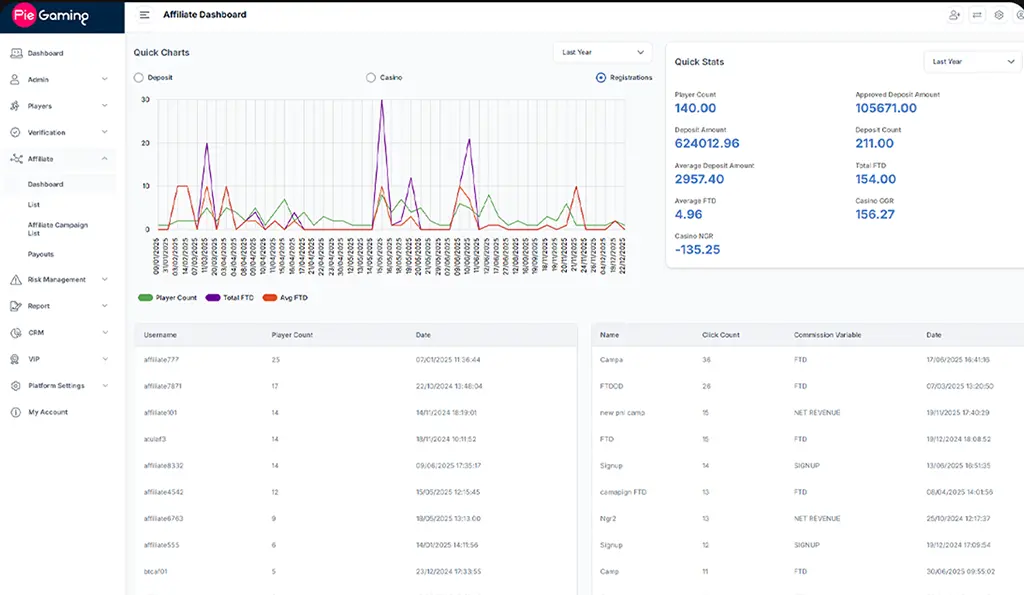
Affiliate Dashboard
Paid advertising generates volume quickly, but traffic declines when spending stops. Affiliates can provide a more sustainable way of acquisition, where players can still be driven to the game long after it has been set up. If you build your program early, you’ll have the time to set up terms, test traffic quality, and set up partner relationships before it’s time to scale.
Choose the Right Commission Structure
Cost Per Acquisition involves a fixed payment once the player referred by the advertiser has taken a qualifying action, usually a first-time deposit that meets minimum criteria. It can facilitate quick acquisition, but it might be less beneficial for affiliates to maximize long-term retention.
RevShare involves sharing a percentage over time of the net game revenue that is earned by referred players. It creates stronger long-term alignment, but NGR definitions, deductions, caps, and negative carryover must be clearly stated in the agreement.
Hybrid is a mix of CPA payment and a reduced RevShare percentage, which offers immediate income but also assures value to both parties in the long-term. Have answers in mind about your Net Gaming Revenue calculation, RevShare caps and negative carryover policy before going live. As far as serious partners are concerned, they will ask.
What to Look for in an Affiliate Platform
Prioritize casino affiliate software with real-time or near-real-time dashboards, fraud monitoring, geo-specific commission rules and flexible CPA, RevShare and Hybrid plan support. Income Access and My Affiliates are examples of solutions used across iGaming programs, though features vary by configuration.
Critically, confirm your casino software supports server-to-server postbacks before launching. Without proper event integration, affiliate tracking will have gaps that affect attribution accuracy and partner trust.
Strategy 2- Build Bonuses That Retain, Not Just Acquire
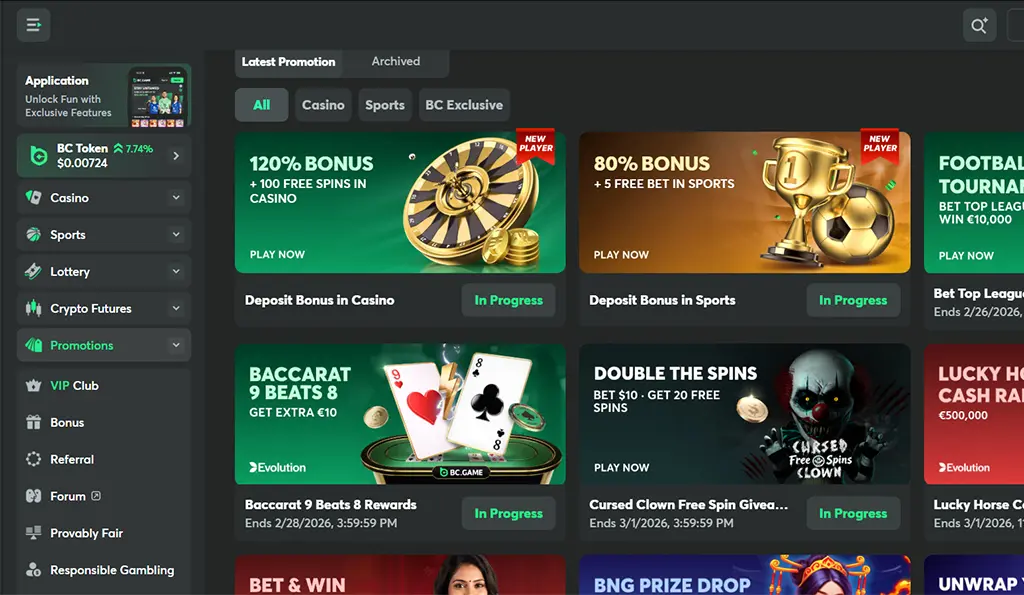
Build Bonuses That Retain
When bonuses are being offered, they are often designed to lure players in, but a sustainable strategy must account for what follows the first deposit. Retention and net revenue / player value are more important than the volume of deposits offered.
Multi-Deposit Welcome Packages vs. Single-Bonus Offers
A single welcome bonus creates a concentrated acquisition event. The player claims it, completes the wagering requirements and may drop off after that first session. A multi-deposit package spreads rewards across several qualifying deposits, which may encourage repeat visits and give you more time to understand player preferences before presenting personalized offers.
Compare both structures using second- and third-deposit rates, net gaming revenue, and bonus costs before choosing either.
Loyalty Programs and VIP Tiers
Tiered loyalty programs let you differentiate rewards by player activity, but higher activity alone isn’t a measure of sustainable value. An AADS case study reported players in higher VIP tiers wagered 2.5 times more than casual users, with retention up 40%. Treat this as illustrative rather than a universal benchmark.
Typical benefits of VIP tiers are usually free spins, faster assistance response time, cashback and personal account management provided to the highest-level players. Programs should never be built around a higher frequency of wagers. Most regulated gambling jurisdictions have a responsible gambling monitoring system in place, as well as strict eligibility criteria – these are not second considerations.
Your casino software must support tier-level bonus engine configuration. Without it, personalization at scale isn’t possible.
Strategy 3- Use Live Casino as a Conversion and Retention Tool
Most operators promote live casinos the same way they promote slots: a banner, a bonus and a lobby placement. That’s a missed opportunity. Live dealer casinos aren’t just another vertical. It’s a fundamentally different product that deserves its own promotional strategy.
Live dealer games combine streamed video, real dealer interaction and scheduled table activity in ways slots simply don’t. That difference can create stronger engagement opportunities, but operators should validate the actual impact using their own data rather than assuming live casinos automatically drive longer sessions or lower churn.
A few things that make live casino worth promoting differently:
- Familiar dealers and named tables give players a reason to come back that has nothing to do with a bonus. Recognizable hosts and consistent formats build continuity between visits.
- Branded studio environments create an identity for your live section that’s harder for competitors to copy than a welcome offer.
- Scheduled shows and limited-seat tables add urgency when the scarcity is real and clearly communicated, not just marketing language.
From the promotional perspective, the operators who are able to reap the maximum value from live casino consider it a different category of product:
- Lobby placement: Test live tables above the fold against a slots-first layout. Before making any conclusions, measure CTR, first session conversion and net revenue.
- Social content: Since short snippets of dealer interaction and live table moments do better than the typical casino creative on TikTok and Instagram, make sure to include these elements. Just be sure to monitor the deposits and player value and not just likes.
- Exclusivity framing: Named tables and branded dealer shows are worth promoting specifically, as long as the experience actually delivers what the marketing promises.
Strategy 4: Leverage Social Media and Influencer Partnerships
Social media can support brand discovery and, where permitted, direct acquisition. What’s allowed depends on your license, platform rules, and target jurisdiction. Reach doesn’t automatically convert into deposits.
Short-Form Video on TikTok, Instagram Reels and YouTube Shorts
The most engaging video format on TikTok, Instagram and YouTube is short-form video. Track performance by the “real” metrics: qualified reach, registrations, first-time deposits, player value, etc. — but not vanity metrics such as views or likes.
Content formats worth testing:
- Live dealer clips: Short footage of table presentation, dealer interaction or a branded studio communicates the product more clearly than a static graphic.
- Offer explainers: Videos walking through bonus eligibility, wagering requirements and withdrawal terms, without misleading win messaging.
- How-to-play shorts: Quick explainers for baccarat, blackjack or live dealer formats reduce product friction for new players.
- Product-led content: Named tables and studio features give campaigns a specific subject beyond a generic “play now” message.
Before publishing, check platform requirements. TikTok permits gambling advertising only in specified markets, subject to licensing, age targeting and responsible gambling compliance.
Meta similarly restricts gambling ads and may require prior written approval. Restrict campaigns and landing pages to licensed jurisdictions, apply age targeting and include the warnings, terms and license disclosures required by your market.
Micro-Influencers vs. Macro-Influencers
In iGaming, audience relevance matters more than follower count. Micro-influencers whose community follows casino content will generally generate more high-quality deposits than macro-influencers with a more general audience. Look beyond engagement rate and judge creators on registrations, first-time deposits, player value and cost per qualified acquisition.
In emerging markets, such as LatAm and MENA, where gambling audiences are already active on the platform, Telegram is worth exploring for distribution in these parts of the world. Before it becomes part of your influencer strategy, confirm jurisdiction status, consent, disclosures and responsible gaming requirements.
Strategy 5- Personalize with CRM and Behavioral Data
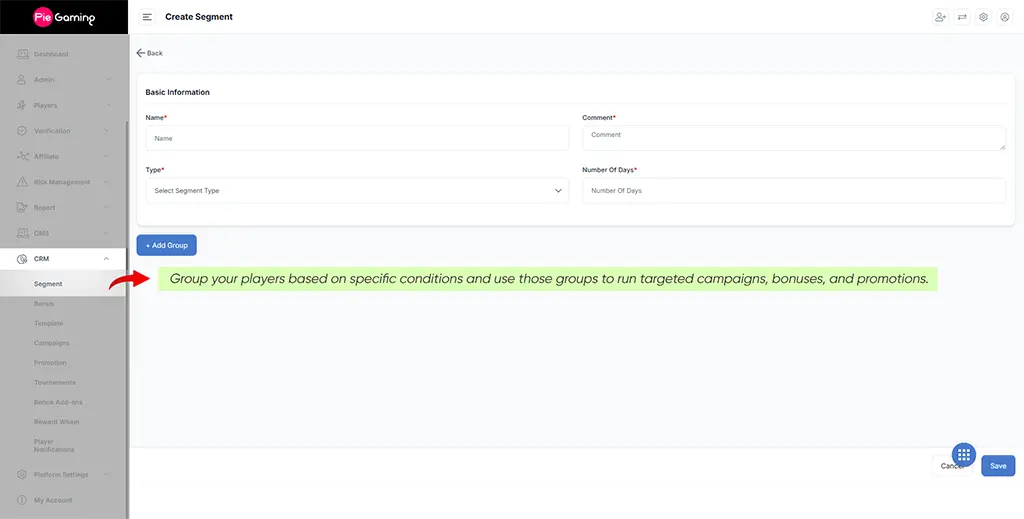
Personalize with CRM and Behavioral Data
Sending the same message to every player makes CRM communication harder to optimize and easier to ignore. Behavioral segmentation lets operators tailor content, timing and channel selection to what a player actually does, subject to consent, data protection and responsible gambling controls.
Segment Players by Behavior, Not Demographics
Demographic data is useful for eligibility and compliance. For campaign design, behavioral data is more actionable. Segments worth building around:
- Deposit frequency and recency.
- Preferred game category.
- Session timing and activity patterns.
- Bonus engagement rates.
- Churn risk scores, used alongside appropriate safer gambling safeguards.
Players that have been inactive for 7-14 days may be entered in a re-engagement segment, but there is some variation depending on the product and market.
Generally, a personalized message that is relevant to the audience will be more effective than a generic reminder. Though not a promise for iGaming, Campaign Monitor says that emails with personalized subject lines are 26% more likely to be opened.
AI-Driven Offers and Real-Time Triggers
Behavioral triggers extend personalization beyond fixed campaign schedules by responding to what players actually do. Operators can trigger communications around events like first deposit, product preference changes, or reaching a loyalty milestone.
One critical guardrail: promotions should never be triggered solely because a player has lost money. Targeting players after losses can encourage loss chasing, which conflicts with responsible gambling requirements in most regulated markets. Always suppress promotional messages for players who are self-excluded, in a cooling-off period or showing risk indicators.
Platforms like Optimove, FastTrack and OptiKPI offer behavioral segmentation and real-time triggers built specifically for iGaming. Features vary by plan, so verify capabilities before committing.
Casino CRM integration may require APIs, webhooks, or event streams depending on your software stack. A closed platform can limit which player events are available to your CRM, so confirm your casino software supports the integrations you need before selecting a tool.
Strategy 6- Offer Localized Payment Methods as a Trust Signal
Payment methods are both an operational requirement and a conversion lever. If a player reaches the cashier and can’t find a familiar option, they may abandon the deposit flow entirely. Localizing your payment stack can reduce that friction, though the impact depends on the market, licensing model, and withdrawal requirements.
Match Payment Options to the Market
Payment preferences vary by country, so a single global stack rarely serves every target market effectively.
- Europe: Cards, bank transfers, open banking and e-wallets like Skrill and Neteller are all relevant, but availability differs by country. Open banking is particularly worth validating in the UK and Nordic markets.
- Latin America: PIX is a major instant payment rail in Brazil. Mercado Pago is available across several LatAm markets, though each country may also require local bank transfers or cash-based methods.
- MENA: Payment availability varies significantly by country, local law, and bank policy. Validate every method against your target market before launching.
Displaying supported payment methods early in the sign-up flow can reduce uncertainty and help players decide whether to continue. Clearly state which methods support deposits, withdrawals, processing times and fees rather than relying on logos alone.
Crypto Casinos and Web3 Promotion Channels
The primary channels for targeting crypto casino audiences are Web3 communities, Discord groups, Telegram channels, and crypto-native creators. The channels are not exempted from jurisdiction and compliance testing – nor are they exempt from gambling advertising and responsible for gambling requirements.
Where properly implemented, provably fair mechanics let players verify eligible game outcomes using disclosed cryptographic inputs. This is a strong trust and education angle for crypto-native audiences, provided operators clearly explain which games are covered and how verification works. It shouldn’t be presented as proof that the entire casino is fair or licensed.
Strategy 7- Use SEO and Content Marketing to Own Long-Term Acquisition
Paid traffic declines when spending stops. SEO can build cumulative organic visibility over time, but it’s not free. Operators still invest in content production, technical SEO, and compliance. The advantage is a channel that keeps sending qualified traffic without paying for every click.
Target Player-Intent Keywords at Scale
The queries with higher commercial intent are “best live roulette casino,” “how to play baccarat,” and “blackjack basic strategy,” which are mostly informational. Both can be helpful for acquisition if the content is at the appropriate level and offers a straightforward compliant next step.
Long-form content can be useful when the topic genuinely requires depth. In an analysis of 912 million blog posts, Backlinko and BuzzSumo found that content longer than 3,000 words received 77.2% more referring-domain links than content shorter than 1,000 words. This is a correlation, not a guarantee. Write to satisfy the query rather than hit a word count.
Concepts worth covering accurately across game and bonus content:
- RTP: A long-run theoretical return, not a guaranteed session result
- House edge: Particularly relevant for table game and live casino content
- Wagering requirements: Cover eligible games, contribution rates, expiry and withdrawal terms
- Game variance: Relevant for slots content targeting experienced players
Use these because they answer genuine player questions, not because they are target keywords.
Build Topical Coverage Around Game Verticals
A structured content cluster serves users across different research stages. A live blackjack cluster might include a rules guide, strategy page, RTP in casino explainer, and table selection guide. Each page needs a distinct intent and a clear reason to exist separately. Don’t create thin pages solely to target keyword variations.
Link pages naturally and connect educational content to relevant lobby pages where legally appropriate.
Strategy 8- Run Paid Campaigns Where Regulations Allow
Google and Meta impose significant restrictions on gambling advertising. Google requires certification and market-specific eligibility, while Meta requires prior written permission and evidence that the activity is licensed in the territories targeted. These restrictions don’t eliminate paid acquisition, but they make jurisdiction, license coverage and platform approval essential parts of campaign planning.
Alternative Ad Networks for iGaming
Specialist networks can provide additional inventory for approved gambling and crypto campaigns. Options worth exploring include AADS, Blockchain-Ads and TrafficStars, though acceptance rules vary by provider. Before committing, confirm:
- Whether real-money gambling campaigns are accepted.
- Which licenses and jurisdictions are required.
- Age and geo targeting controls available.
- Fraud detection and traffic quality measures.
Push notifications can support re-engagement when users have provided valid permission and are eligible to receive marketing. Measure using qualified return visits and deposits, not click-through rate alone. Always suppress messages for self-excluded or cooling-off users.
Retargeting and Geo-Targeted PPC
Restrict campaigns to jurisdictions where you are licensed to advertise. Spending on users who can’t legally convert is wasted budget and a compliance risk.
Retargeting eligible registered users who haven’t deposited can be effective when it addresses a known friction point. Before serving a deposit bonus, identify the actual drop-off reason:
- Missing or unsupported payment method.
- Failed or incomplete verification.
- Unclear bonus terms or wagering requirements.
- Poor mobile UX at the cashier stage.
Strategy 9- Track What Works and Cut What Doesn’t
CPA only measures the cost of acquiring a player. It doesn’t show whether that player returns, deposits again, or generates positive net revenue after bonuses and chargebacks. A full-funnel measurement framework helps operators make budget decisions based on cohort quality, not just volume.
Here are the KPIs Every Casino Operator Should Track:
Additionally, build a testing culture. Test landing pages, bonus creative, email subject lines and lobby placements continuously. Evaluate results using retention, bonus cost, GGR and NGR , not click-through rate alone. Review channel performance by LTV and payback, not volume. A channel sending 500 low-value players deserves less budget than one sending 100 with strong retention.
Promotion-Ready Casino Software
PieGaming builds the promotional tools operators need directly into the platform. Affiliate tracking, bonus configuration, live casino branding, behavioral CRM integrations and crypto wallet support are all native. So, instead of spending time connecting third-party tools, you can focus on what actually drives growth: marketing your casino.
Wrapping Up…
Promoting an online casino isn’t about finding one channel that works and scaling it indefinitely. The operators who grow consistently are the ones who build across multiple strategies, measure what actually drives player value and cut what doesn’t.
Begin with the levers you have access to on your platform: Affiliate tracking, bonus configuration, live casino and CRM integrations. They set the standard for what other channels can do. Next, scale them, using SEO, paid and social, and measure by player value, not volume. The strategy that grows, grows the compounds.

Contact Us
FAQ
-
How much does it cost to market a new online casino?
Costs vary by jurisdiction, channels, license requirements, and acquisition of targets. Budget across content production, affiliate commissions, paid advertising, bonus costs, CRM tools, compliance, creative and ongoing optimization. There is no fixed number; what matters is understanding the fully loaded cost per acquisition relative to the player's value each channel generates.
-
Why do casino marketing strategies matter for new operators?
Without a clear strategy, operators default to spending on visibility without measuring what converts or retains. A structured approach helps new operators attract qualified players, differentiate from competitors, manage acquisition costs and allocate budget toward channels that drive sustainable, compliant growth rather than short-term deposit spikes.
-
How can affiliate marketing benefit an online casino?
A well-structured affiliate program expands reach through performance-based partnerships, diversifies acquisition sources and aligns marketing costs with agreed qualifying actions. The key is building the right commission structure, working with relevant partners, and ensuring affiliates follow your licensing and responsible gambling requirements from the start.
-
What role does social media play in online casino marketing?
Social media supports brand discovery, educational content, and measurable acquisition campaigns, but the opportunity depends on platform policy, licensing, and target jurisdiction. Operators must verify permitted markets, apply appropriate age targeting and include all required disclosures before running any gambling-related content.
-
What are the key components of a successful online casino marketing strategy?
The fundamentals are SEO, paid acquisition, affiliate partnerships, localized payments, and CRM personalization. Layer in retention bonuses, live casino promotion, social media, and continuous performance testing. Responsible gambling controls and compliance aren't separate from the strategy; they're built into every channel and campaign from the start.

Palak Madan has been writing about the iGaming industry since 2024. She focuses on helping operators and founders understand their options when launching an online casino, from choosing the right software provider to figuring out costs and compliance requirements across different markets. At PieGaming, she covers topics like white label casino solutions, platform selection, and market entry, turning complex industry information into practical guidance for people building iGaming businesses. She also keeps a close eye on licensing and regulatory changes; particularly how new rules shape the way operators enter and grow in different jurisdictions.

Casino influencer marketing involves the collaboration between licensed casino websites and influencers on platforms like YouTube, Kick, Twitch, TikTok, and Telegram who share casino games via tracked links and promo codes. Creators are paid by flat fee, CPA, revenue share or hybrid and paid based on results by FTD, NGR and retention. Campaigns must comply with local advertising, disclosure, and 18+ rules.
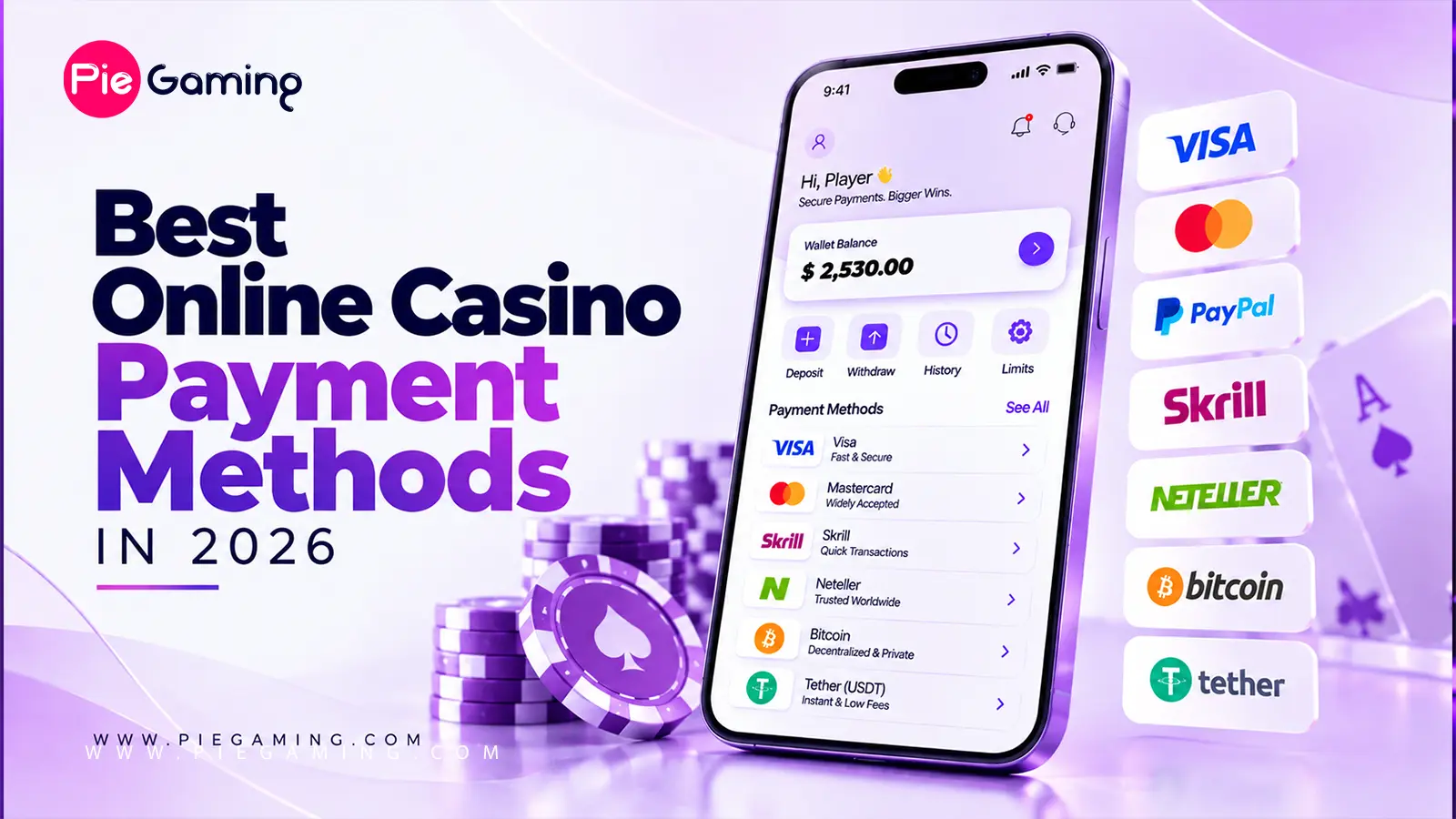
Best online casino payment methods in 2026 include credit and debit cards, e-wallets, open banking, cryptocurrencies, prepaid vouchers, and mobile money. Cards are the most widely supported but face issuer restrictions on gambling transactions. E-wallets like PayPal, Skrill, and Neteller offer faster withdrawals.
This blog explores ways and platforms to find and partner with top sports betting affiliates to grow the iGaming business.
This blog explains how iGaming affiliate marketing software helps operators boost revenue through smart tracking, automation, fraud prevention, and better campaign control.
Affiliate software is instrumental in managing partnerships and keeping track of performance in iGaming. This guide provides an overview of many iGaming affiliate software providers and features that operators can utilize for running an efficient affiliate marketing program.
This write-up talks about the best online casinos supporting GCash in the Philippines—also, the gaming variety, bonuses, and customer support they provide.
Top providers of payment applications for iGaming payment solutions are well-equipped with high transactional volume, robust compliance frameworks, and quick payouts for players using them. Selecting the right provider is your key to high authorization rates, fraud prevention, and seamless integration for your Internet betting platform.


See you in your inbox soon!

Stay ahead of the game. Subscribe for exclusive content, updates, and insiders!