
Self-exclusion tools in iGaming help operators improve responsible gambling practices. It lets operators protect players from harmful gambling behavior and strengthen regulatory compliance.
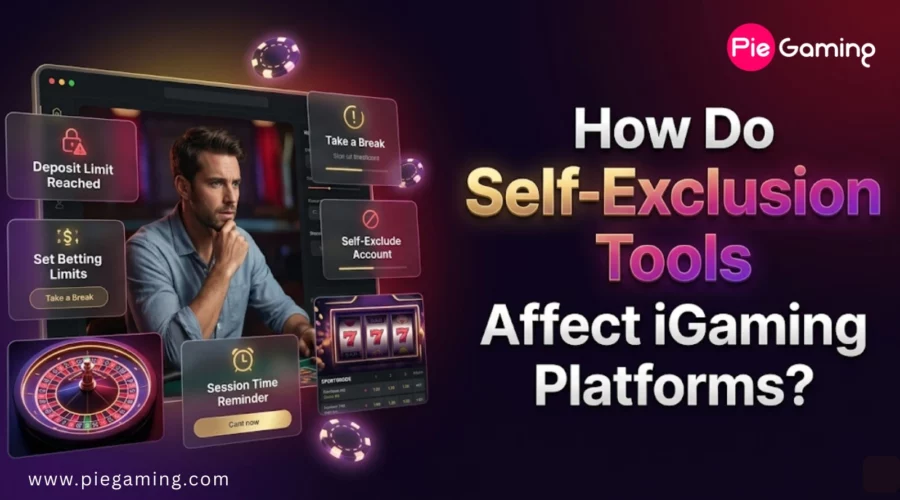
Ever imagined, what could happen if casino platforms ignored responsible gambling?
Regulatory penalties, player trust issues, and long-term brand damage. Today, iGaming isn’t just about offering popular casino games but about offering a safer player experience.
Since responsible gambling is continuing to grow worldwide, self-exclusion tools are becoming a crucial part of a successful online casino platform. These tools help operators meet regulatory demands, reduce legal risks, protect players, and build brand reputation.
But the real question is: how do these tools actually affect iGaming platforms?
In this blog, we will walk you through how self-exclusion systems affect iGaming businesses and why investing in responsible gambling tools is beneficial for operators.
What Are Self-Exclusion Tools in iGaming?
Self-exclusion tools in iGaming are referred to as built-in safety features, which empower players to voluntarily block themselves from casino platforms. Once the player is excluded, he won’t be able to access his account, deposit funds, or place bets for the chosen exclusion period. In many platforms, self-exclusion tools are linked to PAM software in the iGaming business.
For operators, offering a self-exclusion tool is mandatory, as it is legally required in the regulated markets. It offers valuable data to operators on where and how players reach their limits.
Types of Self-Exclusion Systems
There are different types of self-exclusion tools available in the industry. Let’s understand each one of them below.
Temporary exclusion
As the name suggests, players can choose a short-term self-ban (from hours to several days) if they feel the need to pause. The ‘time-out’ helps players prevent extended sessions and impulsive betting. In this case, the platform allows exclusion for 24 hours or a few weeks, after which the player’s account is reactivated.
Permanent exclusion
If there are more serious cases, a player can always choose to permanently self-ban himself from betting, effectively locking accounts. After that, operators must enforce a lifetime block on deposits or play for that player.
Note: If a player wants to revoke his account, then he must submit a formal appeal and proof of changed circumstances.
Deposit and betting limits
Apart from bans, many platforms offer self-imposed financial control. This lets players set daily/weekly/monthly deposit limits or wagering limits on their own accounts. Once activated, these limits will prevent further deposits or bets until reset. This helps players manage their spending and avoid overspending.
Session time reminders
Session time, reality check, and play time alerts are common tools in the iGaming industry. Operators often give on-screen timers or pop-up reminders; for instance, you’ve been playing for one hour. This makes players aware of their time spent on the platform.
Implementing or offering these self-exclusion tools in the platform helps operators promote responsible gambling, which ensures players have safer play.
Read More – How to Start a Sportsbook
Why Are Responsible Gambling Features Important for Online Casinos?
Some important points stating why responsible gambling features are important for online casinos:
Growing Gambling Regulations Worldwide
The iGaming jurisdictions across the world are updating their rules about online gambling. As per recent European iGaming laws, they put more emphasis on consumer protection and harm reduction measures.
That’s the reason why many jurisdictions ask operators to offer deposit limits, reality checks, and self-exclusion options as a basis for license approval. By implementing responsible gambling tools, operators can stay ahead of evolving iGaming markets.
Increasing Focus on Player Protection
Responsible gambling isn’t just about meeting compliance standards. It’s also about protecting vulnerable players. Research groups emphasize harm prevention and self-exclusion schemes as a core tool for reducing problem gambling.
Players’ protective tools not only help prevent addictive behavior but also enhance user perception. In fact, players feel safer and more respected when a casino platform openly supports responsible gambling.
Ways Self-Exclusion Tools Impact iGaming Platforms
Here are different ways through which responsible gambling tools impact iGaming platforms:
Improves Regulatory Compliance
As mentioned above, implementing self-exclusion tools in iGaming is a legal requirement. For instance, UK operators have to connect to the national GAMSTOP register and block any self-excluded users.
By integrating self-exclusion features into their account management system, operators enforce bans and stay compliant with licensing rules.
Enhances Brand Reputation
Operators can build their brand reputation by offering clear, responsible gaming options. It’s a universal truth that the platform that promotes safety and transparency earns goodwill among players and regulators.
Having self-exclusion tools in the casino platform ensures that operators care about players’ well-being.
Builds Player Trust and Loyalty
There are thousands of online gambling platforms available across the world. How to build player trust among others? That’s where self-exclusion tools in iGaming let players feel empowered and respected. By adding responsible gambling tools, operators can build player trust and increase loyalty.
Reduces Gambling Addiction Risks
Effective self-exclusion tools directly curb harm by stopping play for those at risk. As time passes, this reduces the rate of problem gambling among a platform’s user base. Since platforms allow self-regulation, operators maintain a safer gaming environment with a core mission of responsible gambling initiatives.
Helps Platforms Avoid Legal Penalties
Sometimes operators deliberately avoid integrating self-exclusion tools in their platforms, due to which they face hefty fines or license suspension. For instance, in the UK, ‘GAMESTOP’ integration isn’t an option but a clear law for licensed sites.
Key Self Exclusion Programs in Different Jurisdictions
Key Self Exclusion Programs in Different Jurisdictions
The table below highlights the various self-exclusion programs run by different jurisdictions across the world.
| Program | Details |
| GamStop (UK) | It’s a national self-exclusion program in the United Kingdom, allowing players to block themselves from all UKGC gambling websites and apps. |
| GameSense (Canada) | A program widely used in Canada to educate players about safe gambling habits and reduce gambling-related risks. |
| Spelpaus (Sweden) | This national self-exclusion program in Sweden allows players to block access to all licensed gambling operators in the country via a single registration. |
| NCPG (US) | The National Council on Problem Gambling in the US offers support services for people facing gambling problems and encourages safer gambling practices. |
| NCPG (Singapore) | This council also offers responsible gambling support programs including self-exclusion options for casinos and online gambling activities. |
Challenges iGaming Operators Face with Self-Exclusion Systems
Integration of self-exclusion tools in iGaming is important, but it comes with a lot of challenges that operators face. These challenges include:
Cross-platform account detection
Today’s players are smart; they use multiple casino accounts, making it hard for operators to identify self-excluded users across various websites. Without a shared system, banned players can create new accounts on another platform, which is technically challenging for operators.
User verification issues
Some operators conduct weak verification, which lets restricted players return using fake details or different accounts. Therefore, strong KYC and identity verification checks are a must for operators to avoid such issues.
Revenue impact concerns
Yes, this is true: operators can face short-term revenue restraints; self-excluded players cannot continue gambling. Therefore, some operators worry about losing high-value players. But operators must understand that self-exclusion tools in iGaming help them build players’ trust.
Different jurisdiction regulations
As mentioned earlier, every country has different rules about gambling, and self-exclusion tools are no exception. Some jurisdictions require a national self-exclusion program, while others have different reporting standards or exclusion periods. Thus, managing compliance across various jurisdictions can be challenging.
Role of AI and Automation in Responsible Gambling
AI and automation tools play a significant role in responsible gambling. They help operators identify early risks associated with players. Let’s talk about their role in detail below.
Predictive behavior analytics
AI tools in online gambling help operators analyze player activity and betting patterns to identify risky gambling behavior early. Just by tracking player activities, operators can detect users who may be developing gambling problems before the situation becomes serious.
Risk scoring systems
Today’s responsible gambling tools are integrated with automated systems that help calculate player risk levels. These tools monitor factors such as spending habits, losses, betting frequency, and playing time. If risky behavior is detected, the player will get recommended pop-ups or alerts.
Automated intervention tools
AI-powered tools automatically send warnings or reminders to players about harmful gambling behavior. In this case, the platform may suggest ‘taking a break,’ ‘setting a deposit limit,’ or ‘temporarily restricting gameplay.’
Best Practices for Implementing Self-Exclusion Tools
It is clear that self-exclusion tools in gambling are important considerations. But operators forget the best approach to implement them in the system. Below are the practices operators can follow:
Easy access for players
Self-exclusion tools should be easily accessible for players on the platform. When players have clear access to the feature, it helps in retaining them.
Transparent policies
On the platform, operators should have a clear document regarding how self-exclusion tools work, account restrictions, and reactivation tools. Simple and transparent policies help build player trust.
Compliance with gambling authorities
It’s not an option but mandatory for every operator to comply with gambling authorities and follow local gambling regulations. Staying compliant with iGaming regulations helps avoid legal risks and build platform credibility.
Regular monitoring and reporting
Once tools are implemented, operators must regularly monitor responsible gambling activities and track how players use self-exclusion tools. If operators review player behavior data in a timely manner, it will help them improve responsible gambling strategies over time.
Why Choose PieGaming for Responsible Gambling & Self-Exclusion Solutions?
PieGaming is a leading iGaming software provider, offering white-label and turnkey platforms equipped with self-exclusion tools. Here are the top reasons why operators choose PieGaming:
Advanced Responsible Gaming Features
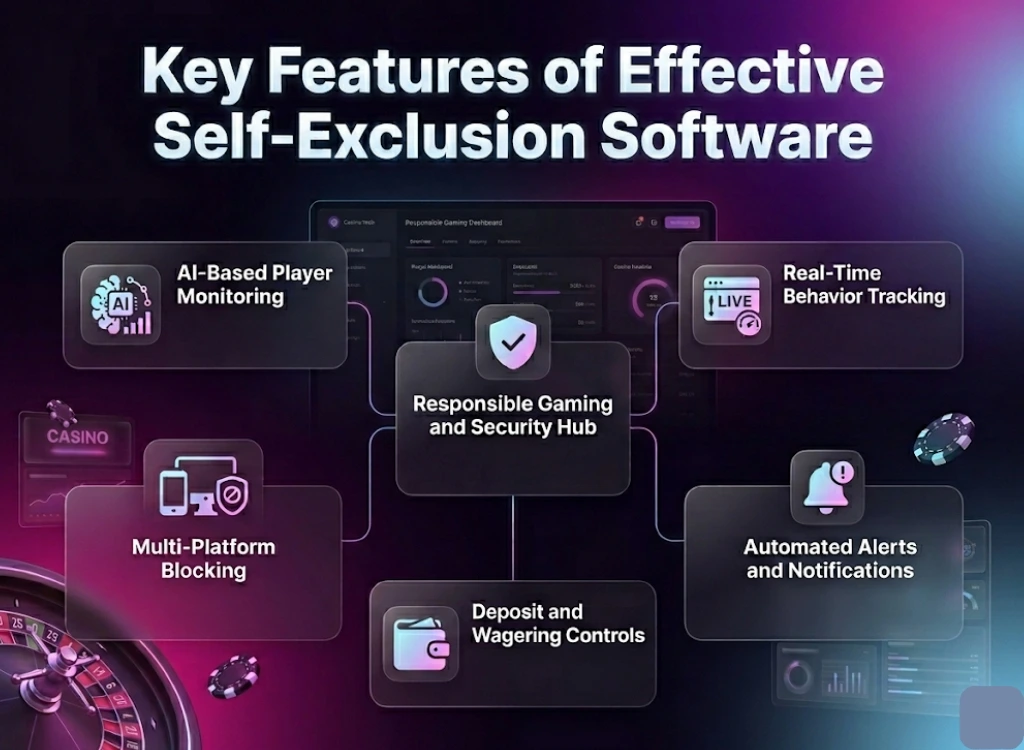
PieGaming’s platform comes with gambling risk management and anti-fraud management tools. Its PAM solution comes with features like KYC/AML protocols, real-time gameplay monitoring, and duplicate account detection. These features allow operators to spot the suspicious behavior of players.
Regulatory Compliance Support
Our iGaming solutions are built to meet the compliance requirements of different jurisdictions across the world. Whether it’s back office or PAM, our platform ensures seamless compliance with global iGaming regulations and licensing requirements.
AI-Powered Player Protection
Unlike other platform providers, PieGaming’s PAM solution is designed to integrate with modern AI tools for responsible gaming. Further, operators can also use advanced analytics and machine learning for real-time risk scoring and automated intervention. The AI approach helps operators personalize players’ experience.
Customizable iGaming Solutions
We understand the branding and how important it is for operators to differentiate among others in the market. That’s why we offer customized white label and turnkey platforms as per operators’ needs. From user interface to UX, features, games, and RG tools, operators can expand their offerings to players.
Scalable & Secure Platform Infrastructure
Our casino and sportsbook platforms are designed for growth. Our software is cloud-based and easily handles a growing traffic base with real-time performance. Security features like SSL encryption, 2FA, and audited code protect user data and funds.
Conclusion
The iGaming industry is growing, and so is the importance of responsible gambling. Self-exclusion tools in iGaming not only protect players but also build your brand reputation in the market. By following and implementing the best practices and choosing a partner like PieGaming, operators can turn responsible gambling into a competitive advantage.
For any gambling operator, offering self-exclusion isn’t just about ticking boxes —it’s about creating trust and building a platform that players want to use long-term.
FAQs
-
How do self-exclusion tools work in iGaming?
A player simply chooses to ban himself through the casino account settings, just by clicking the ‘Self-Exclusion’ button. Then the system locks the player’s account for the preferred period. So, during this period, deposits, bets, and gaming access are blocked.
-
Can self-exclusion tools improve player trust?
Yes, self-exclusion tools improve players’ trust by giving them confidence that the casino is a safe environment. A clear, accessible, and self-exclusion feature will show players that the operator puts their welfare first and is not purely driven by money. Having transparency in the platform helps in building loyalty.
-
How does AI help responsible gambling systems?
AI helps in smart monitoring and intervention. For instance, machine learning models can scan thousands of betting events to detect unusual patterns. Further, these algorithms can trigger alerts, pop-ups, or limit adjustments when risky behavior of any player is spotted. In other words, AI makes RG tools more personalized.
-
Why are responsible gambling tools important for casinos?
They are important for player safety and legal compliance. Casino platforms that offer tools like deposit limits, time reminders, etc., help prevent addiction. Not only does it avoid license issues but also improve the casino’s reputation.
-
What are the benefits of self-exclusion software for operators?
Self-exclusion software can enhance customer retention and brand reputation. Operators can gain insights into player behavior, which helps refine marketing or game offerings in a sustainable way. Further, it also reduces risk by reducing the number of problem gamblers.

Monika Gola is an iGaming content specialist at PieGaming. Since 2020, she has been researching and developing content around software selection, online casino & sports betting regulations, and operator growth strategies. Her research includes analyzing market opportunities in regions like Europe, Africa, and Southeast Asia, as well as evaluating regulatory frameworks and entry barriers. She is actively monitoring industry trends, compliance updates, and evolving player demands across global iGaming markets to help operators navigate this industry seamlessly.

To obtain a gambling license in Romania, operators should register a local company and submit financial documents and fulfill ONJN requirements. Obtaining a Romanian iGaming license gives operators a significant opportunity to legally offer gambling services to other European countries as well.
A slot tournament is a tournament where all the players are given the same number of credits, play a certain game for a period of time, and receive a point for each win. Understanding how slot tournaments work is simple: It isn’t the amount of money you win during the tournament that matters; it’s where you are on the leaderboard when the tournament ends.
Poker game development is one of the biggest revenue engines for online casino businesses in the modern era. It helps companies increase player engagement, retention, and revenue. The evolution of poker services through multiplayer poker and real-time tournaments, white label and turnkey poker solutions, make for faster penetration into and scalable operations within the marketplace.
Provably fair technology enables players around the world to personally confirm that online game outcomes are fair and transparent.




See you in your inbox soon!

Stay ahead of the game. Subscribe for exclusive content, updates, and insiders!