
Starting an online casino in Europe means choosing a target market, registering your business, securing a gambling licence, meeting country-specific regulations, localising your platform, and preparing to launch. Europe doesn’t run on a single gambling framework, so you’ll need to evaluate each jurisdiction’s licensing, taxation, compliance, and player protection requirements before you enter.

Europe is home to some of the world’s most mature and tightly regulated online gambling markets. The region generates billions of euros in annual gaming revenue, with online GGR topping €40 billion in 2024, making it the largest regulated iGaming market globally (EGBA & H2 Gambling Capital, 2024).
That scale comes with complexity. Starting an online casino business in Europe means navigating country-specific regulations, picking the right licensing jurisdiction, and meeting strict AML and responsible gambling requirements. You also need to deliver the kind of seamless player experience European customers expect.
This guide walks you through the key steps for launching an online casino in Europe. You’ll learn how to pick your target market, navigate licensing requirements, and estimate startup costs. It also covers platform localisation and compliance prep. Plus, you’ll get the operational and marketing groundwork you need before going live.
Whether you’re launching your first iGaming business or expanding into Europe’s competitive market, you’ll find what you need to plan, launch, and grow with confidence.
European Online Casino Regulations: Key Markets and Licensing Differences

European Online Casino Regulations
Europe’s online gambling landscape is fragmented. Each country sets its own rules for licensing, taxes, compliance, and player protection. There’s no single authority covering the whole region.
According to the European Gaming and Betting Association (EGBA), 27 out of 31 European countries use some form of multi-licensing model. Others still run monopoly, mixed, or transitional systems. That means a license in one country won’t let you operate in another.
To make this easier to navigate, we’ve grouped European jurisdictions into three market types. These aren’t official legal categories. They’re a simple way to understand the different licensing approaches you’ll run across Europe.
Mature Multi-Licensing Markets
These markets have solid, well-tested licensing systems and experienced regulators. The rules are clear. You’ll need to meet strict standards for responsible gambling, AML, player fund protection, technical certifications, and regular reporting.
Getting into these markets takes more money and more prep work upfront. But you get a stable legal environment, strong consumer trust, and room to grow long-term.
Examples: Malta, Sweden, Denmark and the United Kingdom (regulated by the UK Gambling Commission).
Restricted or Locally Licensed Markets
Some countries require a local licence before you can offer gambling services to their players. In several cases, the rules even change depending on the product, so sports betting, casino games, and poker may each need separate approval.
These markets come up with their own local requirements: taxes, responsible gambling rules, advertising limits, approved payment methods, and reporting duties. Don’t assume what works in one country will work in another. Check each market on its own.
Examples: Germany, the Netherlands, France, Spain, Italy.
Transitional or Evolving Markets
A few European countries are reforming their gambling laws or moving toward open licensing systems. These markets could offer good opportunities down the line, but the rules are still changing as new laws and regulators come into place.
Keep an eye on how things develop here before you commit.
Examples: Finland (moving to a multi-licensing model), Ireland (still modernizing its framework).
Comparison of European Online Gambling Market Types
| Market Type | What to Expect | Examples | Entry Complexity |
| Mature Multi-Licensing Markets | Established rules, experienced regulators, clear compliance standards, and predictable environment. | Malta, Sweden, Denmark, UK. | High |
| Restricted or Locally Licensed Markets | Local licences required; rules can vary by product, taxes, advertising, and compliance obligations. | Germany, Netherlands, France, Spain, Italy
|
High to Very High |
| Transitional or Evolving Markets | Laws are being reformed or expanded, creating future opportunities alongside shifting requirements. | Finland, Ireland | Medium (subject to change) |
Use these market types to build a smarter licensing strategy. Don’t treat Europe as one market. Look at each country on its own: its rules, its obligations, its potential, and where it’s headed before you decide where to launch.’
Step-by-Step Guide to Launching an Online Casino in Europe

Step to Launching an Online Casino in Europe
Starting an online casino in Europe gets much easier once you break it into clear steps. Here’s what you need to do before you go live.
Step 1: Choose the Right European Market
Your first decision isn’t picking a casino platform. It’s deciding which European market you want to enter. Europe is made up of independent gambling jurisdictions, each with its own licensing model, tax structure, advertising rules, and player protection requirements. A strategy that works in Malta may not work in Germany, France, or the UK.
When evaluating a market, consider these factors:
- Regulatory model: Check whether the jurisdiction follows a multi-licensing, monopoly, or mixed regulatory system. This affects how easily you can enter the market and how much ongoing compliance you’ll need to maintain.
- Local licensing requirements: Check whether you’ll need a domestic licence for your specific vertical, such as online casino, sportsbook, poker, or bingo. Some jurisdictions require separate licences for different gambling products.
- Taxation and operating costs: Compare Gross Gaming Revenue (GGR) tax rates, licence application fees, annual renewal costs, and ongoing compliance expenses. Lower licensing fees don’t always mean lower long-term operating costs.
- Market size and growth potential: Assess the number of active online gamblers, market revenue, internet penetration, and projected growth. A smaller but fast-growing regulated market can offer better opportunities than a saturated one.
- Competition: Research how many licensed operators already serve the market. Highly competitive jurisdictions often need larger marketing budgets and stronger product differentiation to win players.
- Player preferences: Understand local gambling habits, preferred casino games, payment methods, languages, currencies, and device usage. Live casino games are particularly popular in Southern Europe. Players in the Nordic countries expect mobile-first experiences and fast payment options.
- Advertising restrictions: Review local rules for bonuses, affiliate marketing, influencer partnerships, TV advertising, and paid search. Marketing regulations differ significantly across Europe and can directly affect your customer acquisition strategy.
- Payment ecosystem: Verify that your preferred payment service providers support the local market and offer the payment methods players trust. Supporting options like Trustly, iDEAL, Bancontact, or local bank transfers can significantly improve deposit conversion rates.
Step 2: Register Your Business
Most European regulators require you to set up a legally recognised business before you can apply for a licence. Depending on your target jurisdiction, you may also need to disclose ultimate beneficial owners (UBOs), directors, shareholders, and proof of sufficient operating capital.
Before you incorporate, think through:
- Where to establish your company: Choose a jurisdiction that aligns with your licensing strategy. Some European regulators require operators to establish a local legal entity or maintain a registered office as part of the licensing process.
- Governance requirements: Understand what your chosen regulator expects from your corporate structure, including UBO disclosures, director responsibilities, and any “fit and proper” assessments for shareholders and key personnel.
- Banking partners: Identify banks or financial institutions that support licensed gambling businesses. Banking availability varies by jurisdiction, and some providers require proof of your licensing status before offering business accounts or payment services.
- Reporting obligations: Prepare for annual financial reporting, regulatory audits, and ongoing compliance submissions required by your licensing authority. Building these processes early helps you avoid compliance issues after launch.
A transparent corporate structure is a core part of the licensing process. It shows regulators you’re financially sound during due diligence.
Step 3: Obtain the Appropriate National Gambling Licence
There’s no single Europe-wide gambling licence. You need the licence required by each target market regulator. The right licence depends on where you offer gambling services, not where your company is incorporated.
Before applying, compare your options based on your target market, compliance obligations, tax structure, application costs, and long-term expansion plans.
Leading European gambling licensing jurisdictions
Each jurisdiction has its own licensing framework, tax rules, and compliance expectations. Here are some of the most recognised European regulators and licensing bases.
| Jurisdiction | Best for | Key points |
| Malta Gaming Authority (MGA) | Operators seeking a respected EU-based remote gaming licence | You need a B2C Gaming Service Licence to offer gaming services from Malta. Operators widely use Malta as a credible regulatory base, with defined licence fees, gaming tax, and ongoing compliance requirements. |
| UK Gambling Commission (UKGC) | Operators targeting players in Great Britain | The UKGC licences gambling businesses in Great Britain. It’s known for strict consumer protection, AML, and responsible gambling rules. |
| Gibraltar Regulatory Authority (GRA) | Established operators with substantial infrastructure | Gibraltar remains a recognised licensing hub for experienced international operators. It’s best described as a specialist jurisdiction rather than a broad entry-level licence option. |
| Swedish Gambling Authority (Spelinspektionen) | Operators entering Sweden | You need a licence to offer gambling for money in Sweden. Applications must be in Swedish, bonuses are tightly restricted, and licensed operators face strong responsible gambling and advertising rules. |
| German Joint Gambling Authority (GGL) | Operators targeting German players | The GGL supervises cross-state online gambling in Germany. Operators must comply with Germany’s detailed national rules. |
Operators often use Malta and Gibraltar as licensing bases for international ambitions. The UK, Sweden, and Germany are market-specific regimes that require direct compliance for those local players.
Step 4: Localise Your Online Casino
European players expect more than a translated website. Every market has different payment habits, gaming preferences, language needs, and regulatory expectations. Localisation is both a commercial advantage and, in many jurisdictions, a compliance requirement.
A European-ready casino should offer:
- Native-language content: Cover your website, customer support, and responsible gambling information.
- Local currencies: Support EUR, SEK, DKK, or other national currencies as needed.
- Preferred payment methods: Offer options like Trustly, Klarna, iDEAL, Sofort, Bancontact, or local bank transfers.
- Popular games and providers: Match what players in your target market actually want.
- Compliant promotions: Build offers that follow national advertising and bonus rules.
A locally relevant experience builds player trust and drives better conversion and retention.
Step 5: Prepare for Compliance Before Launch
Getting your gambling licence doesn’t mean you’re ready to go live. Before you accept real-money players, run a final compliance check. Make sure your platform, your day-to-day processes, and any third-party tools meet what your regulator expects. It’s much cheaper to fix problems now than after launch.
Before you go live, check that you’ve covered the following:
- Test and certify your platform: Have your platform, games, and Random Number Generator (RNG) tested by an approved lab if your regulator requires this. This proves your games are fair and your systems work as intended.
- Test player onboarding: Walk through registration, ID checks (KYC), age verification, and account approval yourself. Players should be able to sign up easily while you still meet the rules.
- Check your responsible gambling tools: Make sure deposit limits, self-exclusion, reality checks, and session reminders all work properly. These tools protect players and are usually a legal requirement, not just a nice-to-have.
- Test payments end to end: Try out deposits, withdrawals, refunds, and chargebacks across every payment method you offer. Check your fraud prevention works before real money is involved.
- Get your record keeping in order: Your regulator can ask to see player activity, transaction records, and compliance reports at any time. Make sure these are accurate and easy to pull up.
- Test your backup and recovery plans: Check that your data backups, incident response steps, and system monitoring work. This protects you if something goes wrong after launch.
A proper pre-launch check like this lowers your risk, helps you avoid fines, and gives you peace of mind before you open your doors to real-money players.
Step 6: Market Your Online Casino in Europe
Launching your casino is only the beginning. Acquiring players in Europe needs a market-specific strategy that balances growth with regulatory compliance. Advertising rules, bonus restrictions, and permitted acquisition channels vary by jurisdiction. A campaign that performs well in one country may not be compliant in another.
When building your acquisition strategy, focus on the following:
- Localise your marketing campaigns: Translate more than just your website. Adapt your landing pages, promotional messages, email campaigns, and customer support to local languages and cultural preferences. This builds engagement and trust with local players.
- Understand advertising regulations: Review each jurisdiction’s rules on welcome bonuses, affiliate marketing, paid advertising, influencer partnerships, and social media promotions before you launch campaigns. Non-compliance can lead to significant penalties or licence breaches.
- Build a sustainable SEO strategy: Create country-specific content that targets local search behaviour, regulatory topics, and player interests, instead of relying on generic English-language pages. This improves your organic visibility and attracts higher-intent traffic.
- Choose compliant acquisition partners: Work only with affiliates and marketing partners who follow the advertising standards of your target market. As the licence holder, you’re often responsible for making sure your partners market your brand responsibly.
- Retain players responsibly: Design CRM campaigns and loyalty programmes that encourage long-term engagement while staying compliant with local responsible gambling regulations. Your promotional offers, bonuses, and rewards should always align with the rules of the jurisdiction where you operate.
After launch, measure performance using key casino KPIs metrics like First-Time Deposits (FTDs), Customer Acquisition Cost (CAC), Lifetime Value (LTV), retention rate, conversion rate, and return on marketing investment (ROMI). Tracking these KPIs by country helps you spot which markets deliver sustainable growth and where you need to refine your acquisition strategy.
Common Challenges of Entering the European Market
Europe gives you access to some of the world’s most profitable regulated gambling markets. But it also comes with unique operational and regulatory challenges. Understanding these obstacles before launch helps you build a stronger market entry strategy and avoid costly compliance issues.
Fragmented Regulations
Europe doesn’t run on a single national framework. Instead, gambling regulations are set country by country. The UK is a good example of this fragmented landscape. It operates under the UK Gambling Commission, one of Europe’s most established regulators, with its own licensing, compliance, and responsible gambling requirements that are separate from EU jurisdictions.
Licensing requirements, technical standards, responsible gambling obligations, and advertising rules vary significantly between jurisdictions.
If you’re expanding into multiple European countries, you’ll likely need separate licensing strategies and compliance processes for each one rather than a single regulatory approval that covers them all.
Language Localisation
Europe is home to dozens of official languages, and players expect a localised experience. Translating your casino content isn’t enough on its own. Your customer support, promotional campaigns, responsible gambling messaging, bonus terms, and legal policies all need to reflect the local language and culture.
If you’re targeting Germany, Spain, and Sweden, for example, you should offer dedicated language support and market-specific content rather than running everything through a single English platform.
Taxation
Every European jurisdiction applies its own gambling tax regime. Depending on the market, you might pay taxes based on Gross Gaming Revenue (GGR), betting turnover, or another locally defined model.
Beyond licensing fees, factor in corporate taxation, reporting obligations, and any country-specific financial requirements before you pick a target market. Understanding your full tax burden is essential when you’re forecasting profitability.
Player Acquisition
In Europe, the player market continues to become more competitive as markets mature and advertising regulations become stricter. Some jurisdictions restrict welcome bonuses, affiliate marketing, TV ads, influencer promotions, or direct marketing.
A mix of SEO, compliant affiliate partnerships, CRM, and localised content, whilst remaining within the advertising regulations of each country, will be required for an effective acquisition strategy.
Strong Competition
There are reputable and well-known operators that dominate many European markets, have well-developed game libraries, and maintain loyal customer bases. Having thousands of casino games won’t be enough, either.
You’ll need to stand out with localised promotions, exclusive content, quicker withdrawals, better customer support, responsible gambling features, and a seamless mobile experience to match what local players are used to.
Payment Localisation
Payment preferences vary a lot across Europe. Debit cards and e-wallets remain popular, but many players prefer country-specific banking solutions. iDEAL dominates in the Netherlands. Trustly is popular across the Nordics. Bancontact is the go-to in Belgium. Sofort still holds ground in German-speaking markets.
Supporting trusted local payment methods alongside multiple currencies improve deposit conversion and builds player confidence.
Ongoing Compliance
Regulatory compliance doesn’t end once you get your licence. You will be responsible for AML and KYC compliance, suspicious transaction monitoring, responsible gambling programmes, GDPR player data protection, regulatory reporting, and swift compliance with evolving regulations.
Gambling laws are constantly changing in Europe and adherence is a long-term matter that requires robust processes and regular audits of compliance.
Launching in Europe Vs Other Emerging Markets
The European region is one of the oldest online gambling areas in the world, but it is not monolithic in terms of regulation. Licensing, taxation, compliance, and consumer protection requirements vary from country to country.
This requires you to assess each jurisdiction before entering. It makes expansion more complicated, but it also provides you with a developed regulatory system and a clear licensing system.
Some jurisdictions are rolling out new licensing frameworks, while others are still revising gambling legislation or restricting certain forms of online gambling. Understanding these differences matters when you’re deciding where to invest.
Europe VS Emerging Markets: Key Factors for Online Casino Expansion
| Factor | Europe | Emerging Markets |
| Licensing Maturity | Most jurisdictions run established licensing frameworks with clearly defined requirements. Licensing conditions, technical standards, and compliance obligations still differ from country to country. | Frameworks vary widely. Some jurisdictions have recently opened regulated online gambling markets, while others are still developing or revising their legal frameworks. |
| Competition | Many regulated markets already have well-established licensed operators. This makes customer acquisition more competitive and puts a premium on product differentiation and localisation. | Competition tends to be lower in newly regulated markets, though this depends on how mature the jurisdiction and its licensing model are. |
| Consumer Confidence | Licensed operators that comply with national regulations, responsible gambling requirements, and secure payment standards tend to benefit from stronger consumer trust. | In newer or developing markets, you’ll often need to invest more in building brand awareness and proving reliability, especially where regulated gambling is still finding its footing. |
| Operating Costs | Market entry usually involves higher licensing fees, technical certification, legal support, ongoing compliance, and country-specific reporting. Expanding into multiple jurisdictions adds even more cost. | Initial licensing and operating costs can be lower in some jurisdictions. But evolving regulations, shifting compliance requirements, and market uncertainty can raise your long-term risk. |
| Growth Opportunities | Growth mainly comes from expanding into additional regulated jurisdictions, innovating your product, and retaining players in mature markets. | Newly regulated markets can offer strong growth potential, but this depends on regulatory stability, internet adoption, payment infrastructure, and the legal status of online gambling. |
Which Market Is the Right Choice?
Emerging markets may appeal if you’re after faster expansion or a less saturated competitive landscape. That said, don’t assume all emerging markets offer the same opportunities. Evaluate each jurisdiction on its own, weighing licensing availability, regulatory maturity, payment infrastructure, and legal certainty before you commit.
How Much Does It Cost to Launch an Online Casino in Europe?
Launching an online casino in Europe typically takes a meaningful upfront investment. Costs vary by jurisdiction, licence type, online casino software model, and compliance scope. If you’re going for a lean launch, you can start at the lower end of the range. Fully regulated or premium market entries will need a much bigger budget.
Estimated Startup Costs for Launching an Online Casino in Europe
| Cost Item | Typical Range | What It Covers |
| Company incorporation | €0–€5,000 | Business registration, corporate setup, and initial filings. |
| Licence application + first-year fees | €5,000–€250,000+ | Application fee, annual licence fee, and jurisdiction-specific regulatory costs. |
| Software/platform setup | €30,000–€150,000+ | Casino platform, gaming technology, and integration. |
| Payment provider setup | €5,000–€15,000 | PSP onboarding, payment integration, and related fees. |
| Website development | €5,000–€50,000+ | UX/UI, front-end build, mobile optimisation, and localisation. |
| Compliance and certification | €10,000–€75,000+ | AML, KYC, testing, audits, and responsible gambling controls. |
| Marketing and acquisition | €20,000–€300,000+ | Launch campaigns, affiliate spend, brand awareness, and player acquisition. |
| Staffing and operations | €15,000–€100,000+ | Compliance, support, fraud, finance, and management. |
| Total estimated launch budget | €60,000–€500,000+ | A realistic range for a new online casino launch, depending on market and scale. |
Disclaimer: These figures are indicative estimates based on industry norms and vary depending on your target jurisdiction, licence type, platform provider, and scope of operations. Actual costs may differ significantly. We recommend consulting with legal, financial, and regulatory advisors in your target market before finalizing your budget.
Wrapping Up…
Starting an online casino in Europe takes careful planning, but it’s absolutely doable. Choose the right jurisdiction, secure the correct licence, build a compliant and localised platform, and invest in trusted payment methods and responsible gambling tools.
Europe’s regulated markets reward operators who get the fundamentals right from day one. With the right strategy and partners, you can launch a casino that earns player trust and grows sustainably across Europe’s diverse markets.

contact-us
FAQ's
-
What do I need to launch an online casino in Europe?
You'll need the right licence, a legal entity, compliant software, payment providers, AML/KYC controls, responsible gambling tools, and legal support to meet country-specific regulations.
-
How much does it cost to start an online casino in Europe?
Costs typically range from around €60,000 for a lean setup to €500,000+ for a fully regulated launch, depending on licensing, platform choice, compliance, and marketing.
-
What payment methods should I offer in a European online casino?
Offer cards, bank transfers, open banking, e-wallets, and local payment options where allowed. Availability depends on your jurisdiction and your payment provider.
-
Which European licence is best for a new operator?
Malta is often preferred for EU market credibility, while the UKGC is required for the UK and is stricter. The best licence depends on your target market.
-
What are the biggest challenges when launching in Europe?
The main challenges are fragmented regulations, higher compliance costs, licensing complexity, payment restrictions, and strong competition in established markets.

Palak Madan has been writing about the iGaming industry since 2024. She focuses on helping operators and founders understand their options when launching an online casino, from choosing the right software provider to figuring out costs and compliance requirements across different markets. At PieGaming, she covers topics like white label casino solutions, platform selection, and market entry, turning complex industry information into practical guidance for people building iGaming businesses. She also keeps a close eye on licensing and regulatory changes; particularly how new rules shape the way operators enter and grow in different jurisdictions.
Online casinos have gained so much popularity, as global revenue is projected to grow from about $19.1 billion in 2024 to $38 billion by 2030, as per the Grand View Research report. Yet beneath this growth lie serious online casino problems for operators. This guide breaks down key problems operators face.
Kenya has a growing online gambling market supported by increasing internet adoption and mobile payment systems. This guide clarifies the steps and protocols you can follow for setting up an online casino business in Kenya, including regulations and licensing requirements.
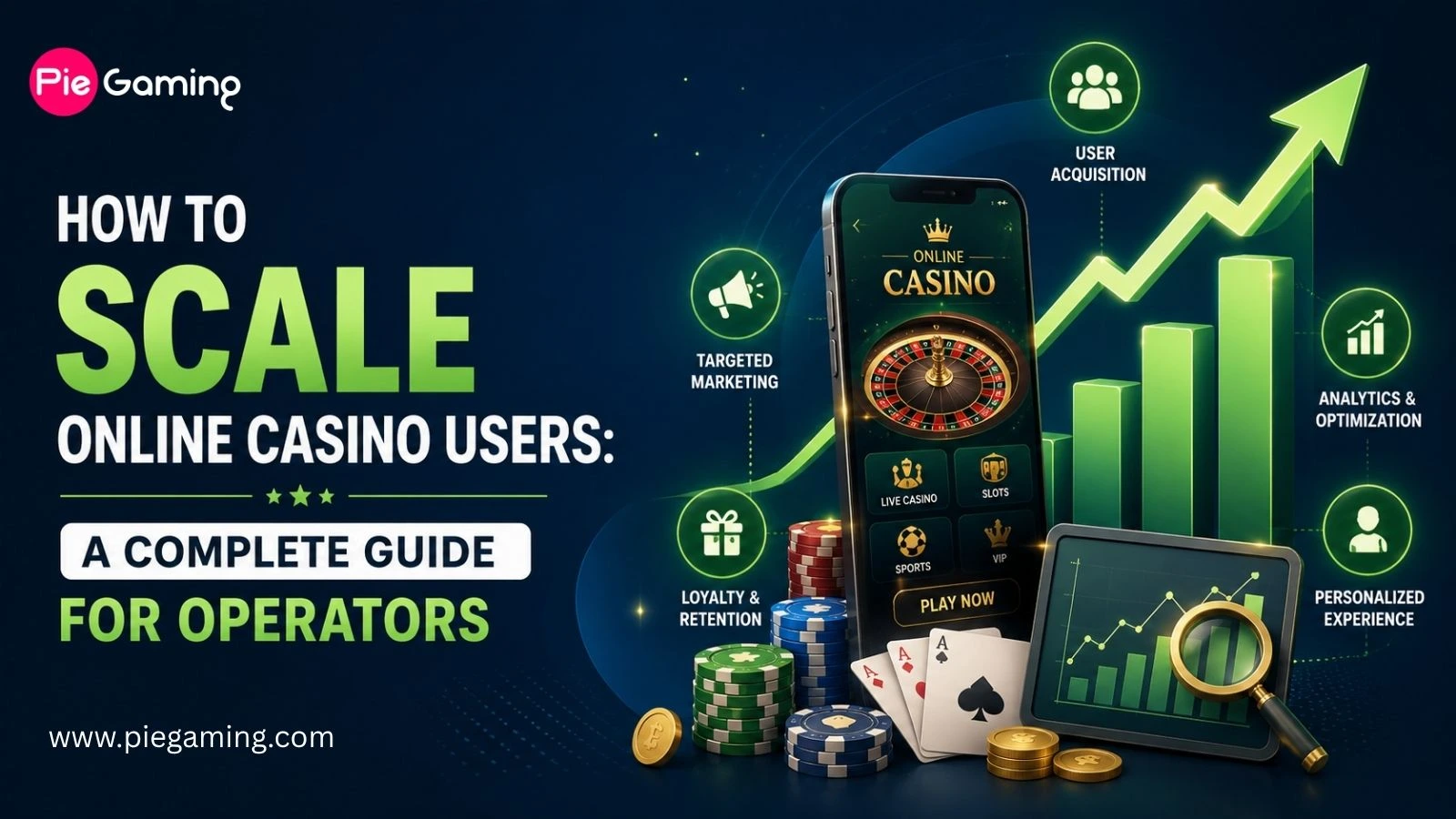
The key components of scaling online casino users can be summarized in four areas. The right acquisition channels, delivering personalized engagement, developing loyalty programs, and making data-driven decisions. Creating a mobile experience, maintaining player engagement and translating markets that you want to attract are all just as crucial to sustainable growth.

This blog breaks down the key strategies of top iGaming operators in 2026 and how you can grow like them as a market leader. Stay tuned until the end.

Starting an online casino sounds exciting. But many new operators fail within a few months due to evitable mistakes. Here are the top 10 mistakes you must steer clear of.
Learn how to start an online casino in Turkey in 2026. Get easy tips on laws, licenses, payments, and more to run your business smoothly.
GGR vs NGR are the two-revenue metrics every casino operator needs to track. GGR is total wager minus player payouts, reflecting gaming performance before any deductions. NGR is GGR after bonuses, taxes, payment fees, provider royalties, and chargebacks are deducted. The gap between the two reveals where margin pressure is building.

See you in your inbox soon!

Stay ahead of the game. Subscribe for exclusive content, updates, and insiders!