
Online casino software is the comprehensive technical engine that powers everything from immersive game rendering and secure payment processing to player management and regulatory compliance.

In 2026, the global iGaming market is undergoing a total structural overhaul. The barrier to entry for operators has shifted from “having a site” to “owning the tech.”
The global online casino market size was estimated at USD 19.11 billion in 2024 and is growing at a CAGR of 12.2%. It is projected to reach USD 38.00 billion by 2030.
Whether you’re looking for steps to start an online casino or looking to scale, understanding the platform is the key. It creates a difference between a profitable empire and a technical footnote. Online casino software explained in this guide.
What Does Online Casino Software Actually Do?
Think of online casino software not as a single app, but as a high-performance “operating system” for your business. It is the central nervous system that keeps the platform upright with several simultaneous users.
At its most basic level, the software runs the games. The software manages the logic, the impact of RNG, and the visual rendering that the player sees. But that is only the front of the house.
The real heavy lifting happens in the Player Account Management (PAM) system. This is where the software:
Manages Players:
From player registration, the software handles KYC, account verification, and profile security.
Moves the Money:
It acts as a secure financial bridge, connecting your casino to dozens of payment gateways. It handles deposits & balances, and manages logic for withdrawals in fiat and crypto.
Maintains Data Integrity:
Every spin, win, and login is logged in an immutable database. This isn’t just for your analytics; it is for compliance.
In 2026, the best software connects them into one seamless loop. It ensures that if a player wins a jackpot, the money is credited, the tax records are updated, and the fraud filters are satisfied.
What Are the Core Components of Online Casino Software?
To the player, a casino is just a screen full of icons. To the operator, it is a complex machine built from several high-performance parts. If one of these components fails, the entire business halts. Here are the five “organs” that make your platform function:
- Casino Games: This is your inventory. Modern software connects to thousands of slots, table games, and live dealer streams. Market leaders use game aggregators to pull 100+ studio content through a single technical handshake.
- Player Accounts & Wallets: The Player Account Management system is the brain. It tracks who the player is, their betting history, and their “Seamless Wallet.” It allows players to jump from a slot game to a live blackjack table without moving their funds.
- Payments and Withdrawals: This component is your financial bridge. It aggregates credit cards, e-wallets, and crypto gateways. High-end software automates the “payout logic,” ensuring players get their winnings.
- Admin Dashboard: This is your cockpit. It provides real-time data on GGR, active player counts, and bonus performance. If you can’t access data records, you can’t make the split-second marketing decisions required to stay profitable.
- Security and Game Fairness: This is the “shield.” It includes the RNG that ensures fair spin. Also including anti-fraud tools and money laundering information before they cost you money.
Read Blog – How to Start An Online Casino
How Online Casino Software Works?
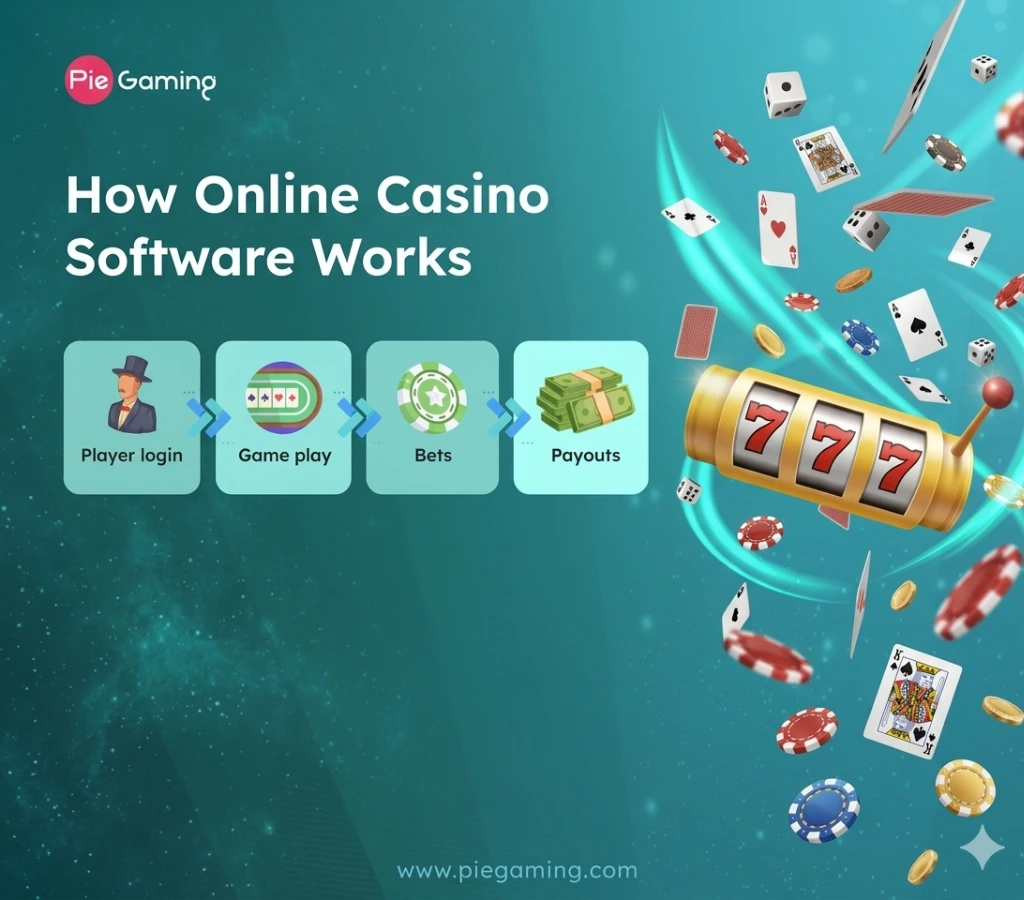
Overview of how online casino software works
Online casino software operates on Random Number Generators (RNGs). These are computer-based programs that are continually producing random strings of numbers with no discernible pattern. The results of these games are entirely random. As a result of which, online games are poised to be altogether ‘fair’ at all events.
You don’t need to be a coder to understand how a spin happens. The “flow” is a rapid-fire communication between three different servers:
1. The Trigger: A player logs in and clicks “Spin” on a slot game.
2. The Validation: Your casino server connects with the PAM server to confirm if the player has enough money.
3. The Math: If “Yes,” the request hits the game provider’s server. The RNG fires, determines a result (e.g., a $50 win), and sends it back.
4. The Payout: Software updates the player’s wallet, transaction logs, and shows “Big Win” on the player’s screen.
All of this happens in roughly 200 milliseconds. Your software ensures this “conversation” between servers, even if 50,000 people are spinning at the same time.
Frontend vs Backend in Online Casino Software
In the iGaming industry, a platform is split into two distinct universes. An operator needs to be a master of both frontend and backend to understand what online casino software is used for.
The Frontend: What Players See
The front end is the “hook.” It is everything a user touches, clicks, and sees on their screen. In 2026, this isn’t just about flashy banners; it’s about Responsive Design and User Journey.
- The Lobby: How games are categorized (Slots, Live Dealer, Trending).
- The UI/UX: The speed of the search bar, the ease of the “one-click” deposit button, and the transition animations.
- Mobile Fluidity: A “mobile-first” frontend ensures the game scales for a portrait-mode smartphone without hiding critical navigation buttons.
The Backend: What Operators Manage
The backend is the “command center,” often referred to as the Back-Office. This is where you actually run the business. While the player enjoys the graphics, you are using the backend to:
Monitor GGR:
Tracking real-time revenue and player “churn” rates.
Manage Bonuses:
Setting up “Sticky” vs. “Non-Sticky” bonuses and wagering requirements.
Security & KYC:
Approving player withdrawals and flagging suspicious betting patterns.
CMS Control:
Updating the website content, adding new game banners, and managing regional language settings.
Essentially, the Frontend is your brand’s personality, but the Backend is its intellect and safety. Without a robust backend, you are just running a pretty website that can’t process a single bet securely.
Read Blog –Best Online Casino Website Builder
What Types of Online Casino Software Are Available?
Choosing a casino software model is the most consequential decision an operator will make. It dictates upfront costs, speed to market, and how much of the “heavy lifting” you have to handle yourself. The industry has standardized around three primary paths.
1. White Label Online Casino Software
Best for startups, first-time operators, or affiliates looking to transition into the operator side.
White label casino software is essentially a “business-in-a-box.” It’s a pre-built platform that handles the technical backend and game licenses.
The biggest advantage is speed. Operators can go live in weeks. You get lower setup costs and limited technical complexity.
2. Turnkey Casino Software
Best for growth-oriented operators who want full brand autonomy without starting from scratch.
Turnkey is the “modular kit” of the casino gaming industry. The provider gives you the high-performance engine (the PAM, the games, the wallet), but you own and manage the brand yourself.
You get much more control over which payment gateways to use and which game studios to feature. Turnkey online casino software allows faster launches. Fully custom platforms while giving operators ownership over licenses, data, and growth strategy. This makes them a popular choice for businesses that want to scale.
3. Custom Online Casino Software
Best for enterprise-level brands looking to introduce a proprietary feature in their platform. These features can include a unique social betting mechanic or a specific Crypto integration.
With custom online casino software, you get 100% ownership of the source code. This is the “high-stakes” table. Expect development costs to range from $100,000 to $500,000+ and a timeline of 6 months to a year. You are responsible for every bug, every security update, and every regulatory audit.
What Games Can Be Integrated with Online Casino Software?
Modern online casino software supports a wide variety of games, allowing operators to build a diverse and engaging gaming library. Thanks to unified APIs and modular architecture, these games can be integrated seamlessly, without rebuilding the platform for every provider.
Which Casino Games Are Most Commonly Supported?
Slots:
These include several slot titles, from classic three-reel games to advanced video slots. Also including bonus features, jackpots, and themed gameplay. Slots are popular due to their simplicity, high engagement, and strong revenue potential.
Table Games:
The digital versions of casino staples. Think high-speed Blackjack, Baccarat, and Roulette. These rely on certified RNG (Random Number Generation) to ensure every hand dealt is 100% fair.
Live Casino:
This is the highest bandwidth vertical and is widely supported by modern platforms. These games replicate the experience of land-based casinos. Live blackjack, roulette, and baccarat are especially popular in regulated and high-trust markets.
Crash & Instant Games:
The 2026 trend-setters. Games like Aviator or JetX appeal to a younger, “crypto-native” demographic. With crash casino games, players get fast-paced action where they decide exactly when to cash out.
Read Blog – Top Popular Casino Games
How Do Payments Work in Online Casino Software?
If games are the heart of your casino, payments are the lifeblood. If the money doesn’t move smoothly, the players won’t stay. Your software’s payment gateway must be a clear bridge between the player’s bank and their casino wallet.
Which Payment Methods Can Casino Software Support?
A diverse “cashier” is essential for global expansion. Top-tier software integrates:
- Cards: Visa, Mastercard, and Amex remain the standard for Western markets.
- E-wallets: Fast-movers like Skrill, Neteller, and PayPal that players trust for privacy.
- Local Payments: Regional payment methods are non-negotiable for capturing local market share.
- Crypto: Bitcoin, Ethereum, etc., provide anonymity and speed for young & tech-savvy players.
Read Blog – Top iGaming Payment Solutions Providers
How PieGaming’s Online Casino Software Helps Operators Launch Faster?
PieGaming provides a ready-to-deploy ecosystem that can go live in as little as 4-6 weeks.
The secret lies in their pre-integrated architecture. PieGaming provides a Unified API that instantly plugs you into 5,000+ games and dozens of global payment gateways.
Their White Label and Turnkey solutions come with a robust Player Account Management system. This means the technical stuff, security, compliance, and backend logic, is already done. You simply choose a template, configure bonus rules, and start acquiring players.
Why PieGaming Accelerates Your Online Casino Software Launch:
- Off-the-Shelf Templates: Skip the design phase with high-conversion UI/UX themes.
- Pre-Integrated Games: Instant access to giants like Evolution and Pragmatic Play.
- Unified Backend: Manage CRM, payments, and risk from one central backend.
Conclusion
At the end of the day, understanding what online casino software is is about recognizing the foundation of your entire business. Your software isn’t just a place to host games; it’s the quiet force that keeps your platform secure, your payouts fast, and your players coming back.
In a market as fast-moving as 2026, you can’t afford to be held back by clunky, outdated tech. With a solution like PieGaming, you’re gaining a technical ally that handles the complexity so you can focus on growth.

FAQs
-
Is online casino software legal?
Yes, but legality depends entirely on where you operate and where you are licensed. Over 60 countries have established legal frameworks for iGaming. To stay legal, your software must be certified by an official jurisdiction (like Malta, Curacao, or Ontario) and its games must pass fairness audits by independent labs like eCOGRA.
-
Can one online casino software run multiple casinos?
Absolutely. This is done through "Multi-tenant Architecture." It allows an operator to run several different brands from a single backend. You can manage all your players, payments, and game settings from one dashboard, while each casino looks and feels completely different to the players.
-
How Much Does Online Casino Software Cost?
Prices vary based on your business model. A White Label setup usually starts between $20,000 and $50,000, while a more flexible Turnkey solution can range from $100,000 to $500,000. These figures are estimates and can vary significantly based on your target jurisdiction, the number of integrated game providers, custom UI/UX requirements, and ongoing revenue-sharing agreements.
-
Does casino software support mobile apps?
Yes. Modern software is built with a "mobile-first" approach using HTML5. Most providers now offer Progressive Web Apps (PWAs), which give players an app-like experience directly through their browser without needing to download anything from an app store. Native iOS and Android apps are also supported but require separate development and store approval.

Jaya Swaroop has been covering iGaming and betting technology since 2019, with a specialization in online casino platforms, sportsbook solutions, and licensing frameworks. Her work involves analyzing platform capabilities and evaluating cost structures, compliance requirements, payment integrations, market strategies, and regulatory updates that impact operators entering or scaling in the iGaming space. With a background in B2B marketing and content strategy, she has contributed to SEO-led growth and demand generation initiatives for global businesses. Jaya holds a Bachelor’s degree in Science (Chemistry & Mathematics) and is certified in content writing, email marketing (HubSpot), project management, and Google Analytics.
Stake.Us, PlayFame, McLuck, MegaBonanza and Zonko are social casino platforms that are free-to-play casino games using virtual coins. These platforms offer hundreds of slots, tables, and instant-win games with daily free coins, tournaments, and bonus features.
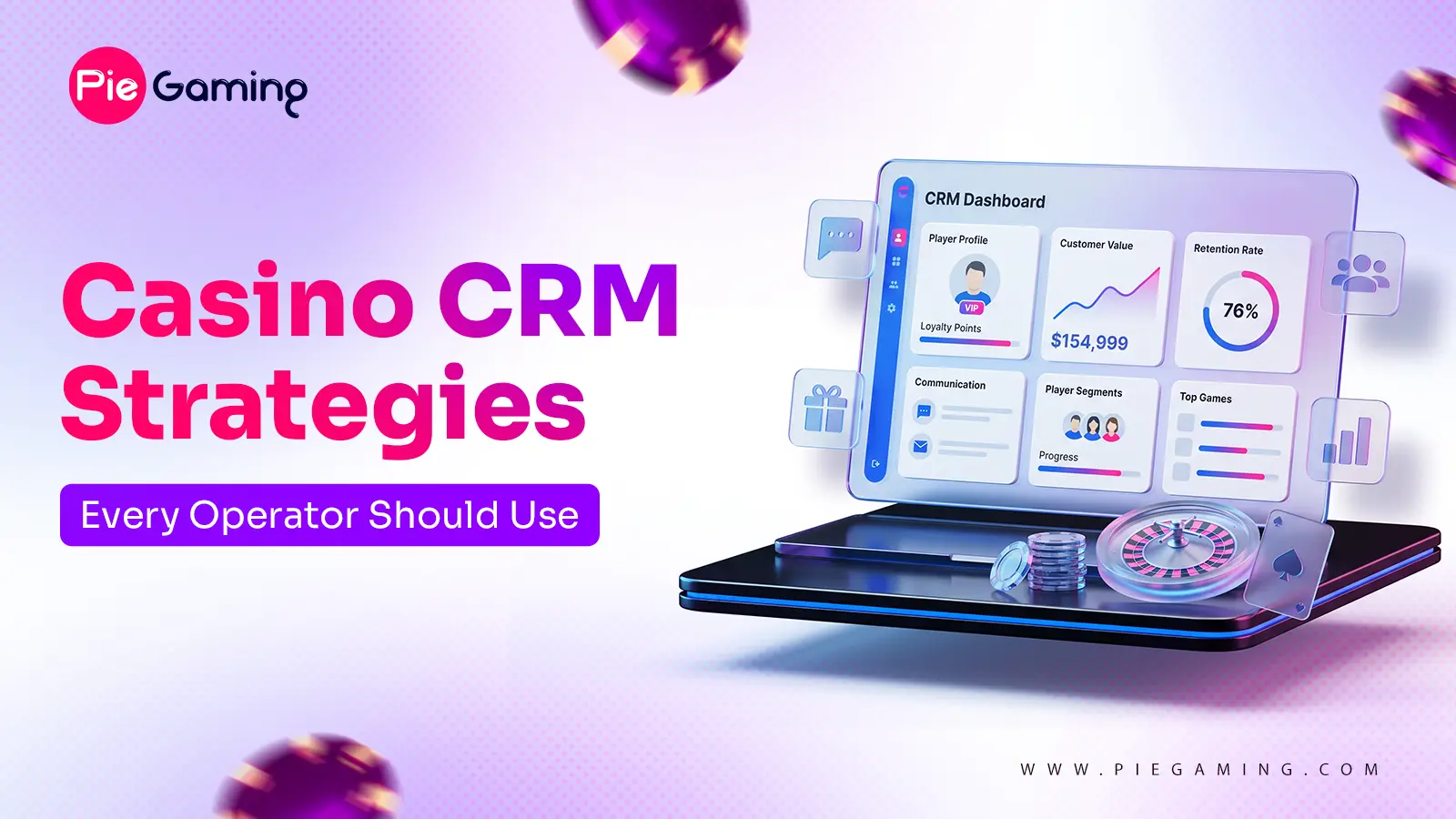
Casino CRM strategies help operators to personalize campaigns, improve player retention, reduce churn rate, and maximize player lifetime value.
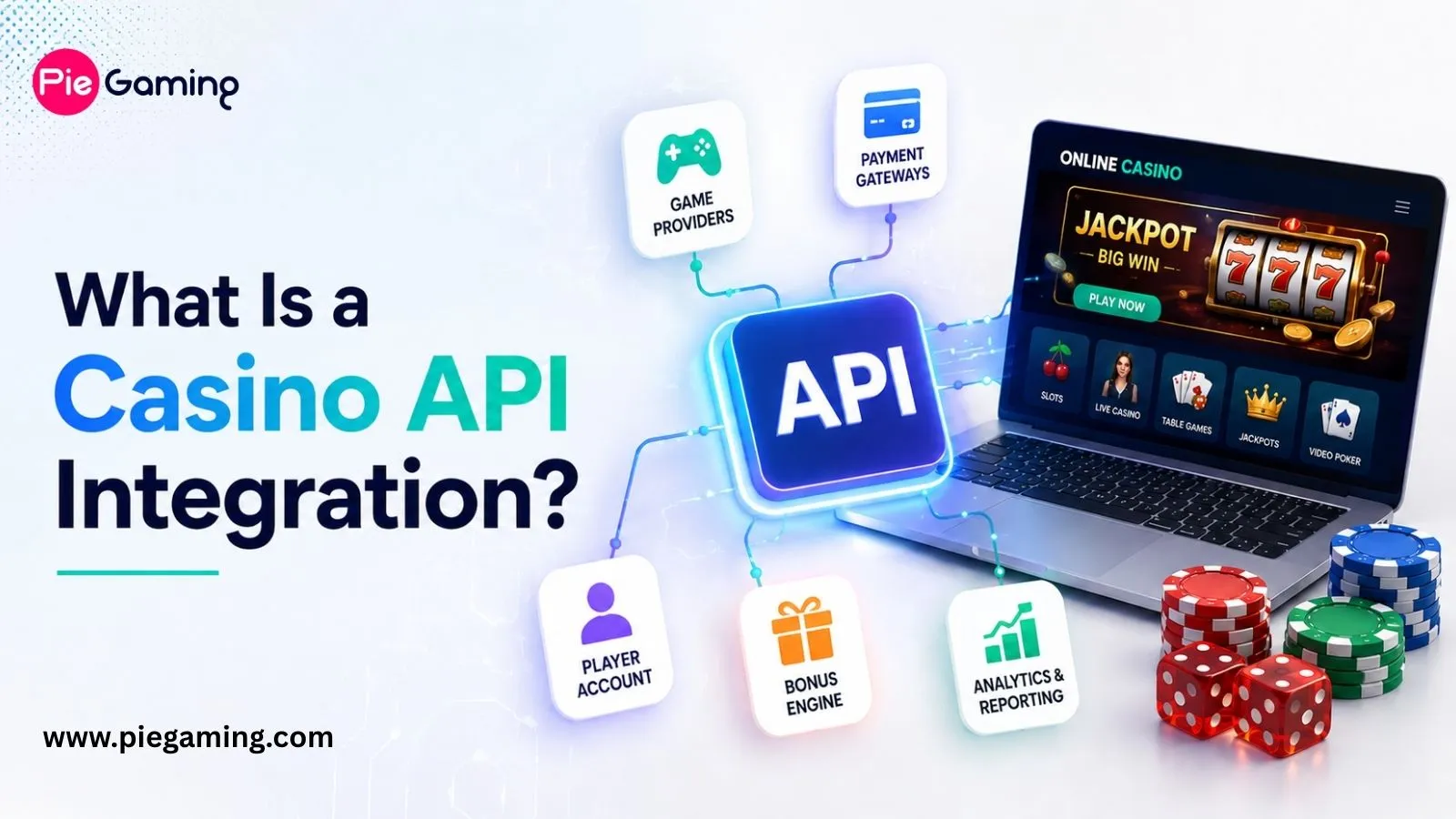
A casino API integration is a software solution that connects your platform with games, payment gateways, wallets, KYC tools and other third-party solutions. It allows data to be exchanged between systems in real-time. This way you can launch quicker, automate tasks, and provide a smooth playable experience.
House Edge is the mathematical advantage built into online casino games and all other forms of gambling. It shapes the odds, influences your winnings and losses, and constitutes the cornerstone of any online casino or sportsbook operator’s overall financial strategy.

The Hi-Lo casino game is a simple card game where players predict whether the next card will be higher, lower, or equal to the current card. This guide explains how Hi-Lo works, its rules, betting options, payouts, gameplay, and strategies players can use when making predictions.
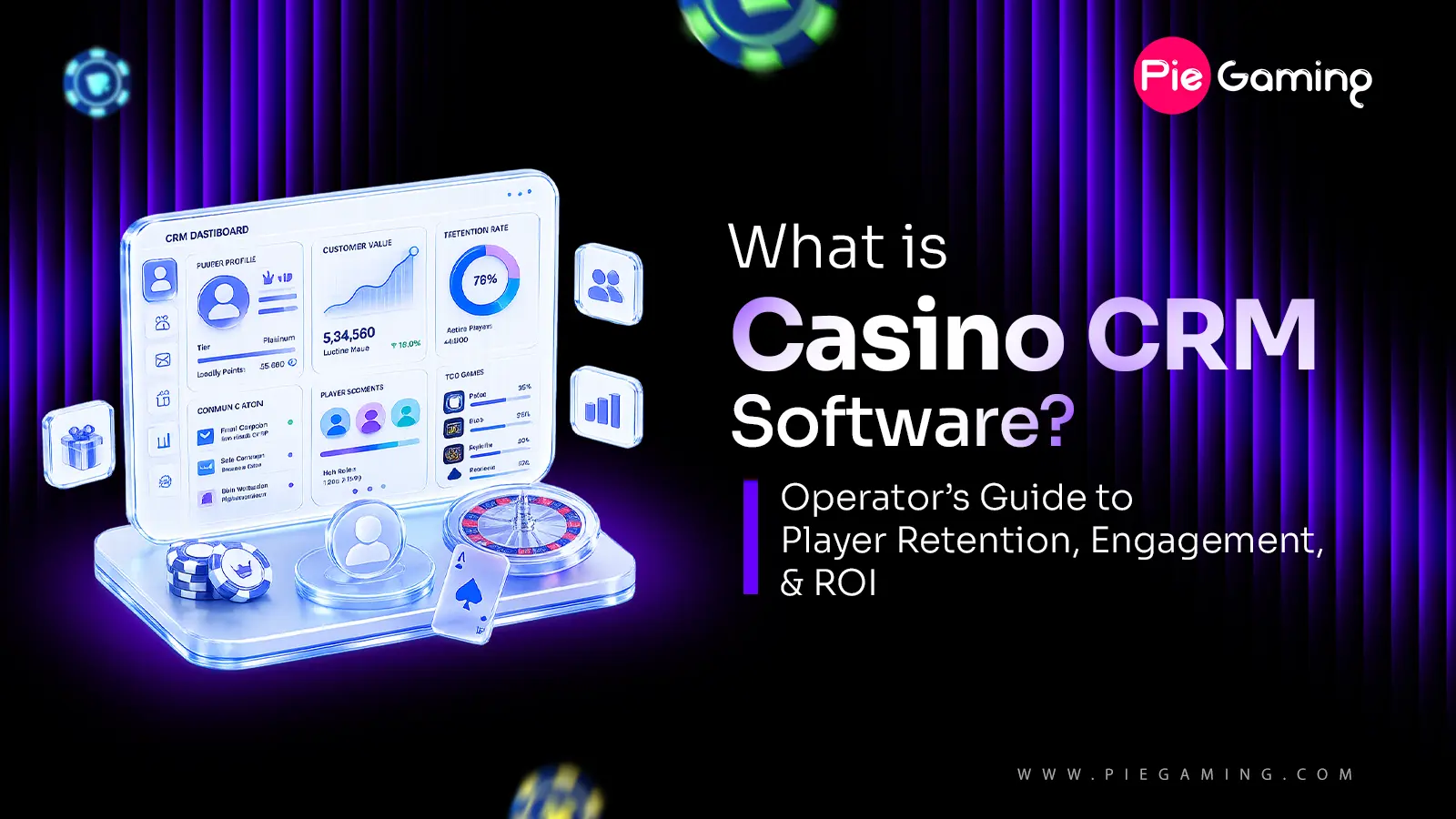
Casino CRM software is a specialized platform for online and land-based gambling operators that tracks player behavior, automates targeted promotions, manages VIP loyalty and supports regulatory compliance.
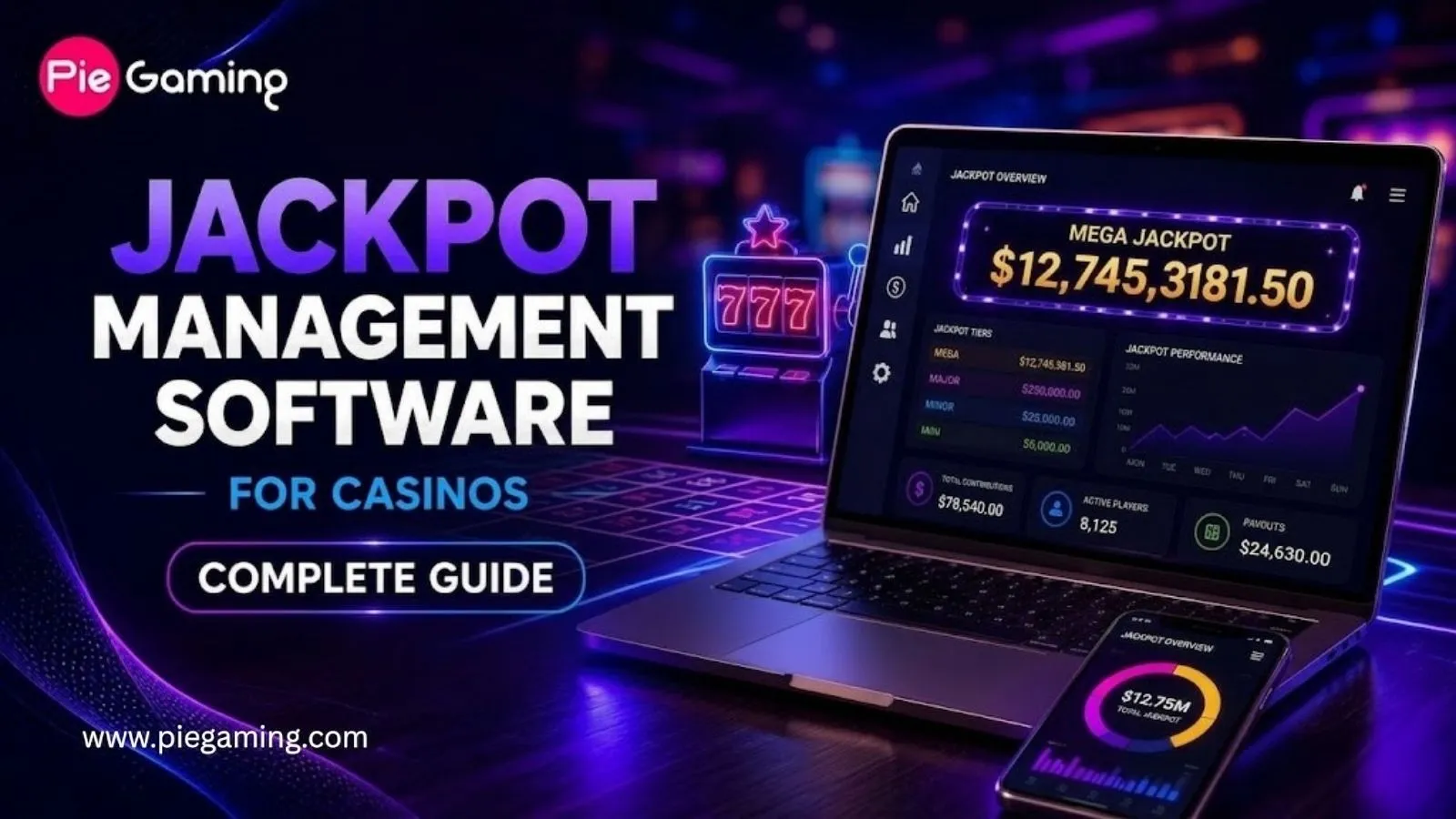
Jackpot management software is a computer program used to organize how jackpots are created, tracked, and paid out in an online casino. The operators can now execute the campaigns in real-time, interact with the players, lengthen the playing time, and generate more wagering revenues on the platform without having to be directly involved in the management of the campaigns.

See you in your inbox soon!

Stay ahead of the game. Subscribe for exclusive content, updates, and insiders!