
Casino CRM software is a specialized platform for online and land-based gambling operators that tracks player behavior, automates targeted promotions, manages VIP loyalty and supports regulatory compliance.
A successful online casino has thousands of quality players. Without players, running an online casino and expecting ROI is challenging. Most operators lose a significant share of first-time depositors within the first month without effective lifecycle engagement. Also, generic promotions no longer drive long-term loyalty, and customer acquisition costs continue to rise.
A successful casino operator offers personalized experiences. This is where a purpose-built casino CRM becomes a strategic revenue engine, which raises retention, LTV, GGR, and VIP management.
This guide covers what casino CRM is, how does it work, and other things.
What Is Casino CRM Software?
A casino CRM (Customer Relationship Management) is an operator-focused marketing tool. It uses real-time player data to drive personalized engagement. Unlike generic CRM tools like Salesforce or HubSpot, a CRM for gambling integrates with your PAM and collects data at registration, ensures KYC/AML verification status, and continuously checks gaming activity. It also monitors the financial behavior of players.
Further, it manages multiple loyalty programs and automates promotions. It also ensures omnichannel communication, including email, SMS, push notifications, and in-app messages.
Why Casino Operators Need CRM Software More Than Ever
In the rising casino industry, having an advanced casino CRM is a basic need to succeed. Key reasons why modern casino operators need CRM:
Rising Player Acquisition Costs
Player acquisition costs in the iGaming industry are rising day by day. A sustainable business model ensures that new customers are kept active far beyond the first deposit. A great CRM is mandatory to protect the investment by moving players through effective player retention strategies like welcome series, VIP programs, etc.
Increasing Competition
There is a total of 8,108 casinos operating across the world, and the number seems to be increasing with the rising competition. Even long-time players leave the platform if they don’t get personalized recommendations. With CRM, operators get to know when a player visits a competitor’s website and thus adjust offers in real-time.
High Player Churn
Casinos without a CRM strategy kill players. Most players choose to leave the platform if they find the platform to be UX clunky. Thus, a targeted CRM campaign brings back at-risk players by sending them personalized bonuses or gamification challenges at the right moment.
Demand for Personalized Experiences
Today’s players are digitally driven and continuously expect personalization. They expect relevant game recommendations, timely bonus reminders, and rewards for games they love. With CRM, operators can send personalized messages, pop-ups, or notifications to players about games, bonuses, rewards, etc.
Responsible Gaming & Compliance
A casino business must be compliant in the targeted jurisdiction. Regulators hold operators accountable for players’ welfare. KYC, AML, and deposit/self-exclusion tools are important requirements in major iGaming markets. A CRM often comes pre-integrated with these compliance tools to ensure the platform remains compliant.
Casino CRM vs. PAM vs. Back Office
Many operators often get confused between CRM, PAM software, and the casino back office system. Understanding each one will help you know what unique purpose they serve.
How Does a Casino CRM Work?
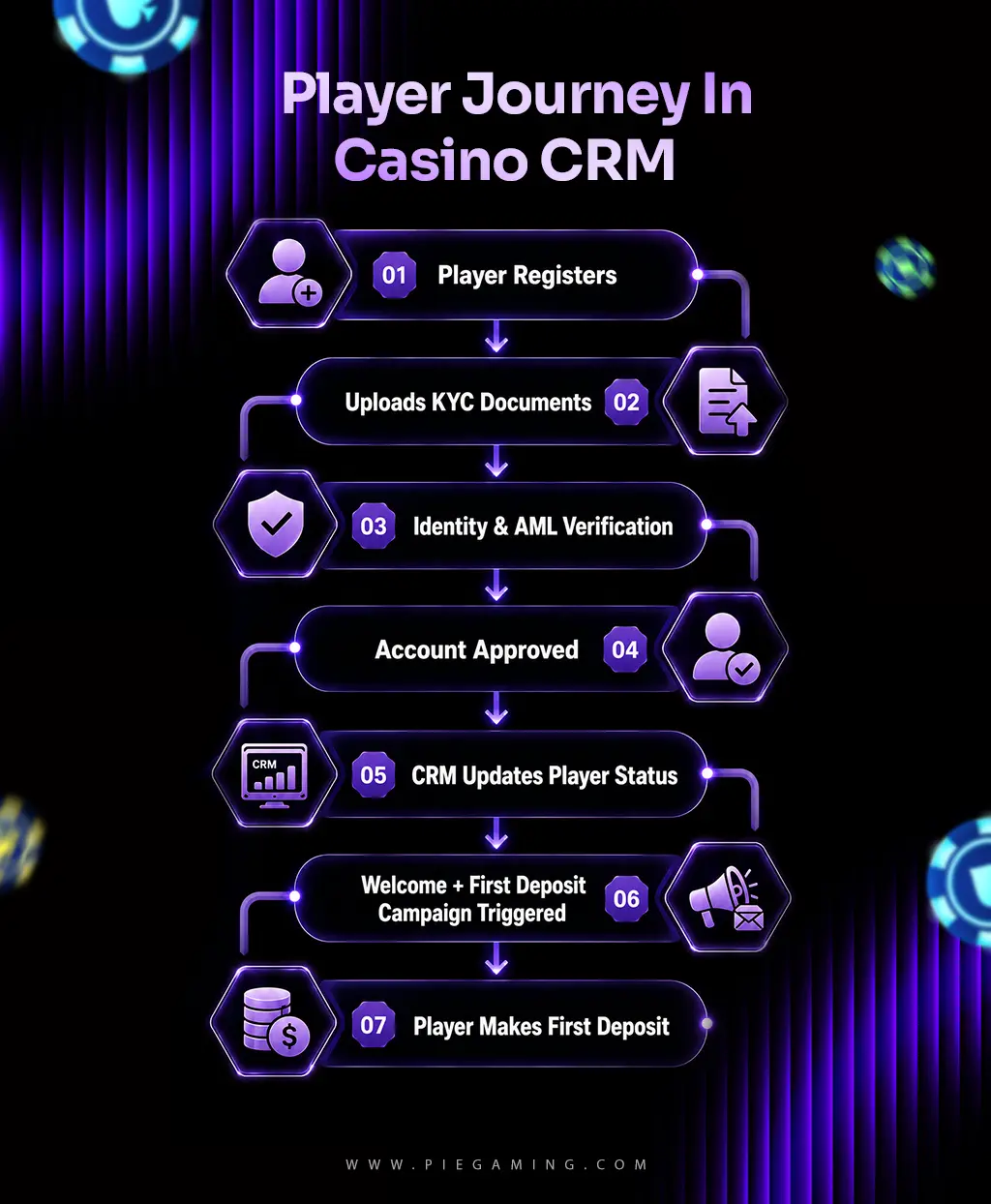
Player Journey in Casino CRM
A casino CRM works by building a continuous player journey. Here’s a step-by-step process involved:
Step 1 – Player Registration
The first step in CRM is signup. It collects basic profile details like age, country, and demographics. It also tracks which device and source acquired the players and logs initial campaign tags. The collected data is the foundation of the player’s profile in the CRM.
Step 2 – Identification & KYC
As part of the onboarding process, the system flags whether the player has uploaded required ID documents or not. Basically, it verifies the legal age and identity of players so that players can proceed to play. It checks the following:
- Verify player identity using government-issued documents.
- Confirm legal age to prevent underage gambling
- Verify proof of address
- Update the player’s KYC and verification status in the CRM.
Step 3- Gameplay Tracking
Every player’s gaming session is monitored. The CRM collects data on which games a player plays, with which providers, bet amounts, win/losses, duration, session, and net wagering.
Step 4- Financial Behavior
The CRM monitors deposits and withdrawals. It also tracks amounts, frequency, and payment methods. For instance, if a player continuously deposits through certain credit cards or crypto wallets, the CRM notes that for loyalty tracking. It also records failed transactions.
Step 5 – Behavior Analysis
The CRM classifies players into behavioral segments by combining gameplay and financial data. The examples include inactive players, high rollers, bonus hunters, sportsbook-only players, slots-only players, and crypto players.
Step 6 – Auto Player Segmentation
Casino CRM software comes with both fixed (static) and live (dynamic) segmentation. For instance, if a player starts wagering more than a VIP threshold, the CRM automatically categories them to a VIP player list. The segment re-adjusts as per new trends, which reduces manual effort and ensures campaigns target the right audience.
Step 7 – Run Personalized Campaigns
Once players are segmented, casino CRM runs personalized campaigns by sending notifications like welcome emails to new sign-ups, thank-you messages after deposits, and game recommendations based on favorite genre. It also sends free bets on top games, loyalty awards, and bonuses.
Step 8 – Reporting & Optimization
Finally, everything is properly tracked and analyzed. The CRM dashboard depicts campaign performance like open/click rates, conversion to deposit, and KPIs like FTD retention rate, churn rate, and average LTV. It allows operators to check which segments produce good results.
How is AI Impacting Casino CRM?
AI is making casino CRM more personalized, predictive, and automated. It helps operators analyze player behavior, identify high-value players, predict churn, and deliver relevant offers at the right time.
With AI, operators can personalize player experiences, predict player churn, automate campaigns, identify high-value players, and optimize bonuses and promotions.
Top 8 Features Operators Should Look for in Casino CRM Software
What makes casino CRM software powerful? It’s features. Having access to top-tier features can facilitate your business operations. Here are top features you shouldn’t compromise with.
1. Loyalty Programs and Player Engagement Tools
Advanced CRM offers built-in loyalty programs, gamification challenges, and personalized bonuses. Check multi-tier VIP systems, custom reward rules, and point accumulation, plus bonus budget caps and margin controls that keep offers profitable. Look for engagement features like
- Mission-based challenges
- Personalized bonuses
- Gamified features (cashback, free spin, tournaments)
2. Fraud Detection
Good casino CRM software are ones that identify and flag suspicious patterns in player activities. For instance, players who make quick multi-account registrations, deposit large sums and quickly withdraw, or show unusual bonus-redemption behavior. A fraud detection tool can save operators from bonus abuse and potential money laundering.
3. Role-based Dashboards
The CRM should provide customizable dashboards and user roles. Marketing managers can see campaign analytics and player segments. Role-based access ensures that data is only shown to authorized users. This helps operators prevent unauthorized participation and keep the team efficient.
4. Regulatory Compliance, KYC, and AML Tools
The CRM should integrate with the operator’s KYC/AML processes. Features to consider include automatic flagging of unverified accounts, built-in self-exclusion tools, a deposit limit tied to KYC level, and tools to generate compliance reports.
Some CRMs also come with automated ID verification, ongoing AML monitoring, and easy record keeping for records.
5. Multi-currency and Payment Solution
Whether you’re a local casino operator or a global brand, you need a wallet that supports multiple fiat currencies and cryptocurrencies. The CRM should accommodate operator offerings across currencies such as EUR, USD, ETH, BTC, and stablecoins. It should also integrate with major payment providers and support seamless crypto transactions through a dedicated crypto casino solution, enabling secure deposits, withdrawals, and multi-wallet functionality for modern iGaming operations.
6. Predictive Analytics
Predictive analytics uses deposit velocity and session patterns to identify at-risk players before they churn, suggest optimal bonus levels to maximize redeposit, or even forecast lifetime value of segments. For instance, AI engines in CRM can identify hundreds of players’ attributes per user and automatically predict who will become VIP or who is likely to drop off.
7. Journey builder/ Campaign Automation
It is the most important feature that allows operators to design and automate the entire player’s journey based on actions, behavior, or lifecycle stage. Consider it as a marketing automation flowchart like welcome flows, reactivation flows, etc. This is crucial as manual scheduling is too slow for real-time betting behavior.
8. Marketing Automation and Campaign Management
Built-in casino marketing software tools let the CRM launch multi-channel promotions and targeted campaigns. It should integrate with email services, push notification services, SMS gateways, and even social ads. It should also support affiliate marketing software to help operators track partner-driven traffic, registrations, and conversions alongside other acquisition channels. It should also offer batch sends and triggered sends from one platform. For example, CRM tools should send 100,000 personalized promotions per hour.
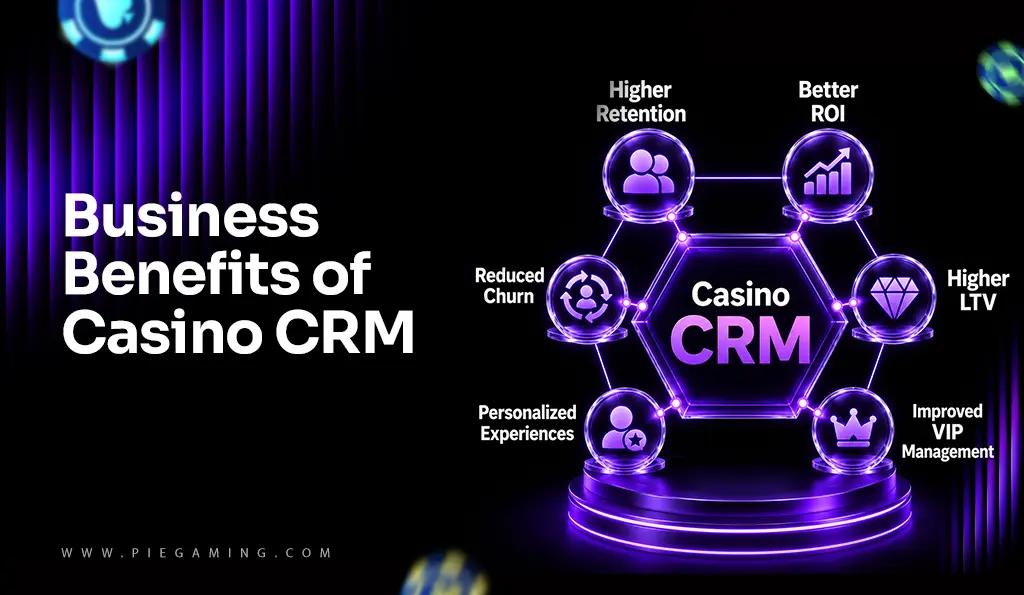
Benefits of casino CRM software for operators
Top 10 Casino CRM Software Providers in 2026
Here is a list of the top casino CRM software providers that help online and land-based operators track player behavior, automate targeted promotions and retain more players. Each provider is compared on the criteria below.
1. PieGaming
PieGaming provides casino CRM software built into its white label and turnkey casino platforms. The CRM shares data with PieGaming’s PAM, bonus engine and back office. It tracks player behavior in real time and triggers targeted promotions, VIP rewards and SMS, email, Telegram and WhatsApp campaigns without a third-party integration. That makes it a strong CRM for gambling operators that want to launch fast.
2. Optimove
Optimove is a CRM marketing platform widely used by iGaming brands for multi-channel campaign automation. It is known for AI-led segmentation, gamified retention features and built-in margin controls that keep bonus spend profitable.
3. Smartico
Smartico focuses on real-time gamification and player engagement, with missions, tournaments, loyalty levels and a bonus engine in one tool. It also supports multi-brand operators managing several casinos from one account.
4. Xtremepush
Xtremepush combines customer data, CRM, loyalty and omnichannel messaging (push, in-app, email, SMS and web). It takes in real-time data from payments and game lobbies, making it a popular casino marketing software hub for regulated casino and sportsbook operators.
5. OptiKPI
OptiKPI is an iGaming CRM focused on behavioral segmentation and predictive retention. It groups players automatically by risk, game preference and spending velocity, then automates the right offer for each segment.
6. Fast Track
Fast Track is an iGaming-specific CRM built around real-time, event-driven automation. It reacts to deposits, wins or inactivity the moment they happen, which suits operators running high-volume, always-on retention campaigns.
7. AIM by Marketing Results
AIM is casino marketing software built for land-based and hybrid casino properties. It connects to casino management systems for player development, host tracking, and direct mail and email campaigns, making it a fit for resort and tribal casinos.
8. PLAYRx
PLAYRx is built for iGaming VIP teams. It scores player value and risk, then gives VIP managers a daily list of actions instead of spreadsheet-based workflows.
9. VeliEDGE
VeliEDGE offers no-code segmentation and player engagement tools, so marketing teams can build and launch campaigns without developer support. It suits mid-size operators that want speed and flexibility.
10. Symplify
Symplify is a multichannel marketing automation platform used by gaming brands for lifecycle messaging across email, SMS and push, with a focus on compliant, well-run communication flows.
How to Choose the Right Casino CRM: A Buyer’s Checklist
There are multiple casino CRM software available on the market. Choosing the right one requires careful consideration and a structured checklist as below.
Understand Your Business Needs
Your business goals should be crystal clear. Is your focus on improving general retention, maximizing VIP ROI, cross-selling between casino and sportsbook, or any other thing? You must identify the target market and player base since different locations have different marketing channels. Also, decide whether you need a standalone CRM or one integrated into your online casino software platform.
Evaluate Core CRM Features
A good casino CRM is one that brings numerous key features, which facilitate the operations. Look for core casino CRM features, which include the following.
- Player segmentation
- Marketing automation
- Journey Builder
- Bonus & loyalty management
- Omnichannel communication
- Reporting & analytics
Note: To read more about the features, visit the Feature Section above.
Check Integration Capabilities
The CRM must easily plug into your existing systems. The white label casino platform from PieGaming comes pre-integrated with a CRM solution, so operators don’t need to get it from third-party providers. Even if you want it through API, make sure it can easily integrate with the platform without any difficulty. Ensure that it can easily integrate with the following:
- PAM
- Back Office
- Bonus Engine
- Payment providers
- KYC/AML tools
- Open APIs
Assess Scalability
Your casino CRM software should be able to handle your current volume and grow with your business. Cloud-based CRMs scale easily, but checking load test results is crucial for performance measurement.
Prioritize Security & Compliance
Security can’t be compromised in the casino industry. No security means your business is at risk. Security measures you need to consider while evaluating CRM for a gambling casino include:
- GDPR compliance
- Responsible gaming tools
- AML support
- Data encryption
- Role-based access
How PieGaming’s Casino CRM Helps Operators Maximize Player Retention
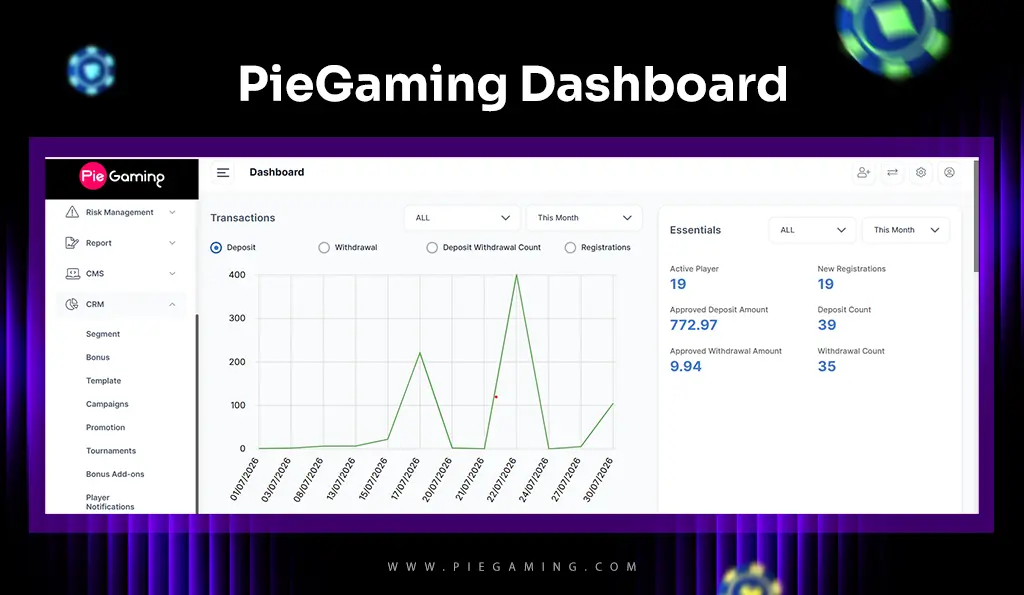
PieGaming’s Robust CRM Solution
PieGaming’s white-label casino platform comes with purpose-built in-built CRM software designed for operators. It integrates with their bonus engine and PAM, ensuring fully automated and rule-based campaigns at scale.
Following are the keyways through which PieGaming’s CRM drives retention.
Player Segmentation
With PieGaming’s casino CRM, you can segment players by behavior (VIP, bonus-user, etc.), geography, game type, and betting limit in real time. Segmenting players will help you target the right audience with campaigns and promotions.
Bonus Engine Integration
The Bonus engine is one of the effective CRM tools that helps in running promotional campaigns. Operators can create main bonus rewards like Sign Up, FTD, Rescue, Weekly, and Redeposit bonus.
Further, operators can also offer add-ons such as free spins, free bets, no-risk bets, and combo rewards. The CRM automatically applies add-ons to the right player segments, without manual effort.
Player Notification
PieGaming’s Casino CRM helps operators with player engagement with its player notification feature. You can deliver players a notification of any newly launched game, a daily free spin lottery notification. These notifications can be sent through email, in-app pop-up, SMS, email, and other communication channels.
Templates
Player retention is important in the iGaming industry, and templates help in retaining players and growing revenue. Operators get four types of templates, including SMS, email, Telegram, and WhatsApp, which helps them run campaigns. Operators can use templates for promotions to retain players.
Promotions
Operators get four types of promotions with PieGaming’s casino CRM software. These include bonus logged, combo promotion, standard promotion, and loyalty awards as well.
Hyper-personalized Marketing Campaigns
PieGaming’s CRM uses data-driven rules. For instance, a “rescue” campaign can automatically target players who haven’t logged in for X days, with offers tailored to their favorite game type.
Conclusion
In the competitive iGaming industry, powerful casino CRM software isn’t just an option but a necessity for business growth. Operators can collect and analyze players’ data, automate personalized journeys, and integrate loyalty and compliance with robust CRM software.
Operators who invest in a modern casino CRM platform are rewarded with lower churn, higher player LTV, and more revenue-driven marketing. In fact, a tiny jump into the retention can multiply profits. It simply means that the smarter way to grow isn’t about player acquisition but about keeping the players who’ve already won.
So, get the best CRM from PieGaming that comes pre-integrated in its white label and turnkey casino platform .

PieGaming casino CRM
FAQ's
-
What is a casino CRM?
A casino CRM is a CRM for gambling operators, designed to manage and optimize player relationships. It captures every player's data and uses that to automate marketing and loyalty programs.
-
What features should a casino CRM have?
Features a casino CRM should include robust player segmentation, marketing automation, a bonus/loyalty engine, multi-channel messaging, and built-in analytics. Other key features include fraud-detection role-based access, KYC/AML compliance tools, multi-currency wallet support, etc.
-
Why do online casinos need a CRM?
Because in the casino business, retention drives profit. Acquiring a player can cost 3-5x more than retaining a player. Without CRM, most players vanish within a few weeks. A CRM stops the wastage by delivering the right offer to the right player at the right time.
-
How much does a casino CRM cost?
For small operators, casino CRM software costs around $300-$800 per month for basic plans. It covers a smaller number of players and features. While enterprise-Grade solutions can start from $0.5M to $2M+ per year for large operators with millions of players.
-
How does casino CRM software work?
A casino CRM operates in a series of data-processing steps. CRM analyzes data to create player segments in VIPs, inactive, slots-only, etc. It automates personalized campaigns for each segment. After running each campaign, CRM collects results to refine future targeting.

Monika Gola is an iGaming content specialist at PieGaming. Since 2020, she has been researching and developing content around software selection, online casino & sports betting regulations, and operator growth strategies. Her research includes analyzing market opportunities in regions like Europe, Africa, and Southeast Asia, as well as evaluating regulatory frameworks and entry barriers. She is actively monitoring industry trends, compliance updates, and evolving player demands across global iGaming markets to help operators navigate this industry seamlessly.
Casino gamification refers to the inclusion of goals, levels, rewards, and other video game elements around the core gambling area. Learn how operators can use gamification in igaming to create more engaging player journeys while managing costs.
Stake.Us, PlayFame, McLuck, MegaBonanza and Zonko are social casino platforms that are free-to-play casino games using virtual coins. These platforms offer hundreds of slots, tables, and instant-win games with daily free coins, tournaments, and bonus features.
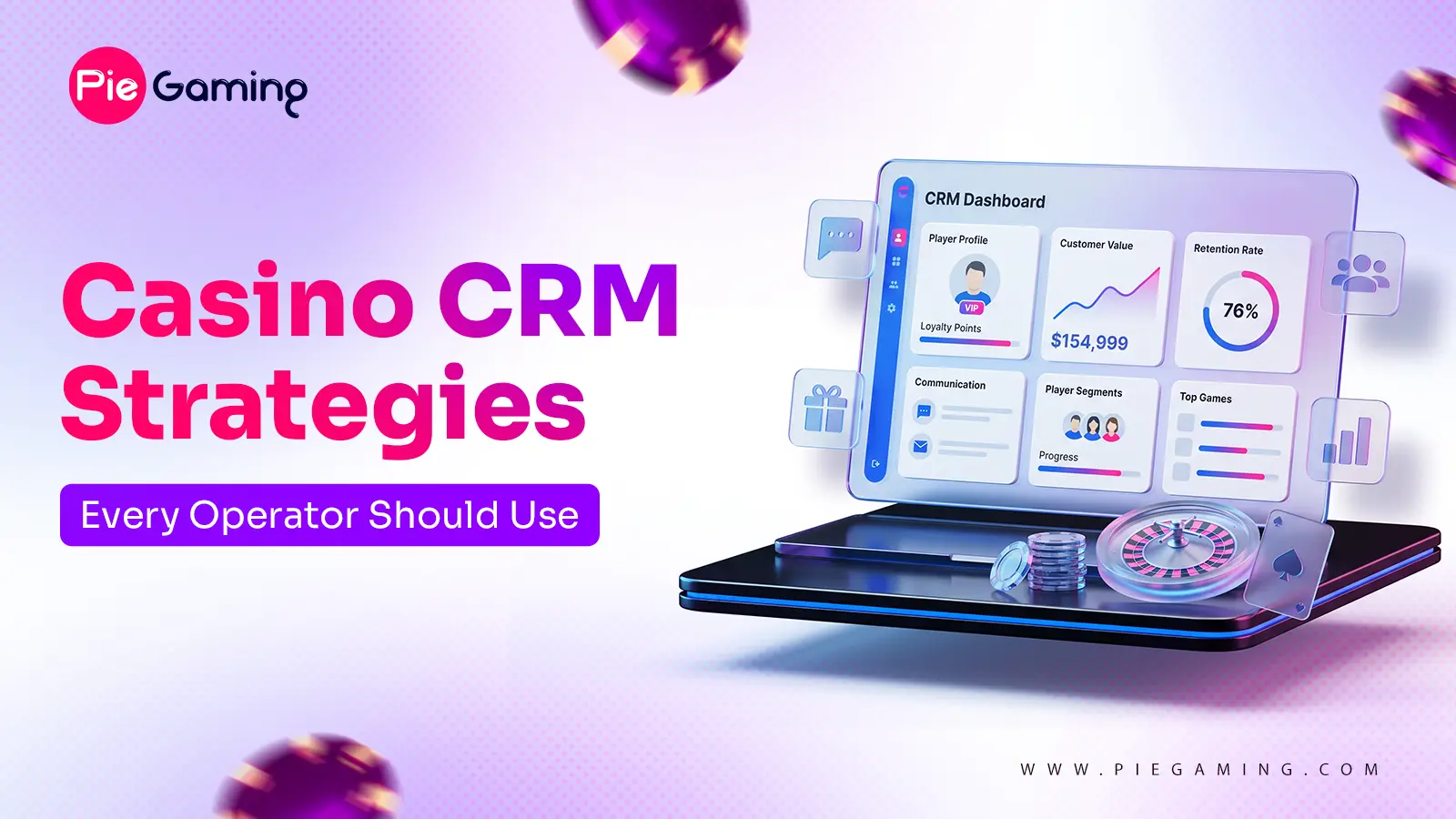
Casino CRM strategies help operators to personalize campaigns, improve player retention, reduce churn rate, and maximize player lifetime value.
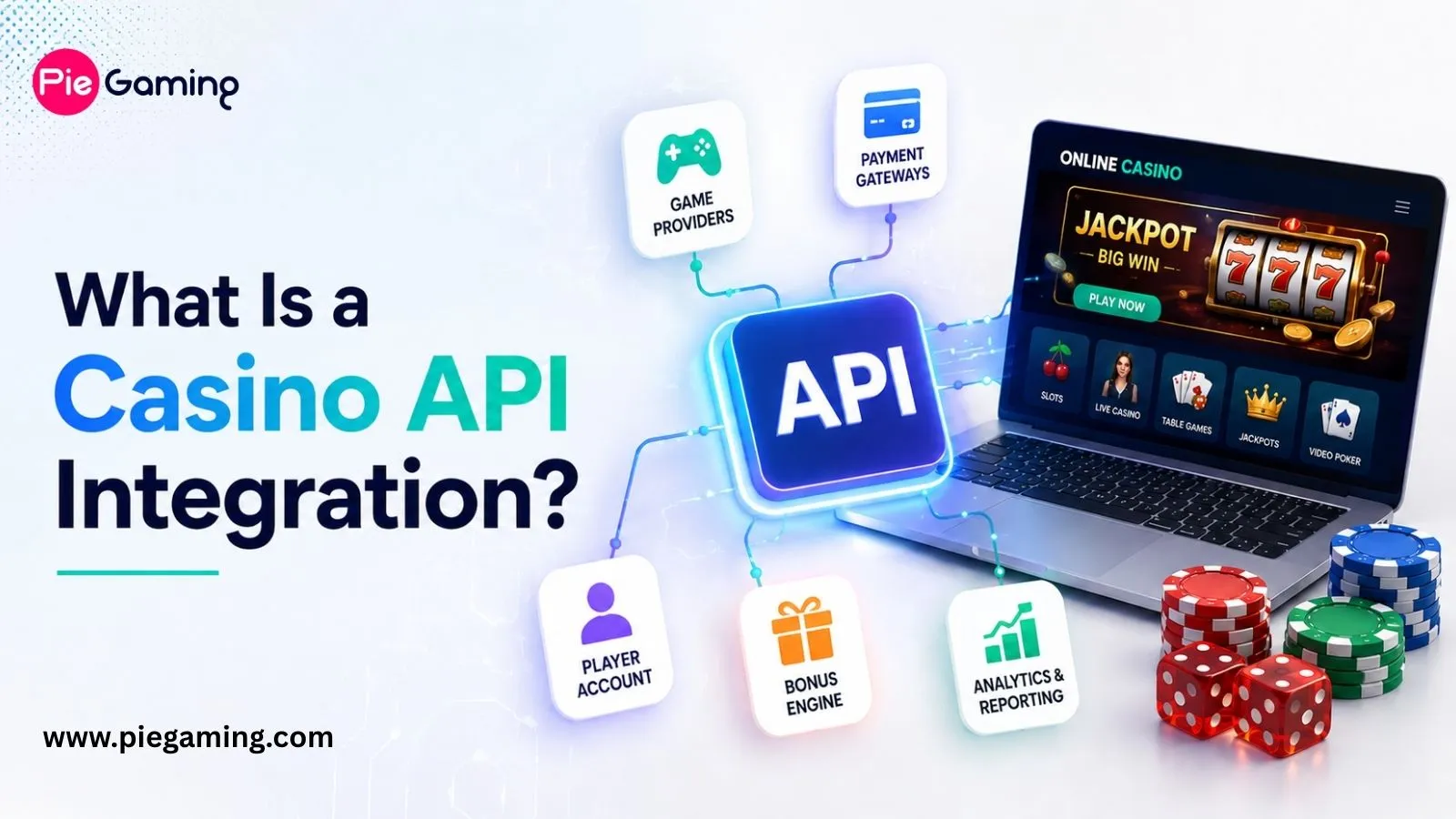
A casino API integration is a software solution that connects your platform with games, payment gateways, wallets, KYC tools and other third-party solutions. It allows data to be exchanged between systems in real-time. This way you can launch quicker, automate tasks, and provide a smooth playable experience.
House Edge is the mathematical advantage built into online casino games and all other forms of gambling. It shapes the odds, influences your winnings and losses, and constitutes the cornerstone of any online casino or sportsbook operator’s overall financial strategy.

The Hi-Lo casino game is a simple card game where players predict whether the next card will be higher, lower, or equal to the current card. This guide explains how Hi-Lo works, its rules, betting options, payouts, gameplay, and strategies players can use when making predictions.

Jackpot management software is a computer program used to organize how jackpots are created, tracked, and paid out in an online casino. The operators can now execute the campaigns in real-time, interact with the players, lengthen the playing time, and generate more wagering revenues on the platform without having to be directly involved in the management of the campaigns.

See you in your inbox soon!

Stay ahead of the game. Subscribe for exclusive content, updates, and insiders!