
Costa Rica doesn’t offer a formal online gambling license. Operators can establish their business by forming a local company. This jurisdiction is well-known for its cost-effective setup, streamlined registration process, and tax advantage on international gambling revenue.
Are you a startup looking to enter Latin America’s Costa Rica Gambling market?
Costa Rica has been an operator’s favorite destination for running an iGaming business. Why? Because the country offers low-cost and flexible entry into the global gambling market. Over the past two decades, hundreds of sportsbooks and casinos have established operations here, making it a well-known offshore hub in the industry.
The country is experiencing significant growth with a projected market value of US$871 million or more by 2029. Regardless of the market growth, there is no official Costa Rica gambling license.
Let’s understand the legal landscape of the Costa Rican iGaming market and how operators can run a casino and sportsbook business there.
Is Online Gambling Legal in Costa Rica?
Online gambling in Costa Rica lies in a grey area as it is not overseen by a dedicated regulatory framework. The country doesn’t have specific laws that legalize online casinos or sportsbooks.
Nevertheless, there is no strict prohibition against operating such businesses, provided certain conditions are met.
Though operators are allowed to run an online gambling business from Costa Rica, they can’t target local residents. This simply means that all betting activities must target international markets, and no service should be made accessible to Costa Rican players.
This makes Costa Rica an offshore gambling market where the business is situated in Costa Rica but is commercially active elsewhere.
For operators, knowing this distinction is important.
Though the absence of strict regulations reduces entry barriers, it poses a responsibility for operators to self-regulate. This means implementing the best practices like anti-money laundering, responsible gambling, and fraud prevention.
Failure to do so can lead to reputational damage and difficulties with payment providers.
How the iGaming Business Model Works in Costa Rica
Unlike regulated jurisdictions such as Malta, the UK, or Curacao, Costa Rica’s iGaming business model differs. Costa Rica allows operators to run businesses under a general commercial framework without issuing a specific gambling license.
Costa Rica Vs. Regulated Jurisdictions
The given table highlights the difference between Costa Rica and other regulated markets.
| Particulars | Costa Rica Model | Malta (MGA) | UK (UKGC) | Curacao |
| Gambling license | Not available | Yes | Yes | Yes |
| Regulatory authority | None | Strict | Strict | Moderate |
| Business setup | Company + permit | Complex licensing | Highly regulated | Easier licensing |
| Compliance requirements | Minimal | high | Very high | Moderate |
| Market access | Offshore only | Global | UK market | Global |
| Credibility | Low-medium | High | Very high | Medium |
For operators, the offshore nature of the model is its biggest advantage and primary limitation. Though it enables faster market entry and lower costs, it doesn’t ensure credibility as a licensed jurisdiction.
Types of Gambling Market in Costa Rica
Though gambling isn’t regulated, Costa Rica supports multiple offshore (international) business models, such as the following:
Offshore online casino platform
Online casino platforms are the most common in Costa Rica, offering a mix of slot games, table games, and live dealer experiences. These platforms also rely on white label casino software, turnkey iGaming solutions, and third-party game providers to tap into the market.
Sports betting operations
Sports betting is known to be a powerful betting operation, especially for operators targeting regions like Latin America, Europe, and Asia. Sports betting platforms come with pre-match and live betting features, supported by real-time data feeds and odds management systems.
Crypto-native casino platforms
In recent years, crypto casinos have gained traction in the online gambling market. As an operator, you must know how to start a crypto casino to get the most out of your gambling business. By adding cryptocurrencies like Bitcoin, USDT, and Ethereum, you remove the traditional banking challenges associated with high-risk industries.
| Important Note to Consider:
None of the above business models is allowed to target Costa Rican residents. If operators attempt to acquire local players or promote services within the country, it can lead to legal complications. |
How to Set Up a Gambling Business in Costa Rica — Step -by-Step Process
Below is the step-by-step process to start a gambling business in Costa Rica.
Step 1—Incorporate a legal entity in Costa Rica
The first and most critical step to start an iGaming business in Costa Rica is incorporating a legal business entity. As there is no official Costa Rica gambling license, your company will legally operate as a service-based business—categorized as data processing, IT service, or customer support services.
Though the incorporation process is simple, it requires proper legal handling to ensure compliance with Costa Rican corporate laws.
Key aspects of this step include:
- Register a company
- Appoint directors and shareholders
- Get a registered office address within Costa Rica
- Work with local legal representative to handle documentation
- Complete the incorporation process within a timeline of 2-4 weeks
Step 2 — Secure a municipal business permit
Once the company is incorporated, your next step would be to get a municipal business permit, which is referred to as a Patente municipality. The local municipality issues this license where your business is registered and acts as your local authorization to operate within the jurisdiction.
Operators must understand that this permit doesn’t work as a gambling license. Rather, it defines the nature of your business activity.
Key components of this step include:
- Apply for a Patente Municipal
- Define business activities like IT services, data processing, or support services
- Submit required corporate documents
- Pay municipal fees
- Renew the permit timely
Step 3 — Build your operational infrastructure
This step involves building the operational infrastructure that powers your iGaming business. That’s where your platform, technology stack, and user experience come together. The quality and reliability of your platform will impact player retention, transaction efficiency, and scalability.
Unlike restricted jurisdictions, Costa Rica allows more flexibility. What you need to do in this step:
- Integrate gaming software
- Setup hosting environment
- Implement back-office systems, CRM, PAM, Risk and fraud detection tools
- Ensure platform scalability to handle user growth
Step 4 — Put your compliance framework in place
Though Costa Rica doesn’t enforce strict gambling laws, compliance is an important component of running a successful online casino. For operators, aligning with international standards is important to maintain trust, secure payment processing partnerships, and avoid legal compliance in target markets.
Having a strong compliance framework ensures operational maturity and reduces exposure to financial crime. The core elements of this step include:
- Implement KYC procedure and AML systems
- Add responsible gambling policies
- Maintain transaction records for transparency and accountability
Step 5 — Establish payment and banking channels
An iGaming platform isn’t complete without setting up banking and payment infrastructure. Due to the high-risk gambling business, many traditional banks and payment providers impose restrictions.
Due to this, operators rely on offshore banking solutions and alternative payment methods to ensure smooth financial operations. The main goal is to create a reliable system for deposits and withdrawals.
Therefore, operators must open an offshore bank account, integrate crypto payment gateways, partner with payment service providers (PSPs), and support multiple currencies to target global audiences.
Step 6 — Deploy geo-blocking for Costa Rican residents
For operating an offshore gambling business in Costa Rica, geo-blocking is a must-have for any operator. Since operators are not allowed to target Costa Rican players, they must implement technical measures to restrict access from within the country.
Failure to integrate will lead to legal risks and put your operations at risk. Key measures you can implement:
- Use IP blocking technology
- Apply jurisdiction-based filtering
- Monitor user activity to identify and prevent attempts
Legal & Compliance Considerations
If you want to operate from Costa Rica, it’s crucial to understand both local and international legal expectations. Though the country doesn’t impose restrictions, operators are obliged to follow global compliance standards.
Crucial components you need to adhere to:
- Anti-money laundering requirements
- Implement customer verification process
- Ensure responsible gambling practices
- Implement KYC & AML compliance
Furthermore, operators should be aware of legal requirements in the markets they want to target.
Government Bodies and Authorities
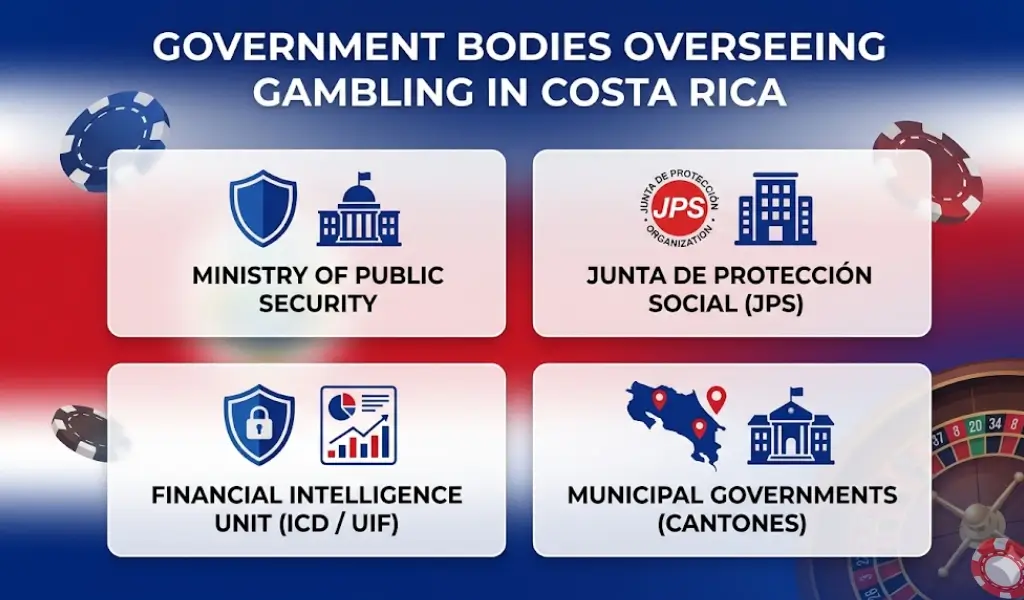
Types of Gambling Authorities in Costa Rica
It has been quite clear since the introduction that Costa Rica doesn’t offer an iGaming license; hence, there is no dedicated gambling regulator.
However, the Ministry of Public Security is responsible for maintaining legal order, while Junta de Protección Social supervises land-based gambling activities like lotteries.
Similarly, the gambling finance is handled by the Financial Intelligence Unit (ICD / UIF), which ensures compliance with anti-money laundering regulations.
Municipal Governments are mainly important for iGaming operators, as they are responsible for issuing business permits for operators.
Essential iGaming License Guides for Online Casino & Sportsbook Operators
Cost Breakdown for a Costa Rica iGaming Setup
The cost of setting up an iGaming business in Costa Rica is significantly lower than in regulated jurisdictions. The initial expenses typically include company registration, legal services, and development or integration of a gaming platform.
Here’s the breakdown of the initial setup cost, including:
- Company setup: $1,000 – $3,000
- Legal & documentation: $2,000 – $5,000
- Software/platform: $10,000 – $100,000+
Ongoing Costs:
- Permit renewal
- AML compliance tools
Hidden Costs:
- Payment processor integration & chargeback reserves
- Offshore banking setup challenges
- Geo-blocking software
- Compliance training for staff
Disclaimer: The above-mentioned cost figures are indicative and intended for general informational purposes only. The actual cost may vary depending upon factors such as business structure, software selection, payment integration, and legal advisory fees. Operators are advised to consult with legal authorities before making any investment decisions.
Taxation in Costa Rica
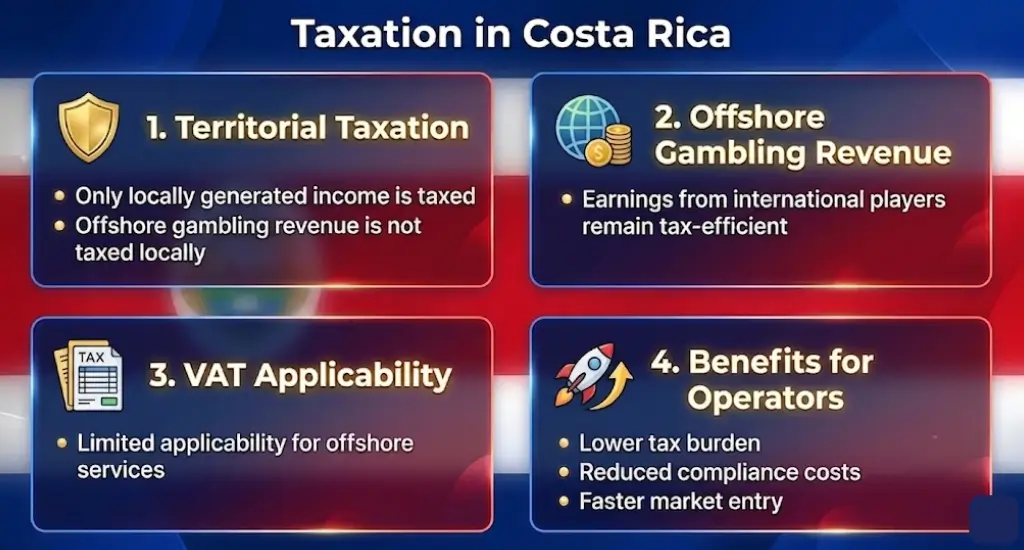
Overview of taxation policies in Costa Rica
The iGaming industry in Costa Rica operates under a territorial taxation system. That means the income generated within the country is only taxable. For casino or sportsbook operators serving international markets, this gives a significant tax advantage.
The lenient tax structure is one of the driving forces that is attracting operators to Costa Rica. It allows operators to maximize profitability while minimizing taxation.
However, operators must consider tax structure in the jurisdictions where they’re targeting players.
Common Mistakes to Avoid
Many operators enter the Costa Rican iGaming market with wrong assumptions, particularly regarding licensing. Due to this, they end up making mistakes. Following are the common mistakes operators must avoid making:
- Assuming Costa Rica offers a real gambling license
- Targeting local players (leads to major legal risk)
- Overlooking AML/KYC compliance
- Selecting unreliable payment providers
- Not implementing geo-blocking
- Considering Costa Rica as a fully regulated jurisdiction
Conclusion
To conclude, Costa Rica remains one of the easiest ways to tap into the iGaming industry, but it’s not a licensing jurisdiction. Its offshore model is the perfect choice for startups that don’t want a regulatory burden.
To get the most out of this country, operators should understand that the ‘Costa Rica gambling license’ is important to make an informed decision.
Though the country doesn’t offer gambling licenses, it allows operators to build and scale offshore operations seamlessly. However, they need to comply with all legal and international standards.

FAQ's
-
How to get a license in Costa Rica?
You can’t get an official Costa Rica gambling license. Rather, you have to register a business entity and operate under a municipal permit as a data processing or service company.
-
Is Costa Rica known for gambling?
Yes, Costa Rica is globally known as an offshore hub for online casinos and sportsbooks due to its low-cost setup and flexible legal environment.
-
What is the legal status of online gambling in Costa Rica?
iGaming activities are not formally regulated, but they are permitted for offshore operations that do not target Costa Rican players.
-
Does Costa Rica offer an official gambling license?
No, Costa Rica doesn’t issue any official online gambling license. Operators run iGaming businesses under general business permits.
-
What is the cost of getting a Costa Rica gambling setup?
The cost of starting a gambling business in Costa Rica is low compared to other jurisdictions. It is because there is no official gambling license fee. However, the initial cost can range from $15,000 to $100,000+.


Monika Gola is an iGaming content specialist at PieGaming. Since 2020, she has been researching and developing content around software selection, online casino & sports betting regulations, and operator growth strategies. Her research includes analyzing market opportunities in regions like Europe, Africa, and Southeast Asia, as well as evaluating regulatory frameworks and entry barriers. She is actively monitoring industry trends, compliance updates, and evolving player demands across global iGaming markets to help operators navigate this industry seamlessly.

The best online casino slot providers in 2026 are Pragmatic Play, Evolution Group Studios, Play’n GO, Hacksaw Gaming, Relax Gaming, Games Global, Playtech, Push Gaming, Yggdrasil and Blueprint Gaming. Operators should compare them on six criteria: licensing and certification, RTP range, volatility, market fit, integration and commercial terms.
Casino gamification refers to the inclusion of goals, levels, rewards, and other video game elements around the core gambling area. Learn how operators can use gamification in igaming to create more engaging player journeys while managing costs.
Stake.Us, PlayFame, McLuck, MegaBonanza and Zonko are social casino platforms that are free-to-play casino games using virtual coins. These platforms offer hundreds of slots, tables, and instant-win games with daily free coins, tournaments, and bonus features.
Casino CRM strategies help operators to personalize campaigns, improve player retention, reduce churn rate, and maximize player lifetime value.
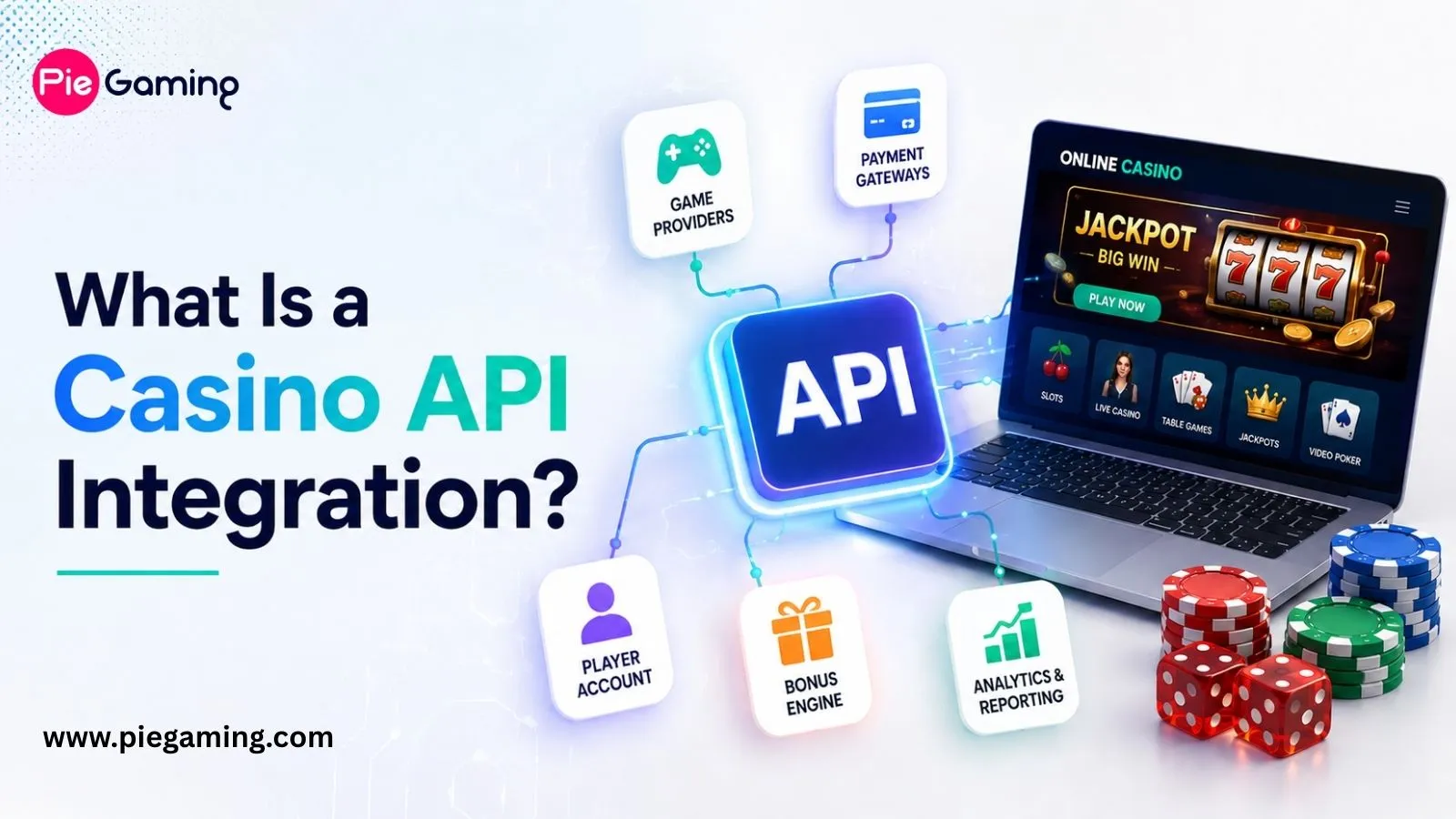
A casino API integration is a software solution that connects your platform with games, payment gateways, wallets, KYC tools and other third-party solutions. It allows data to be exchanged between systems in real-time. This way you can launch quicker, automate tasks, and provide a smooth playable experience.
House Edge is the mathematical advantage built into online casino games and all other forms of gambling. It shapes the odds, influences your winnings and losses, and constitutes the cornerstone of any online casino or sportsbook operator’s overall financial strategy.
The Hi-Lo casino game is a simple card game where players predict whether the next card will be higher, lower, or equal to the current card. This guide explains how Hi-Lo works, its rules, betting options, payouts, gameplay, and strategies players can use when making predictions.





See you in your inbox soon!

Stay ahead of the game. Subscribe for exclusive content, updates, and insiders!