
The best lottery games to include on an online lottery platform are Lotto Games, Instant Win Games, Scratch Cards, Daily Numbers Games, Keno, Bingo, Raffle Games, Lottery Syndicates, and Progressive Jackpots. These games attract diverse player segments. They boost engagement and drive long-term revenue growth.
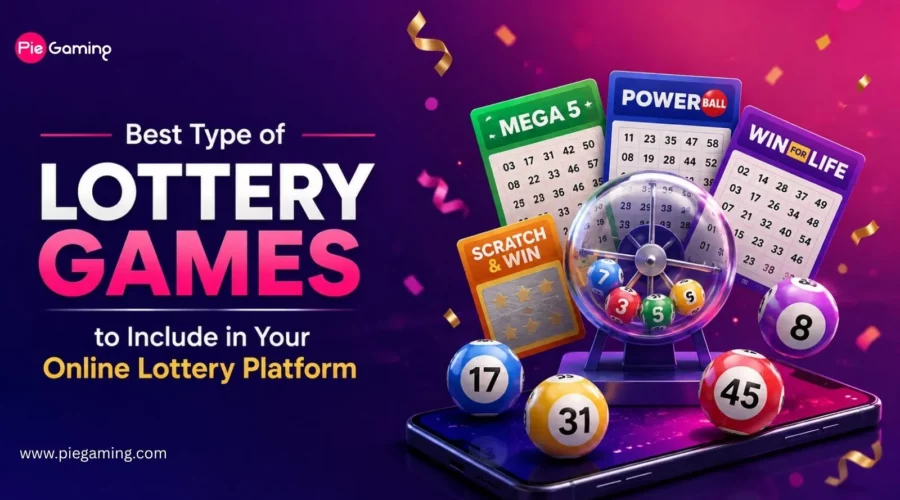
All players don’t want the same thing. Some dream about life-changing jackpots while others just want instant wins, they can play on their lunch break. That’s the whole reason you need to pick your lottery games carefully.
Get the mix right, and you’ll keep players coming back. You’ll stand out and build a platform people actually stick with. Classic draw-based lottery pulls in jackpot hunters, while fast-paced instant games feed the need for quick thrills. Each one has its place and does something different for your player base.
In this guide, we’ll break down which lottery game works best for your platform and why. You’ll see how different online casino game types actually engage players.
What Are Online Lottery Games?
Online lottery games let players buy tickets, pick numbers, and win money without leaving home. Everything happens through an app or website, whether it’s national draws, instant-win games, scratch cards, keno, or raffles. One platform, multiple formats.
The backend runs the whole operation:
- Manages ticket sales and player accounts.
- Generates random numbers and schedule draws.
- Processes payments and distributes prizes.
- Keep everything secure and compliant.
Here’s why these matters: convenience is a genuine game-changer for modern players. Players can participate anytime from anywhere, store digital tickets, get instant notifications, and access way more games than traditional lotteries offer.
But you can’t survive on one game type alone. Some players hunt massive jackpots while others want instant wins, and still others prefer frequent draws with smaller prizes. If you only offer one, you’ll lose the rest.
A diverse game portfolio does three important things:
- Attracts more player types.
- Keep people coming back.
- Creates steadier revenue.
The market is moving fast with mobile-first design, personalized promotions, subscription tickets, gamification features, and faster results. The platforms that win focus on variety, accessibility, and genuine player engagement. That’s what sets you apart.
Top 10 Types of Lottery Games
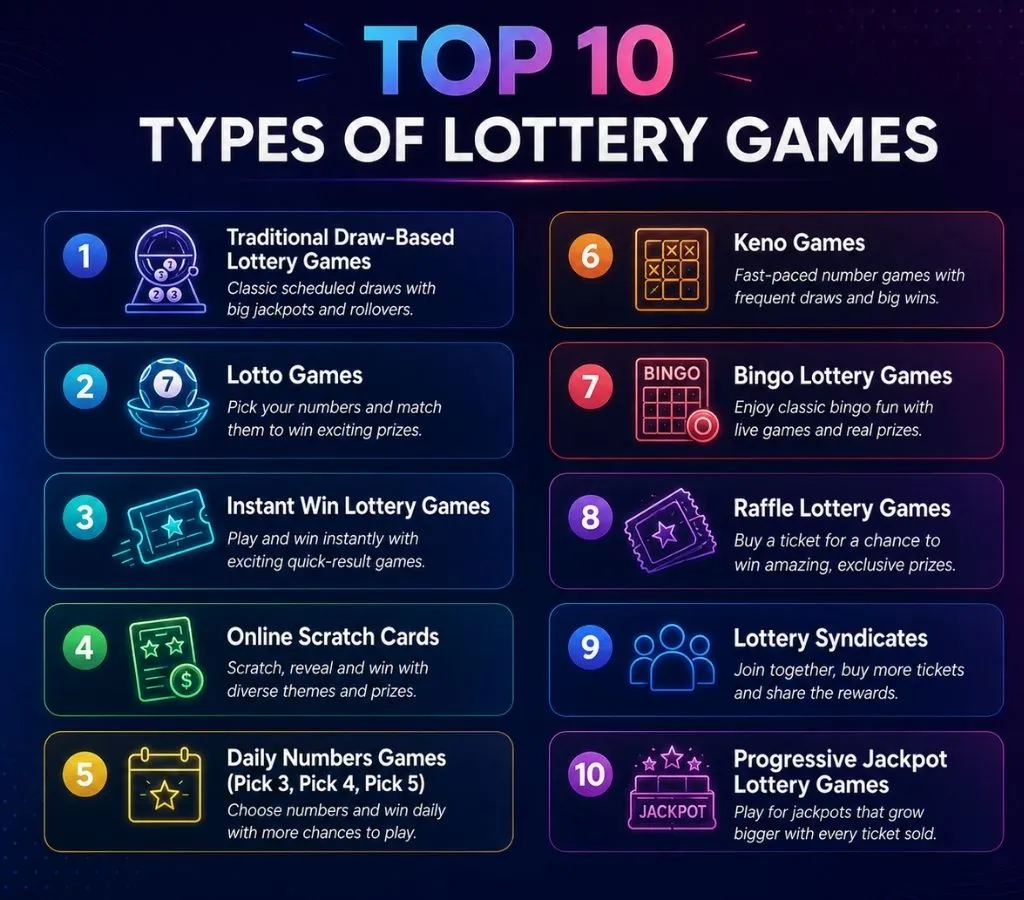
Different types of lottery games
You already know variety keeps players around. But which games actually work hardest for your platform? Here are the ten types of lottery games worth featuring and how they complement each other.
1. Traditional Draw-Based Lottery Games
Overview of Traditional Draw-Based Lotteries
The core of the lotteries business is based on the traditional draw-based lottery. Players select numbers, wait for a draw time, and are awarded the winning money depending on the number of matches. It is easy, comfortable, and highly effective in retaining players’ interest.
There are 6/49 games, Pick 3 and Pick 4 games, and national jackpot draws everywhere. Players are familiar with the mechanics of this without needing to learn or be misled by the rules. They buy a ticket, select the numbers, and wait for the draw – this eliminates friction and makes conversion easier.
Key Features
- Players select numbers within a set range (like 1 to 49).
- You schedule draws on a regular basis (daily, weekly, twice weekly)
- Winners get paid based on how many numbers match.
- If no one wins the jackpot, the prize rolls over to the next draw.
- Your system automatically handles recurring subscriptions, so players don’t need to buy tickets manually.
Business Benefits
- Attract a broad player base through format familiarity.
- Generate traffic spikes during high-value jackpot rollovers.
- Encourage repeat play through scheduled draw frequency.
- Create predictable revenue from regular ticket sales.
- Enable cross-selling instant-win games and other products.
2. Lotto Games
Overview of Lotto Games
Lotto games are straightforward and effective for driving engagement. Players pick a set of numbers from a pool, like 6 from 49, and a draw reveals the winning combination.
The beauty is that players win at multiple levels: match all six and hit the jackpot, but match four or five, and they still win. That keeps them engaged with more frequent payouts.
Unlike national lotteries with fixed rules, you own lotto games completely and can customize everything. You control number ranges, draw schedules, prize tiers, jackpot sizes, and payouts with no external network controls or restrictions. Just your game, your rules, your revenue.
Key Features
- Players select a fixed number of digits from a pool (6/49, 5/50, 7/35).
- Prizes reward matching different numbers, not just the jackpot.
- Multiple prize tiers create more frequent wins.
- Optional bonus numbers, multipliers, or secondary draws.
- Localize easily with custom number pools and payouts.
- Subscriptions, syndicates, and auto-play integrate seamlessly.
Business Benefits
- Complete control over game mechanics, jackpots, ticket pricing, and payouts.
- Launch proprietary games without relying on external lottery networks.
- Frequent draw schedules create more purchase opportunities and recurring revenue.
- Run promotional jackpots, bonus draws, and seasonal campaigns easily.
3. Instant Win Lottery Games
Overview of Instant Win Lottery Games
Instant win games deliver the speed that players crave and expect. Buy a ticket or complete a game action and get results immediately, with no waiting for a scheduled draw or coming back tomorrow. Just pure instant gratification.
Think digital scratch cards, match-and-win games, symbol reveals, and prize wheels that show results right away. Players find out instantly if they win, and that speed is genuinely addictive. It’s why instant win games are growing faster than any other lottery category.
Key Features
- Results show immediately after purchase or game completion.
- Pre-generated prize pools determine outcomes.
- Digital scratch cards, symbol matching, prize wheels, reveal games.
- Low entry costs so casual players can afford them.
- Game sessions take seconds to complete.
- Easy to theme around holidays, events, or promotions.
Business Benefits
- Eliminate wait times so players get instant results.
- Generate more plays per day than draw-based games.
- Create revenue streams beyond scheduled lotteries.
- Launch themed games tied to holidays and events instantly.
- Cross-sell these games alongside traditional lotteries.
- Control prize distribution and payouts flexibly.
4. Online Scratch Cards
Overview of Online Scratch Cards
Scratch cards are the digital version of physical scratch-off tickets that players tap or click to reveal symbols, numbers, or prize combinations. Match them and they win instantly—it’s simple and immediate in every way.
The key mechanic is the scratch-and-reveal action that feels familiar because it replicates the physical experience players already know. But here’s what makes them powerful for operators: you control everything from themes to prize structures to ticket prices. That versatility is why scratch cards work across all player types, especially casual players who want quick wins with zero learning curves.
Key Features
- Digital scratch-and-reveal interface on web or mobile.
- Instant results with no scheduled draws.
- Multiple price points from budget to premium.
- Matching symbols, bonus games, or multi-stage reveals.
- Fixed prize pools with transparent payouts.
- Easy to customize for seasons, brands, or events.
- Mobile optimized for quick-play sessions.
Business Benefits
- Familiar gameplay appeals to a broad audience.
- Fast game cycles drive high engagement.
- Players buy multiple cards in minutes, boosting repeat purchases.
- Recurring revenue without relying on scheduled draws.
- Launch new themed games quickly and affordably.
- Segment audiences by price point, prize level, and theme.
- Tie games for holidays, sports events, and campaigns easily.
5. Daily Numbers Games (Pick 3, Pick 4, Pick 5)
Overview of Daily Numbers Games
Daily Numbers Games are simple and attractive to a particular group of players. Players select a combination of numbers and, when they match the winning combination, they win. The trick is that prizes are small, but their odds aren’t nearly as bad as conventional lotteries.
There are morning, afternoon and evening draws that play multiple times during the day for players to enjoy. That’s the true hook of involvement. They aren’t looking for a life-changing jackpot, but for smaller wins that they can land.
Key Features
- Players select 3, 4, or 5 digits before each draw.
- Betting options include Straight (exact order), Box (any order), and Combinations.
- Fixed-odds payouts, not progressive jackpots.
- Low ticket prices
- Better winning odds than traditional multi-number lotteries.
- Results arrive within hours or minutes.
- Customize draw schedules and payouts by region
Business Benefits
- Multiple daily draws create frequent revenue opportunities.
- Appeal to players seeking better odds and regular payouts.
- Habitual play from frequent draws throughout the day.
- Lower prize liabilities compared to jackpot games.
- With flexible payout models, you can adjust to the market.
6. Keno Games
Overview of Keno Games
In Keno, players select 1 to 20 numbers from a list of 80 numbers, and the draw is conducted to see which numbers match. You win based on how many matches, making it simple, fast, and engaging for all skill levels.
Unlike other games, you don’t have to get all your numbers on Keno to win because all the matching numbers pay out. Select the number 1 and press 1 and you win – select the number 5 and press 3 and you win. This flexibility is one of the reasons why players love it, as there are multiple paths to payoff.
Key Features
- Players choose 1 to 20 number selections (called “spots”).
- Winning is based on matching selected numbers with drawn numbers.
- Draws run every few minutes.
- Flexible betting options with different risk and reward levels.
- Multiple prize tiers for different match combinations.
Business Benefits
- Continuous engagement from high-frequency draws.
- More betting opportunities than daily or weekly lotteries.
- Appeals to casual and experienced players alike.
- Players stay longer because they can join consecutive draws.
- Multiple payout models to adjust by market.
- Cross-sell with instant-win games and scratch cards.
7. Bingo Lottery Games
Overview of Bingo Lottery Games
Unlike other lottery games, Bingo Lottery Games are social. The players purchase a card containing random numbers; balls with numbers are being drawn at a set time and when a pattern, either a line, four corners or a full house is drawn the player wins.
What makes Bingo different from other games, however, is the fact that it is also interactive and community driven, and these factors are important to players. It’s not about the win, it’s about the experience as they chat, compete and form relationships.
That’s why players stick around and are more likely to return. There are three different sizes of balls that may be played, 75 balls, 80 balls, or 90 balls, and each has various card layouts and rules. That diversity is great because you can offer different preferences to your players, while also growing your portfolio.
Key Features
- Multiple game formats (75-ball, 80-ball, 90-ball bingo).
- Players win by completing predefined patterns.
- Multiple prize tiers in one game (line wins, full-house jackpots).
- Hundreds or thousands of players in a single room.
- Scheduled game sessions throughout the day.
- Chat rooms and leaderboards for community engagement.
Business Benefits
- Longer session durations keep players active throughout the entire game.
- Multiple revenue streams from tournament entries, jackpot contributions, and premium rooms.
- Appeals to broader demographics seeking community-oriented experiences.
- Chat features, loyalty programs, and community tools to drive retention.
- Run special events, seasonal tournaments, and branded campaigns easily.
8. Raffle Lottery Games
Overview of Raffle Lottery Games
A raffle lottery is a lottery that involves purchasing tickets, and the winners are drawn by random selection. Contrary to Lotto Games, Keno or Daily Numbers Games, a player doesn’t pick numbers or make number combinations.
Instead, they buy one or more raffle tickets, and the winning numbers are drawn at a certain point in time. Raffles are typically employed for large awards, special promotions, luxury items, holidays, car or vehicle giveaways, and limited edition prizes. The number of tickets is usually limited, so players are aware that they will have a specific number of chances to play, not infinite.
Key Features
- Each ticket contains a unique identifier rather than player-selected numbers.
- Winners are determined through a random draw conducted on a scheduled date.
- Often features a fixed number of tickets, creating defined winning odds.
- Can offer a single grand prize, multiple prize tiers, or secondary prizes.
- Supports limited-time campaigns and event-based promotions.
- Suitable for both standalone raffles and promotional lottery offerings.
Business Benefits
- Creates urgency by limiting ticket availability and establishing clear sales deadlines.
- Enables operators to promote high-value prizes without maintaining ongoing jackpot pools.
- Generates strong player interest through transparent and fixed odds structures.
- Supports premium prize campaigns, including luxury goods, travel packages, and exclusive experiences.
- Encourage bulk ticket purchases as players seek to improve their chances of winning.
- Provides a powerful marketing tool for seasonal promotions, product launches, and special events.
9. Lottery Syndicates
Overview of Lottery Syndicates
Lottery Syndicates are group buying made simple and accessible for all players. Players pool money together and buy more tickets collectively, so when a ticket wins, the prize gets split among all members. Everyone shares the same cost and everyone shares the win.
Individual players can’t afford to buy 50 lottery tickets on their own. A syndicate of 10 players each contributes toward 50 tickets together, so same cost per person but way better odds overall. That’s the appeal for players thinking about their budgets.
Key Features
- Multiple players contribute to a shared ticket pool.
- Prize winnings are distributed proportionally among members.
- Works with lotto, jackpot, and draw-based games.
- Automated syndicate creation and management.
- Players join existing syndicates without organizing groups.
- Access to more ticket combinations than solo play.
Business Benefits
- Increase ticket sales through larger pooled purchases.
- Make high-jackpot games accessible to budget-conscious players.
- Boost engagement during major jackpot rollovers.
- Drive recurring participation through subscription syndicates.
- Attract players hesitant about high individual ticket costs.
- Generate extra revenue without building new games.
- Higher transaction value than standard individual purchases.
10. Progressive Jackpot Lottery Games
Overview of Progressive Jackpot Lottery Games
Progressive Jackpot Lottery Games are the real attention magnet for your platform. A portion of every ticket sold feeds the jackpot pool, so if there’s no winner on Tuesday, the jackpot grows. No winner on Thursday either? It grows again. A modest prize becomes a million-dollar prize, then five million, then ten million. Players can’t look away once the numbers climb.
Unlike fixed-jackpot games, progressive jackpots build anticipation because they don’t reset—they climb steadily over time. That climb becomes your marketing engine, driving natural media coverage as numbers hit milestone thresholds. Players share the news, acquisition spikes happen, and new players arrive just to chase the big prize.
Key Features
- Jackpot increases automatically when no one wins the top prize.
- The percentage of each ticket sale feeds the jackpot pool.
- Works with lotto, Keno, scratch cards, and other formats.
- Local, networked, or platform-wide jackpots.
- Secondary prize tiers for partial matches.
- Rollover mechanics build jackpots over time.
- Configure with jackpot caps, guaranteed minimums, or seed amounts.
Business Benefits
- Strong acquisition as jackpots grows.
- Significant ticket sales spikes during rollovers.
- Repeat participation from players in tracking growth.
- Media coverage and viral marketing from milestone jackpots.
- Platform visibility through social sharing and advertising.
- Cross-sell other lottery products naturally.
- Retention through consecutive draws.
How to Choose the Right Lottery Games?
Picking lottery games isn’t about what’s popular in the industry right now. It’s about what your players want and what your platform can sustain long-term. Here’s how to choose the right mix for your audience.
Analyze Your Target Audience
Start with your players first, not your game library or competitor benchmarks. Different players want different things, so build around their actual preferences instead of guessing.
Casual players love Scratch Cards, Instant Win Games, and Daily Numbers Games because they offer simple gameplay with quick results and low commitment. High-value players go after Lotto Games, Progressive Jackpots, and Syndicates that give access to bigger prize pools without settling for smaller wins.
Mobile-first players prefer Keno and instant-win products because they work perfectly for short sessions on phones. Social players thrive on Bingo and Syndicates, where community engagement actually matters to the experience. Know your player types and pick games that match their behavior patterns.
Select Games Based on Business Objectives
Your business goals shape your portfolio differently depending on what you’re trying to accomplish. If revenue growth is the priority, Instant Win Games, Keno, and Scratch
Cards generate constant transactions throughout the day without seasonal dips. Building user acquisitions? Progressive Jackpots and Lotto Games pull new players in because big prize pools make headlines and drive registrations naturally.
For long-term retention, Daily Numbers Games, Bingo, and Keno keep players coming back through regular draws and frequent participation opportunities. Need to differentiate from competitors? Syndicates, Raffles, and themed products do what competitors don’t offer at all.
Consider Regional Player Preference
Regional preferences matter more than you might think when planning your portfolio strategy. North America dominates jackpot games, Daily Numbers, and Scratch Cards across all operator segments.
Europe favors Lotto Games, Syndicates, and Bingo in their player bases. Asia-Pacific loves mobile-first experiences, Keno, and fast-draw games that reward quick thinking.
Emerging markets respond to affordable formats with low ticket prices and frequent win opportunities. Build what your market actually wants instead of what works elsewhere.
Build a Balanced and Scalable Game Portfolio
Launch strategically instead of dumping every game at once on your platform. Phase one should include Lotto Games, Instant Win Games, Scratch Cards, and Daily Numbers Games to cover most player types effectively.
As you grow and understand your audience better, add Keno, Bingo, Raffles, and Syndicates to expand engagement options significantly. Finally, introduce Progressive Jackpots and networked jackpot systems to drive acquisition and revenue spikes when you’re ready.
This phased approach lets you scale without chaos and build a diverse ecosystem that actually works.
Read Blog – How to Buy Online Casino Software
Common Mistakes Operators Make When Selecting Lottery Games
The best operators learn from others’ mistakes before making their own expensive errors. Game selection mistakes are costly to fix once players have formed expectations. Here’s what goes wrong most often and how to avoid it.
Offering a Limited Game Portfolio
Many operators make the same fatal mistake by relying on just one or two lottery formats, usually lotto or jackpot games. These formats work well enough, but they’re not enough to keep players engaged in the long-term for retention.
A single game type attracts one player’s segment and misses everyone else entirely. You need a real mix that serves multiple preferences and behaviors. Lotto games for jackpot hunters, instant-win games for quick thrills, scratch cards for casual players, Keno for volume seekers, daily draw products for regularity.
Different player types need different games that match their desires. Stack them all and you cover the market.
Focusing on Games Instead of Player Behavior
The bigger mistake is picking up games without understanding who’s actually playing them or why. Casual players want quick experiences and don’t care about massive jackpots at all.
High-value players hunt big prizes through syndicates and won’t touch a $2 scratch card. Operators who skip player analysis always struggle because they build portfolios that don’t match actual behavior patterns.
Instead, dig into your data to find what actually works for your audience. Which games drive the most activity and engagement? Which ones keep players coming back consistently? Which segments spend the most and generate the highest LTV?
Use participation data to guide your decisions carefully. Let players tell you what works through their actual behavior patterns.
Neglecting Mobile Experience and Onboarding
Mobile is no longer optional or a nice-to-have feature for operators today. A growing chunk of your players only accesses your platform through phones, so mobile-first matters.
If your games load slowly on mobile, if registration takes forever, if checkout is complicated and confusing, they leave immediately.
Make sure every game works smoothly on mobile devices without lag or issues. Keep registration simple and fast. Make the first purchase frictionless and rewarding. If players have to jump through hoops to get started, they’ll find a competitor who doesn’t make it difficult.
Weak Retention and Jackpot Strategies
Acquisition is visible and measurable, but retention is invisible until it’s gone and hurts your bottom line. Many operators chase new signups obsessively while ignoring the players they already have in their system. No jackpot variety, weak loyalty programs, zero personalized offers mean players get bored and churn fast.
Instead, balance big progressive jackpots with frequent smaller wins that keep people engaged. Use player data to send targeted promotions that match their preferences. Reward loyalty is meaningful.
Make repeat play feel rewarding and worthwhile. Acquisition brings them in through the door, but retention keeps them around and makes them profitable long-term.
Integrate Top Lottery Games with PieGaming
PieGaming handles the complexity, so you don’t have to worry about the details. You get access to leading lottery content providers through one scalable platform. Lotto games, instant-win games, Keno, progressive jackpots—everything you need to build a diverse portfolio without juggling multiple vendors and integrations. Launch new games quickly, manage them easily, and scale as you grow. One platform, one integration, real growth.
Wrapping Up…
Building the right lottery portfolio isn’t about offering everything to everyone without thought. It’s about offering what your players actually want and what your business can sustain long-term. Understand your audience deeply through data analysis. Know your market inside out.
Balance revenue growth with genuine player retention strategies. Mix quick-play games with big jackpot opportunities for variety. Test constantly and adapt based on data insights. Get this formula right and you’ve built something players come back to repeatedly. That’s your competitive edge.

FAQ's
-
What lottery games actually give me the best chance of winning?
Smaller local lotteries beat the big national games every time for player odds. State games often run at 1 in 10 to 1 in 50 odds compared to Powerball at 1 in 292 million. The fewer number combinations in the game, the better your actual odds become for winning something.
-
Should I play instant-win games or wait for scheduled draws?
Instant-win games give you much better odds of winning something, around 1 in 4 or 1 in 5 on average. But the prizes stay small and consistent, so you're winning less per play. Scheduled draws offer life-changing jackpots that seem attainable, but your odds drop dramatically compared to daily games.
-
Which games generate the most revenue for operators?
Scheduled draw games like Powerball and Mega Millions dominate revenue across the industry consistently. The massive jackpots and rollovers drive huge player interest and repeat ticket sales.
-
How do online lotteries actually decide who wins?
Online platforms use secure Random Number Generators for instant games that pick winners immediately. For scheduled draws, the system mimics a physical ball draw but does it digitally with the same randomness.
-
Can I trust that online lottery results are truly fair and random?
Yes, absolutely. Regulated platforms use certified RNGs and operate under government supervision. The odds are locked in, and operators can't secretly change them in their favor to benefit the house. Independent auditing keeps everything honest and transparent.

Palak Madan has been writing about the iGaming industry since 2024. She focuses on helping operators and founders understand their options when launching an online casino, from choosing the right software provider to figuring out costs and compliance requirements across different markets. At PieGaming, she covers topics like white label casino solutions, platform selection, and market entry, turning complex industry information into practical guidance for people building iGaming businesses. She also keeps a close eye on licensing and regulatory changes; particularly how new rules shape the way operators enter and grow in different jurisdictions.

An iGaming CRM helps operators turn players’ data into targeted communication, automated journeys, and more relevant experiences. Explore this blog to learn how it works, what features matter, and how to build a smarter CRM strategy.
Certified RNG uses independent labs like GLI and eCOGRA to test game software before launching. Provably fair uses server seeds, client seeds, and a nonce, so players can verify individual round outcomes cryptographically after each bet.
Big Data in iGaming is the aggregation and analysis of large amounts of player, transaction, and gameplay information to inform more intelligent decision-making. It enables operators to offer personalized experiences, optimize odds, identify fraud, and drive retention. Here’s how Big Data is crucial to staying competitive in the data-driven iGaming. Information is the currency at the highest stakes in online gambling.
Top iGaming PAM providers in 2026 includes PieGaming,Pragmatic Solutions, EveryMatrix, SoftSwiss, Playtech, Digitain, BetConstruct, GammaStack, Tecpinion, Skilrock offering advanced player management, payments, CRM, fraud prevention, and scalable gaming infrastructure.
RTP, or Return to Player, is the percentage of total wagers a casino game is designed to give back to a player. For operators, RTP casinos directly influence the theoretical house edge, while for players, it gives a usual way to compare long-term mathematical returns of different casino games.

Explore how a casino back office system enhances profits through effective management, data analysis, and operational efficiency, driving success in the gaming industry.


See you in your inbox soon!

Stay ahead of the game. Subscribe for exclusive content, updates, and insiders!