
Top providers of payment applications for iGaming payment solutions are well-equipped with high transactional volume, robust compliance frameworks, and quick payouts for players using them. Selecting the right provider is your key to high authorization rates, fraud prevention, and seamless integration for your Internet betting platform.
The global iGaming market is exploding, with its valuation projected to clear $153.57 billion by 2030. But beneath every revolving slot, sports bet, and live dealer game sits one of the most silent yet vital gears in an industry’s wheel: the payment gateway.
In the iGaming industry, where a single friction point or just seconds of delay can spell total abandonment. For a player, a seamless transaction isn’t just a convenience; it’s a core retention strategy. Today’s operators must balance hyper-local payment patterns and strict anti-money laundering (AML) rules with massive player demands for instant payouts.
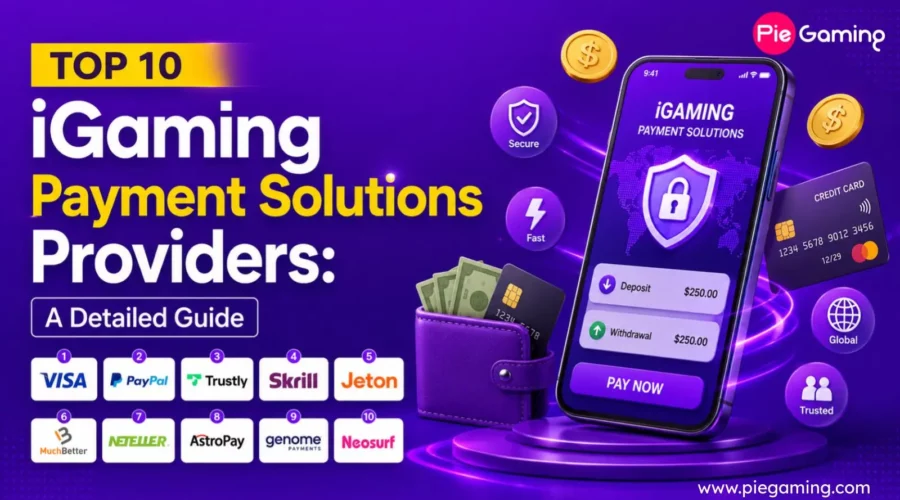
This comprehensive guide dissects the top 10 iGaming payment solution companies rewriting the rules of player transactions through speed, security, and global reach.
Why Is Payment Solution Important In The iGaming Industry?
A strong payment gateway provides the financial foundation of any successful iGaming platform. With a direct impact on player acquisition and retention, if deposit methods are restricted or payouts are delayed, players will immediately migrate to a competitor.
In addition to their user experience as a functional means to operations, payment solutions are essential to survival. They process high-volume, real-time transactions while protecting the platform from fraud and chargebacks.
Moreover, it’s almost impossible to cross-cut through the labyrinth of worldwide regulatory compliance regulations, like Anti-Money Laundering (AML) laws, or to secure and appropriate cross-border routing without an intelligent, industry-targeted payment partner.
What is an iGaming Payment Solution?
iGaming payment solution for secure transactions
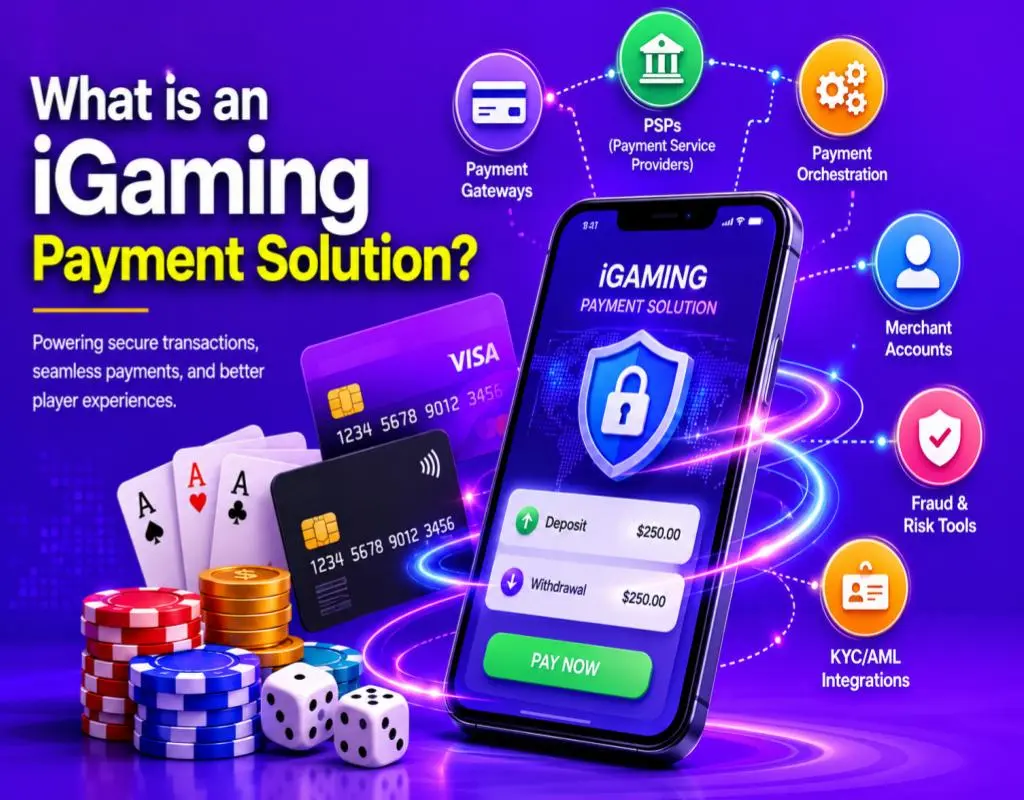
An iGaming payment solution is a payment infrastructure that allows online casinos, sportsbooks, poker rooms, and betting platforms to safely accept deposits and withdrawals. iGaming payment solutions are custom solutions for the unique aspects of the gambling industry. It includes regulatory compliance, fraud prevention, multi-currency transactions, player verification, and high-risk payment processing, and is unlike any other eCommerce payment system.
In the current iGaming payment system, a set of integrated pieces works together to provide interactivity with smooth gameplay by providing protection and compliance for players.
Payment Gateways
A payment gateway is the technology that securely processes transactions between players, operators, and financial institutions. When a player deposits funds into an online casino or sportsbook, the gateway encrypts payment data, verifies the transaction, and communicates with banks or payment providers to authorize the payment. In iGaming, payment gateways play a critical role in ensuring fast deposits, secure transactions, and high payment approval rates while supporting multiple payment methods and currencies across different markets.
KEY FUNCTIONS
- Secure transaction processing
- Payment authorization and settlement
- Encryption of sensitive financial data
- Support for multiple payment methods
Payment Service Providers (PSPs)
A Payment Service Provider (PSP) handles services for operators to accept payment information over multiple channels such as credit cards, debit cards, e-wallets, bank transfers, and alternative payment methods (APMs). Instead of working with many payment providers alone, operators can use a single PSP that provides access to numerous payment options via a single integration.
Benefits include:
- Wider payment coverage
- Faster market expansion
- Improved payment acceptance rates
- Simplified payment management
Payment Orchestration
Payment orchestration platforms enable operators to orchestrate several PSPs and payment paths within a single system. If one payment processor refuses a transaction, the payment shall be automatically redirected to a second provider. By this process, approval rates increase and the number of payment failures decreases as well.
Key advantages:
- Higher transaction success rates
- Smart routing capabilities
- Centralized payment management
- Reduced dependency on a single provider
Merchant Accounts
A merchant account is a dedicated business account that allows iGaming operators to accept and process player payments. Gambling is a high-risk industry, so acquiring and maintaining merchant accounts may prove more difficult than in other industries. Many iGaming payment providers offer specific high-risk merchant accounts for gaming businesses.
Fraud and Risk Tools
Fraud prevention is an essential element for the iGaming payment solution. Operators encounter many threats, including chargebacks, bonus abuse, account takeovers, stolen payment credentials, and money laundering.
Fraud and risk management tools available frequently are:
- Real-time transaction monitoring
- Device fingerprinting
- Velocity checks
- Chargeback prevention systems
- AI-powered fraud detection
- Behavioral analytics
Such tools enable operators to protect legitimate players while minimizing financial losses.
KYC and AML Integrations
Most regulated gaming jurisdictions require Know Your Customer (KYC) and Anti-Money Laundering (AML) compliance. Many modern payment solutions also work seamlessly with identity verification and compliance providers to reduce onboarding and regulatory risk and to simplify onboarding as they integrate directly with identity verification and compliance providers.
Common capabilities include:
- Identity verification
- Age verification
- Document authentication
- Source-of-funds checks
- Sanctions screening
- Ongoing AML monitoring
These integrations enable operators to meet licensing requirements while providing a smoother player registration experience.
Traditional Payment Gateways vs iGaming Payment Solutions
| Feature | Traditional Payment Gateways | iGaming-Specific Payment Providers |
| Industry Focus | General eCommerce and retail businesses | Online casinos, sportsbooks, poker, and betting operators |
| High-Risk Industry Support | Limited or restricted | Specifically designed for high-risk gaming businesses |
| Regulatory Compliance | Basic payment compliance | Gaming-specific compliance, KYC, AML, and responsible gaming support |
| Payment Methods | Standard cards and wallets | Extensive support for cards, e-wallets, bank transfers, crypto, and local payment methods |
| Approval Rates | Standard routing | Optimized routing for higher acceptance rates |
| Multi-Jurisdiction Support | Limited | Built for global regulated markets |
| Fraud Prevention | Generic fraud tools | Advanced gaming-focused risk and fraud management |
| Merchant Accounts | Standard merchant accounts | High-risk merchant account solutions |
| Player Withdrawals | Often limited | Fast and automated withdrawal processing |
| Scalability for Gaming Operators | Moderate | Designed to handle high transaction volumes and peak betting activity |
Top iGaming Payment Solution Providers in 2026
The payment solution choice makes all the difference between player acquisition, retention, and operational process efficiency. The top-tier providers will provide the perfect blend of speed, security, international reach, compliance support, and player-friendly features.
Here are 10 payment systems iGaming is using around the globe for 2026.
1. Visa
Visa remains one of the most important payment methods for casino and sportsbook operators because of its global acceptance and player familiarity. For many first-time depositors, especially in regulated markets, Visa is often the preferred funding method due to its convenience and trust factor. While it excels at player acquisition and deposit conversion, operators typically pair it with e-wallets or bank transfer solutions to offer faster withdrawals.
Key Features
- Accepted by millions of merchants and financial institutions worldwide
- Supports Visa Secure (formerly Verified by Visa) for enhanced transaction security
- Tokenization technology reduces exposure to card data breaches
- Compatible with recurring payments and subscription-based gaming products
- High transaction success rates in regulated markets
Supported Payment Methods
- Credit cards
- Debit cards
- Virtual cards
Regions Served
- Available in more than 200 countries and territories
- Particularly strong across North America, Europe, Australia, and parts of Asia-Pacific
Best For
Operators targeting mainstream players in regulated markets who expect familiar and trusted payment options during registration and first-time deposits.
Pros
- One of the highest-adopted payment methods globally
- Familiar checkout experience reduces deposit friction
- Strong fraud prevention and authentication tools
- Widely supported by online casinos and sportsbooks
- Effective for acquiring new players
Cons
- Withdrawal processing can take longer than e-wallets and open banking solutions
- Gambling-related transactions may be restricted by certain issuing banks
- Chargeback risks are generally higher than alternative payment methods
Operator Insight
Visa is rarely used as a standalone payment strategy. Most successful operators combine Visa with faster payout methods such as Skrill or Trustly to balance player convenience, withdrawal speed, and transaction approval rates. For operators entering regulated markets, Visa is often considered a foundational payment method rather than a competitive differentiator.
2. PayPal
PayPal is one of the most recognized digital wallets globally and a preferred payment method among players who prioritize security and convenience. Unlike traditional card payments, PayPal allows users to fund their gaming accounts without sharing banking details directly with the operator. Its strong brand reputation often helps improve trust during player onboarding, making it particularly valuable for operators targeting regulated markets where credibility and user confidence are key conversion factors.
Key Features
- One-click payments for faster deposits
- Advanced fraud detection and transaction monitoring
- Secure wallet-based transactions without sharing banking details
- Multi-currency support for international operators
- Mobile-optimized payment experience across devices
Supported Payment Methods
- PayPal Wallet
- Linked bank accounts
- Credit cards
- Debit cards
Regions Served
- North America
- Europe
- Australia
- Selected regulated iGaming jurisdictions
Best For
Operators targeting regulated markets where player trust, brand recognition, and frictionless deposits are critical to acquisition and retention.
Pros
- One of the most trusted payment brands globally
- Fast and intuitive deposit experience
- Reduces friction during player registration and funding
- Strong security and consumer protection measures
- Excellent mobile payment experience
Cons
- Available only to licensed operators in approved jurisdictions
- Processing fees can be higher than some alternative payment methods
- Limited availability in many emerging gambling markets
Operator Insight
PayPal is particularly effective for operators focused on player acquisition in mature markets such as the UK, Germany, and North America. Its biggest advantage isn’t payment speed; it’s trust. Many players are more willing to make a first deposit when they see PayPal at checkout. However, because PayPal’s availability is heavily regulated, operators expanding into emerging markets typically complement it with local payment methods, e-wallets, or bank transfer solutions to maximize coverage and conversion rates.
3. Trustly
Trustly has become a leading payment solution in regulated iGaming markets by leveraging open banking technology. Instead of relying on cards or e-wallets, Trustly enables players to make payments directly from their bank accounts. This reduces payment friction, improves transaction approval rates, and supports faster withdrawals. For operators in Europe and other open banking-friendly markets, Trustly is often viewed as a high-conversion alternative to traditional card payments.
Key Features
- Instant bank-to-bank payments
- Open banking infrastructure
- No separate wallet or account registration required
- Rapid deposit and payout capabilities
- Bank-grade security and authentication
- Real-time account verification
Supported Payment Methods
- Direct bank transfers
- Open banking payments
- Instant bank payments
Regions Served
- Europe
- United Kingdom
- North America (select regulated markets)
Best For
Operators targeting regulated European markets where players prefer direct bank payments over cards or e-wallets.
Pros
- Faster withdrawals than most card-based payment methods
- High transaction approval rates
- Eliminates the need for card details or wallet accounts
- Lower chargeback and fraud risks
- Seamless user experience with fewer payment steps
Cons
- Primarily effective in markets with mature open banking ecosystems
- Limited coverage outside supported banking networks
- Less suitable for regions where e-wallets dominate player preferences
Operator Insight
Trustly is particularly valuable for operators focused on maximizing conversion rates and reducing payment failures. Because transactions are initiated directly through a player’s bank account, approval rates are often higher than traditional card payments, which can be subject to gambling-related banking restrictions. Operators serving markets such as Sweden, Finland, Germany, and the UK frequently use Trustly as a primary payment method due to its speed, security, and ability to support near-instant payouts—a feature increasingly expected by modern players.
4. Skrill
Skrill is operated by a multinational payments company, Paysafe Limited (formerly known as Optimal Payments). It has been one of the most widely adopted e-wallets in iGaming for more than two decades. Its strong operator acceptance, fast wallet-to-wallet transactions, and multi-currency capabilities make it particularly popular among active casino players and sports bettors. Skrill is often favored by operators looking to serve international audiences because it simplifies cross-border payments and supports a broad range of funding options through a single wallet ecosystem.
Key Features
- Instant deposits and withdrawals through Skrill Wallet
- Supports 40+ currencies
- VIP loyalty program for high-volume users
- Integrated cryptocurrency buying and selling features
- Mobile app for payment management on the go
- Strong presence across major casino and sportsbook platforms
Supported Payment Methods
- Skrill Wallet
- Bank transfers
- Credit and debit cards
- Cryptocurrency services
Regions Served
- Europe
- Latin America
- Asia-Pacific
- Selected African markets
Best For
Operators targeting international player bases that require a trusted e-wallet with strong multi-currency support and widespread acceptance across online gambling platforms.
Pros
- Accepted by many online casinos and sportsbooks
- Fast deposits and withdrawals
- Supports multiple currencies and international transactions
- Well-established brand among experienced iGaming players
- Useful for operators expanding into multiple regions
Cons
- Transaction and currency conversion fees can accumulate for frequent users
- Verification requirements may slow onboarding for some players
- Less effective in markets where local payment methods dominate
Operator Insight
Skrill is particularly valuable for operators serving cross-border audiences. While cards remain essential for first-time deposits, Skrill often becomes the preferred payment method for repeat players due to faster withdrawals and wallet convenience. Its strength lies in international reach rather than localized market penetration, making it a common addition to payment stacks focused on player retention and lifetime value.
5. Neteller
Neteller is another leading e-wallet within the Paysafe ecosystem and has long been associated with online gambling and sports betting transactions. While it shares many similarities with Skrill, Neteller has historically maintained a strong presence among experienced bettors, poker players, and VIP customers who prioritize fast fund movement between gaming platforms. Its extensive iGaming acceptance and flexible funding options make it a reliable choice for operators serving high-engagement player segments.
Key Features
- Instant wallet-to-wallet transfers
- Multi-currency account support
- VIP rewards program for frequent users
- Cryptocurrency functionality
- Broad acceptance across online gambling platforms
- Mobile-friendly payment experience
Supported Payment Methods
- Neteller Wallet
- Bank transfers
- Credit and debit cards
- Cryptocurrency services
Regions Served
- Europe
- Asia-Pacific
- Latin America
- Selected international markets
Best For
Operators targeting frequent bettors, poker players, and high-value customers who prioritize fast withdrawals and flexible wallet-based transactions.
Pros
- Strong reputation within the gambling industry
- Quick deposits and withdrawals
- Accepted by many established gaming operators
- Multiple funding and withdrawal options
- Popular among experienced and high-frequency players
Cons
- Fees may apply to certain transactions and currency conversions
- Availability is restricted in some jurisdictions
- Less mainstream recognition compared to PayPal
Operator Insight
Neteller and Skrill appeal to slightly different player preferences while operating within the same Paysafe ecosystem. Neteller tends to be more widely recognized among seasoned bettors and poker communities, making it particularly useful for operators targeting high-value and highly active players. Rather than replacing card payments, Neteller is most effective as part of a broader payment strategy focused on retention, faster payouts, and player convenience.
6. Jeton
Jeton has emerged as a popular payment solution among iGaming operators looking to expand into diverse international markets. Unlike traditional e-wallets that focus primarily on mature gambling jurisdictions, Jeton combines wallet services, local payment methods, and multi-currency capabilities to help operators reach players across Europe, Latin America, Asia, and the Middle East through a single integration.
Key Features
- Digital wallet platform
- Multi-currency accounts
- Local payment method integrations
- Jeton Card for spending wallet balances
- Mobile-first payment experience
- Support for cross-border transactions
Supported Payment Methods
- Jeton Wallet
- Bank transfers
- Credit and debit cards
- Local payment methods
Regions Served
- Europe
- Latin America
- Asia
- Middle East
Best For
Operators expanding into multiple international markets that require localized payment experiences without integrating numerous regional providers.
Pros
- Strong international coverage
- Supports local and global payment methods
- Fast deposits and withdrawals
- User-friendly mobile experience
- Suitable for multi-market expansion
Cons
- Lower consumer awareness than PayPal or Skrill
- Adoption levels vary by region
- Limited presence in some regulated markets
Operator Insight
Jeton’s biggest advantage is market flexibility. While it may not have the brand recognition of larger e-wallets, it helps operators simplify payment operations across multiple regions. For operators targeting emerging markets alongside established jurisdictions, Jeton can reduce integration complexity while offering players familiar local payment options.
7. MuchBetter
MuchBetter was built specifically for industries with frequent digital transactions, making it particularly well-suited for online gambling and sports betting. Its mobile-first design, biometric authentication, and instant payment capabilities appeal to modern players who primarily manage their gaming activity through smartphones.
Key Features
- Mobile-first wallet
- Biometric authentication
- Real-time transfers
- Loyalty and rewards program
- Integrated prepaid card
- Advanced fraud protection
Supported Payment Methods
- MuchBetter Wallet
- Bank transfers
- Credit and debit cards
Regions Served
- Europe
- United Kingdom
- Latin America
- Selected international markets
Best For
Operators with mobile-heavy player bases looking to deliver a fast, app-based payment experience.
Pros
- Designed specifically for gaming and betting transactions
- Strong security through biometric verification
- Fast deposits and withdrawals
- Excellent mobile user experience
- Lower friction for repeat transactions
Cons
- Smaller user base compared to Skrill or PayPal
- Limited awareness outside core gambling markets
- Availability varies by region
Operator Insight
MuchBetter’s value lies in retention rather than acquisition. Operators targeting younger, mobile-first audiences often include MuchBetter alongside more mainstream payment methods.
8. AstroPay
AstroPay has established itself as one of the most important payment providers for operators targeting emerging markets. Its strength lies in supporting local payment preferences and alternative banking methods in regions where traditional card penetration is low or international payment acceptance remains inconsistent.
Key Features
- Localized payment solutions
- Digital wallet functionality
- Prepaid payment options
- Multi-currency support
- Mobile-first platform
- Rapid onboarding process
Supported Payment Methods
- AstroPay Wallet
- Local bank transfers
- Prepaid vouchers
- Credit and debit cards
Regions Served
- Latin America
- Asia
- Africa
- Selected European markets
Best For
Operators expanding into emerging markets where players prefer local payment methods over international cards and e-wallets.
Pros
- Strong penetration in high-growth markets
- Supports region-specific payment preferences
- Simplifies onboarding for underbanked users
- Useful for international expansion strategies
- Broad local payment coverage
Cons
- Lower recognition in mature gambling markets
- Coverage varies significantly between countries
- Some payment methods are market-specific
Operator Insight
For operators entering Latin America, AstroPay is often considered a necessity rather than an optional payment method. In many emerging markets, local payment preferences have a direct impact on conversion rates. Operators relying solely on cards and traditional e-wallets may struggle to acquire players effectively without solutions like AstroPay.
9. Genome
Genome differs from most payment providers on this list because it focuses on operator infrastructure rather than player-facing wallets. It combines payment processing, merchant services, dedicated IBAN accounts, and business banking capabilities, making it particularly valuable for licensed operators managing large transaction volumes across multiple jurisdictions.
Key Features
- Dedicated IBAN accounts
- Merchant payment processing
- Multi-currency banking support
- SEPA payment capabilities
- Compliance-focused infrastructure
- Business account management tools
Supported Payment Methods
- Bank transfers
- SEPA payments
- Merchant accounts
- Virtual IBANs
Regions Served
- European Economic Area (EEA)
- United Kingdom
- Selected international markets
Best For
Operators seeking banking infrastructure and payment processing capabilities rather than consumer-facing wallet solutions.
Pros
- Built for regulated businesses
- Strong compliance framework
- Supports multi-currency operations
- Useful for payment and treasury management
- Suitable for scaling operators
Cons
- Limited direct player-facing functionality
- Primarily focused on Europe
- Less recognizable to players than wallet providers
Operator Insight
Genome addresses a challenge many operators face after launch: banking infrastructure. While wallets and card processors help players fund accounts, operators also need reliable business banking, settlement management, and compliance support. Genome is often used as part of a broader payments stack rather than as a standalone payment solution.
10. NeoSurf
NeoSurf is a prepaid payment solution designed for players who prefer not to use traditional banking methods online. By allowing users to purchase prepaid vouchers and fund gaming accounts without sharing personal banking details, NeoSurf provides an additional layer of privacy and accessibility that appeals to specific player segments.
Key Features
- Prepaid voucher system
- No bank account requirement
- Anonymous deposit capabilities
- Instant funding
- Simple redemption process
- Digital wallet support
Supported Payment Methods
- NeoSurf prepaid vouchers
- NeoSurf Wallet
Regions Served
- Europe
- Canada
- Australia
- Selected international markets
Best For
Operators targeting privacy-conscious players or markets with significant underbanked populations.
Pros
- No banking information required
- Fast and simple deposit process
- Appeals to privacy-focused users
- Reduces card-related payment failures
- Useful in cash-preferred markets
Cons
- Primarily a deposit solution
- Limited withdrawal functionality
- Lower adoption compared to mainstream wallets
Operator Insight
NeoSurf serves a niche but valuable role within an iGaming payment ecosystem. While it won’t replace cards, e-wallets, or bank transfers, it can help operators capture players who are reluctant to share banking details online. In certain European markets, this additional payment option can improve accessibility and support player acquisition from underserved segments.
Top iGaming Payment Solutions Comparison Table
| Provider | Type | Best For | Key Strength | Withdrawal Speed | Global Reach |
| Visa | Card Network | Mainstream players | High adoption & trust | Medium | Very High |
| PayPal | E-wallet | Regulated markets | Consumer trust | Fast | High |
| Trustly | Open Banking | European operators | Direct bank payments | Very Fast | Medium |
| Skrill | E-wallet | International operators | Multi-currency support | Fast | High |
| Jeton | E-wallet | Multi-market expansion | Local payment integrations | Fast | High |
| MuchBetter | Mobile Wallet | Mobile-first players | Gaming-focused experience | Fast | Medium |
| Neteller | E-wallet | High-value bettors | Strong iGaming adoption | Fast | High |
| AstroPay | Alternative Payments | Emerging markets | Local payment coverage | Fast | Medium |
| Genome | Banking & Payments Infrastructure | Operators & merchants | Business banking tools | Medium | Medium |
| NeoSurf | Prepaid Voucher | Privacy-focused users | No bank account required | Limited | Medium |
All these payment alternatives cater to distinct operator and player desires. And though Visa and PayPal monopolize all commercial payments, providers like Trustly, Skrill, Neteller and MuchBetter shine in a realm reserved for gaming, which provides a much more effective service experience than Visa and PayPal. At the same time, AstroPay, Jeton, Genome and NeoSurf allow operators to enter different emerging markets and cater to different payment preferences around the world.
Read Blog – Top Cryptocurrency Casino Solutions
How to Choose the Right iGaming Payment Provider?
In iGaming, payment processing is more than a backend operational process. It influences player experience, conversion rates, business profitability, and regulatory compliance. A bad payment experience can result in abandoned registrations, failed deposits, and lost players, while the right vendor can assist operators with better retention, more customers, and better revenues.
Fast Deposits & Withdrawals Boost Player Retention
Modern players are used to instant gratification. Deposits are usually processed within seconds, but the rate at which players withdraw is often a major player’s satisfaction factor. Players become frustrated and won’t use the operator after waiting a long time before they can withdraw. Payment providers who offer instant deposits and fast payouts make the process of the player’s journey easier and repeat play and long-term loyalty to your brand are likely to be a result.
Local Payment Methods Increase Conversion Rates
Player payment preferences vary widely from region to region. Card payments may be king in one market, but other competitors will likely opt for bank transfers, e-wallets, prepaid vouchers, or mobile payments. Localizing payment alternatives enables operators to better fulfill player needs and ease deposits.
Fraud Prevention & Chargeback Management
Since the iGaming industry is a booming sector, many players have become victims of fraudsters. A trusted payment provider allows operators to uncover anomalies, guard against fraudulent transactions, and lower chargeback losses by using advanced risk management tools.
Compliance With Gambling Regulations
Strict regulations also apply to the online gambling sector, and these include player verification, anti-money laundering (AML), responsible gaming, and financial reporting requirements for operators. Most of the prominent payment providers already have built-in compliance tools and integrated plug-ins that help operators comply with regulatory obligations more efficiently.
Multicurrency & International Presence
iGaming operators should cater to players from different currencies as they go global. A payment solution enables players to transfer cash in a fluid manner and make deposits or withdrawals in their currencies. For global operators, strong multi-currency support is not optional; it’s a competitive requirement.
Read Blog – Best Payment Method for online casino
What are Challenges Often Encountered by iGaming Payment Processing?
Despite the major innovations in payment technology, most iGaming operators still face certain payment-related difficulties.
High Chargeback Rates
Chargebacks are still one of the most intractable problems in online gambling. Players can contest authentic transactions, claim unauthorized card usage, or try “friendly fraud” after a lost account. Excessive chargebacks can also carry financial penalties like loss of money, fines from the processing companies, and even end the merchant’s account.
Common causes include:
- Unauthorized transaction claims.
- Bonus abuse.
- Poor transaction visibility.
- Inadequate communication from customer experience.
Regulatory Restrictions
Payment rules vary greatly between jurisdictions and international operations. Some nations place restrictions on gambling-related payments, whereas others require compliance mechanisms to be put in place prior to any payments being processed.
Cross-Border Transactions
International payments may present added expenses, lag time, and technical issues. Challenges commonly encountered in cross-border dealings:
- Currency exchange fees.
- Lower approval rates.
- Banking restrictions.
- Settlement delays.
- Limitation of regional payment capabilities.
Cross-border expansion might be costly and a waste of time without the necessary payment systems.
Fraud and AML Risks
Fraud is a major concern for operators, payment providers, and regulators. Lawbreakers could try to use gambling apps for money laundering, account takeovers, identity fraud, bonus misuse, and misuse of compromised payment tokens. Robust AML controls and real-time risk monitoring are necessary to shield both players and operators.
Payment Declines
A majority of payment declines occur from a lack of funds, bank restrictions, technical issues, fraud filters, or casinos blocking their customers.
High decline rates can cause, at minimum:
- Lost deposits.
- Increased player frustration.
- Lower conversion rates.
- Reduced lifetime player value.
Increasing use of payment orchestration and intelligent routing solutions are also being introduced to help boost approval rates.
Banking Relationship Problems
Operators might have difficulty keeping merchant accounts, banking relationships, or getting access to payment processing tools.
Common challenges include:
- Merchant account closures.
- More scrutiny of compliance.
- Higher processing fees.
- Limited banking partners.
- Delayed onboarding.
This is one of the main reasons why so many operators choose payment providers that cater to regulated iGaming businesses.
Why PieGaming is the Right Technology Partner for iGaming Operators
PieGaming offers a scalable iGaming ecosystem designed to help operators launch and grow their sportsbook and casino businesses with confidence. Operators can personalize gaming by providing integrated connections to top payment service providers, adaptable APIs, and brand customization.
PieGaming helps to expand internationally with a multitude of markets, currencies, and regulatory frameworks. PieGaming supports businesses in operations, enhancing player experience, and boosting growth over the long run by seamlessly integrating powerful technology with operator support.
Conclusion
The right payment solution can greatly affect an iGaming operator’s success through better user experience, better conversion, better fraud prevention, and greater regulatory compliance. This might be Visa, PayPal, Trustly, Skrill, or any provider you are interested in, depending on your target market and business goals.
By joining hands with PieGaming, operators can establish a secure, scalable, and player-friendly gaming ecosystem on which to grow, particularly as the sector becomes an increasingly competitive one.

FAQ's
-
Are crypto payment solutions legal for online casinos?
Yes, crypto payment solutions are legal for online casinos in some jurisdictions but restricted or prohibited in others. Their legality depends on local gambling regulations, licensing requirements, and cryptocurrency laws. Operators should always verify compliance requirements in their target markets before offering crypto payments.
-
How do online casinos prevent payment fraud?
Online casinos use a combination of KYC verification, AML checks, transaction monitoring, device fingerprinting, AI-powered fraud detection, and secure payment gateways to identify suspicious activity and prevent fraud. These measures help protect both players and operators from financial losses.
-
What are the transaction fees involved?
Transaction fees vary depending on the payment provider and method used. Card payments typically incur processing fees, while e-wallets, bank transfers, and cryptocurrency payments may have different fee structures. Operators should evaluate both transaction costs and approval rates when selecting a payment solution.

Jaya Swaroop has been covering iGaming and betting technology since 2019, with a specialization in online casino platforms, sportsbook solutions, and licensing frameworks. Her work involves analyzing platform capabilities and evaluating cost structures, compliance requirements, payment integrations, market strategies, and regulatory updates that impact operators entering or scaling in the iGaming space. With a background in B2B marketing and content strategy, she has contributed to SEO-led growth and demand generation initiatives for global businesses. Jaya holds a Bachelor’s degree in Science (Chemistry & Mathematics) and is certified in content writing, email marketing (HubSpot), project management, and Google Analytics.

Casino influencer marketing involves the collaboration between licensed casino websites and influencers on platforms like YouTube, Kick, Twitch, TikTok, and Telegram who share casino games via tracked links and promo codes. Creators are paid by flat fee, CPA, revenue share or hybrid and paid based on results by FTD, NGR and retention. Campaigns must comply with local advertising, disclosure, and 18+ rules.
Best online casino payment methods in 2026 include credit and debit cards, e-wallets, open banking, cryptocurrencies, prepaid vouchers, and mobile money. Cards are the most widely supported but face issuer restrictions on gambling transactions. E-wallets like PayPal, Skrill, and Neteller offer faster withdrawals.
This blog explores ways and platforms to find and partner with top sports betting affiliates to grow the iGaming business.
This blog explains how iGaming affiliate marketing software helps operators boost revenue through smart tracking, automation, fraud prevention, and better campaign control.
Affiliate software is instrumental in managing partnerships and keeping track of performance in iGaming. This guide provides an overview of many iGaming affiliate software providers and features that operators can utilize for running an efficient affiliate marketing program.
This write-up talks about the best online casinos supporting GCash in the Philippines—also, the gaming variety, bonuses, and customer support they provide.
A casino affiliate program is a performance-based marketing model where affiliates promote casino brands and earn commissions for acquiring qualified players. This guide explains how casino affiliate programs work, explores commission models, highlights key performance metrics, and covers strategies to build and scale a profitable acquisition channel.






See you in your inbox soon!

Stay ahead of the game. Subscribe for exclusive content, updates, and insiders!