
Multi-language online casino software helps operators expand into global markets, improve player engagement, and increase retention via localized player experience.
Imagine a player from Brazil lands on your casino, finds everything in English. He struggles to navigate, misunderstands a bonus offer, and leaves within minutes.
What led to his disappointment?
Struggling to understand a language.
In the global iGaming industry, LANGUAGE is more than communication – it’s CONVERSION.
Language is still a barrier in regions where English is not spoken. For instance, in regions like LATAM, Asia-Pacific, Africa, and South Asian regions, English is not the primary language.
These booming markets are home to those who don’t speak English. Operators targeting these regions must have multi-language support to target local audiences. A localized, multi-language casino speaks the player’s language.
All this translates into higher engagement, better conversion rates, and long-term profitability.
Let’s explore how a multi-language online casino platform can boost your casino success.
What is Multi-Language Support in Online Casinos?
In iGaming, multi-lingual support means offering a casino platform in more than one language. In other words, translating and localizing every element on the platform, such as website text, game interfaces, payment pages, and customer support services.
A truly multilingual casino platform is one where players (across the world) can switch to their native language and see all website content, menus, and messages in their native language.
But there is an important distinction that operators often miss:
Translation vs. Localization in Online Casinos
The given table gives insights into the role of Translation and Localization in the online casino industry.
| Particulars | Translation | Localization |
| Definition | Converting words from one language to another is called translation. | A complete cultural and contextual adaptation of a platform to meet players’ demands. |
| Language | Converts text literally, i.e., welcome – Bonjour in French | Uses region -specific dialects for instance, Welcome bonus – Bonus de Bienvenue in France. |
| Goal | Make content understandable | Make content understandable feel native to local players |
| Currency | Shows generic symbols, e.g., $ | Shows local currencies like EUR, INR, etc. |
| Cultural relevance | Limited or absent | Includes local symbols, preferences, and player behaviors |
| Game content | Translated game content | Adapts games, themes, and narratives for regional appeal |
| Impact on conversion | Moderate | Higher due to trust and relevance |
| Player experience | Functional but impersonal | Personalized and familiar experience |
Why Does Multi-Language Support Matter for Casino Success?
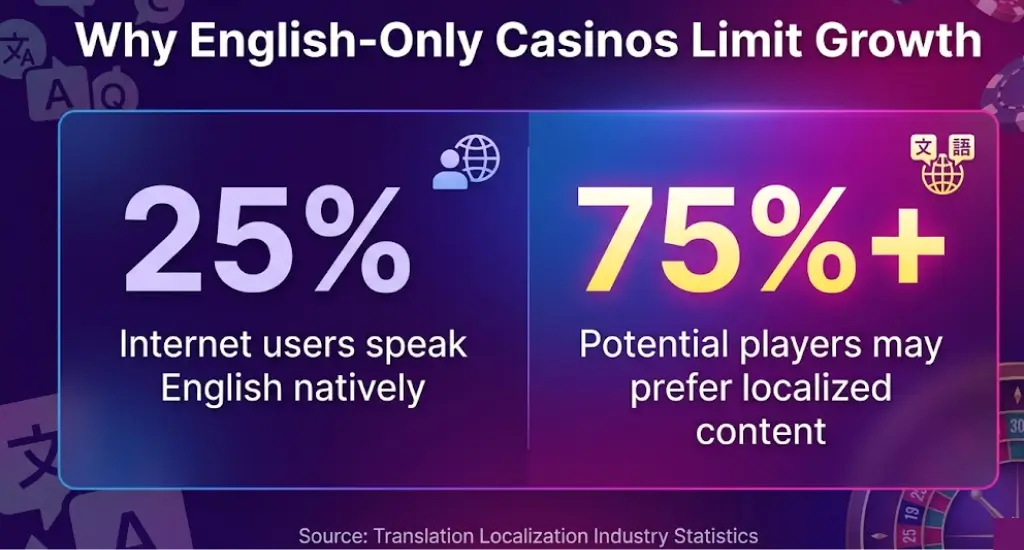
Multilingual online casino statistics
To succeed in the online casino, operators must take a step ahead by launching a multi-language online casino to target players worldwide. Here’s why multi-language support in gambling platforms matters:
Expands Global Market Reach
A multilingual casino platform means reaching new player bases globally. By speaking local languages, players can enter fast-growing igaming markets like Europe, LATAM, Africa, and Asia. Operators who have localized platforms can tap into these regions legally. An English-only platform won’t earn you money; you must make your casino platform multi-lingual.
Enhances User Experience (UX)
Players always seek a platform where they can play in their own native language. When everything from navigation to game instructions is understandable at a glance, player engagement soars. For instance, localizing casino content can include imagery, music, and themes familiar to players. All this makes the game more enjoyable.
Boosts Player Trust & Credibility
Believe it or not, localized language builds trust among players in the casino industry. A site launched in the player’s language feels more legitimate and familiar.
When a player from the Philippines sees a platform fully localized in Filipino, with Filipino customer agents, the Philippine Pesos as the display currency, and localized promotional content. Players get a clear message: this operator knows me, respects me, and has invested in serving me.
This builds the trust of players on the platform.
Improves Player Retention
When a player finds the platform familiar, they are more likely to keep coming back. A multilingual experience feels personal. It gives players a sense that the casino “speaks their language.” In other words, it’s difficult for competitors to lure away players who already feel “at home.”
Increases Revenue & ROI
In multilingual online casino platforms, operators tend to yield more revenue than those that are not. In fact, repeat player rates improve because localized platforms retain players longer. Localization reduces friction in deposits and play; that means higher average revenue per user and lifetime value (LTV).
Read Blog – Key Casino Metrics that Boost Revenue Fast
What are the Core Features of a Multi-Language Casino Platform?
A robust multilingual online casino platform should include the following features:
Multi-Language UI/UX
A casino platform with an easy language selector lets players switch languages instantly. The user interface, like menus, buttons, and prompts, should adapt fully. Displaying language options in the native scripts makes the platform more trustworthy.
Localized Game Content
Casino operators must ensure that games are localized as per the target market or jurisdiction. This means in-game text, rules, and even themes that reflect the region. For instance, some platforms offer slot machines with culturally themed graphics for different countries.
Multilingual Customer Support
The casino platform must support multilingual customer support channels like live chat agents, email responses, or chatbots. These should be available in players’ native languages. Players facing account issues, withdrawal delays, or KYC verification need clear and confident communication.
Payment Localization
Integration of region-specific payment systems like credit/debit cards, e-wallets, local debit schemes, or mobile money is a must. The software should detect the player’s location and showcase relevant payment options. Further, it should automatically depict prices and balances in local currency and handle conversions appropriately.
Geo-Targeted Content
If a casino platform is geo-targeted, it will serve different content to different regions in one go. For instance, if a South African player logs in, they must see promotions built around South African football leagues. Operators must plan seasonal and cultural events into calendars per country. This ensures that the casino feels up-to-date and locally relevant in each targeted market.
Compliance & Legal Considerations
Regulatory compliance is as important as localization in the iGaming industry. Every jurisdiction has its own laws and regulations. For example, many countries require that terms and conditions, privacy policies, and responsible gaming messages be presented in the local language. For instance, a Spanish license typically allows a Spanish-language legal disclaimer; France requires French, and so on.
What operators must do here?
- Localize regulatory content
- Must update platform as law changes
- Compliance elements must be updated in local language
Every operator serving international gambling markets must note that maintaining a separate compliance structure for each jurisdiction is mandatory.
Challenges in Implementing Multi-Language Support
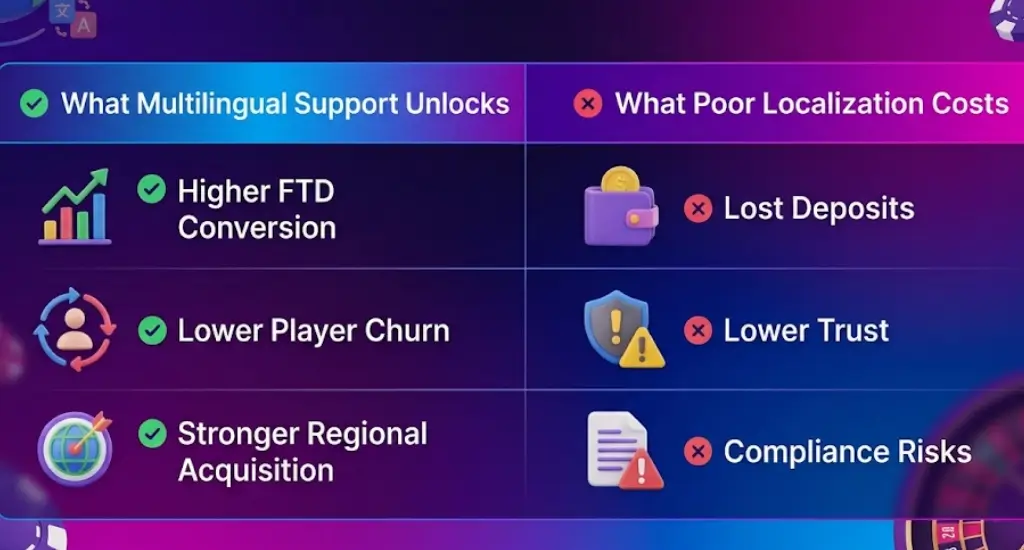
Multilingual support vs poor localization in casinos
Whether you’re a first-time operator or an experienced one, building a multi-language casino platform has never been an easy job. Here are the key challenges, which include:
Poor translation quality
Poorly translated text in online casinos often backfires and even contains errors that confuse players. A wrongly translated bonus term may sound misleading to players. As per some iGaming experts, a site that sounds “unnatural” loses players’ trust immediately.
High costs of localization
Hiring professional localization experts can be expensive. Each language adds significant word count and ongoing maintenance. Many operators underinvest at first, giving the appearance of localization, and later realize that the budget is not set.
Technical integration issues
Having multiple languages, currencies, and payment methods requires a flexible tech infrastructure. The backend must serve the right language content and formatting seamlessly. It’s true that adapting a game engine or CMS, which is fully bilingual or multilingual, is challenging. Ensure that live chat or chatrooms work in all languages.
Maintaining consistency across languages
The iGaming industry is dynamic, where industry updates keep on changing. It’s important to update casino content consistently in all targeted languages. Promotional campaigns, game offerings, and legal notices should be translated for every update.
What are the best Practices for Multi-Language Casino Platforms?
What makes any multilingual online casino successful? It’s the best practices followed by the operators, which include the following:
Use professional localization services
Partner with localized translators who understand the gaming category, the target market’s regulatory and cultural content. Generic translators may not know about betting terminology. Experts in iGaming will craft accurate and natural content for each jurisdiction.
Implement AI + human translation
Today, modern translation management often uses machine translation, but every piece of content should be human-reviewed. Further, native-speaker quality assurance balances speed and cost with quality.
Optimize for mobile-first users
Nearly 80% of players use smartphones as their primary device for betting. Therefore, ensuring that all localized content and interface elements are mobile-friendly is important. Also, don’t forget to test mobile layouts for every language so that players don’t face any issues while using your platform.
Regularly update translated content
Your job isn’t done with the translation of content; it’s important to ensure that you update translated content regularly. Update translated content as soon as regulations change.
Use analytics to track performance by region
Tracking performance by region and language is important. Monitor KPIs like sign-up rates, conversion, and churn rates separately for each language. Analytics help you know whether a certain language is underperforming or not.
How to Choose the Right Multi-Language Casino Software Provider?
Choosing a multilingual casino software provider is critical for casino success. Key factors include:
Number of supported languages
Look for the number of supported languages on the platform and how easy it is to add new ones. PieGaming, for instance, comes with multi-language and multi-currency support as important parts of global reach. You can also add new languages through the CMS.
Customization flexibility
The software should allow you to customize text and content per region. From text to layouts, payment method displays, promotional templates, and responsible gaming interfaces, everything should be allowed to be customized to give a local feel to the players.
Integration with payment gateways
Ensure software comes with pre-integrated payment solutions and methods covering your targeted regions. It should automatically present relevant currency and payment options based on the player’s region.
Compliance-ready solutions
The best iGaming software provider is one that stays ahead of regulatory changes and updates compliance promptly. For instance, PieGaming’s turnkey solutions are designed for compliance across key regions like Africa. Check if the provider has licenses like MGA or Curacao.
Ongoing support
Always look for a software provider who offers you regular and 24/7 ongoing localization support. It’s important to confirm that the software provider offers multilingual support for operators.
Read Blog – Key factors to select the right iGaming provider
Conclusion
In the growing iGaming industry, multilingual support is no longer an option for ambitious casino operators, but it is one of the essential components for growth. By localizing content, payment options, and support services, casino operators can tap into new regions, enhance players’ gaming experience, and build lasting trust.
Operators who invest in multilingual online casino platforms will always be ahead in the competitive gambling market. PieGaming can help you give your players the language and culture they expect through its white label casino software.
The world is speaking. The question for every casino operator is: are you speaking back?

FAQs
-
What is the importance of multi-language support in online casinos?
Multi-lingual support is important in online casinos because online gambling is global, and players like engaging with the platform that offers their localized languages. Multilingual support allows operators to target players beyond English-speaking countries.
-
How many languages should an online casino support?
There is no straightforward answer to this. But operators can start with 10-15 languages covering the highest-traffic markets. For instance, Brazilian, Spanish, and Portuguese are important for LATAM.
-
What is the key difference between translation and localization in iGaming?
Translation converts text while localization adapts the entire product to a market. A localized casino platform includes local payment methods, local currency formats, native-language support agents, and market-specific responsible gambling measures.
-
Can AI be used for translations in online casinos?
Yes, AI/ML tools can be used for the initial draft of text. It is important to use human reviews for casino content. The best approach for operators is to follow AI + humans. Let software speed up the process and then have professional translators correct and localize the output.
-
What are the most common mistakes in casino localization?
The common mistakes include relying on literal translation, ignoring cultural differences in promotions, failing to adapt to payment/currency formats, etc.

Monika Gola is an iGaming content specialist at PieGaming. Since 2020, she has been researching and developing content around software selection, online casino & sports betting regulations, and operator growth strategies. Her research includes analyzing market opportunities in regions like Europe, Africa, and Southeast Asia, as well as evaluating regulatory frameworks and entry barriers. She is actively monitoring industry trends, compliance updates, and evolving player demands across global iGaming markets to help operators navigate this industry seamlessly.

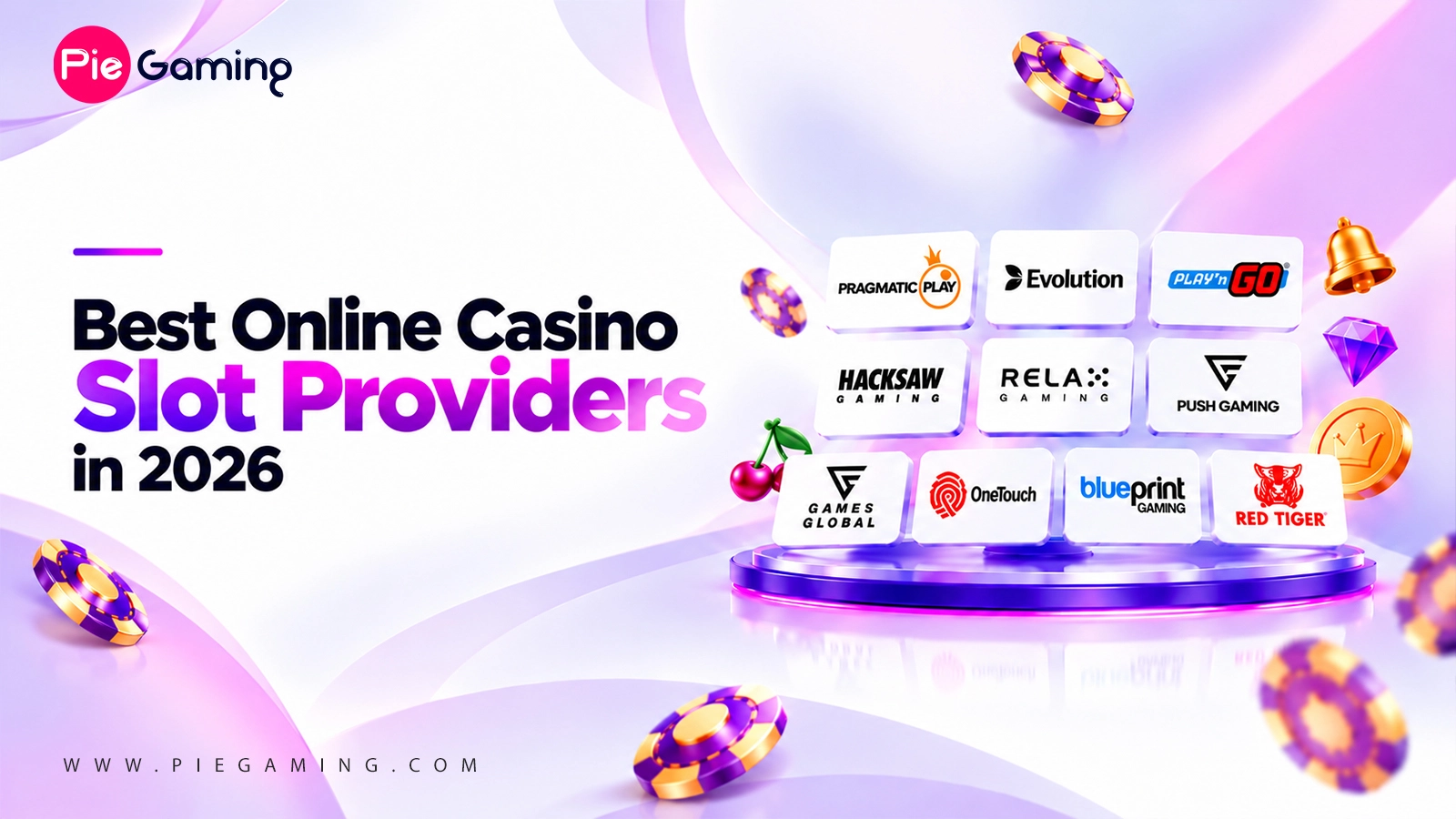
The best online casino slot providers in 2026 are Pragmatic Play, Evolution Group Studios, Play’n GO, Hacksaw Gaming, Relax Gaming, Games Global, Playtech, Push Gaming, Yggdrasil and Blueprint Gaming. Operators should compare them on six criteria: licensing and certification, RTP range, volatility, market fit, integration and commercial terms.
Casino gamification refers to the inclusion of goals, levels, rewards, and other video game elements around the core gambling area. Learn how operators can use gamification in igaming to create more engaging player journeys while managing costs.
Stake.Us, PlayFame, McLuck, MegaBonanza and Zonko are social casino platforms that are free-to-play casino games using virtual coins. These platforms offer hundreds of slots, tables, and instant-win games with daily free coins, tournaments, and bonus features.
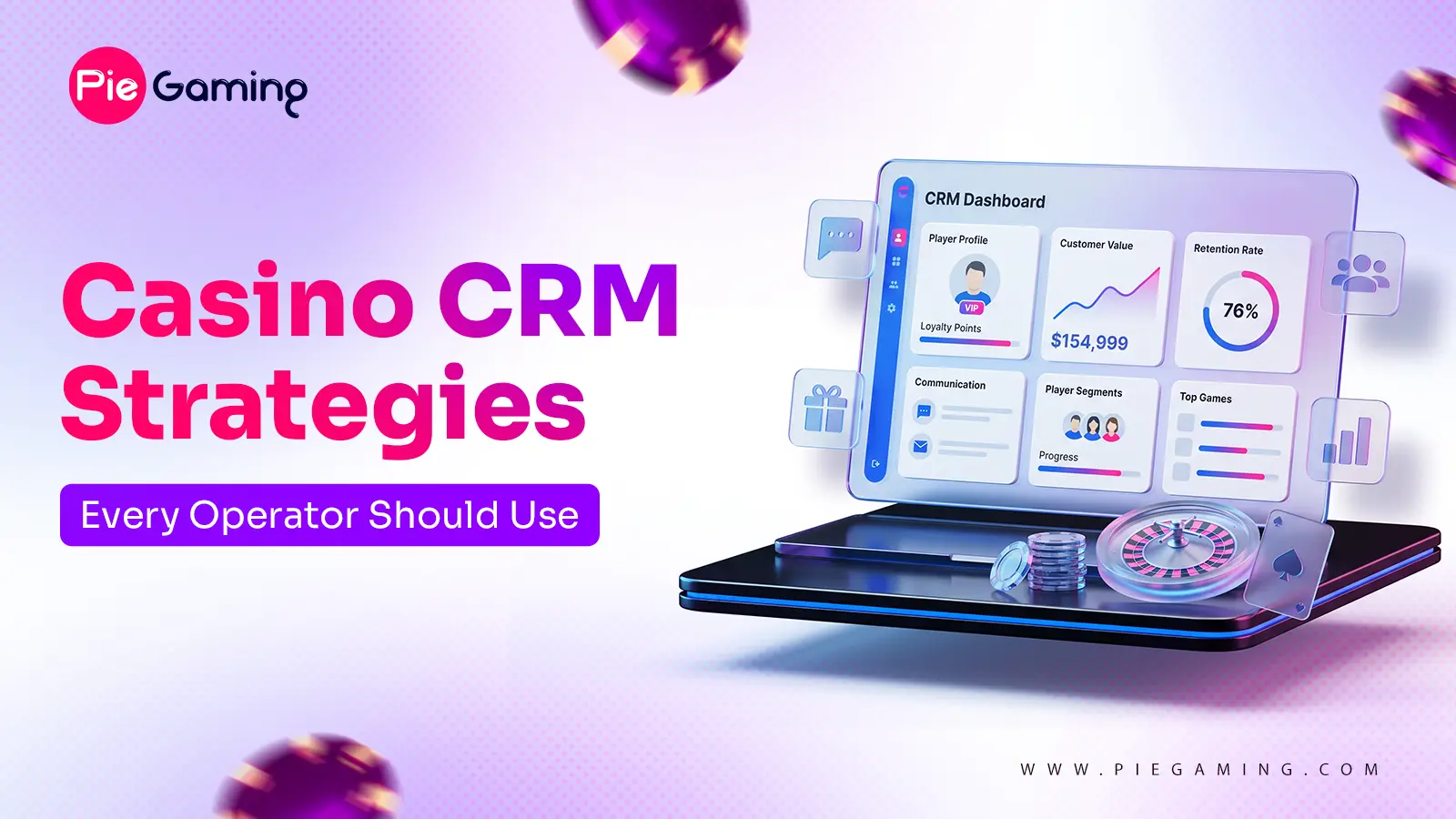
Casino CRM strategies help operators to personalize campaigns, improve player retention, reduce churn rate, and maximize player lifetime value.
A casino API integration is a software solution that connects your platform with games, payment gateways, wallets, KYC tools and other third-party solutions. It allows data to be exchanged between systems in real-time. This way you can launch quicker, automate tasks, and provide a smooth playable experience.
House Edge is the mathematical advantage built into online casino games and all other forms of gambling. It shapes the odds, influences your winnings and losses, and constitutes the cornerstone of any online casino or sportsbook operator’s overall financial strategy.
The Hi-Lo casino game is a simple card game where players predict whether the next card will be higher, lower, or equal to the current card. This guide explains how Hi-Lo works, its rules, betting options, payouts, gameplay, and strategies players can use when making predictions.

See you in your inbox soon!

Stay ahead of the game. Subscribe for exclusive content, updates, and insiders!