
White label and turnkey casino solutions help operators launch online casino businesses without building an entire platform from scratch. The real difference lies in knowing the licensing, integration, and operational capabilities of white label vs turnkey casino solutions.
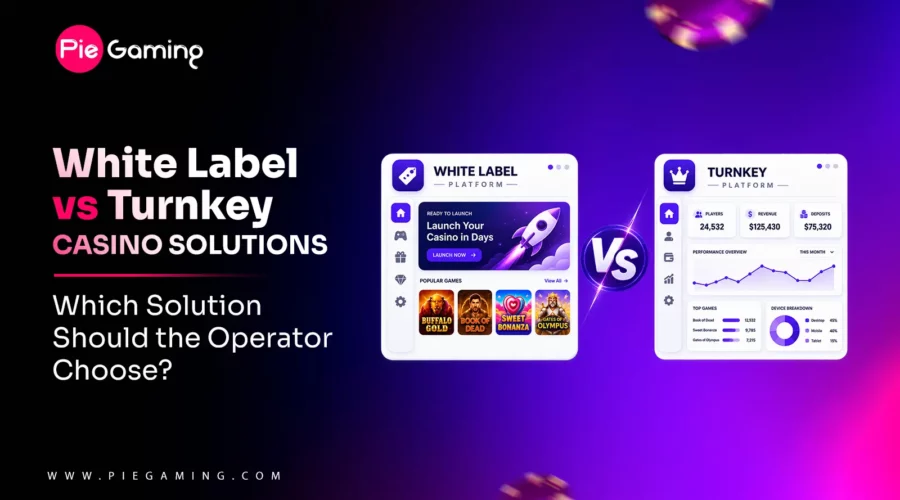
White label vs. turnkey casino solutions is the hot topic among startup or first-time operators who want to tap into the iGaming industry. However, it’s not about which model is “better,” but which model should operators use to have more control over operations.
White Label vs Turnkey Casino Platform Comparison
White label: lower cost, faster launch, less control.
Turnkey: higher investment, longer timeline, full platform ownership.
The right choice depends on whether you are optimising for speed to market or long-term operational independence.
Both solutions offer core technology required to run an online casino, like PAM, CRM Software, CMS, affiliate solutions, bonus engines, etc. But operational responsibilities differ significantly.
A white label is designed for operators who want a fast market entry, whereas turnkey is best suited for businesses that want a fully customized platform. However, the choice depends on the budget, timeline, licensing strategy, payment requirements, customization needs, and long-term business plans.
This blog is your ultimate guide for white label vs. turnkey casino solutions.
Some Stats to Look at:
- The global online casino industry is projected to grow to
USD 30.8 billion by 2030. - The UK online casino industry is the most mature and tightly regulated in the European market.
- North America
is estimated to dominate the online casino market due to increasing legalization of online gambling in various U.S. jurisdictions, including New Jersey.
What is a White Label Casino Solution?
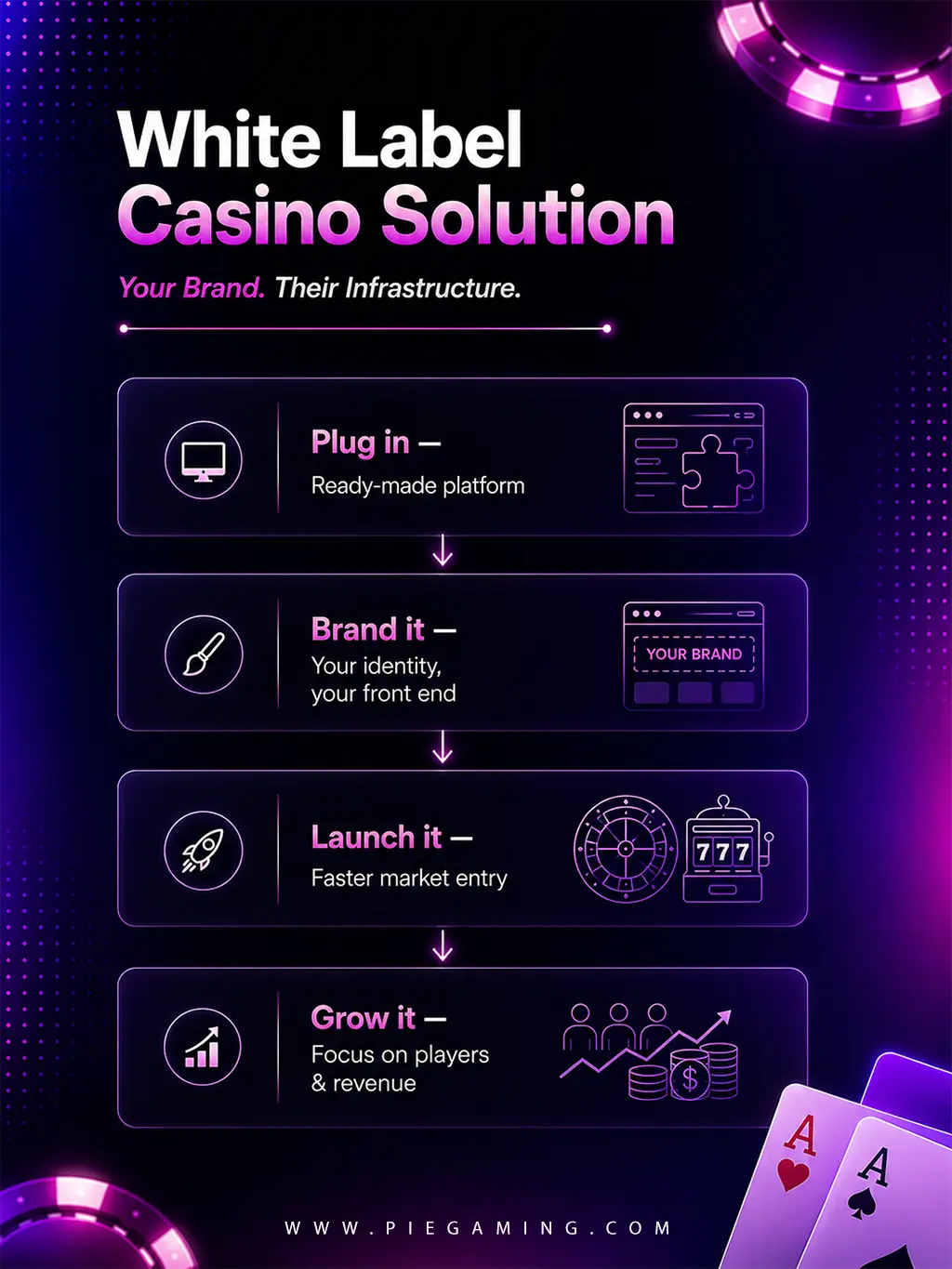
White Label Casino model
A white label casino solution is a fully developed, pre-built, and ready-to-go-live platform. It allows operators to launch a branded casino without building technology from scratch. The software provider manages everything from licensing to game content, payment solutions, security, and customer support.
The white label casino solution comes pre-integrated with essential tools like PAM, CMS, affiliate management, risk management, bonus engine, etc. Though customization is not available in this, the front end can always be branded with your name, logo, and colors.
For startups or first-time operators, this reduces the technology burden, which needs to be built before launching. Further, a white label solution saves time and money, making it the perfect model for startups and casino businesses looking to start a white label casino business with minimal effort.
Key Features of White Label Solution
What makes a white label solution stand out in the market? Its features, which include the following:
- A ready-to-launch software
A white label casino is ready-to-launch software that goes live in 2-6 weeks. It shortens the implementation process, reduces the technical complexity, and allows operators to launch effortlessly.
- Provider-managed infrastructure
White label casino solutions technology is mainly handled by the software provider, so operators don’t face any technical issues.
- Pre-integrated PAM/Back Office
Operators can manage players’ activity, KYC, payments, bonuses, and other operational activities from existing tools like PAM or the back office.
- A vast game library
The white label casino solution comes with a huge gaming library. It boasts popular casino games from top providers like Evolution, Pragmatic Play, Evoplay, Spribe, etc. So, operators don’t need individual integration from scratch.
Pros and Cons of White Label
| Pros | Cons |
| Faster market entry within 2 weeks | More dependency on the provider |
| Lower initial investment | Limited customization |
| Pre-integrated games & operational tools | Revenue share & recurring commercial costs |
| Comes with operator’s license | Integration choices may be provider-dependent |
What is a Turnkey Casino Solution?
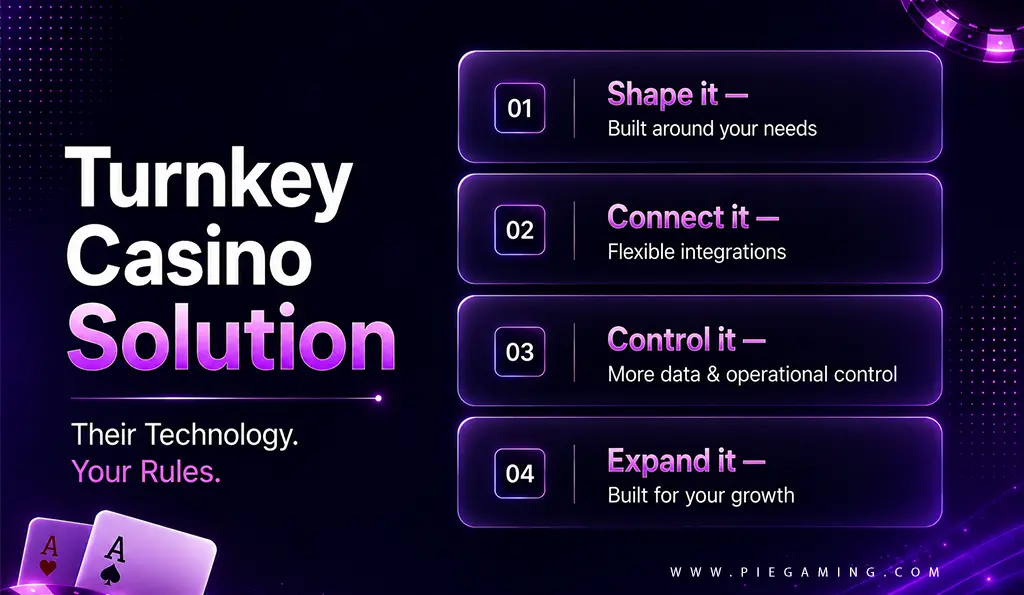
Turnkey Casino Solution Model
A turnkey casino solution is a fully developed, ready-to-use casino platform that requires minimal setup for fast deployment. The platform offers more control and customization to operators to tailor the platform as per their brand.
In other words, turnkey casino solutions give operators the freedom to decide on payment solutions, branding, game selection, licensing, and other key operational aspects.
In terms of customization, both models cover the basic UI, UX, content, layout, and promotions, but Turnkey goes deeper. Also, the setup process takes more time than the white label due to modifications and customizations.
With turnkey, operators can build a more unique and differentiated brand to outperform competitors.
Key Features of Turnkey Casino Solution
A good platform is defined by its robust features. Top features of the turnkey casino solution include:
- Fully customizable
A turnkey casino solution is a fully customizable platform that provides you with unique features and design elements. From UI, UX, layout, and content, customize the platform as per your needs.
- Flexible integrations
Payment providers, game suppliers, and other third-party services can easily be integrated as per business requirements.
- Dynamic game category
Operators can customize their own gaming category on the platform. For example, segmenting games into categories like popular games, hot games, fruit games, etc.
- Scalable infrastructure
The platform can easily grow as operator traffic spikes along with market and future integrations.
- Pre-integrated PAM
Turnkey casino platforms come pre-integrated with PAM, which helps them manage players’ activity. From first sign-up to first deposit, KYC, dynamic segmentation, and campaign management, operators can manage everything.
Pros and Cons of Turnkey
| Pros | Cons |
| Greater customization | Higher initial implementation cost |
| More control over integrations and configurations | Longer implementation due to more customization |
| Greater flexibility for payments and game suppliers | Requires more technical involvement |
| Better fit for differentiated brands | Ongoing development and maintenance cost can be higher |
Turnkey vs. White Label Casino Solutions: The Core Differences
The simplest way to understand white label vs. turnkey casino is to look at their shared responsibilities that sit with the operator and the provider.
| Particulars | White label | Turnkey |
| Platform ownership | Usually the provider’s control. But the right depends on the contract. | More operator control, but ownership of code is contract-specific |
| Revenue model | May involve setup fees, recurring fees, and revenue fees. | Project implementation fees plus ongoing platform costs |
| Set up fee | Lower | Higher |
| Customization | Mostly branding, design & available configuration | Deeper UI/UX, themes, and feature customization |
| Game library | Based on the provider’s existing integration | Can be modified around operator’s preferred choice |
| Payment methods | Majorly pre-integrated methods | Greater flexibility to add preferred payment solutions |
| Licensing | Supported through the provider | Operators obtain their own license |
| Scalability | Depends on the provider’s platform & scalability | More flexible around growth |
| Integration flexibility | Restricted to the provider’s ecosystem | greater freedom to select integrations |
| Technical control | Lower | Higher |
| Operational responsibility | Lower technical | Greater technical and operational responsibility |
| Best For | Startups, entrepreneurs | Established operators building a long-term business |
How Costs Differ Between White Label and Turnkey?
Whether you’re a startup or an established operator switching to a turnkey platform, one thing that will concern you the most is – Cost.
White label and turnkey providers charge numerous fees for their services. Without knowing the cost, your promised venture could turn into a costly expense.
The table below highlights the cost difference for white label vs. turnkey casino solutions.
| Factors | White Label | Turnkey |
| Initial investment | Lower – $10k – $50k+ | Higher – $50k – $200k+ |
| Revenue share | Higher as providers take a % of GGR. | Lower as profit retention is with operator. So, no GGR share. |
| Licensing/Compliance | Depends on the commercial licensing structure of a provider | Operators may carry more direct responsibility |
| Provider fees | Recurring fee/revenue share | Platform and support fee |
The key question here is not – “which model costs less?”
It is:
“Which model gives you the best total cost of ownership for the targeted market and business model?”
It could be simplified as:
Startup operators testing a new niche can go with lower upfront costs. And established operators expecting multiple markets, customization capabilities, and data ownership may justify a larger initial investment for greater control.
White Label vs. Turnkey: Which Model is Right for Your Business?
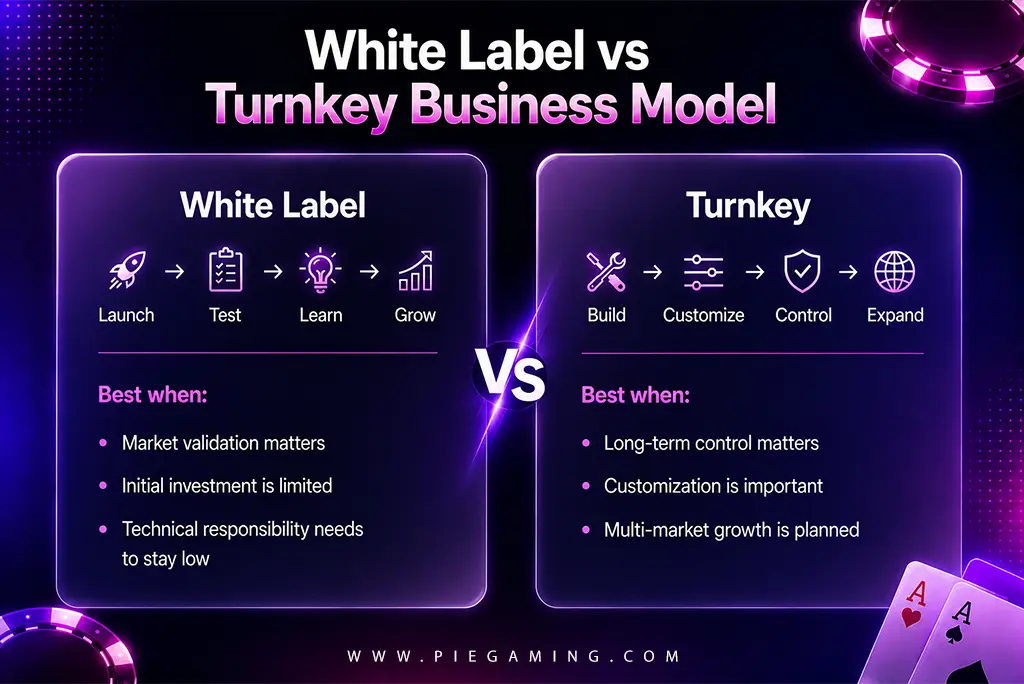
White Label vs Turnkey Model
White label vs. turnkey casino solutions both help operators start an online casino. But choice heavily depends on the operator’s needs, business requirements, and cost.
Still, the practical approach to understanding the model is best to…
Consider White Label When:
- Startup or entrepreneur who wants to get into the market without building large technology operations.
- Operators prefer to have basic casino features without any licensing responsibility.
- The white label software provider manages technical operations, customer support, and payment and licensing work on his own. So, if the operator wants to get rid of this responsibility, they can choose to go with this.
Choose Turnkey When:
- Operators want more control over casino operations and customization.
- Operators have knowledge about licensing and compliance work and are seeking long-term casino growth.
- Mid-size operators working with a white label casino and wanting to switch to a broad solution can consider turnkey.
Look at the table below to better understand which model suits you best in the simplest way.
| If your priority is | Consider… |
| Faster market entry | White label |
| Lower initial investment | White label |
| Less technical model | White label |
| Greater customization | Turnkey |
| More payment flexibility | Turnkey |
| Greater data control | Turnkey |
| Multi-market strategy | Turnkey |
| Long-term platform flexibility | Turnkey |
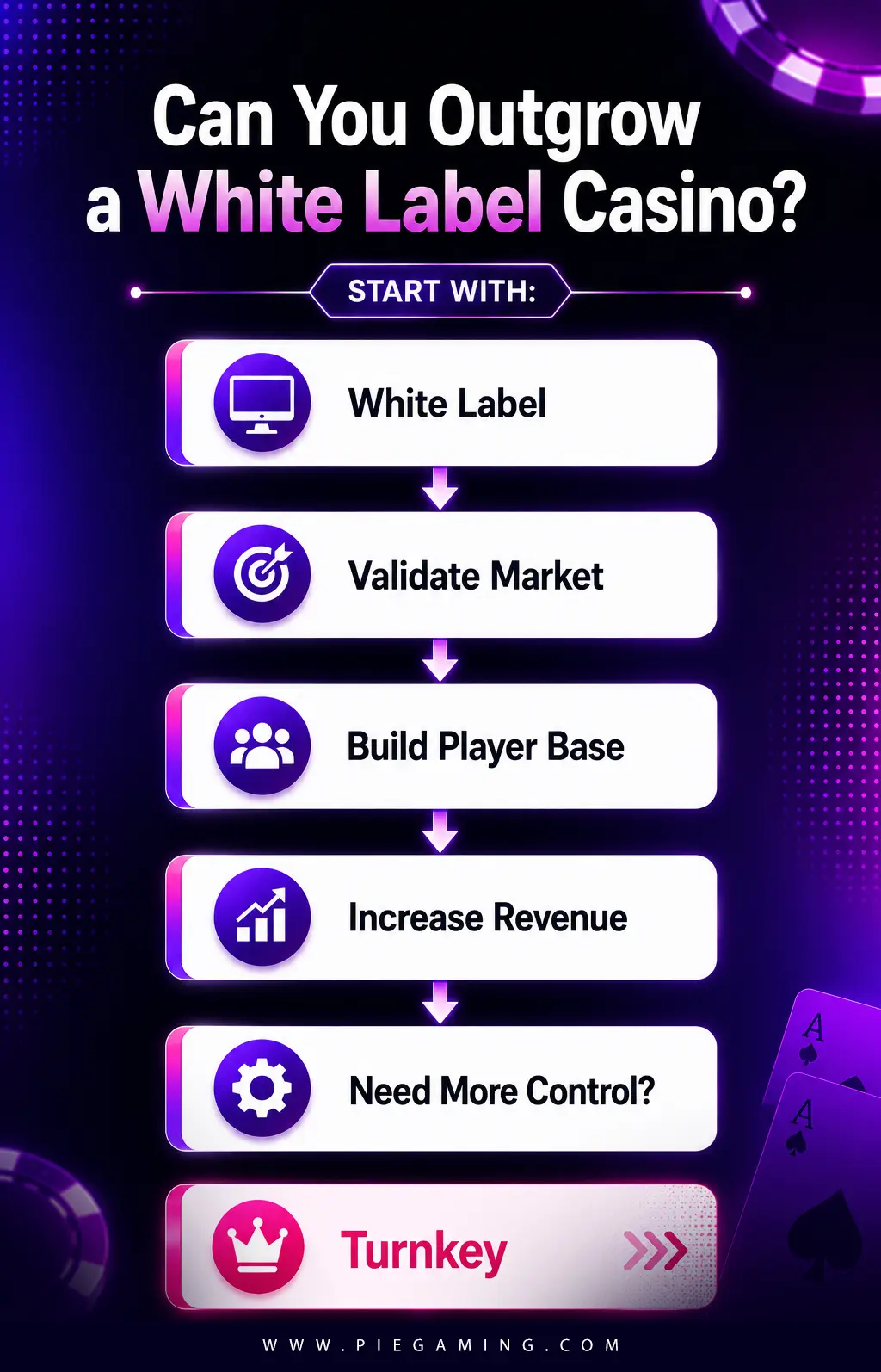
Steps to outgrow a white label casino platform
What Are the Next Steps After You Choose?
If you choose white label:
Request a demo from your shortlisted provider and confirm the launch timeline, licensing coverage, and what is included in ongoing technical support. Review the revenue share structure and establish which customizations are available within the existing framework before signing. PieGaming launches white label casinos within two weeks, so your go-live date should be confirmed as part of the initial scoping call.
If you choose turnkey:
Start by defining your target market, licensing jurisdiction, and platform requirements before approaching providers. Turnkey builds involve more configuration across payments, game content, and back-office setup, so ask for a detailed project timeline broken into milestones. PieGaming delivers turnkey casino launches in four to six weeks depending on scope, with a dedicated account manager supporting the process from onboarding through to go-live.
How Does PieGaming Help You Launch the Casino Platform?
PieGaming is a premier provider of white label and turnkey casino software solutions. All our solutions are futuristic, scalable, and tailored to specific business needs and operators. We have been in the industry for over 10 years and have worked with 150+ clients across the world. Both our white label and turnkey solutions come pre-integrated with PAM, back office, affiliate solution, risk management, CRM, sports, and popular casino games.
Further, we ensure to launch your casino within 2 weeks with a white label model. With the turnkey model, we launch casinos in 4-6 weeks, depending on business requirements. Also, we provide a dedicated account manager who supports you from start to finish. Our team supports long-term growth with platform upgrades.
Conclusion
To conclude, it’s hard to say which one is the winner between the white label vs. turnkey casino solutions. For startup operators, a white label is an ideal solution, as it ensures the fastest market entry too without much investment. Whereas turnkey is more suitable for operators who want full customization, integration flexibility, and control over their long-term platform strategy. Remember that a turnkey is a little costlier than a white label solution.
Now that you’re fully aware of both solutions, evaluate the top online casino software providers to choose the right one. Check provider contracts, integration capabilities, support models, licensing, and total cost of ownership.
Contact Us
FAQs
-
Which is better: white label or turnkey solutions for online casinos?
White label is better for operators who want to quickly enter the market with lower upfront technology investment. Turnkey is better when operators want more customization capabilities; integration flexibility and greater platform control are more important.
-
Which is cheaper to start: white label or turnkey casino solutions?
A white label platform generally requires less upfront technology investment because the platform is already built. Whereas turnkey usually costs more because customization, integration, and implementation require additional work and cost as well.
-
How long does it take to launch a white label vs. turnkey casino?
The timeline to launch a white label and turnkey casino depends on the provider and project scope. PieGaming claims to launch a white label platform in 2 weeks, and turnkey can be launched within 4-6 weeks, subject to customization and implementation requirements.
-
Is a Custom-Built Casino Better Than White Label or Turnkey?
Custom development gives you complete control over every aspect of the platform but requires significantly more time, budget, and in-house technical expertise. White label and turnkey solutions are the practical choice for most operators because they deliver a fully functional, tested platform at a fraction of the cost and timeline. Custom builds are only worth considering if your product requires functionality that no existing platform can support.
-
White label vs turnkey casino: what happens if you want to change providers?
This depends heavily on the contract. Before signing, operators must confirm data-export rights, player-account migration, payment relationships, domain ownership, game integrations, outstanding balances, etc. A provider's change is more complicated when the operator is deeply dependent on a provider's proprietary ecosystem.
-
Does white-label vs turnkey affect casino licensing?
Not automatically. Licensing depends on the jurisdiction and the actual business structure. The operator must know who provides the gambling facilities, who contracts with players, who manages compliance, and which entity holds the required license.
-
Can I Add More Games to a White Label Casino?
Yes, but the extent depends on your provider. White label casinos operate within the provider's existing game library, so adding titles outside that catalogue typically requires the provider to integrate a new studio or aggregator on your behalf. If game variety is a priority, confirm the provider's aggregation partnerships and the process for requesting new content before signing.
-
White Label vs Turnkey Casino Software: Which Should I Choose?
White label casino software is the better fit for operators who want a fast, low-investment launch without managing technical operations. Turnkey casino software suits operators who need full control over the platform, payment stack, and long-term customization. The right choice comes down to your budget, timeline, and how much operational independence you need from day one.

Monika Gola is an iGaming content specialist at PieGaming. Since 2020, she has been researching and developing content around software selection, online casino & sports betting regulations, and operator growth strategies. Her research includes analyzing market opportunities in regions like Europe, Africa, and Southeast Asia, as well as evaluating regulatory frameworks and entry barriers. She is actively monitoring industry trends, compliance updates, and evolving player demands across global iGaming markets to help operators navigate this industry seamlessly.
Casino gamification refers to the inclusion of goals, levels, rewards, and other video game elements around the core gambling area. Learn how operators can use gamification in igaming to create more engaging player journeys while managing costs.

Stake.Us, PlayFame, McLuck, MegaBonanza and Zonko are social casino platforms that are free-to-play casino games using virtual coins. These platforms offer hundreds of slots, tables, and instant-win games with daily free coins, tournaments, and bonus features.
Casino CRM strategies help operators to personalize campaigns, improve player retention, reduce churn rate, and maximize player lifetime value.
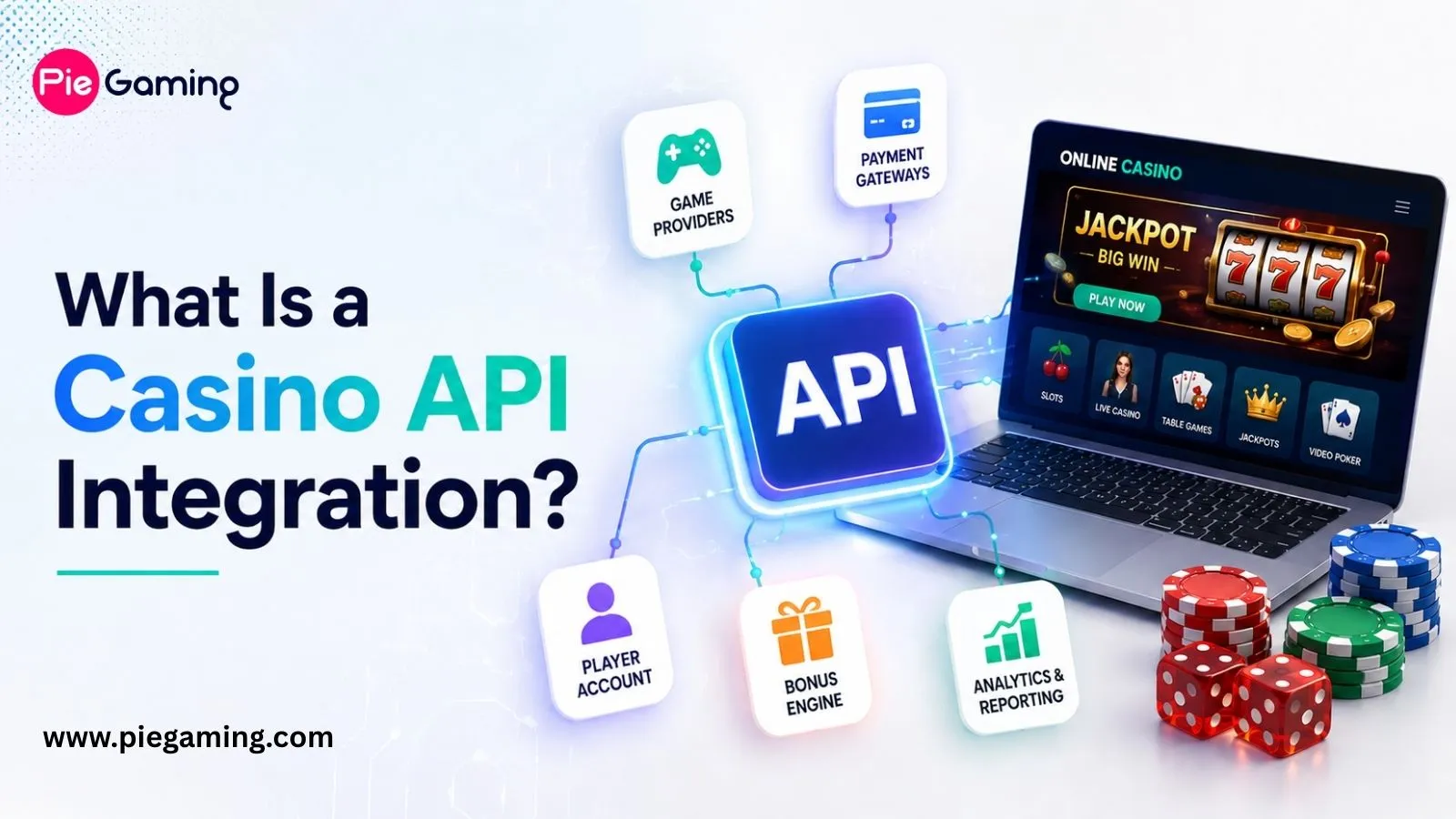
A casino API integration is a software solution that connects your platform with games, payment gateways, wallets, KYC tools and other third-party solutions. It allows data to be exchanged between systems in real-time. This way you can launch quicker, automate tasks, and provide a smooth playable experience.
House Edge is the mathematical advantage built into online casino games and all other forms of gambling. It shapes the odds, influences your winnings and losses, and constitutes the cornerstone of any online casino or sportsbook operator’s overall financial strategy.

The Hi-Lo casino game is a simple card game where players predict whether the next card will be higher, lower, or equal to the current card. This guide explains how Hi-Lo works, its rules, betting options, payouts, gameplay, and strategies players can use when making predictions.
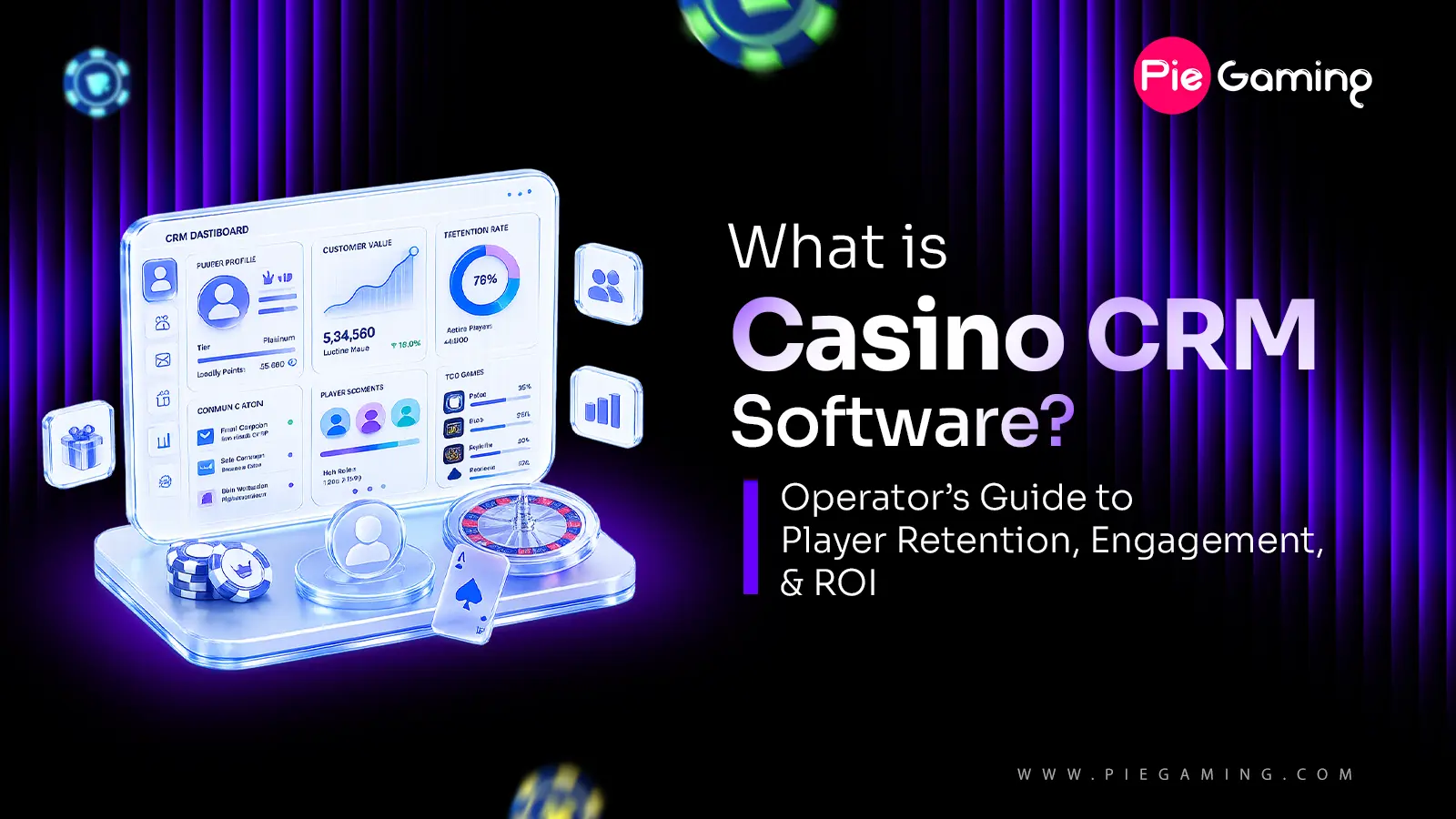
Casino CRM software is a specialized platform for online and land-based gambling operators that tracks player behavior, automates targeted promotions, manages VIP loyalty and supports regulatory compliance.

See you in your inbox soon!

Stay ahead of the game. Subscribe for exclusive content, updates, and insiders!