
This guide highlights the top 10 global casino game development companies in 2026, helping operators and investors identify reliable partners for building scalable, compliant gaming platforms.
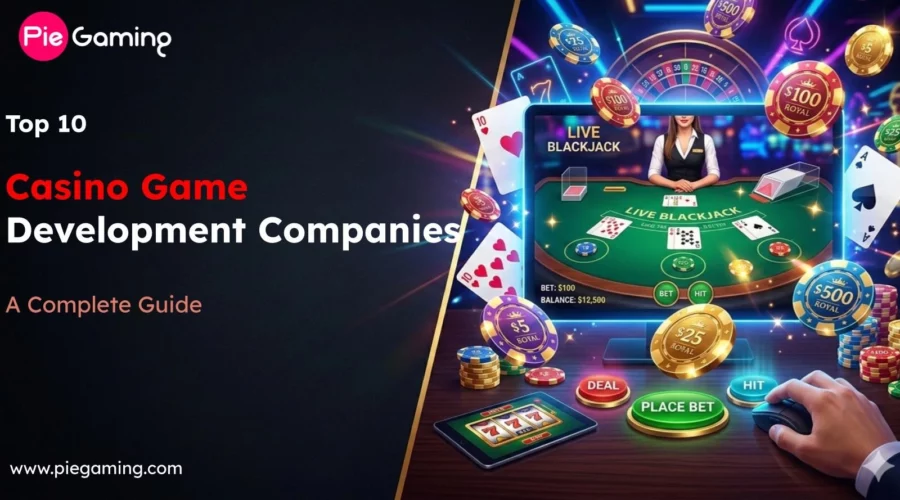
The iGaming industry has become a high-tech field where player expectations are at an all-time high. Immersion and mobile-first casino games have now become an essential aspect. By 2029, the worldwide casino gambling market is projected to grow to $342.31 billion.
Online casino operators now prioritise building a strategic ecosystem for players rather than just providing popular casino games. Technical scalability, cross-jurisdictional compliance, and the degree of “provably fair” transparency that contemporary players demand are all guaranteed by the correct provider. Casino software providers and aggregators, who facilitate the management of thousands of titles through unified API integrations, are crucial to this success.
Best Casino Game Development Companies in 2026
This blog will help you navigate the top 10 online casino game developers of 2026, ensuring you select partners that integrate flawlessly via a robust, modern casino gaming industry to maximize your GGR.
1. Evolution Gaming
- Founded Year: 2006
- Headquarters: Stockholm, Sweden
- Popular Game Types: Live Dealer, Augmented Reality (AR) Game Shows
Why operators choose them: Evolution remains the heavy hitter of the live vertical. In 2026, they mastered the “crossover” game, blending traditional table mechanics with high-energy AR visuals. Operators choose them because their brand carries instant trust. When you host an Evolution table, you aren’t just buying a game; you’re buying a social experience that keeps “whales” engaged for longer sessions. Their regional studios offer localized dealers, making them essential for expansion into emerging markets like Latin America.
2. Pragmatic Play
- Founded Year: 2015
- Headquarters: Sliema, Malta
- Popular Game Types: Slots, Live Casino, Virtual Sports
Why operators choose them: Pragmatic Play leads the industry if speed and volume are your top priorities. They regularly produce eight or more high-performing slots per month without compromising quality. Because it automates player engagement, their “Drops & Wins” tournament framework is a turnkey retention tool that operators adore.
3. Vivo Gaming
- Founded Year: 2010
- Headquarters: San José, Costa Rica
- Popular Game Types: Multi-lingual Live Dealer, Baccarat
Why operators choose them: Vivo Gaming has carved out a massive niche by being the most “operator-flexible” live provider. Vivo is excellent at localised, high-definition streaming for regional markets like Latin America and Southeast Asia, while others concentrate on ostentatious game shows. They provide a special “Chroma Key” solution that enables operators to digitally brand the tables with their own themes and logos. It’s the top choice for brands that want a bespoke, exclusive feel without the massive cost of building a private physical studio.
4. Aviatrix
- Founded Year: 2022
- Headquarters: Limassol, Cyprus
- Popular Game Types: NFT-based Crash Games
Why operators choose them: Aviatrix represents the “Web3” revolution of 2026. This isn’t just a crash game; it’s a loyalty program disguised as a game. Players “own” their aircraft as NFTs, which they can customize and level up as they play. For an operator, this is a retention of goldmine—players are less likely to switch platforms when they have invested time into “leveling up” their in-game assets. It is the perfect bridge for operators looking to modernize their portfolio and attract the crypto-native demographic to use Bitcoin for betting.
5. Spribe
- Founded Year: 2018
- Headquarters: Kyiv, Ukraine / Global Offices
- Popular Game Types: Turbo Games, Crash Games (Aviator)
Why operators choose them: Their games feel like high-end mobile apps rather than traditional casino machines. Operators choose them to target the “on-the-go” player who wants a 30-second session on the subway. The animations are fluid, the UI is intuitive for one-handed play, and the mathematical “hit rates” are tuned for high-frequency engagement. Operators prioritize Spribe because their games have incredibly low technical overhead. They run perfectly on low-end mobile devices and unstable internet connections, making them the primary GGR engine for operators in emerging iGaming markets across Africa and Latin America.
6. PG Soft (Pocket Games Soft)
- Founded Year: 2015
- Headquarters: Valletta, Malta
- Popular Game Types: Mobile-First 3D Slots
Why operators choose them: PG Soft is the undisputed master of portrait-mode gaming. By 2026, mobile traffic accounts for over 80% of iGaming, and PG Soft’s “vertical-first” design philosophy hits this mark perfectly. Instead of feeling like conventional casino machines, their games have the feel of upscale mobile apps. They are selected by operators to target the “on-the-go” player who desires a 30-second tube session. The mathematical “hit rates” are adjusted for high-frequency engagement; the animations are fluid, and the user interface is simple for one-handed play.
7. OneTouch
- Founded Year: 2015
- Headquarters: Tallinn, Estonia
- Popular Game Types: Premium Mobile Table Games, Slots
Why operators choose them: OneTouch is the “minimalist” of the group. They specialise in high-performance, clean table games that look amazing on high-resolution smartphone screens. While many providers over-complicate their UI, OneTouch keeps it ergonomic. OneTouch’s Baccarat and Roulette are frequently used by operators who wish to provide a “VIP” or “Luxury” mobile experience. Their games emphasise a “mobile-first” ergonomic layout that lessens player fatigue during extended sessions and is lightweight and quick to load.
8. NetEnt (Evolution Group)
- Founded Year: 1996
- Headquarters: Stockholm, Sweden
- Popular Game Types: Cinematic Slots, Branded Content
Why operators choose them: Why they are selected by operators: The industry’s “Blockbuster” studio is NetEnt. Their games like Divine Fortune and Starburst are still at the top of the most-played lists in 2026. They are excellent at creating branded content, such as immersive slot experiences based on well-known films and music icons. Operators choose NetEnt for its high “brand equity.” NetEnt is a crucial tool for converting high-value players in regulated European and North American markets because it communicates to the player that your casino is reputable and high-tier.
9. BetGames
- Founded Year: 2012
- Headquarters: Vilnius, Lithuania
- Popular Game Types: Live Betting, Lotto, Fixed-Odds Games
Why operators choose them: BetGames occupies a unique space between the sportsbook and the casino. Their 24/7 live-streamed lottery and dice games are designed for “non-stop” action. In 2026, they are the go-to game provider for sportsbooks looking to cross-sell their users. Because the games use “fixed-odds” logic, they are incredibly intuitive for sports bettors who find traditional slots confusing. Their simple, elegant live broadcasts create a high-frequency betting loop that is perfect for filling the “gaps” between major sporting events.
10. Evoplay
- Founded Year: 2017
- Headquarters: Lviv, Ukraine
- Popular Game Types: RPG-inspired Slots, Instant Wins, VR-ready Games
Why operators choose them: The operator who wishes to present the future should use Evoplay. They are the most innovative developer on this list, frequently adding first-person shooter mechanics, inventory systems, and role-playing aspects to their games. Evoplay’s “360-degree” game engine is a key differentiator in 2026 as VR and AR gain traction. When they wish to differentiate themselves from the “sea of sameness” and provide a gaming experience that is on par with contemporary video game consoles, operators select them.
Read Blog – Complete Guide Best iGaming Software Provider
Selection Criteria for the Top Casino Game Development Companies in 2026
Identifying industry leaders in 2026 necessitates a thorough, multifaceted screening procedure. The definition of “excellence” in 2026 has changed from straightforward game variety to technical robustness and regulatory vision.
Our Selection Pillars:
- Game Portfolio & Innovation: Our top choices are those that incorporate augmented reality (AR), AI-driven personalization, and “crash” mechanics that appeal to players in 2026.
- Licensing & Compliance: All the companies on this list have top-tier licenses from organizations such as Curacao, UKGC, and MGA (Malta).
- RTP & Game Fairness: We confirmed that these game providers are certified Random Number Generators (RNG) and are routinely audited to guarantee the accuracy of published Return to Player (RTP) percentages.
- Mobile & Live Dealer Support: With over 80% of iGaming traffic coming from smartphones, we preferred studios built for mobile. For live dealer providers, we sought out 5G-optimized low-latency streaming and multi-lingual support.
- Compatibility with Modern Software: We chose developers whose titles integrate seamlessly with unified APIs and work well with major 2026 casino game aggregators.
- Global Market Presence: We preferred companies with a strong record of localizing their content. They need to provide themes and languages that connect with various global markets.
Read Blog – Choose the Perfect igaming Software Provider
Choosing the Right Game Developers with the Right Casino Software
For an operator, real magic happens in the execution. Manually managing ten different contracts, technical bridges, and casino back-office systems is a recipe for operational burnout.
This is where the best casino game development companies, like PieGaming, make a significant impact by simplifying operations and strengthening the role of PAM across casino platforms. Instead of getting stuck in individual API connections, PieGaming lets you connect to a large library of top-notch content through one simple integration. You gain immediate access to major players like Evolution and Pragmatic Play; all managed from a single central dashboard.

FAQs
-
How do casino game providers integrate with software platforms?
Integration is primarily handled through Unified API (Application Programming Interface) technology. Instead of building a new bridge for every game, developers use APIs as digital connectors that allow the casino's backend to "talk" to the provider’s game server. The typical process follows these steps: Documentation Review: Developers study the provider's API specifications (endpoints, data formats). Sandbox Testing: Integration is first performed in a "test environment" to ensure balance updates and win-logic work correctly without real money. Wallet Integration: The most critical step is connecting the "seamless wallet," ensuring that when a player spins a slot, the funds are instantly deducted and credited across both systems. Go-Live: Once quality assurance (QA) is passed, the games are toggled "on" for the public.
-
How much does it cost to develop a casino game?
In 2026, costs vary wildly based on complexity and regional developer rates. Simple 2D Slots: $10,000 – $50,000. Premium 3D/Cinematic Slots: $50,000 – $150,000+. Crash or Instant Win Games: $20,000 – $60,000. Live Dealer Setup: $100,000+ (due to physical studio, hardware, and streaming latency requirements). Note: Most online operators do not develop their own games. They pay a setup fee ($5k–$20k) to an aggregator and a GGR share of 10%–20% to host existing top-tier titles.
-
Are these casino game development companies experienced in regulatory compliance?
Yes. Top-tier developers (like those in our Top 10 list) treat compliance as a core product feature. They hold licenses from major authorities like the MGA (Malta), UKGC (United Kingdom), and Curacao. Their compliance expertise includes: RNG Certification: Providing proof from labs like iTech Labs or eCOGRA that their games are truly random. Jurisdictional Customization: Automatically adjusting game features (like spin speed or "auto-play" limits) to meet specific local laws in countries like Germany or the UK. Responsible Gaming Tools: Building in-game reality checks, session timers, and self-exclusion triggers.
-
What factors should I consider when choosing a casino game development company?
When vetting a partner, prioritize these five technical and business pillars: Mobile-First Design: Ensure games are built in HTML5 and optimized for "one-handed" portrait play. Integration Speed: Ask if they have a Unified API that allows you to add their entire library at once rather than one by one. RTP Flexibility: Check if they offer adjustable RTP (Return to Player) ranges so you can manage your house edge based on your market's tax requirements. Uptime & Support: Look for a 99.9% SLA (Service Level Agreement) and 24/7 technical support—any downtime directly results in lost revenue. Bonus Tools: Do they offer "out-of-the-box" engagement features like free spins, tournaments, or "mystery drops"?

Jaya Swaroop has been covering iGaming and betting technology since 2019, with a specialization in online casino platforms, sportsbook solutions, and licensing frameworks. Her work involves analyzing platform capabilities and evaluating cost structures, compliance requirements, payment integrations, market strategies, and regulatory updates that impact operators entering or scaling in the iGaming space. With a background in B2B marketing and content strategy, she has contributed to SEO-led growth and demand generation initiatives for global businesses. Jaya holds a Bachelor’s degree in Science (Chemistry & Mathematics) and is certified in content writing, email marketing (HubSpot), project management, and Google Analytics.

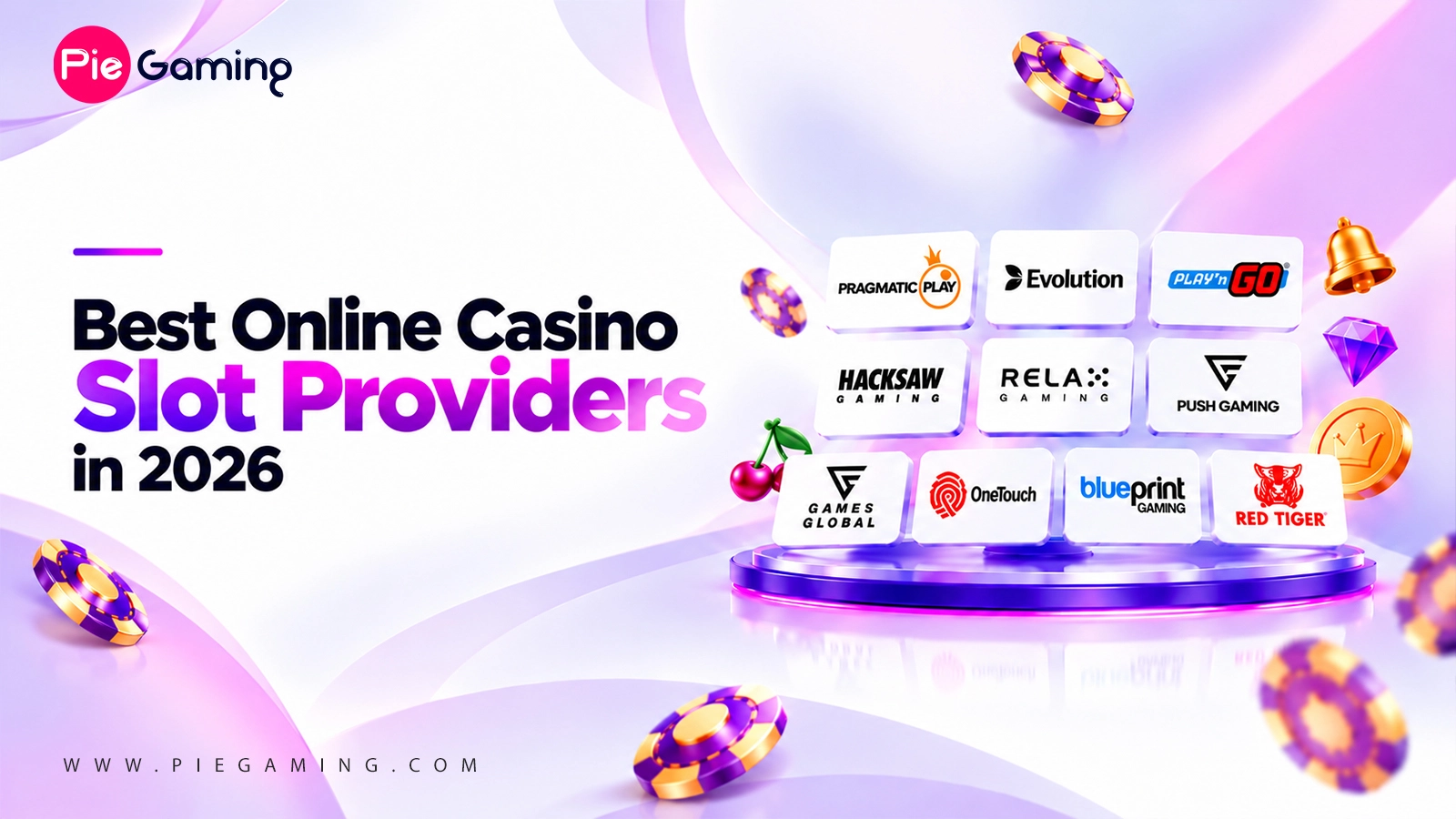
The best online casino slot providers in 2026 are Pragmatic Play, Evolution Group Studios, Play’n GO, Hacksaw Gaming, Relax Gaming, Games Global, Playtech, Push Gaming, Yggdrasil and Blueprint Gaming. Operators should compare them on six criteria: licensing and certification, RTP range, volatility, market fit, integration and commercial terms.
Casino gamification refers to the inclusion of goals, levels, rewards, and other video game elements around the core gambling area. Learn how operators can use gamification in igaming to create more engaging player journeys while managing costs.
Stake.Us, PlayFame, McLuck, MegaBonanza and Zonko are social casino platforms that are free-to-play casino games using virtual coins. These platforms offer hundreds of slots, tables, and instant-win games with daily free coins, tournaments, and bonus features.
Casino CRM strategies help operators to personalize campaigns, improve player retention, reduce churn rate, and maximize player lifetime value.
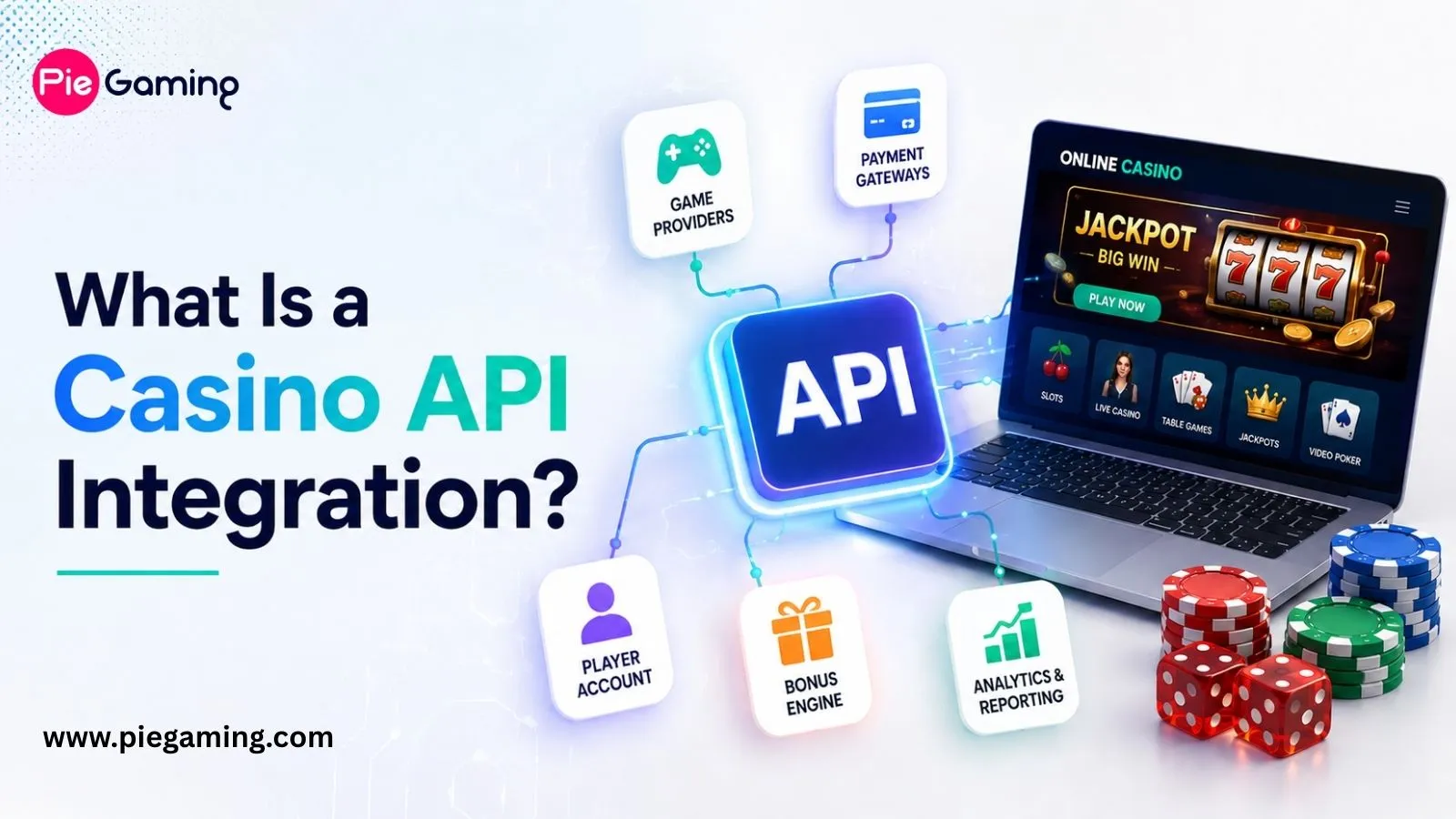
A casino API integration is a software solution that connects your platform with games, payment gateways, wallets, KYC tools and other third-party solutions. It allows data to be exchanged between systems in real-time. This way you can launch quicker, automate tasks, and provide a smooth playable experience.
House Edge is the mathematical advantage built into online casino games and all other forms of gambling. It shapes the odds, influences your winnings and losses, and constitutes the cornerstone of any online casino or sportsbook operator’s overall financial strategy.
The Hi-Lo casino game is a simple card game where players predict whether the next card will be higher, lower, or equal to the current card. This guide explains how Hi-Lo works, its rules, betting options, payouts, gameplay, and strategies players can use when making predictions.

See you in your inbox soon!

Stay ahead of the game. Subscribe for exclusive content, updates, and insiders!