
Learn what positive EV betting means, how to calculate expected value with any odds, how the vig works against bettors, and how to size +EV bets.

Have you ever noticed how some bettors seem to win consistently at betting while most of us lose money?
The difference often comes down to a simple math concept called Expected Value Betting (EV).
While most punters place bets based on their gut feeling or favorite teams, smart bettors use EVs to spot bets that are likely to make money.
Positive EV (+EV) betting means taking a bet only when the odds pay more than the true chance of the outcome justifies. Over a large number of bets, that gap is what produces a profit.
This guide explains what EV means in betting, how to calculate it with the expected value formula, how the bookmaker’s margin (vig) works against you, and where +EV strategies run into real-world limits.
What Is The Expected Value in Sports Betting?
EV sports betting predicts whether you’ll make or lose money on a bet over the long run.
It compares your estimated true probability of an event against the bookmaker’s odds.
When you spot opportunities where your calculated probability is higher than the bookmaker’s, you’ve found a value bet.
To be precise, if you were to make the same bet over and over again, would you make money or lose money?
That’s what EV betting tells you!
Let’s understand this in two ways:
1) Simple example:
Your friend offers you a coin flip bet:
- If it lands heads, you win $120
- If it lands tails, you lose $100
- Each outcome has a 50% chance
The math:
EV= (Chance of winning x Amount you win) – (Chance of losing x Amount you lose)
EV= (0.5 x $120) – (0.5 x $100)
EV= ($60 – $50)
EV= + $10
This $10 EV means that, on average, you’ll profit $10 every time you make this bet over the long run.
2) EV Sports Betting Example:
Let’s say you are betting on a football match:
- Bookmaker Odds: 2.00 (50% chance according to a bookmaker)
- Your research shows the team has a 60% chance of winning
- Your bet $100
The Math:
EV= (0.60 x $100)- (0.40 x $100)
EV= $60 – $40
EV= +$20
A positive EV means the bet makes money on average over many repetitions; a negative EV means it loses money on average. Your result is only as good as your probability estimate.
How to Calculate Expected Value With Any Odds
The general formula works with decimal odds:
EV = (P(win) × (decimal odds − 1) × stake) − (P(lose) × stake)
The bookmaker’s implied probability is 1 ÷ decimal odds. Odds of 2.50 imply 40%, and odds of 1.80 imply about 55.6%. A bet is +EV when your estimated probability is higher than the implied probability.
Example: you stake $50 at 2.50 on an outcome you rate at 45%.
EV = (0.45 × 1.50 × $50) − (0.55 × $50) = $33.75 − $27.50 = +$6.25, or 12.5% of the stake.
For American odds, convert first: +150 equals 2.50 in decimal, and −110 equals about 1.91.
Implied probabilities include the bookmaker’s margin, so many +EV bettors compare a price against a “no-vig” fair price from a sharp, high-volume market instead of relying only on their own model.
| Insider Tipℹ️
The agenda is finding bets where you think the real probability is better than the bookmaker thinks. That’s where the value lies. |
Why Is Expected Value (EV) Crucial In Betting?
Expected value is the mathematical edge that separates winners from losers in the betting market. Here’s why it matters the most:
1) Identifies Profitable Bets
EV betting helps you find bets where you have a real advantage.
It’s like having a calculator that shows which bets are worth your money.
When the bookmaker’s odds don’t match the true chances of something happening, EV helps you spot these money-making opportunities.
2) Focuses On Long-term Success
EV helps long-term profit by focusing on the average expected outcome of each decision rather than individual results.
When you consistently choose options with positive expected value, you’ll make more money than you lose over time.
By consistently finding bets where the potential rewards are greater than the chances of losing, bettors can gain a long-term advantage and increase their chances of making money consistently.
3) Reduces Emotional Decision-making
EV betting uses pure math to make betting decisions.
You don’t bet based on feelings, hunches, or stress. The numbers tell you exactly when to bet and pass, keeping your decisions clear and logical.
4) Maximizes Bankroll Efficiency
EV tells you whether a bet is worth taking. A staking method such as the Kelly criterion (covered below) then uses the size of that edge to decide how much to bet.
You’ll know where to place bigger bets – on good opportunities and small bets on riskier ones.
This helps your betting money last longer and grow steadily.
5) Helps Avoid Negative ROI
EV clearly shows which bets will lose you money over time.
It helps you skip bad bets like long parlays (the bookmaker’s margin compounds on every leg) or sportsbook bonus types that come with heavy wagering terms.
You’ll spot and avoid bets that seem good but actually cost you money.
Positive VS. Negative EV: What Does It Mean?

Comparing Positive EV & Negative EV
Positive Expected Value (+EV)
When you find a bet where you have better chances of winning than what the odds show.
It’s like finding a betting opportunity where you’ll make more money than you’ll lose in the long run.
The major things to know about positive EV bets are:
- Your research shows better chances of winning than what the betting odds represent.
- Even if you lose some bets, you’ll make money if you keep betting in these situations.
- If you know a team has a 65% chance to win, but the odds suggest they only have a 50% chance, you’ve found +EV.
Negative Expected Value (-EV)
These are bets where your real chances of winning are worse than what the odds suggest. These bets will eat away at your money because:
- The betting odds make the bet look better than it really is.
- Keep making these bets and your money will slowly disappear.
- Most casino games and most multi-leg parlays, where the bookmaker’s margin is built into every leg.
Here’s an example of a Negative EV bet:
Betting $100 on Black in Roulette:
- 18/38 chance (47.37%) to win $100
- 20/38 chance (52.63%) to lose $100
EV betting calculation:
(47.37% x $100) + (52.63% x -$100)
=- $5.26
For every $100 bet, players can expect to lose $5.26 on average in the long run.
The negative EV exists because the true chance of winning (18/38, or 47.37%) is below the 50% that an even-money (1:1) payout needs to break even. The two green pockets (0 and 00) create the house edge.
This house edge ensures that while you might win sometimes in the short run, you’ll mathematically lose money over many spins.
Read More – How do sportsbooks make money?
Understanding The Link Between Vigorish And Negative EV
Vigorish (Vig) is a commission that bookmakers charge on bets, which creates a negative expected value for bettors.
This means that over time, the mathematics of betting ensures most bettors will lose money.
Standard sports betting odds of -110 require bettors to risk $110 to win $100.
When action is roughly balanced on both sides, the vig lets the bookmaker profit whichever side wins; when it isn’t, the book carries real risk on the result. Setting and holding that margin consistently across thousands of markets is one of the core jobs of a sportsbook platform.
At -110 odds, bettors must win 52.4% of bets to break even.
Any win rate below this results in losses due to the vig creating negative EV.
Real Betting Scenario:
Your $1,100 bankroll on ten $110 bets:
- 5 winning bets: +$500
- 5 losing bets: -$550
- Net result: -$50
- Per bet loss: $5
The margin varies by bookmaker and market: from around 2–3% at low-margin books on major markets, to roughly 4.5% on a standard −110/−110 line, to 10% or more on many props and futures.
Higher vig increases the required percentage needed to overcome the negative EV.
For instance, a vig of 10% means you might need to win 55% of your bets just to break even.
Sports betting has a built-in commission (called “vig”) that makes it mathematically hard to make money.
Even if you are good at picking winners, you first have to overcome these extra costs before you can profit.
Read More – top sports betting software providers
Strategies To Maximize Positive Expected Value In Betting

Maximize Positive EV With These Strategies
Finding good value isn’t just about luck. It requires smart thinking, self-control, and knowledge of how betting works. Here are the best ways to spot and take advantage of valuable bets.
1) Find odds that are too generous
Smart bettors look for times when bookies get their math wrong.
Let’s say they price a tennis player at 2.50. This means the player has a 40% chance of winning.
But after looking at past matches and stats, a bettor figures out she actually has a 50% chance.
That’s a great betting opportunity right there.
Good bettors use simple math tools and past game data to find these mistakes, comparing what they think will happen versus what the bookies think.
2) Employ the Kelly criterion for bet sizing
The Kelly formula helps bettors decide how much money to risk.
Here’s how it works:
Kelly stake = (b × p − q) ÷ b, where b is the decimal odds minus 1, p is your win probability, and q is 1 − p.
If a bettor has $1,000 and rates an even-money bet (2.00) at 55%, the edge is 10%, and full Kelly says to stake 10% of the bankroll, or $100.
Because probability estimates are never exact, many bettors use fractional Kelly instead, such as half-Kelly ($50 here) or less.
This way, a string of losses won’t wipe them out.
3) Monitor market movements and closing line value
Sharp bettors pay attention to how betting odds change before a game starts.
If they bet on a team at 2.10 and by game time the odds drop to 1.90, that’s a good sign. They beat the closing line. Beating it consistently is widely treated as evidence that a bettor’s prices are sharper than the market’s.
4) Conduct thorough research and analysis
Good bettors look at everything, not just who’s winning or losing.
They check if players are hurt, how much rest teams got, how teams played against each other before, and their playing styles.
For example, in soccer- if a defensive team plays an attacking team in the rain, the defensive team might have an edge.
Weather, referees, and how teams are playing lately all matter.
5) Focus on long-term profitability
Some bettors don’t worry about winning or losing single bets.
They look at how they are doing over many months.
If they are winning 53% of their bets at -110 odds, they are only just above the 52.4% break-even rate, so their long-run profit is thin and depends on always getting the best available price.
They keep careful notes about every bet they make, writing down the odds and why they made each bet.
6) Use Arbitrage and hedging
Clever bettors sometimes bet on both teams at different bookies to lock in a return whatever the result.
Here’s an example:
If one bookie has Team A at 2.10 and another has Team B at 2.20 in a game where someone must win, betting on both teams with the right stake split returns a profit either way: 1/2.10 + 1/2.20 ≈ 0.931, so the combined return is about 7.4% more than the total stake.
In practice, these gaps are rare and close quickly, many sportsbooks limit or close accounts that bet this way, and if one leg is voided or cut you are left holding a one-sided bet.
They also protect their wins by sometimes betting against themselves later, especially with future bets that are looking good.
7) Focus on undervalued markets
Focusing on an undervalued online sports betting market can be a great move that most people ignore.
Minor league baseball, lower-level soccer, or specific player stats often have better opportunities than bigger games.
The trade-off is that smaller markets often carry higher margins and lower maximum stakes, so your edge has to beat the extra vig, and you may only be able to bet small amounts.
5 Most Common Misconceptions About EV Betting
Many people who bet think they know what makes a winning wager, but they are often wrong about expected value (EV) betting. Let’s clear up some common mistakes that cost bettors money.
#Misconception 1: Positive EV Bets Always Win
Many bettors believe positive EV betting guarantees winning bets, but that’s not how it works.
Even when you’ve found a great betting value, you can still lose.
A bet with a 60% win probability means you’ll lose 40% of the time.
Good value betting is about winning more than losing over hundreds of bets, not about winning every single time.
#Misconception 2: EV Betting Only Works For Underdogs
A common mistake is thinking that value only exists in underdog bets.
Value can be found anywhere the odds don’t match reality.
A heavy favorite at -200 could be great value if their true odds should be -300.
Smart bettors look for value across all odds ranges, not just in big underdogs with flashy payouts.
#Misconception 3: EV Is Easy To Calculate
While the EV betting formula is simple math, finding true probabilities is complex.
You need to consider team statistics, injuries, weather, matchups, historical data, and countless other factors.
Many bettors oversimplify this process and end up with inaccurate probability estimates, leading to poor betting decisions despite understanding EV basics.
#Misconception 4: All Betting Sites Have The Same Odds
Different sportsbooks often have different odds on the same event.
A team might be -150 at one book but -130 at another.
These differences create opportunities for value betting.
Professional bettors often have accounts at multiple books specifically to find and exploit these odds differences.
#Misconception 5: EV Betting Means No Losing Streaks
Even perfect EV betting can’t prevent losing streaks.
If you are betting with a 55% win rate, you could still lose 10 bets in a row– it’s rare but possible.
Understanding this helps maintain discipline during downswings.
Many good bettors quit because they do not expect or prepare for losing streaks.
Read More – How to start a sportsbook
Wrapping Up…
Understanding EV in the online sports betting industry is like having a roadmap to smarter betting decisions.
It helps you spot good bets, avoid bad ones, and manage your money better.
While it won’t make you win every time, it turns random betting into a more calculated approach.
Don’t chase losses or bets with your emotions.
Instead, trust the math, stick to your strategy, and focus on finding true value.
Make EV betting your compass but combine it with good research and disciplined betting habits.
Betting always carries risk, even with positive EV. Bet only with licensed operators where betting is legal, and only with money you can afford to lose.
For operators, the same math runs in the other direction. Pricing margin into every market and spotting the bettors who beat it is what our sportsbook software is built to do.

FAQs
-
What does +EV mean in betting?
+EV (positive expected value) means a bet’s average result over many repetitions is a profit. It happens when your estimated probability of an outcome is higher than the probability implied by the odds (1 ÷ decimal odds).
-
How do you calculate expected value in betting?
Use EV = (probability of winning × profit if you win) − (probability of losing × stake). For example, $100 at 2.00 on an outcome you rate at 60% gives (0.60 × $100) − (0.40 × $100) = +$20.
-
How does a bookmaker use EV to set odds?
A bookmaker estimates each outcome’s probability, then shortens the odds so the implied probabilities add up to more than 100%. That margin (the vig) gives the bookmaker a positive expected value when action is balanced.
-
Does positive EV betting guarantee a profit?
No. +EV describes only the long-run average. Short-term variance can bring long losing streaks, probability estimates can be wrong, and sportsbooks may limit accounts that win consistently.


Palak Madan has been writing about the iGaming industry since 2024. She focuses on helping operators and founders understand their options when launching an online casino, from choosing the right software provider to figuring out costs and compliance requirements across different markets. At PieGaming, she covers topics like white label casino solutions, platform selection, and market entry, turning complex industry information into practical guidance for people building iGaming businesses. She also keeps a close eye on licensing and regulatory changes; particularly how new rules shape the way operators enter and grow in different jurisdictions.
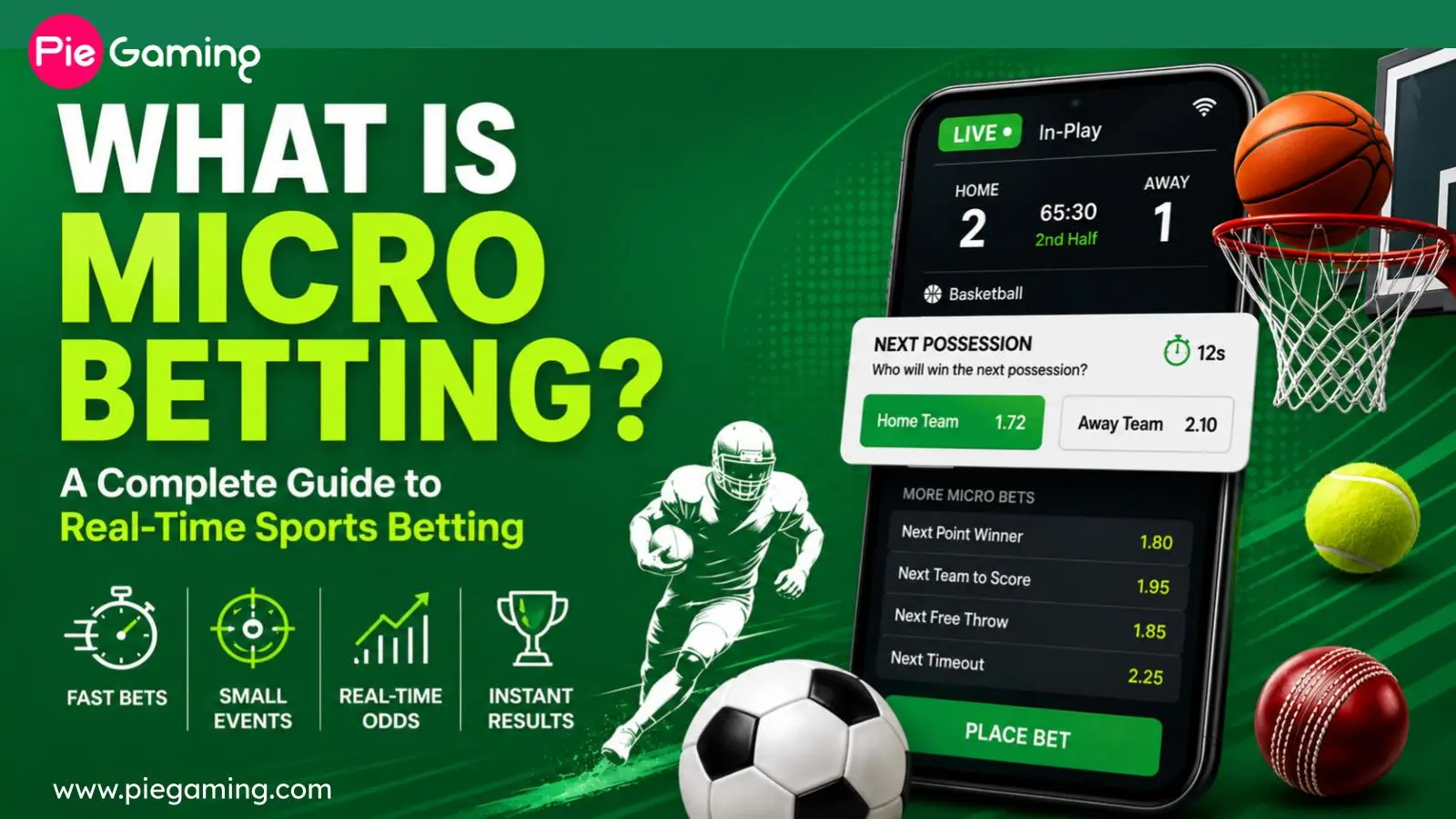
Micro betting is a type of live sports betting that focuses on the small moments within a game. Instead of wagering on the final result, bettors place bets on what happens next, such as the outcome of the next pitch in baseball, point in tennis, possession in basketball, or ball in cricket. Because these events are settled almost instantly, micro betting offers a faster and more dynamic experience than traditional sports wagers.

Esports betting offers a major opportunity to operators, and choosing the right partner can greatly impact profitability, player engagement, and operational efficiency.
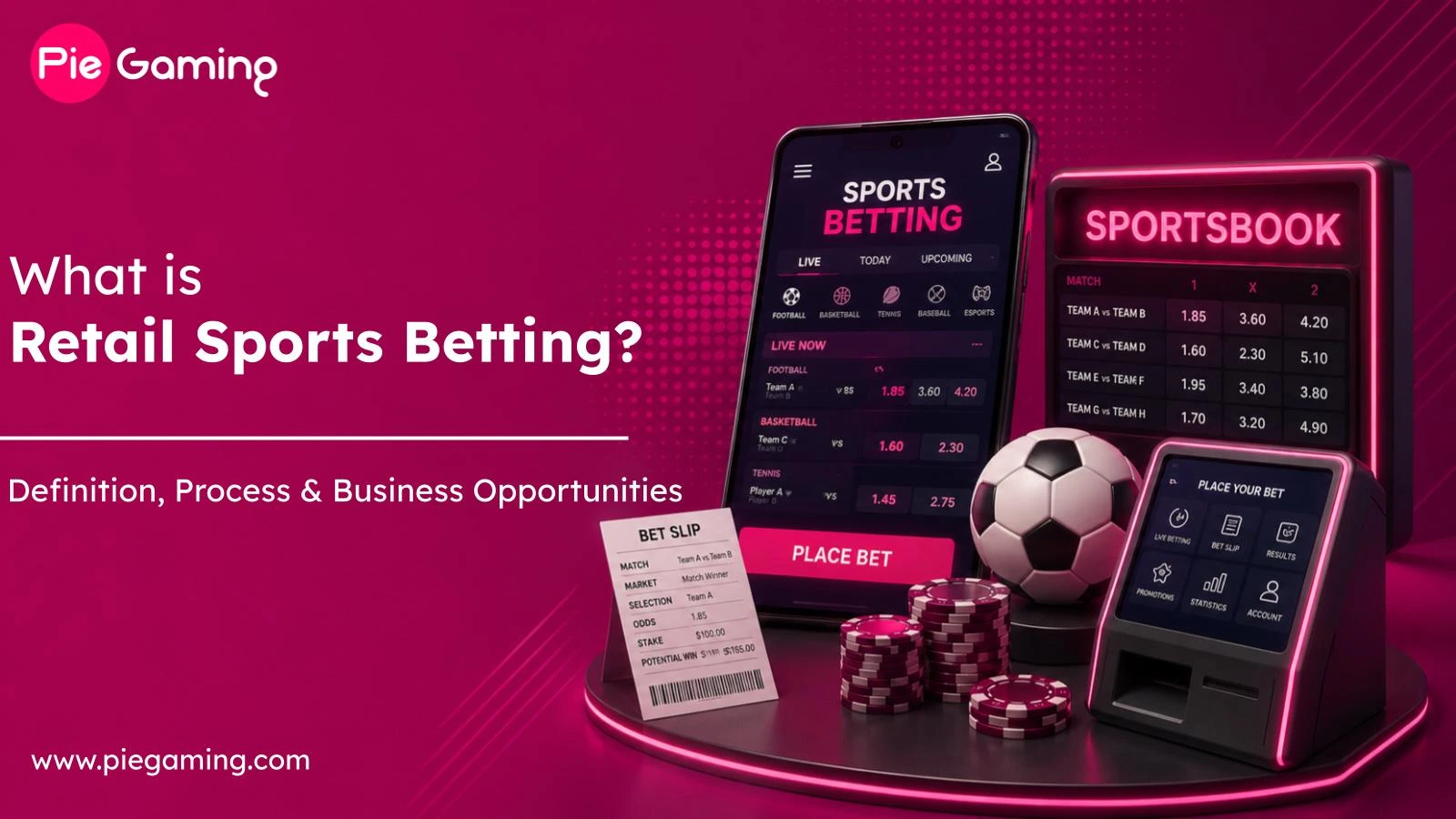
Learn what retail sports betting is, how on-premise sportsbooks operate, and what the retail model costs and returns compared with going online only.

Read about what horse racing betting software includes — tote and fixed-odds markets, race feeds, and payments — plus what a build or a full license costs.

How automated sports betting software handles odds, trading, risk and settlement, how it differs from betting bots, and what still needs a human trader.

Learn about how sports betting algorithms price odds and manage risk, plus the leading algorithm software compared on data, models, and integration options.

Learn how esports betting works as a vertical — titles, markets, odds feeds, and the software operators need to add esports to an existing sportsbook.

See you in your inbox soon!

Stay ahead of the game. Subscribe for exclusive content, updates, and insiders!