
To obtain a gambling license in Romania, operators should register a local company and submit financial documents and fulfill ONJN requirements. Obtaining a Romanian iGaming license gives operators a significant opportunity to legally offer gambling services to other European countries as well.
The Romanian iGaming market is the most preferred gambling jurisdiction in Eastern Europe. As the competition in the global iGaming market is increasing, operators are shifting towards the regulated jurisdiction that offers them long-term stability. And Romania has emerged as one of those top iGaming jurisdictions for operators.
In the last few years, Romania has been gaining a lot of reputation as a trustworthy and well-regulated iGaming jurisdiction within Europe. In 2025, the total gaming market revenue was approximately USD 2.59 billion, which will grow at a rate of 2.4% during 2025-26. It offers opportunities for both B2B and B2C businesses to make it an attractive spot for global gambling brands.
But obtaining a Romanian iGaming license involves a lot more than submitting an application. Operators have to meet regulatory requirements to procure the license.
In this write-up, you’ll learn how to obtain a Romanian iGaming license, its types, costs, and business benefits.
Romania’s Gambling Legal Framework
Before you apply for a license, understanding Romania’s iGaming regulations and its gambling laws is crucial for you.
Is Online Gambling Legal in Romania?
Yes, online gambling is fully legal in Romania. The country is giving operators a golden opportunity to start an online casino business without any legal complexities.
The country maintains a legalized iGaming landscape through a regulated licensing structure to ensure player protection, anti-money laundering compliance, fair gaming practices, and responsible gambling implementation.
Once iGaming operators receive approval from legal authorities, they can offer online gambling services to Romanian players.
| Note to Operators:
Operators who wish to run iGaming activities in Romania must have registered companies in European Union member states. Else, they should have a signatory state of the European Economic Area Agreement, or the Swiss Confederation, with a registered permanent office in Romania provisions of Article 8 of Law No. 227/2025 on the Fiscal Code. Further, operators also must maintain a permanent establishment in Romania. |
Key Gambling Regulations
Romania’s online gambling industry operates under multiple gambling laws and regulatory updates, which are highlighted below:
- Taxation rules
- Licensing conditions
- Advertising requirements
- Compliance obligations
- Responsible gambling measures
- AML and KYC requirements
These regulations are applicable to both domestic and international operators targeting Romanian players.
Licensing Authorities and Their Role
The Romanian Gambling industry is regulated by the National Office for Gambling (ONJN). The authority plays a key role in ensuring businesses follow the laws and maintain integrity in the market.
Further, they are also responsible for issuing Romanian online gaming licenses,regulating the industry, enforcing compliance with laws, and promoting responsible practices.
Types of Romanian iGaming Licenses Explained
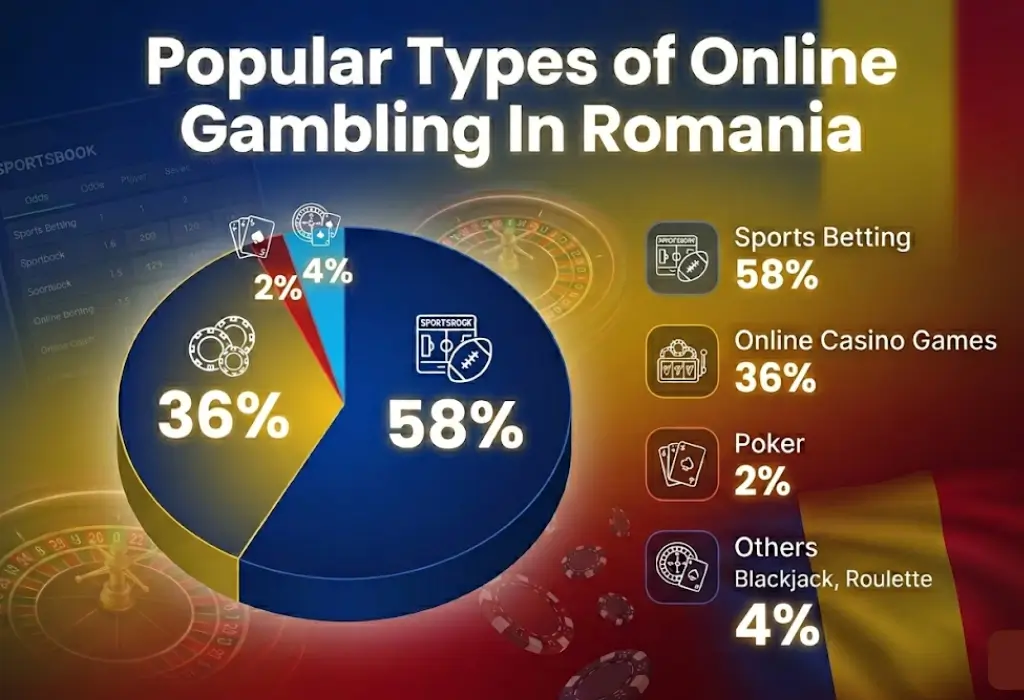
Types of Romanian gambling licenses
Romania offers various types of licenses as per the business model and operational activities. Let’s understand them.
Class 1 License (Operators)
A Class 1 license is designed for B2C gambling operators who organize gambling activities. This license is applicable for online casinos, poker websites, sports betting platforms, bingo platforms, lottery-style gambling products, and mobile gambling applications.
This license allows operators to legally offer gambling services to Romanian players, real-money gambling services, process gambling transactions, operate casino and sportsbook platforms, and market gambling services within regulatory limits.
For international operators who wish to enter the European iGaming market, a Class 1 Romanian gambling license is considered an expansion opportunity.
Class 2 License (Service Providers)
A Class 2 License is designed for B2B suppliers operating in the iGaming industry. It applies to businesses offering casino games, payment solutions, PAM solutions, affiliate tracking systems, live casinos, or odds feeds.
Any supplier who wants to offer services to casino/ sportsbook operators in Romania should have a Class 2 Romania betting license.
This license is advantageous for B2B operators, as it helps them build trust among licensed operators, expand partnerships across Europe, and ensure regulatory compatibility.
Therefore, companies like PieGaming that provide turnkey, white-label, or crypto casino solutions should understand Class 2 license requirements.
Class 3 License (State Monopoly – Lottery)
A Class 3 license is applicable for state-controlled lottery activities. This license might not be relevant for private international operators, as it is connected to monopoly-based gambling operations.
Many commercial operators and B2B providers focus on Class 1 or Class 2 licensing structures.
Eligibility Criteria for Applicants
There are multiple levels for operators to go through to obtain a Romanian iGaming license. This includes:
Corporate Jurisdiction Requirements
Every operator who wants to run an online casino business in Romania must establish a registered legal identity that can meet Romanian regulatory standards. International companies can apply for a Romanian online gambling license, but they must comply with the following:
- Tax obligations
- Regulatory reporting standards
- Local compliance procedures
- Corporate transparency
Financial Stability & Funding Requirements
Before you get the approval of the license, Romanian regulators check your financial condition. For this, operators should showcase the following:
- Operational funding
- Stable financial resources
- Ability to pay player winnings
- Financial sustainability for long-term operations
Operators must note that financial transparency plays a crucial role in the license approval process.
Technical Infrastructure & Licensed Software
Software providers must have a secure and compliant gaming infrastructure, which includes the following:
- Licensed gaming software
- RNG certification
- Fraud prevention systems
- Secure payment gateways
- Secure hosting environments
- Player account protection measures
- Data protection systems
Regulators will inspect your technical infrastructure before your license approval.
Key Requirements for Obtaining a Romania iGaming License
The following are the crucial requirements for procuring a Romanian iGaming license for operators that they must implement in their online casino software.
- Self-exclusion tools
- Responsible gambling measures
- Player protection policies
- Problem gambling support system
- Session/deposit limit
- Anti-money laundering (AML) obligations
- Data protection requirements
- Know Your Customer (KYC) procedures
- Tax reporting rules
- Fair gaming regulators
- Company incorporation certificate
- Shareholder information
- Business plans
- Financial information
- Technical documentation
- Software certification report
- Compliance policies
The above-mentioned regulatory pointers are part of responsible gambling measures, regulatory & legal compliance, and documentation & corporate requirements.
Step-by-Step Licensing Process
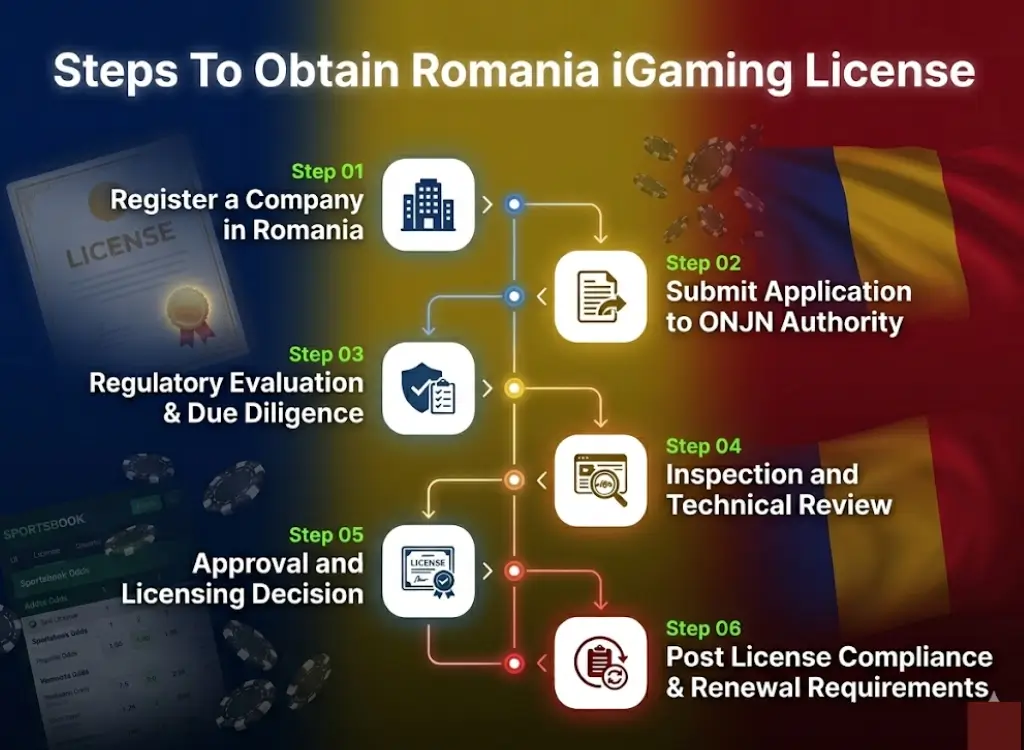
Step-by-step Romania iGaming license process
Operators have to go through multiple regulatory stages to get a Romanian iGaming license. The stages include:
Step 1: Register A Company & Prepare Documentation
The first and foremost step for you is to set up a legal company in Romania. Your company must be registered in Romania to get a license. This step also includes important document preparation, which includes the following:
- Prepare company legal documents
- Get company registration done
- Get a software verification certificate
- Keep AML/KYC policies
- Organize financial statements
- Get the technical specification
- Maintain player protection policies
- Prepare compliance policies
- Obtain software certification
Having all documents prepared in advance will reduce delay during regulatory review.
This is a very crucial step for all operators because many Romanian gambling applications face delays due to incomplete documentation and unclear ownership structures.
Step 2: Submit Application
Now the applicant will submit the license application to the Romanian Gambling Authority, i.e., ONJN. The documents that operators will need to submit include the following:
- Company documents
- Certified RNG certifications
- Fraud detection systems
- Transaction monitoring systems
- Financial records
- Technical certification
- AML/KYC procedures
- Operational details
- Responsible gambling tools and policies
Unless and until you submit all the required documents, the formal evaluation process will not happen.
Step 3: Regulatory Evaluation & Due Diligence
Once the document’s evolution is done, ONJN regulators will conduct a detailed assessment to assess compliance. This step covers the following:
- Corporate ownership
- Regulatory compliance
- Technical system reports
- AML/KYC procedures
- Software certification documents
- Financial documentation
- Operational integrity
- Business suitability
Regulators can also perform checks on directors and shareholders. Operators can also hire a legal advisor during this stage to enhance approval efficiency.
Fit & Proper Checks
Directors, shareholders, and key executives may also go through a fit and proper evaluation. Here, regulators will ensure that licensed operators are:
- Maintaining ethical business practices
- Not having links to illegal gambling activities
- Protecting player interests
- Operating business transparently
- Updating compliance procedures
Step 4: Inspection & Technical Review
ONJN regulators will conduct inspections on technical infrastructure and compliance testing to verify the information shared by the operator. This review step will include platform security assessments, data protection evolution, RNG verification, payment processing checks, and responsible gambling measures. Once regulators are sure that compliance systems are certified, they can grant approval.
Player protection focus is key here for operators.
Step 5: Approval & Licensing Decision
Once the review and verification are successful, the regulator will issue the Romanian online gaming license. So, once the license is approved, operators can:
- Launch their iGaming platform in Romania
- Offer casino and sportsbook services
- Run poker or bingo platforms
- Market online gambling services legally
- Partner with regulated B2B providers
But operators shouldn’t forget to continue meeting all ongoing compliance obligations.
Step 6: Post-License Compliance & Renewal Requirements
Operators must understand one thing: if their license is approved, it doesn’t mean they don’t need to renew it. A Romanian gambling license requires periodic renewal. Operators must follow the renewal process, which typically includes the following:
- Updated compliance review
- Technical re-certification
- Financial reporting
- Responsible gambling audits
- Tax compliance verification
If you maintain operational transparency, it will lead to long-term license retention.
Read Blog – Explore What is Pam Software in iGaming
Romania iGaming License Costs
There are several factors that determine the cost of a Romanian iGaming license, including license type, operational scale, business category, revenue structure, and B2B or B2C activities.
The table below highlights the costs involved in the Romanian iGaming license:
| Particulars | Amount | Details |
| Documentation analysis fee | €3,500 | One-time fee to review the applicant |
| License issuance fee | €10,500 | One-time fee to issue license |
| Class I annual license fee | €300,000/year | Flat yearly fee |
| Class II annual license fee | €20,000/year | Flat fee for B2B service providers |
| GGR Tax for all operators | 21% of GGR | Minimal payment: €400,000 |
| Responsible gambling fund distribution | €500,000/year (operators); €15,000/year (suppliers) | Mandatory contribution to prevent harm |
| Financial Guarantee – Online Betting | €2,000,000 (from 2025) | Bank guarantee for betting operators |
| Financial Guarantee – Online Casino | €5,000,000 (from 2025) | Bank guarantee for casino operators |
Note: The above-mentioned figure is taken from sources available online. This may vary depending on new rules and updates of the jurisdiction.
Benefits of a Romanian iGaming License
The benefits of getting a Romanian iGaming license include the following:
-
Legal Market Access
A Romanian casino license allows operators to offer gambling services in the country. Operators must follow local laws and rules to avoid legal complications.
-
EU Expansion Opportunities
Since Romania is a member of the EU, its license lets operators serve other EU countries. So, this gives operators a golden opportunity to serve other players across European countries.
-
Credibility & Consumer Trust
Offering online casino services in such a regulated country builds business credibility and trustworthiness. It also shows operators’ commitment to player protection and responsible gambling.
-
Regulatory Stability
Unlike other jurisdictions, Romania offers a stable and structured regulatory environment. That means operators will have greater long-term business predictability, clear compliance expectations, lower operational uncertainty, and better investment confidence.
Compliance Obligations After License Approval
For operators, obtaining the license is just the beginning. They have to ensure that they follow regulatory compliance. This can happen if they ensure the following:
- Monitor player activity
- Support self-exclusion requests
- Prevent underage gambling
- Showcase responsible gambling information
- Implement risk management systems
Operators must note that failure to comply with any kind of regulation will lead to strict legal action.
Read Blog – Best Online Casino Software Providers 2026
Conclusion
Romania’s gambling license offers a great opportunity to operators who want to serve Romanian players and other EU countries legally. Whether you’re into the B2B or B2C category, this market has something for everyone.
With structured licensing systems and regulatory frameworks, the Romanian iGaming market offers long-term strategic advantages for international operators. This makes Romania a valuable iGaming hub for operators seeking sustainable growth and market credibility.
But operators should fully understand the Romanian gambling license structure to legally tap into this market.
FAQ's
-
Is online gambling legal in Romania?
Yes, online gambling is legal and regulated in Romania. However, operators should get approval from the Romanian gambling authority before offering services to players.
-
Can foreign companies apply for a Romanian license?
Yes, international companies can apply for a Romanian iGaming license if they meet the country’s regulatory, financial, and compliance requirements.
-
How much does a Romanian iGaming license cost?
The total cost of the license depends on its type, operational scale, certification expense, compliance requirements, and ongoing regulatory obligations.
-
What is the difference between B2B and B2C licenses?
B2C licenses apply to iGaming operators offering services directly to the players, while B2B licenses apply to software and game providers or development companies.
-
Is Romania a good jurisdiction for online casinos?
Yes, Romania is one of the strongly regulated iGaming jurisdictions because of its clear legal framework, growing online gambling market, European positioning, and regulatory stability.

Monika Gola is an iGaming content specialist at PieGaming. Since 2020, she has been researching and developing content around software selection, online casino & sports betting regulations, and operator growth strategies. Her research includes analyzing market opportunities in regions like Europe, Africa, and Southeast Asia, as well as evaluating regulatory frameworks and entry barriers. She is actively monitoring industry trends, compliance updates, and evolving player demands across global iGaming markets to help operators navigate this industry seamlessly.

Self-exclusion tools in iGaming help operators improve responsible gambling practices. It lets operators protect players from harmful gambling behavior and strengthen regulatory compliance.
A slot tournament is a tournament where all the players are given the same number of credits, play a certain game for a period of time, and receive a point for each win. Understanding how slot tournaments work is simple: It isn’t the amount of money you win during the tournament that matters; it’s where you are on the leaderboard when the tournament ends.
Poker game development is one of the biggest revenue engines for online casino businesses in the modern era. It helps companies increase player engagement, retention, and revenue. The evolution of poker services through multiplayer poker and real-time tournaments, white label and turnkey poker solutions, make for faster penetration into and scalable operations within the marketplace.
Provably fair technology enables players around the world to personally confirm that online game outcomes are fair and transparent.



See you in your inbox soon!

Stay ahead of the game. Subscribe for exclusive content, updates, and insiders!