
A launch checklist for sports betting sites — the features, payment coverage, and compliance steps to confirm before you take your first bet.

“The house always wins”. It’s a saying as old as gambling itself, referring to how casinos and bookmakers usually come out on top in the long run.
But what if you could be the house?
In the UK’s $14 billion sports betting industry, there’s room for smart operators to carve out their niche.
But launching a compliant book on a white-label sportsbook solution isn’t as simple as it looks.
This guide will show you the ropes – from getting the licenses to setting up the shop.
Let’s hit the road!
Understanding The Sports Betting Industry In The UK
The UK sports betting industry is booming. From April 2022 to March 2023, it generated $15.1 billion, 6.8% up from the previous year. That’s a lot of bets being placed.
The UK’s online sports betting industry is hugely popular, with 47% of UK bettors using online bookmakers. Football leads the pack, with 23% of fans placing bets online.
Online sportsbooks are more prevalent in urban areas including London and Manchester, where access to technology and betting shops is more concentrated.
But it’s not all fun and games. The industry faces challenges like tighter regulations and a crowded market.
However, white label providers have made the process smoother for operators.
Despite these challenges, these numbers show that there’s still plenty of money in sports betting. It’s an industry that’s changing fast and operators need to stay on their toes.
Read More– How to start a sportsbook
Legal And Licensing Structure Of Sports Betting In the UK
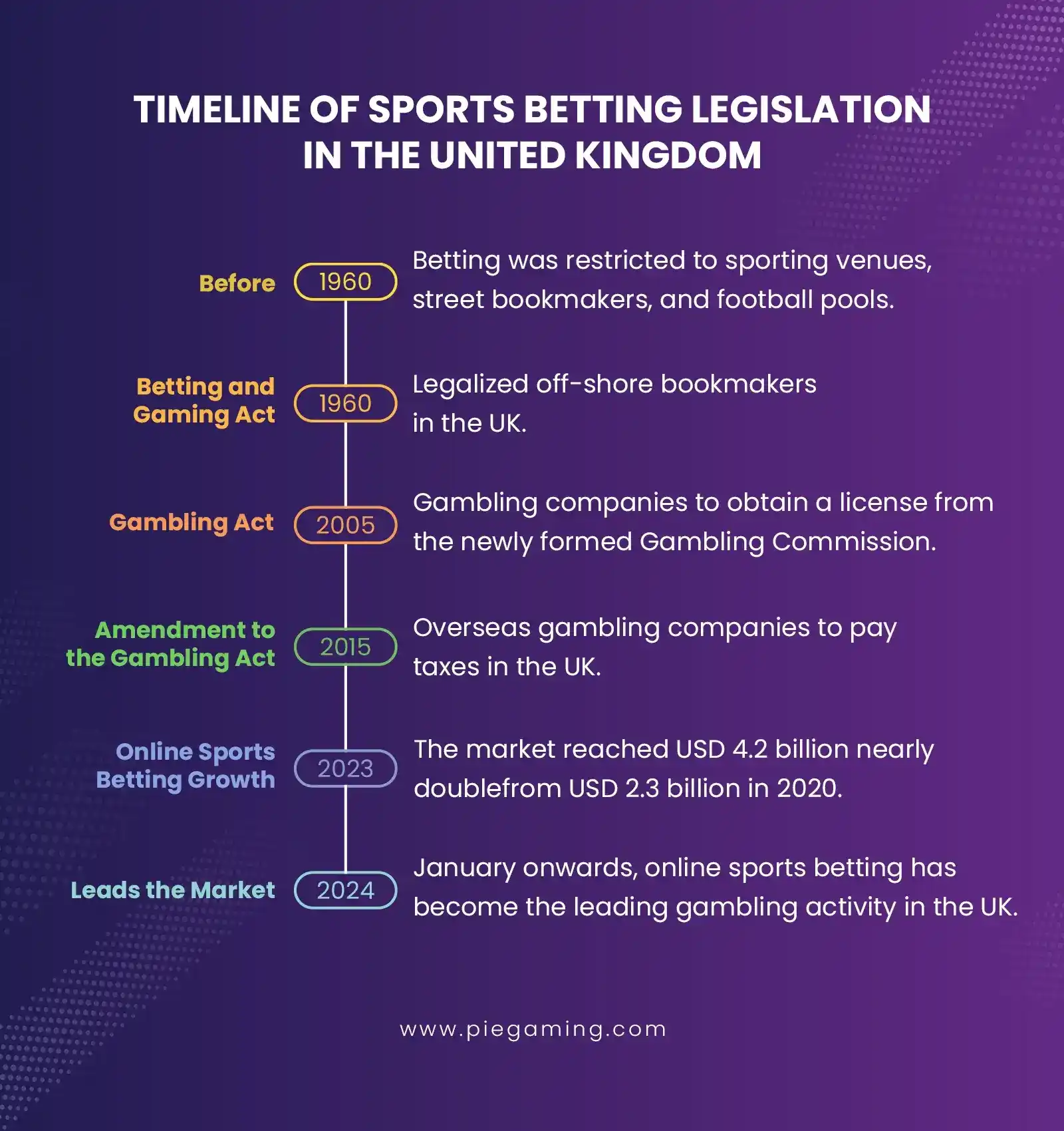
Evolution Of Sports Betting Legislation in UK
The whole gambling industry in the UK is pivoted on two main aspects: The Gambling Act of 2005 and the UK Gambling Commission (UKGC).
They’ve got different rules for both online sports betting software and betting shops.
Let’s break it down by region:
In England:
- You need an operating license from the UKGC if you want to run any kind of iGaming business.
- If you want a physical betting shop, you’ll need an extra permit called a premises license from your local council.
- Be patient though, the whole process can take up to 16 weeks.
- The fees aren’t fixed and it pretty much depends on something called your Gross Gaming Yield (GGY), which is basically how much money your sports betting business makes.
In Scotland:
- It’s pretty much similar to England- you need the same operating license from UKGC
- Local councils handle the premises licenses, making sure everyone follows their local rules.
- Online sportsbooks have become super popular in Scotland, so they are strict about following iGaming rules.
In Northern Ireland:
- They are the rebels of the group as they hold a completely different system.
- Their rules come from betting, gaming, lotteries, and amusements orders from 1985.
- Instead of going to the UKGC, betting businesses need to get their licenses from the Department for Communities.
And here’s what everyone needs to know, no matter where they are in the UK:
- You’ve got to be at least 18 to put the papers in for your sports betting business.
- You need to show lots of papers about how your business is set up and your financial situation.
- The UKGC is strict about preventing money laundering.
8 Steps To Start Your Online Sports Betting Business In the UK
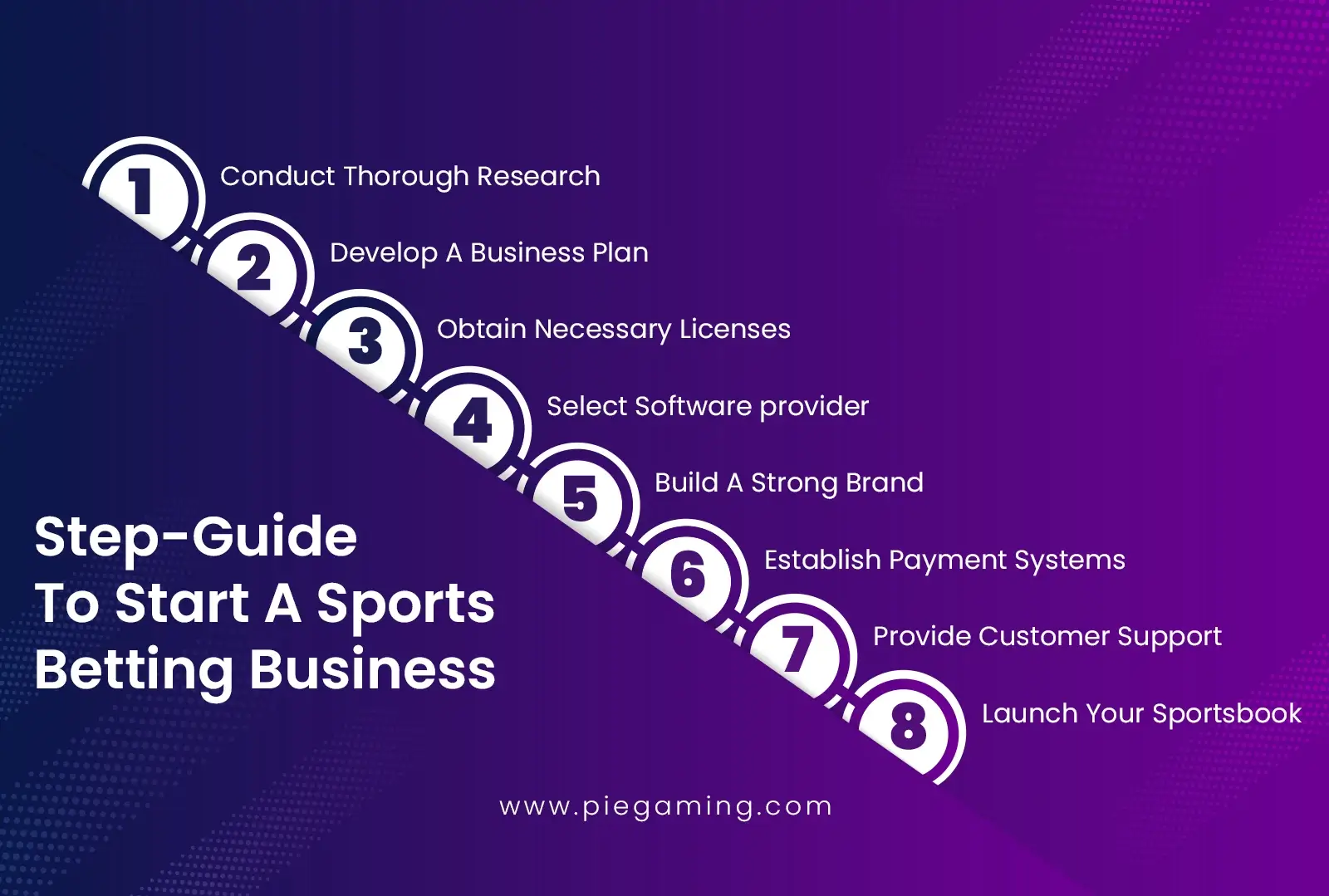
Start your sports betting business in eight steps
Are you passionate about sports and looking to capitalize on the growing market? These following steps can equip you with the knowledge you need to thrive.
1) Conduct Thorough Research
Getting into the sports betting market globally requires more than just a casual glance. You’ll need to become a proper learner of the ins and outs of this growing industry.
- You can start by getting to grips with the major players- who are the big names in online betting, and what makes them tick? What unique offerings do they have that keep punters coming back for more?
- Next up, get into the nitty-gritty of popular markets. In the UK, football reigns supreme. Additionally, there’s a massive appeal for horse racing, cricket, and even newer markets like esports.
- Keep your fingers on the pulse of market trends too. Understanding what is changing can help you position your sports betting business for success.
- Lastly, the UK Gambling Commission (UKGC) isn’t to be played with. Their regulations are detailed and always changing. Spend time poring over their guidelines, particularly around responsible gambling and anti-money laundering protocols.
2) Develop a Solid Business Plan
Your sports betting business plan is more than just a document, it decides your journey for the entire operation.
- Start by clearly defining your niche.
Are you aiming to be a jack-of-all-trades website or will you specialize in a particular sport or type of bet?
- You need to define your sports betting site checklist that clearly sets out what you need before launch.
- When outlining your target audience, get specific. Understanding your target audience will shape everything from your marketing strategy to your user interface design.
- Your financial projections should be realistic and based on solid research. Consider startup costs like licensing fees, online sports betting software development, and initial marketing pushes.
- Include a detailed marketing strategy in your plan. How will you cut through the noise in the UK’s saturated market? Will you focus on digital channels or is there any room for traditional marketing methods?
A good sports betting business plan isn’t just for your own reference. It’s an important tool for attracting investors or securing loans, so make it detailed and professional.
3) Obtain Necessary Licenses and Permits
Getting licensed in the UK is a rigorous process that’ll test your spirit on many levels.
The UK gambling market is very strict about who they allow to operate in the market.
You’ll need to apply for a remote gambling license. This isn’t a one-size-fits-all affair- there are different types depending on what services you’re offering.
For sports betting, you’ll need a “general standard betting” license.
The application process isn’t cheap either.
| As of 2025, the application fee for a remote general betting standard license is approximately $2,640, plus an annual fee based on gross gambling yield. |
Additionally, you’ll need to register with HMRC for tax purposes, and you might even need some additional licenses based on where your servers are located.
The whole process can take up to several months, so start early.
4) Select A Reliable Technology Partner
Your platform’s foundation comes from the sports betting software providers you shortlist, so this decision deserves real scrutiny.
Punters expect a smooth, reliable experience, whenever they are engaging in complex in-play betting during a cricket test match. Downtime during a Saturday afternoon card costs you both stake and trust, so uptime and support terms matter as much as the feature list.
Deployment is the next call. You can go for either a white-label build or a turnkey sportsbook solution depending on how much of the licence and the brand you want to own.
Here are the things you should look for:
a) Betting Markets
- Pre-match bets
- In-play options
- Cash-out features
- Exotic bets (eg- request a bet)
- Flexible system to cater to all types of punters
b) Mobile Compatibility
- Responsive design
- Fast loading time
- Easy navigation on smaller screens
c) Integrations
- Payment gateways
- Data providers for live odds and results
- Potential third-party games or casino software
d) Technology Partner Support
- Customization options for a unique look and feel
- 24/7 technical customer support
- Minimal downtime
A strong partnership behind your white-label sportsbook software can also ensure your platform stays updated with new features.
5) Build a Strong Brand Identity
Having a strong brand identity in a competitive UK market is important. Your brand needs to cut through the noise and stick in the minds of people.
Here’s what you should do:
- Start with your brand’s personality. The best way to do this is to make sure your personality resonates with your target audience and stands out from the competition.
- Your visual identity plays a crucial role. Your logo, color scheme, and overall design should reflect your brand personality.
- Don’t forget about your brand voice. The UK market appreciates a bit of humor and personality in their betting experiences.
Whether it’s witty social media posts or clever email marketing campaigns, injecting some characters into your communications can help you build a loyal customer base.
- Lastly, stay consistent. Your brand identity should be reflected across all touchpoints, from your website and mobile app to your customer service interactions and marketing materials.
6) Establish Payment And Withdrawal Methods
In the UK betting market, smooth and diverse payment options can be a major selling point for your platform.
Here are a few things you should keep in mind:
- Debit cards are a must. Since the UK banned credit cards and gambling in 2020, debit cards have become the go-to option for many bettors.
Just make sure your platform processes debit card payments from all the major issuers like Mastercard and Visa.
- E-wallets are hugely popular in the UK betting scene. Paypal, Skrill, and Neteller are the most used payment methods, and these digital wallet payments are known for their speed and security.
- Bank transfers, while slower, are still favored by many bettors, especially when it comes to larger transactions.
- Don’t overlook newer payment methods. Apple Pay and Google Pay are gaining greater attention, especially among mobile bettors.
- When it comes to withdrawals, speed is important. You should try to process withdrawal requests as soon as possible.
Note: Same-day payouts for e-wallets and 1-3 days for bank transfers are the standard time frame.
- Prioritize implementing strong measures for protecting the financial information of the bettors. This includes two-factor authentication, SSL encryption, and regular security audits.
7) Provide Exceptional Customer Service
In the competitive UK market, top-notch customer support can set you apart from the pack.
Offer multiple support channels including, chat, email, and phone.
Additionally, train your staff. They should be well-versed in all aspects of sports betting. From understanding complex bet types to explaining odds calculation.
Further, aim to answer live chats in a minute or two, respond to emails within a few hours, and keep phone wait times a minimum.
Lastly, don’t forget about social media. Many UK bettors turn to social media platforms like Twitter for quick responses.
Read More– How to secure a gaming license
8) Launch and Market Your Business
Launching your sports betting business in the UK requires a well-planned marketing strategy.
An operator needs to comply with strict advertising regulations to successfully reach your target audience.
Digital channels are the epicenter of that effort.
Here’s how you can leverage them:
- Search engine marketing can help you appear for relevant betting-related searches.
But make sure you familiarize yourself with Google’s and other search engine’s specific policies for gambling ads.
- Additionally, social media marketing can be an effective tool for your sports betting business. Platforms like Facebook, and Twitter have strict rules about iGaming content.
Make sure your ads are clearly marked as iGaming content and are only shown to bettors above 18+.
- Affiliate marketing is huge in the UK industry. Partner with reputable affiliates who can drive traffic to your platform.
- Consider sponsorships as part of your marketing mix. While premier league shirt sponsorships might be out of reach initially, there are opportunities with lower-league football clubs, local sports teams, and even popular podcasts.
- Create engaging bonuses and promotions to attract new punters to your platforms. You can offer various bonuses including, welcome offers, enhanced betting odds, and free bets.
- Lastly, don’t forget retention marketing. Email campaigns, personalized offers, and loyalty programs can help you keep your existing players engaged and prevent them from drifting toward competitors.
Wrapping Up…
Starting a sports betting business in the United Kingdom is an exciting venture, but it’s not without its challenges.
Success doesn’t happen overnight. It takes careful planning and a solid understanding of the market.
Just stay flexible, and ready to adapt to changes in technology and consumer preferences.
Build strong relationships with your bettors and partners and always prioritize transparency and fair play.
While the road ahead may seem daunting, with dedication and the right online sports betting software provider, you can make your place in this growing industry.
So, take the first step, stay consistent, and who knows? You could be the next big shark in UK sports betting.

FAQs
-
How to create a betting site?
Team up with good software companies, get proper licenses, build easy-to-use screens, and add safe payment options. Focus on making bettors happy while following all the rules.
-
What should I look for in a sports betting site's bonus system?
Create bonuses players can actually earn, with simple terms and real value. Balance what you spend to get new customers against keeping them coming back.
-
Why are secure payment gateways important for sports betting sites?
Safe payments build trust, protect financial details, and follow regulations. They reduce dispute charges, speed up money transfers, and keep bettors loyal.
-
Is online sports betting legal and regulated?
Laws differ in each region, with specific licenses needed in regulated markets. Know your target areas well, work with experts, and use strong age checks.


Palak Madan has been writing about the iGaming industry since 2024. She focuses on helping operators and founders understand their options when launching an online casino, from choosing the right software provider to figuring out costs and compliance requirements across different markets. At PieGaming, she covers topics like white label casino solutions, platform selection, and market entry, turning complex industry information into practical guidance for people building iGaming businesses. She also keeps a close eye on licensing and regulatory changes; particularly how new rules shape the way operators enter and grow in different jurisdictions.

Micro betting is a type of live sports betting that focuses on the small moments within a game. Instead of wagering on the final result, bettors place bets on what happens next, such as the outcome of the next pitch in baseball, point in tennis, possession in basketball, or ball in cricket. Because these events are settled almost instantly, micro betting offers a faster and more dynamic experience than traditional sports wagers.
Esports betting offers a major opportunity to operators, and choosing the right partner can greatly impact profitability, player engagement, and operational efficiency.
Learn what retail sports betting is, how on-premise sportsbooks operate, and what the retail model costs and returns compared with going online only.
Read about what horse racing betting software includes — tote and fixed-odds markets, race feeds, and payments — plus what a build or a full license costs.

Learn how automated sports betting software handles odds, bet acceptance, risk, and payouts – what operators can automate and what still needs a trader.
Learn about how sports betting algorithms price odds and manage risk, plus the leading algorithm software compared on data, models, and integration options.
Learn how esports betting works as a vertical — titles, markets, odds feeds, and the software operators need to add esports to an existing sportsbook.







See you in your inbox soon!

Stay ahead of the game. Subscribe for exclusive content, updates, and insiders!