
Turnkey sportsbook solutions provide everything a betting platform needs—from software and odds management to payments and compliance. This complete guide describes how these solutions help operators enter the sports betting market faster.
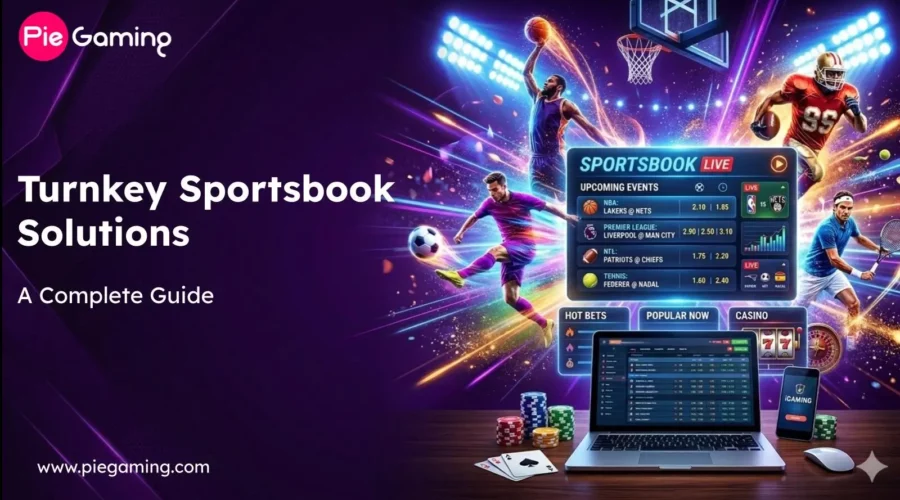
The international sports betting market has seen tremendous growth and rapid expansion, with demand for new platforms capable of rapid and scalable offerings. The global sports betting market, according to Statista is expected to reach more than US$106.22bn by 2030. Open markets in Europe, Latin America, and certain areas of Africa contribute to the growth of online betting.
With fierce competition, providers are being pressured to get into markets quicker without undermining compliance or their performance. Enter a turnkey sportsbook business model as we move into that space.
In this turnkey sportsbook guide, we explain how ready-to-launch sportsbook platforms enable operators to shorten development cycles, manage costs, and prioritize growth over infrastructure. As licensing complexity skyrockets and players’ expectations evolve, turnkey sportsbook solutions offer a viable business opportunity that allows speed, scalability, and operational reliability amidst a rapidly developing betting ecosystem.
What Is a Turnkey Sportsbook Solution?
A turnkey sportsbook software is a ready-to-launch betting platform that enables operators to start an online sportsbook without building the technology from scratch. Basically, a turnkey sportsbook solution guide described here means a complete system with software, integrations, and operational tools that allow operators to concentrate on licensing, marketing, and user acquisition.
To clarify what a turnkey sportsbook solution is, it typically includes pre-integrated odds of feeds, betting markets, player management, payment systems, and compliance tools. These solutions significantly reduce time-to-market, allowing sportsbooks to launch in months rather than years.
Understanding how turnkey sportsbook solutions work begins with the platform infrastructure, how sportsbook odds are calculated, and the sportsbook backend system. Operators have both a front-end betting interface and a fully set-up sportsbook backend system that is described via modules like:
- Odds and Trading Engine for Pre-Match and In-Play Betting
- Risk Management Tools
- Player Account and Wallet Management
- Payment Processing and Payout Controls
- Compliance and Reporting Features
Turnkey vs White Label vs Custom Sportsbooks
The white label sportsbook is speed-driven but less in the way of control. Full ownership via custom sportsbooks comes with lots of money and long development cycles. Turnkey solutions bridge the gap between the two, allowing for faster deployment than custom builds, versus more rigid white-label models.
Strategic Comparison: Turnkey vs. White Label vs. Custom Sportsbooks
This comparison highlights the critical trade-offs between speed-to-market, initial capital expenditure, and the long-term operational control required to scale a betting brand.
| Feature | Turnkey Sportsbook | White Label Sportsbook | Custom Sportsbook |
| Time to Launch | 2–4 months | 2–4 weeks | 9–18 months |
| Upfront Cost | Medium | Low | High |
| Ownership & Control | High (data, operations, roadmap) | Low (provider-owned) | Full ownership |
| Customization Level | Moderate to high | Very limited | Fully customizable |
| Branding Flexibility | Strong | Basic branding only | Complete brand control |
| Backend Access | Yes | No or very limited | Full access |
| Scalability | High | Limited | Very high |
| Compliance Control | Operator-managed | Provider-managed | Fully operator-managed |
| Best For | Growing operators needing speed + control | New entrants testing the market | Large operators with long-term vision |
| Operational Risk | Balanced | Low short-term, higher long-term | Higher initial risk |
| Cost Over Time | Optimized | Increases with revenue share | Lower long-term if scaled |
How Does a Turnkey Sportsbook Platform Work?
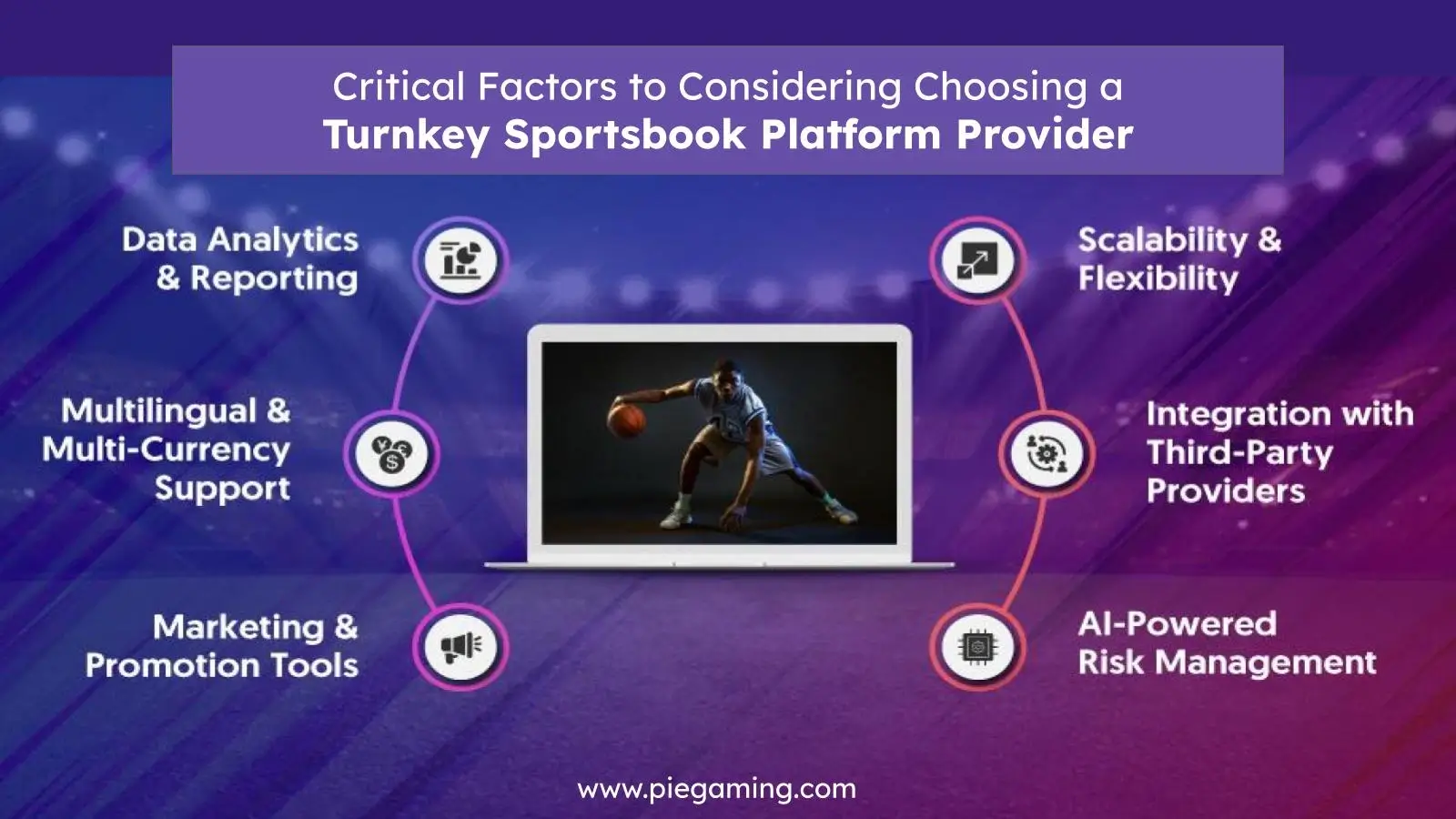
To understand the turnkey sportsbook business model, it’s important to scrutinize how the platform works end to end. At its heart, a turnkey sportsbook proposed approach provides a seamless integrated ecosystem across all essential sportsbook functions. And this answers, for many operators whose task is operationally useful, what is a turnkey sportsbook solution?
Front-End: Website & Mobile App
The front end, i.e., the player-facing layer of the sportsbook, consists of the website and mobile apps where users can browse the sports, place bets, manage accounts, and withdraw winnings. Turnkey platforms offer interactive and device-optimized front-line, pre-installed betting slips, live betting views, and support for multiple languages. The branding, screen layouts and content can be tailored by operators with no change to the underlying system.
Back-end: Admin Panel & Player Management
The back-end is the operations control center. This helps to understand how live betting works technically. Admin panel operators operate the back end by taking care of users, watching gambling behaviour, configuring bonuses, setting limits, and generating reports. Player Account Management (PAM) modules manage registrations, KYC processes, wallets, and responsible gambling applications. This top-down management is one of the main benefits of the turnkey sportsbook business, as it makes it easy to do this day-to-day work at high levels of scale.
Odds & Risk Management
At the center of a turnkey sportsbook is odds and risk management. The platform combines real-time odds feeds and automatic trading tools to maintain pre-match and during-play markets. Risk algorithms also measure liabilities, dynamically manage odds, and trigger alerts for the arrival of exposure thresholds, among other things. This automation minimizes trading time and guards margins.
Integration with the Payment Gateway
Turnkey sportsbooks are also pre-integrated with various payment gateways that offer card, e-wallet, local payment methods, and in some cases cryptocurrency. It handles the storage of deposits, withdrawals, transactions, and payout policies, ensuring smooth cash flow and compliance at the market level in various regions.
Sports Data & API integrations
Accurate sports data must be trustworthy for market accuracy. The Turnkey platforms leverage APIs that link sports data providers, supplying the fixtures, live scores, stats, and settlement data. Such integrations hold the markets to the real and to be in the real-time environment.
The Security and Fraud Prevention
Operators and the players are protected by security layers. Turnkey solutions include encryption, access controls, anti-fraud monitoring, AML checks, and authentication methods against corruption. Automated detection systems detect suspicious activity, bonus misuse, and fraudulent activities, as well as irregularities in the accounts, automatically flagging suspicious activity, alerts of questionable activity, bonus abuse, and anomalies. Thereby helping operators maintain platform quality and ensure platform integrity and regulatory legitimacy.
Through these elements, these elements work in concert to create a collaborative system that allows running a sportsbook as an overall system in which operators can launch, manage, and grow a sportsbook efficiently without the cumbersome task of building the necessary layer-by-layer of the sportsbook from small modules on their own.
What are the Key Features of a Turnkey Sportsbook Software?
The tools that enable reliable, scalable, competitive turnkey sportsbook services should be the focus of any good turnkey sportsbook software guide. To understand how turnkey sportsbook solutions will work, players and operators alike should assess the player-facing functionalities and operational tools available within the sportsbook backend system described here. These features jointly account for performance, compliance readiness, and long-term growth potential.
Core Betting Features
Behind every turnkey sportsbook, robust betting capabilities that modern sports betting has to offer are developed to meet modern player expectations from beginning to end. Prior to a match and live betting. Turnkey platforms offer pre-match markets and also offer live betting. Operators have the freedom to deliver their competitive odds in the sports that most people love and keep you in the loop while the matches happen.
- In-play betting
In-play betting is a great money maker in-game. Turnkey tools include automated odds updates, live event tracking, and instantaneous market suspension at strategic moments to give operators the ability to handle extensive betting.
- Cash-out functionality
Cash-out capabilities allow bet-paying in advance of betting, increasing bet taking for a good deal of engagement and control of risk. From an operator’s viewpoint, this functionality is a way of controlling exposure while also driving more players’ enjoyment.
- Multi-language & multi-currency support
Turnkey sportsbooks are designed to enable global expansion with multi-language and multi-currency wallets. This enables operators to enter into new markets more quickly and without having to rebuild the critical systems.
- Mobile-optimized platform
Because most bets are placed on mobile devices, turnkey solutions focus on responsive design and mobile-first performance on web and native apps.
Advanced Features
Advanced backend tools beyond the mechanics of betting allow for optimal performance in return, not mere mechanics.
- CRM & player retention tools
When it comes to customer service (CRM) and player retention tools, integrated CRM systems are built in, and the backend is designed well to help the operator segment and track behavior, so as to guide operators in developing targeted campaigns based on player behavior. They are critical for retention-based, not purely acquisition-oriented strategies.
- Affiliate management system
Affiliate management system. There are many times when owners of turnkey sportsbooks also track affiliate numbers, commission, and performance, and reports, which allow them to easily scale acquisitions as well as track commissions for sports assets.
- Bonus & promotion engine
Flexible bonus engines permit operators to set up free bets, matched deposits and loyalty rewards with customizable wagering expectations, limits, and eligibility criteria.
- Real-time analytical and reporting tool
Advanced dashboards provide real-time visibility of the betting activity, player performance, revenue and risk exposure – everything at the touch of a button via their advanced analytics system. Such analytics aid in quicker decision-making and more efficient business optimization.
What are the Benefits of Choosing a Turnkey Sportsbook Solution?
Choosing a turnkey sportsbook solution offers clear advantages for operators looking to enter or expand in the competitive sports betting market without the complexity of building a platform from scratch. This model is designed to reduce risk, accelerate launch timelines, and support sustainable growth across regulated markets.
-
Faster time-to-market
Perhaps the biggest advantage of a turnkey sportsbook is its speed. Operators can launch in a few months instead of years because the core platform, integrations, and backend systems are already implemented and tested. This can enable businesses to seize market opportunities fast and start earning money sooner.
-
Lower development cost
A sportsbook built from scratch costs a lot of money, not only in technology, but you’ll also need to build infrastructure and keep it maintained. Turnkey models reduce up-front expenses significantly and are cost-effective thanks to no need for teams to develop in-house, and because of pricing models, they are easier to budget for.
-
Fully managed technical support
Turnkey offers end-to-end tech support such as platform upkeep, updates, and platform checkouts. This provides system stability and frees operators to concentrate on marketing, team development, and player growth, rather than technical support.
-
Ready-to-launch infrastructure
Backed with pre-integrated odds feeds and payment channels, as well as advanced risk management features to meet regulators’ and players’ best-in-class expectations, turnkey sportsbooks offer production-ready infrastructure. Operators also eliminate the delays that come with finding and implementing several vendors on their own.
-
Scalable and customizable platform
Turnkey solutions are designed to grow with the business. Operators can bring in new sports, markets, payment methods or new areas without needing to reengineer the platform. At the same time, companies can tailor branding, structure business rules, and make features to allow differentiation.
-
Regulatory compliance support
It is complex to navigate licensing and compliance requirements, which must be complied with. To meet compliance requirements and lower an operator’s cost of operation in new jurisdictions, turnkey sportsbook platforms come with integrated tools for KYC, AML, reporting, and responsible gambling. As a result, they enable regulatory conformity and reduce the amount of time needed to comply with operators entering a new territory as well as reduce the risk associated with doing so.
The all-around turnkey sportsbook solution provides a balanced approach, speed, cost-effectiveness, and operational control for long-term success, getting to understand what happens behind a sportsbook platform.
Read Blog – Checkout How to Secure a iGaming License
Cost of a Turnkey Sportsbook Solution
The cost structure of sportsbook platforms in a new market extends beyond what it costs to create software. Operators will need to prepare for setup, licensing, continuing operations, and acquiring players to create a sustainable business.
Setup Costs
Setup fees help with platform installation, UI/UX customization, and the integration of core APIs such as odds feeds and games.
- Basic / Starter tier: USD 15,000–40,000, appropriate for early-stage launches with standard templates and limited sports coverage.
- Standard turnkey: USD 40,000–100,000, the most common option, stronger CRM tools, localized payments, and custom branding.
- Premium / Advanced: USD 100,000–500,000+, for high traffic, multi-market operations with native mobile apps and scalable architecture.
Licensing Costs
Turnkey operators have their own licenses, unlike white label models. Costs differ widely by jurisdiction:
- Curaçao: €15,000–45,000 setup + ~€10,000 annually (fast & crypto-friendly).
- Malta (MGA): €25,000–50,000 setup + €10,000+ annual fees (EU credibility).
- UK (UKGC): £5,000 to £800,000+ based on anticipated GGR.
Monthly Operational Costs
Ongoing expenses typically include platform maintenance (USD 1,000–10,000/month), live odds and data feeds (USD 5,000–30,000/month), hosting and security (USD 2,000–15,000/month), and basic staffing (USD 15,000–50,000/month).
Revenue Share & Payments
At scale, GGR share from one provider can be 10–20%, sometimes negotiable to 5–8%. Payment processing represents 2.5–5% for fiat and 0.5–1.5% for crypto, plus rolling reserves.
Marketing & Acquisition
Marketing is critical. Upfront budgets for launch range from USD 50,000 to 200,000. Monthly costs vary by channel and competition, typically USD 20,000–100,000+.
Turnkey Sportsbook Cost Breakdown: A 2026 Financial Snapshot
| Cost Component | Estimated Range (USD) | Frequency |
| Setup Fee | $20,000 – $100,000 | One-time |
| Licensing | $15,000 – $150,000+ | Annual + Setup |
| Data/Odds Feeds | $5,000 – $30,000 | Monthly |
| Revenue Share | 10% – 20% of GGR | Monthly |
| Marketing (PAC) | $200 – $500 per player | Ongoing |
Licensing & Legal Requirements
In the world of online sports betting, your license is your “birth certificate.” You cannot legally collaborate with tier-1 payment processors, top-tier odds providers (like Sportradar), or high-quality game developers without it. And players in 2026 are more sophisticated than ever; they rarely make bank deposits on platforms that don’t display a verifiable regulatory seal.
A valid license covers three important business functions:
- Banking & Payments: Licensed operators already have stable “fiat” banking rails and established crypto payment gateways.
- Marketing Trust: Large affiliate networks and advertising platforms (Google, Meta) need proof of licensing in order to launch campaigns.
- Risk Mitigation: Regulators create an outline for dealing with disputes, ensuring that you’re not attacked with fraudulent “chargeback” claims from players.
- Malta (MGA): Best For: Operators targeting the European market and those trying to get a “Gold Standard” status. The Malta Gaming Authority continues to be the world’s most reputable B2C license. But it is costly and requires a physical “substance” (local office and staff are required) in Malta.
- Curaçao: Best For: Startups, crypto-sportsbooks, global operations. Transitioning from the outdated Master License system to the new LOK (National Ordinance on Games of Chance) is completed. As of now, operators apply directly to the Curaçao Gaming Authority (CGA). It is still the quickest “all-in-one” license, issuing casino and sportsbook licenses in one permit.
- Isle of Man: Best For: Large-scale operators and companies with an emphasis on blockchain/Web3. The Isle of Man have the “OGRA” license and is friendly towards crypto-assets while having a high reputation. It is highly profitable for high-volume books, offering 0% corporate tax and a very low GGR tax (0.1% to 1.5%).
- Anjouan: Best For: Ultra-fast and cost-sensitive startups. Anjouan has exploded in popularity as “the new Curaçao.” It’s now the cheapest and fastest offshore license, typically issued in less than 3 weeks. Although it carries less “weight” than an MGA license, it’s perfectly good for Africa and LATAM.
Compliance Requirements
To keep your license, you must show that you are running a “clean” book. The regulators of 2026 will look to three pillars:
Technical Audits: Your sportsbook’s RNG (Random Number Generator) and “bet settlement” logic will have to be certified by labs such as GLI or iTech Labs.
Responsible Gambling: You need to give players the option to set deposit limits, “cool-off” periods, or completely self-excluded.
Data Protection: You’ll need to adhere to GDPR (Europe) or other players’ data privacy laws and regulations.
KYC & AML Integration
Your PAM (Player Account Management) solution must include pre-programmed compliance tools in your turnkey.
KYC (Know Your Customer): Automated identity verification is now the norm in the field. Systems such as Sumsub and Jumio are frequently built-in and operate alongside a player’s ID, age, and address to validate a player’s ID, age, and address during registration at the very least.
AML (Anti-Money Laundering): This is a technique for Transaction Monitoring in the same vein as Anti-Money Laundering. The software raises red flags of suspicious activity, like a player depositing $10,000, and then immediately trying to withdraw that money without betting, in what is known as “layering.”
Most turnkey providers in 2026 offer “Progressive KYC,” allowing players to sign up and bet small amounts right away, only uploading the entire document once they have reached a specific deposit or withdrawal threshold, which significantly raises conversions.
Top Sports Covered in Turnkey Sportsbook Platforms
Turnkey sportsbook platforms cater to a broader selection of sports to cater to the increasing global betting interest and maximize player engagement.
- Football
It is still the most extensively reported sport, with massive pre- and in-play markets for both local and international competitions.
- Cricket
It is a hot topic on platforms focusing on Asia, the UK, and the Middle East, from T20 leagues to international test matches. They are equally essential.
- Basketball and tennis
They have such a high event frequency that they can also be live betting assets. This makes it both a viable and profitable source of annual returns.
- Esports
It stands out on a scale unmatched anywhere else, not least because of new beginnings for what’s now a relatively new segment of the entertainment customer base. There are turnkey platforms offering major game titles in addition to a real-time feed of real-time data. And thus, they are, of course, quite accessible to the youth.
Besides, virtual sports allow for live betting 24/7, with betting being done using simulations, so in the off-season or when live sports slacken off, game bettors can keep them moving.
Future Trends in Turnkey Sportsbook Solutions (2026 & Beyond)
While the global sports betting market is expected to reach the $125.12 billion mark in 2026, turnkey providers are changing gears to favor “intelligence-driven” ecosystems. The key aspect of the player experience has now become AI-powered personalization.
With Predictive Analytics, contemporary platforms can reconstruct event feeds in real-time, improving retention by identifying “at-risk” players before they churn.
At the same time, Blockchain and Crypto have evolved into an indispensable infrastructure. Smart Contracts now automate instant, “provably fair” payouts while crypto payments lower transaction fees to 0.5%–1.5%, down from fiat costs (Innosoft Group). Led by 5G-enabled, mobile-first advancements, mobile has accounted for more than 78% of the wagers in the world now, indicated by Juniper Research.
This has opened the door to Micro-betting where you can place bets on “next moment” events very quickly and with ultra-low latency, which lets the sportsbook experience become faster and more interactive.
How to Choose the Right Turnkey Sportsbook Provider?
Selecting the right turnkey sportsbook provider is critical to long-term success, as the platform becomes the foundation of your entire operation.
- Check the technology stack: Make sure the platform’s technology stack is scalable and current, that it’s based on scalable and up-to-date architecture, and can handle live betting and high volumes of traffic. Its architecture is designed to keep up with future growth expectations and understand how live betting works technically.
- Assess odds provider quality: Seek out reliable odds feeds that provide comprehensive coverage of sports with fast updates and proven accuracy.
- Check payment methods support: The provider should be able to support various payment methods, including cards, e-wallets, local methods, and crypto.
- Check customer support resources: If you want to cover the major sporting events, you need round-the-clock technical and operational support.
- Verify security certifications: Ensure that encryption, secure data handling, and compliance with industry standards is used while confirming the security certifications.
- Analyze portfolio: The provider’s previous work on the projects tells stories of experience, stability, and ability to deliver at scale.
- Check Customization flexibility: The platform must enable branding, feature configuration, and scalability, as your business scales.
How PieGaming can help you with Turnkey Sportsbook software?
PieGaming’s turnkey sportsbook solution is for operators who wish for speed without compromise. Using more than 10 years of iGaming experience, the platform delivers an advanced, ready-to-deploy stack that offers advanced risk management, wallet systems, and an architecture for regulatory compliance to 100+ markets and verticals.
What makes PieGaming stand out is its modular approach. You get a core sportsbook engine with optional add-ons (CRM, affiliate management, bonus engines, etc.). This gives you a flexible option when your business grows, and that’s also what makes PieGaming unique.
The tech can run across multi-currency wallets, including crypto, and regional payment gateways, and is customizable with no heavy-handed coding. With support for live analytics, live odds, and player behavior analytics on dashboards, which give operators have instant visibility of the performance metrics on day one. This means operators can control performance and exposure on the fly.
PieGaming’s backend is highly reliable, with scalability that is able to support peak events and millions of players. The environment is built for expedited launches while at the same time allowing you to control how and when your product is rolled out and remain compliant.
Conclusion
This turnkey sportsbook solution guide is practical for operators seeking to accelerate launching times and scaling, and remain relevant in an increasingly crowded market. When the right technology partner and a future-ready platform are available, businesses can build trust with their clients in the quickly changing sports betting world, expand access, and push growth through an increasingly innovative infrastructure.


Jaya Swaroop has been covering iGaming and betting technology since 2019, with a specialization in online casino platforms, sportsbook solutions, and licensing frameworks. Her work involves analyzing platform capabilities and evaluating cost structures, compliance requirements, payment integrations, market strategies, and regulatory updates that impact operators entering or scaling in the iGaming space. With a background in B2B marketing and content strategy, she has contributed to SEO-led growth and demand generation initiatives for global businesses. Jaya holds a Bachelor’s degree in Science (Chemistry & Mathematics) and is certified in content writing, email marketing (HubSpot), project management, and Google Analytics.
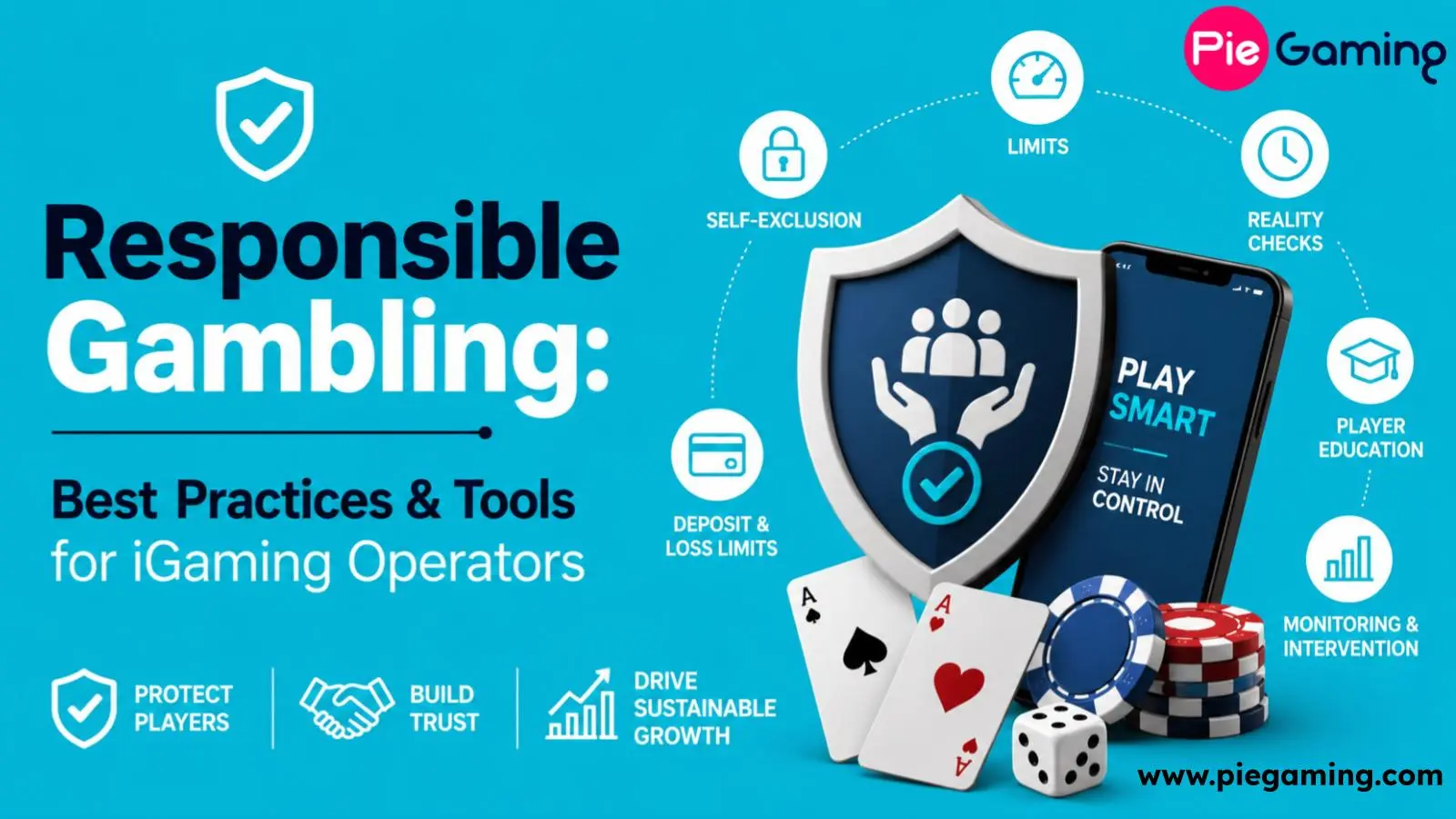
Policies, tools, and practices that address gambling harm by keeping betting safe, controlled, and strictly for entertainment are called responsible gambling. Stakeholders such as regulators, operators, and players collectively set the financial boundaries, provide self-exclusion options, and verify the right age for gambling.
This blog walks you through the top eSports games, most played and watched by the audience. Stay tuned to find out about the best eSports betting games available worldwide.

This blog covers everything from success keys to case studies of successful Asian iGaming operators to help start your dream business.

This blog looks at land-based vs online casinos in 2026, showing which one is growing faster, making more money, and offering better options for casino businesses.

This blog is a comprehensive guide on key success strategies for European iGaming Operators. Read on to build your iGaming empire in the European market.
Explore top iGaming events 2025 in this blog. Learn why you need to be part of gambling conferences and what you can learn from them.
Find out why SiGMA Asia 2025 is a must-visit event for iGaming operators, startups, and investors. See what’s happening, who’s coming, and how it can help grow your iGaming business in Manila.

See you in your inbox soon!

Stay ahead of the game. Subscribe for exclusive content, updates, and insiders!