
Aprenda como o software automatizado de apostas esportivas lida com probabilidades, aceitação de apostas, risco e pagamentos – o que as operadoras podem automatizar e o que ainda precisa de um operador.

As apostas esportivas são dinâmicas. Num piscar de olhos, você perde uma mudança repentina, um aumento repentino nas apostas ou uma oportunidade de ouro. No entanto, muitas operadoras ainda dependem de sistemas manuais que simplesmente não conseguem acompanhar o ritmo. E os riscos são enormes: o mercado global de apostas esportivas Arrecadou mais de 100 bilhões de dólares em GGR somente em 2025.
Quando se trabalha nessa escala, até mesmo pequenos atrasos e erros começam a custar dinheiro de verdade. É aí que entra o software automatizado de apostas esportivas. Em 2026, os operadores mais inteligentes não estão apenas se movendo mais rápido, eles estão dominando o mercado. software de apostas esportivas que reage por conta própria.
Eles estão deixando que os algoritmos cuidem do trabalho pesado. Desde o ajuste de probabilidades em tempo real até o gerenciamento de riscos e a execução instantânea de apostas, a automação se encarrega daquilo que nenhuma equipe humana conseguiria fazer com a velocidade e a escala necessárias.
Vamos entender o que é um software automatizado de apostas esportivas!
Como funciona o fluxo de automação?
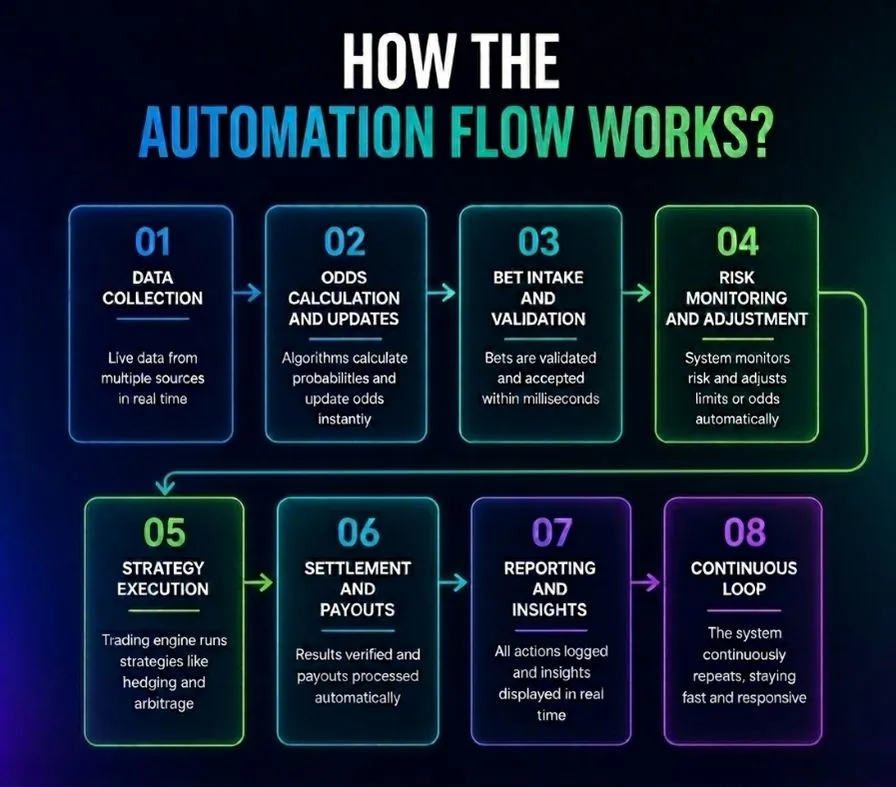
Visão geral de como funciona o fluxo de automação
Por trás da automação, existe um desenvolvimento de software para apostas esportivas Processo com fluxo direto e contínuo, no qual os dados fluem rapidamente e as decisões são tomadas instantaneamente. Cada etapa se conecta à seguinte, de modo que o sistema reage em tempo real, sem esperar que um humano intervenha.
1. Coleta de dados em tempo real
Tudo começa com feeds de dados ao vivo. Estatísticas de uma partida, estatísticas dos jogadores, tendências históricas e informações em tempo real, como gols, lesões ou faltas. O sistema utiliza diversas fontes simultaneamente para garantir que nada esteja errado ou desatualizado.
2. Cálculo e atualização das probabilidades
Esse fluxo de dados recebido alimenta diretamente o mecanismo de cálculo de probabilidades. Os números são processados usando algoritmos e modelos de IA, a probabilidade é calculada e as probabilidades são atualizadas dinamicamente. Um cartão vermelho é marcado; um gol é marcado, e as probabilidades mudam em todos os mercados em que você possa estar envolvido antes mesmo de você ter tempo de assimilar a informação.
3. Recebimento e Validação de Apostas
No momento em que um usuário faz uma aposta, o sistema entra em ação. Ele verifica as probabilidades, valida o valor apostado, confirma o status do mercado e aceita ou sinaliza a aposta em milissegundos. Sem filas, sem atrasos.
4. Monitoramento e Ajuste de Risco
O que está rodando em segundo plano o tempo todo é o Gestão de risco de iGaming O módulo monitora padrões de apostas e fica atento a qualquer anormalidade, como um grande volume de apostas em um único resultado. Ao detectar um sinal de alerta, ele ajusta os limites, modifica as probabilidades ou suspende o mercado automaticamente para manter a exposição sob controle.
5. Execução da estratégia
O mecanismo de negociação também não fica ocioso. Ele executa estratégias predefinidas, como hedge ou arbitragem, abrindo e ajustando posições conforme o mercado se movimenta, tudo sem que ninguém precise apertar um botão.
6. Liquidação e Pagamentos
Ao final do jogo, o sistema verifica os resultados consultando fontes de dados confiáveis e liquida as apostas automaticamente. Os pagamentos são feitos rapidamente, reduzindo o tempo necessário para efetuar o pagamento e também limitando o número de disputas.
7. Relatórios e insights
Todas as ações são registradas e processadas em painéis de controle em tempo real. Sempre que desejarem, os operadores podem acompanhar seu desempenho, avaliar sua exposição ao risco e gerar relatórios de conformidade ou revisão de estratégia.
Todo o fluxo é mantido em um ciclo contínuo, garantindo que a plataforma seja responsiva, precisa e esteja preparada para qualquer evento futuro.
Leia o blog – Valor esperado em apostas: a margem explicada
Componentes Essenciais de uma Plataforma de Apostas Automatizada
Uma plataforma de apostas de alto desempenho só é tão boa quanto o que funciona nos bastidores. A interface pode ser o que os usuários veem, mas é o ecossistema de back-end que mantém tudo rápido, preciso e confiável. Aqui está uma visão geral dos componentes que realmente fazem tudo funcionar.
1. Motor de Probabilidades
Considere o sistema de probabilidades como o cérebro de toda a operação. Ele está constantemente coletando dados ao vivo, condições da corrida, histórico de desempenho dos cavalos, estatísticas dos jóqueis, volumes de apostas, até mesmo o clima, e usando modelos baseados em IA para calcular e atualizar as probabilidades. apostas em tempo real.
Aqui não existem números estáticos. Se um cavalo muito apostado começar a mostrar sinais de fadiga, ou se uma onda repentina de apostas alterar a responsabilidade, o sistema se recalibra instantaneamente.
Uma desistência de última hora, uma mudança nas condições da pista, um aumento repentino nas apostas: a plataforma reage a tudo isso em milissegundos, mantendo-se competitiva e protegendo suas margens.
2. Módulo de Gestão de Riscos
Este é o sistema de defesa da plataforma, e ele nunca dorme. Monitora cada aposta recebida, procurando por padrões que não fazem sentido. Se várias apostas de alto valor forem feitas em um azarão a partir de contas vinculadas simultaneamente, o sistema sinaliza isso imediatamente.
A partir daí, é possível reduzir os limites de apostas para usuários específicos, ajustar as probabilidades para gerenciar a exposição ou suspender um mercado por completo, tudo sem que ninguém precise intervir. Sistemas mais avançados chegam a criar perfis de risco para os usuários, separando apostadores casuais de apostadores profissionais, para que a plataforma possa aplicar controles mais precisos onde eles são mais necessários.
3. Motor de Apostas e Negociação
É aqui que a execução realmente acontece. As apostas são processadas, comparadas com os mercados disponíveis e concluídas instantaneamente, mesmo quando os volumes estão altos.
As versões mais avançadas desse mecanismo vão além do simples processamento de apostas. Elas executam estratégias de negociação automatizadas como... arbitragem, operações de hedge e criação de mercado, ajustando continuamente as posições conforme os mercados se movimentam.
Aqui, a velocidade é fundamental. Um atraso de apenas alguns segundos pode significar probabilidades desfavoráveis ou exposição financeira inesperada.
4. Motor de Assentamento
Quando a corrida termina, o sistema de liquidação assume o controle. Ele se conecta aos provedores oficiais de dados da corrida, verifica os resultados, calcula os pagamentos e atualiza as carteiras dos usuários automaticamente. Sem etapas manuais, sem esperas.
Isso é mais importante do que parece. A liquidação manual gera atrasos, e atrasos geram desconfiança. Um processo de liquidação automatizado e eficiente mantém a transparência e minimiza as disputas.
5. Análise e relatórios
Os dados brutos não são úteis a menos que você possa fazer algo com eles. Este elemento transforma todos os dados coletados na plataforma em dados acionáveis e fáceis de entender por meio de painéis em tempo real. De forma rápida e prática, os operadores podem visualizar volumes de apostas, lucros e prejuízos com base no mercado, comportamento do usuário e tendências de retenção.
O sistema também lida com o lado menos glamoroso, mas igualmente importante: a conformidade. Ele gera automaticamente relatórios de transações, atividades do usuário e fluxos financeiros, prontos para auditoria, para que os operadores não precisem se preocupar quando os órgãos reguladores baterem à porta.
As plataformas de alta tecnologia vão um passo além com análises preditivas e alertam sobre picos de demanda ou um mercado com baixo desempenho antes que isso se torne realidade.
6. Camada de Integração
Todos os componentes mencionados acima precisam se comunicar entre si e com o mundo externo. A camada de integração é responsável por isso. Ela gerencia as APIs que conectam os provedores de dados de probabilidades e corridas em tempo real. provedores de soluções de pagamento para iGamingSistemas de verificação KYC e AML, e gerenciamento de contas de usuário em um fluxo único e integrado.
O usuário deve poder fazer uma aposta que será validada pelo sistema, as probabilidades mais recentes devem ser obtidas, a aposta deve ser confirmada e a transação deve ser registrada em questão de segundos. A camada de integração é o que torna isso possível sem que nada passe despercebido.
Leia o blog – Inteligência artificial em apostas esportivas
Operações de apostas esportivas manuais versus automatizadas
Nas apostas esportivas, a eficiência operacional impacta diretamente as margens de lucro e a experiência do usuário. A diferença entre sistemas manuais e automatizados é maior do que a maioria dos operadores imagina, e estar ciente dessa diferença é o primeiro passo para criar algo escalável.
| Aspecto | Operações de apostas manuais | Operações automatizadas de apostas |
| Gerenciamento de probabilidades | Os operadores definem e ajustam as probabilidades manualmente, o que significa atualizações mais lentas e maior possibilidade de viés humano. | Mecanismos baseados em inteligência artificial atualizam as probabilidades instantaneamente, reagindo a dados ao vivo, padrões de apostas e exposição ao risco em tempo real. |
| Velocidade de Execução | O processamento e a validação de apostas podem sofrer atrasos, especialmente quando o tráfego aumenta durante grandes eventos. | As apostas são executadas com latência ultrabaixa, mesmo em volumes máximos. Sem filas, sem lentidão. |
| Gestão de Risco | O monitoramento manual dificulta a detecção de fraudes ou padrões incomuns antes que o dano seja causado. | Algoritmos em tempo real detectam anomalias instantaneamente e podem ajustar limites automaticamente ou suspender mercados sem intervenção humana. |
| Global | O crescimento é limitado pelo número de funcionários. Mais volume significa mais contratações, mais treinamento e mais custos operacionais. | Projetado para escalabilidade. Milhares de usuários e apostas simultâneas processadas sem necessidade de mão de obra adicional. |
| Precisão | O erro humano na definição, liquidação e divulgação de probabilidades é um risco constante. | Os cálculos automatizados mantêm os preços e os pagamentos precisos, com muito menos margem para erros dispendiosos. |
| Processo de liquidação | A verificação manual dos resultados torna o processo mais lento e abre espaço para contestações. | A liquidação ocorre instantaneamente usando fluxos de dados integrados e processamento de pagamentos automatizado. |
| custos operacionais | Os custos com pessoal, treinamento e supervisão se acumulam ao longo do tempo, tornando difícil o controle desses custos a longo prazo. | Investimento inicial mais elevado, mas custos operacionais significativamente menores à medida que a plataforma cresce. |
| Experiência do Usuário | Atualizações lentas e atrasos frustram os usuários, especialmente durante apostas ao vivo, onde cada segundo conta. | Uma experiência perfeita e em tempo real, com atualizações instantâneas e transações mais rápidas em todos os aspectos. |
| Utilização de dados | Dados históricos e em tempo real raramente são utilizados em todo o seu potencial na tomada de decisões. | Análises avançadas e inteligência artificial processam grandes conjuntos de dados continuamente, proporcionando preços mais inteligentes e insights mais precisos. |
| Conformidade e Relatórios | A elaboração de relatórios manuais consome muito tempo e tem maior probabilidade de conter imprecisões quando mais importa. | Relatórios prontos para auditoria gerados automaticamente em tempo real, mantendo os operadores em conformidade sem complicações. |
Sistemas manuais podem funcionar bem em menor escala, mas atingem um limite rapidamente. Plataformas de apostas automatizadas oferecem a velocidade, a precisão e a escalabilidade que a competitividade no atual ambiente de apostas de alta frequência exige.
Benefícios da automação para operadores de apostas esportivas
A automação deixou de ser um mero diferencial. Para as operadoras que buscam escalar, proteger suas margens e oferecer uma experiência de apostas que realmente fidelize os usuários, ela se tornou o requisito básico.
1. Margens de lucro mais elevadas através de probabilidades mais inteligentes
Em apostas esportivas, cada detalhe importa. Dados em tempo real A inteligência artificial é utilizada para manter as probabilidades em níveis ótimos o tempo todo, reduzindo os spreads, equilibrando as apostas e diminuindo a exposição a apostadores profissionais. O resultado é uma operação que se mantém à frente dos movimentos do mercado, em vez de correr atrás do prejuízo.
2. Controle de risco em tempo real
Quanto mais cedo uma ameaça for identificada, mais barato será. A automação identifica padrões suspeitos, arbitragem e atividades incomuns assim que ocorrem e reage imediatamente, alterando limites, suspendendo mercados ou recalculando probabilidades. Sem esperas, sem análises manuais, sem danos que poderiam ter sido evitados.
3. Escalabilidade sem custos operacionais adicionais
Mais usuários devem significar mais receita, não mais contratações. Sistemas automatizados gerenciam milhares de apostas e mercados simultâneos sem a necessidade de pessoal adicional, facilitando a expansão para diferentes regiões e modalidades esportivas sem que os custos disparem junto com o volume.
4. Processamento e liquidação de apostas mais rápidos
Os usuários esperam velocidade, e os mecanismos automatizados a proporcionam. As apostas são processadas instantaneamente, os resultados são liquidados assim que confirmados e os pagamentos são feitos rapidamente. Esse tipo de confiabilidade gera confiança, e a confiança faz com que os usuários voltem sempre.
5. Experiência de usuário aprimorada
O que acontece nos bastidores se reflete na experiência. Cotações em tempo real, confirmações instantâneas, sugestões personalizadas e até mesmo uma plataforma que não trava mesmo durante os eventos mais intensos. Com uma experiência agradável, os usuários permanecem por mais tempo e fazem mais apostas.
6. Tomada de decisão baseada em dados
Uma casa de apostas gera uma enorme quantidade de dados diariamente. Esses dados são utilizados por meio da automação. O comportamento de apostas, as tendências de mercado e as métricas de desempenho são integrados em painéis de controle para permitir que os operadores tomem decisões mais inteligentes sobre preços, promoções e engajamento do usuário.
Conjunto de tecnologias por trás do software de apostas automatizadas
A infraestrutura tecnológica por trás de qualquer site de apostas rápido e de alto desempenho é projetada para fazer apenas uma coisa: manter todo o sistema funcionando sem problemas quando mais importa. Os componentes principais lidam com a lógica e as operações; no entanto, é esta camada que garante que nada falhe quando mais se faz necessário.
1. Pipeline de Dados e Processamento de Fluxo
As plataformas automatizadas não esperam por atualizações. Elas processam dados continuamente, absorvendo informações de partidas ao vivo, atividades de apostas e feeds externos à medida que os eventos se desenrolam. Isso significa que as probabilidades, os sinais de risco e as ações do usuário são sempre baseados no que está acontecendo agora, e não no que aconteceu alguns segundos atrás.
2. Infraestrutura de baixa latência
Em apostas, milissegundos fazem toda a diferença. A infraestrutura é projetada para reduzir atrasos em todas as etapas, desde o momento em que os dados chegam até o momento em que uma aposta é confirmada. Bancos de dados em memória e computação de borda mantêm os tempos de resposta curtos, de modo que, seja uma atualização de probabilidades ou uma confirmação de aposta, tudo acontece rapidamente, mesmo quando o tráfego está alto.
3. Arquitetura de microsserviços
Em vez de executar um único sistema grande que depende exclusivamente da sua capacidade de sobrevivência, as plataformas modernas são divididas em serviços menores e independentes. Cada um deles executa uma tarefa específica e pode ser dimensionado de forma autônoma. Isso torna a plataforma mais fácil de atualizar, mais flexível de gerenciar e muito mais resiliente. Se um serviço apresentar um problema, os demais continuam funcionando sem interrupções.
4. Implantação nativa da nuvem e escalonamento automático
O tráfego de apostas é imprevisível. Um grande evento pode gerar um aumento repentino no volume em minutos. A implementação nativa em nuvem lida com isso escalando automaticamente quando a demanda aumenta e reduzindo a capacidade quando a situação se estabiliza. A plataforma mantém o desempenho quando necessário e a relação custo-benefício quando não é preciso.
5. Monitoramento, registro e tolerância a falhas
Nenhum sistema é imune a problemas, mas um sistema bem construído os detecta antes mesmo que os usuários os percebam. O monitoramento contínuo acompanha o desempenho em toda a plataforma, o registro centralizado mantém um histórico claro de cada ação e os mecanismos de failover são acionados automaticamente caso algo falhe. As operações permanecem ininterruptas e, quando algo precisa ser corrigido, as informações para solucionar o problema já estão disponíveis.
Desafios na implementação de sistemas automatizados de apostas
A automação resolve muitos problemas, mas traz consigo um conjunto de desafios que os operadores precisam dominar desde o início. Velocidade e eficiência significam pouco se as bases forem instáveis.
Problemas de dependência e precisão de dados
Um atraso na transmissão de dados ou alguns segundos de dados incorretos durante um evento ao vivo podem resultar em probabilidades erradas e liquidações imprecisas. Múltiplos fornecedores de dados, camadas de validação e sistemas de contingência são o que impedem que erros dispendiosos passem despercebidos.
Alto custo de configuração inicial
Infraestrutura, fluxos de dados, modelos de IA e integrações de terceiros se somam antes mesmo de qualquer investimento ser feito. O desafio é manter a clareza sobre o compromisso inicial, sem perder o foco no que os retornos a longo prazo realmente representam.
Equilibrando automação com supervisão humana
A automação é rápida, mas nem sempre consegue perceber as circunstâncias. Eventos inesperados e casos extremos podem pegar um sistema totalmente automatizado desprevenido. O verdadeiro desafio é saber onde deixá-lo operar livremente e onde manter o julgamento humano no processo.
Conformidade regulatória em decisões automatizadas
As regulamentações sobre apostas variam de região para região e mudam com frequência. Cada decisão automatizada precisa estar em conformidade com as normas e ser rastreável. Quando isso não ocorre, as consequências vão além de multas e podem colocar em risco as licenças de operação.
Transparência em Sistemas Algorítmicos
Quando uma plataforma se comporta como uma caixa preta, explicar os resultados aos reguladores e resolver disputas entre usuários torna-se difícil. Registros claros, modelos explicáveis e trilhas de decisão rastreáveis são o que mantém os operadores no controle real.
Como escolher o software de apostas automatizadas certo
Escolher o software de apostas automatizadas certo vai além de simplesmente verificar uma lista de funcionalidades. Trata-se de encontrar um sistema que se adapte à sua forma de operar, impulsione o crescimento do seu negócio e se integre à sua infraestrutura existente sem dificuldades. A maioria dos operadores acaba comparando uma solução personalizada com uma solução pronta. solução de apostas esportivas de marca brancaAqui estão os principais fatores que valem a pena avaliar:
| Fator | O que procurar | Por que isso importa |
| Soluções personalizadas versus soluções de marca branca | Plataformas personalizadas oferecem controle total, mas levam mais tempo para serem desenvolvidas. Uma solução de marca branca é pré-construída e está pronta para ser lançada mais rapidamente. | Se a prioridade é chegar rapidamente ao mercado, a solução white label faz sentido. Se o seu modelo precisa de personalização profunda, um desenvolvimento sob medida compensa o tempo e o investimento extras. |
| Capacidades de Integração | Verifique a facilidade com que o software se conecta a provedores de dados, gateways de pagamento, sistemas KYC e ferramentas de CRM por meio de APIs. | Integrações deficientes tornam tudo mais lento e criam lacunas de dados. Integrações claras e bem construídas mantêm as operações funcionando em tempo real com menos dores de cabeça técnicas. |
| Confiabilidade e suporte do fornecedor | Procure por experiência comprovada, garantias sólidas de tempo de atividade, atualizações regulares e uma equipe de suporte que realmente responda quando algo der errado. | Tempo de inatividade custa dinheiro e mina rapidamente a confiança do usuário. Um fornecedor confiável mantém a plataforma estável e garante que os problemas sejam resolvidos antes que se agravem. |
Esses três fatores não abrangem todas as decisões, mas são os que tendem a ser mais importantes quando as operadoras estão escolhendo entre plataformas. Acertar nisso facilita bastante o gerenciamento do restante.
Como PieGaming Suporta apostas automatizadas.
|
Empacotando…
O software automatizado de apostas esportivas não se trata apenas de acompanhar a concorrência. Trata-se de construir uma operação verdadeiramente duradoura. Decisões mais rápidas, controle de risco mais inteligente e escalabilidade são resultados da implementação do sistema certo. Seja optando por uma solução white-label ou por um sistema próprio, você estará no caminho certo. apostas esportivas prontas para usoA automação já deve estar instalada.
Os operadores que investem em automação hoje não estão apenas resolvendo os problemas atuais. Eles estão se preparando para vencer em um mercado que só tende a se tornar mais exigente.

FAQ
-
O que é um software automatizado de apostas esportivas?
O software automatizado de apostas esportivas utiliza algoritmos para gerenciar probabilidades, apostas e riscos sem a necessidade de intervenção manual. Ele processa dados em tempo real para manter as operações das casas de apostas funcionando mais rapidamente, com maior precisão e capacidade de expansão.
-
Como funciona o software de apostas automatizadas?
A plataforma coleta dados em tempo real, calcula probabilidades, aceita apostas, monitora riscos e liquida resultados, tudo em tempo real. Cada etapa acontece automaticamente, permitindo que a plataforma reaja instantaneamente sem a necessidade de intervenção humana.
-
As apostas esportivas automatizadas serão legais em 2026?
Depende de onde você opera. Em mercados regulamentados, as apostas automatizadas são permitidas desde que os operadores atendam aos requisitos de licenciamento, sigam os padrões de conformidade e respeitem as diretrizes de jogo responsável estabelecidas pelas autoridades locais.
-
A inteligência artificial é utilizada em ferramentas automatizadas de apostas esportivas?
Sim, e é fundamental para o desempenho dessas plataformas. A IA analisa dados, prevê resultados e ajusta as probabilidades em tempo real, ajudando as operadoras a melhorar a precisão, identificar riscos precocemente e executar estratégias de apostas mais inteligentes em todos os mercados.


Palak Madan escreve sobre a indústria de iGaming desde 2024. Ela se concentra em ajudar operadores e fundadores a entenderem suas opções ao lançar um cassino online, desde a escolha do provedor de software certo até a análise de custos e requisitos de conformidade em diferentes mercados. PieGamingEla aborda temas como soluções de cassino white label, seleção de plataforma e entrada no mercado, transformando informações complexas do setor em orientações práticas para quem está construindo negócios de iGaming. Ela também acompanha de perto as mudanças nas licenças e regulamentações, principalmente como as novas regras moldam a forma como as operadoras entram e crescem em diferentes jurisdições.

As microapostas são um tipo de aposta esportiva ao vivo que se concentra nos pequenos momentos de uma partida. Em vez de apostar no resultado final, os apostadores apostam no que acontecerá a seguir, como o resultado do próximo arremesso no beisebol, o ponto no tênis, a posse de bola no basquete ou a bola no críquete. Como esses eventos são resolvidos quase instantaneamente, as microapostas oferecem uma experiência mais rápida e dinâmica do que as apostas esportivas tradicionais.

As apostas em eSports oferecem uma grande oportunidade para as operadoras, e escolher o parceiro certo pode impactar significativamente a lucratividade, o engajamento dos jogadores e a eficiência operacional.

Aprenda o que são apostas esportivas presenciais, como funcionam as casas de apostas físicas e quais são os custos e retornos do modelo presencial em comparação com as apostas exclusivamente online.

Saiba mais sobre o que o software de apostas em corridas de cavalos inclui — mercados de apostas tote e de odds fixas, transmissões ao vivo das corridas e pagamentos — além do custo de desenvolvimento ou de uma licença completa.

Saiba mais sobre como os algoritmos de apostas esportivas calculam as probabilidades e gerenciam o risco, além de conferir uma comparação dos principais softwares de algoritmos com base em dados, modelos e opções de integração.

Aprenda como as apostas em eSports funcionam como um segmento vertical — títulos, mercados, feeds de odds e o software que as operadoras precisam para adicionar eSports a uma casa de apostas já existente.
Descubra como a IA é usada nas apostas esportivas para precificação de probabilidades, detecção de fraudes, mercados ao vivo e segmentação de jogadores — e o que isso muda para as operadoras.

Vejo você em sua caixa de entrada em breve!

Fique à frente do jogo. Assine com exclusividade
conteúdo, atualizações e informações privilegiadas!