
Los mejores métodos de pago para casinos en línea en 2026 incluyen tarjetas de crédito y débito, monederos electrónicos, banca abierta, criptomonedas, tarjetas prepago y dinero móvil. Las tarjetas son el método más aceptado, pero están sujetas a restricciones por parte del emisor en las transacciones de juego. Los monederos electrónicos como PayPal, Skrill y Neteller ofrecen retiros más rápidos.
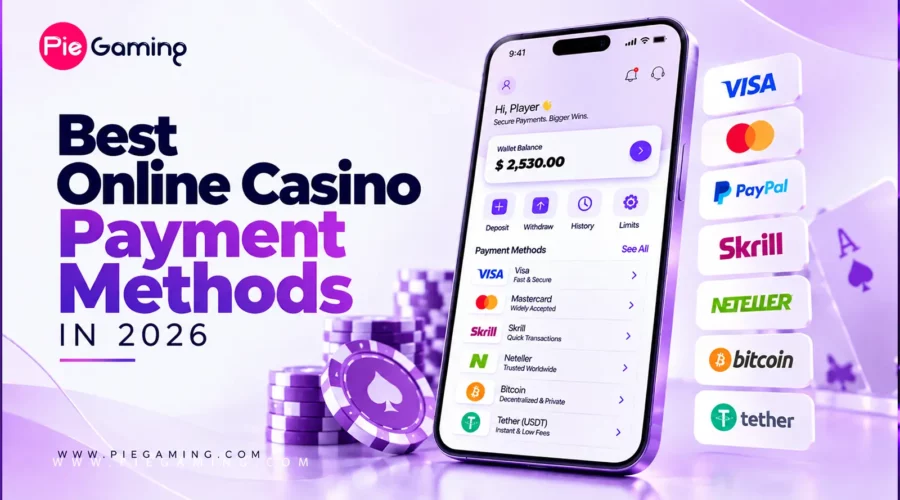
Los jugadores de casinos en línea no pagan de la misma manera. Algunos prefieren un depósito instantáneo con tarjeta. Otros necesitan una billetera electrónica local que admita su moneda. Un tercero busca un método de retiro que no tarde tres días hábiles. Cuando los operadores solo ofrecen unas pocas opciones de pago, generan inconvenientes para una parte importante de su público incluso antes de que realicen su primera apuesta.
En 2026, un competitivo software de casino en línea Necesita una infraestructura de pago flexible: cobertura de métodos locales, depósito fiable y comisiones transparentes. Esta guía compara los mejores métodos de pago de casinos online según su velocidad, coste, alcance regional y los factores que influyen en la elección del jugador.
¿Cómo funcionan los sistemas de pago de los casinos?
Lo que a primera vista puede parecer pagos inmediatos en el casino, en realidad es el resultado de la interacción de múltiples sistemas, lo que garantiza la transferencia segura de fondos dentro de las normas reglamentarias.
Flujo de depósitos: El jugador selecciona un método de pago y establece un valor. Se inicia una ruta de pago que solicita la transacción al banco, la red de tarjetas o la billetera electrónica correspondiente. El proveedor confirma o rechaza la transacción; las verificaciones de fraude y prevención del blanqueo de capitales se realizan simultáneamente, y el saldo del jugador se actualiza una vez confirmada la transacción. La liquidación final puede demorarse ligeramente según el método de pago.
Flujo de retiro: El operador verifica los indicadores de AML (Antilavado de Dinero) o de juego seguro del jugador, las condiciones de apuesta, el método de propiedad y el estado KYC (Conozca a su Cliente) antes de aprobar una apuesta. Si se aprueba, el dinero se transfiere a un método elegible, generalmente el método de depósito. El tiempo requerido variará según el proceso de aprobación del operador y el monto del pago por el uso del tren.
Cinco componentes fundamentales mantienen en funcionamiento esta infraestructura:
- Plataforma de casino y monedero Ledger — Registra los depósitos, retiros, bonos, actividad de apuestas y saldo disponible; aplica las reglas y límites de pago del operador.
- Pasarela de Pago (seleccione para continuar) — Captura y enruta de forma segura los datos de pago entre el cajero del casino y los bancos, adquirentes, monederos electrónicos o proveedores de pago alternativos.
- Procesador de pagos o PSP — Gestiona el procesamiento de transacciones, los flujos de autorización, la conciliación y, en algunos casos, los servicios de adquisición y pago.
- Seguridad y Gestión de riesgos Controla — Cifrado, tokenización, monitoreo de transacciones, detección de fraude y controles contra el lavado de dinero que protegen los datos de los jugadores y señalan actividades sospechosas.
- Sistemas de verificación y cumplimiento — confirmar la identidad, edad, dirección y titularidad del pago al tiempo que se respaldan los procedimientos KYC y AML del operador, juego responsabley obligaciones específicas de cada jurisdicción.
En conjunto, estos sistemas determinan si un depósito se procesa rápidamente, si se puede automatizar un pago, si se admite un método local y si el operador cumple con sus obligaciones legales y de riesgo.
Tipos de métodos de pago en casinos online
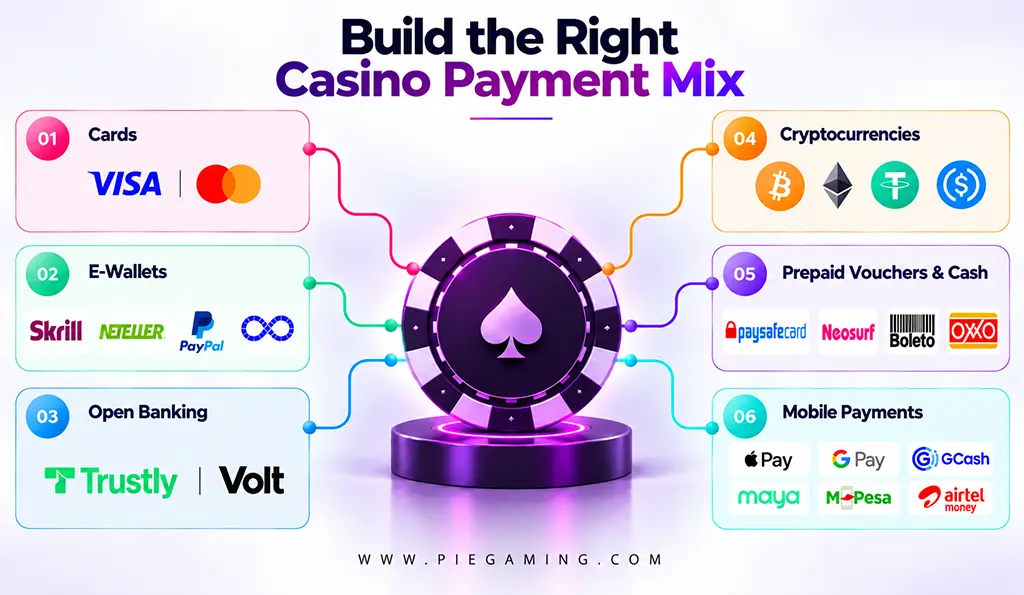
Métodos de pago del casino en línea
Variedad de opciones de pago de casinos Abarcan desde tarjetas y monederos electrónicos hasta criptomonedas y dinero móvil, y cada uno difiere en velocidad, disponibilidad, comisiones y región. Esto es lo que los operadores deben saber sobre cada uno.
1. Tarjetas de crédito y débito (Visa, Mastercard)
Visa y Mastercard son ampliamente aceptadas en casinos en línea con licencia, aunque su aceptación depende de la jurisdicción, el operador y las normas locales de pago para juegos de azar. En algunos mercados regulados, el juego con tarjeta de crédito está limitado o incluso prohibido. Las transacciones de juego no están permitidas a nivel de red, y la tarjeta de débito elegible podría ser rechazada.
Los depósitos con tarjeta suelen acreditarse en segundos una vez aprobados. Los retiros generalmente tardan de 3 a 7 días hábiles, dependiendo del emisor, el sistema de la tarjeta y la cola de procesamiento del operador. Las tasas de rechazo representan un desafío operativo clave. Las restricciones de juego a nivel del emisor y el código MCC de juego pueden afectar las tasas de autorización incluso en tarjetas válidas con fondos suficientes.
2. Monederos electrónicos
Las billeteras electrónicas actúan como intermediarias entre el banco del jugador y el casino. Los jugadores cargan fondos desde una cuenta bancaria o tarjeta y realizan depósitos sin compartir sus credenciales bancarias directamente con el casino. Los depósitos son rápidos y los retiros suelen ser más rápidos que los pagos con tarjeta. Las comisiones y la disponibilidad varían según el proveedor, el mercado y el operador. Skrill, Neteller, PayPal y MiFinity son las opciones más utilizadas en el sector del iGaming.
3. Banca abierta y transferencias bancarias instantáneas
La banca abierta permite a los jugadores aprobar un depósito a través de su propia aplicación bancaria sin necesidad de introducir los datos de la tarjeta en la caja del casino. El jugador selecciona su banco, se autentica y aprueba el pago. La velocidad depende del proveedor, el banco y la red de pagos local.
Dado que evita las redes de tarjetas, el riesgo de que un emisor caiga en el bloqueo de MCC no representa un problema. Sin embargo, las políticas de riesgo bancario y los límites de pago aún pueden causar demoras. Entre los principales proveedores se encuentran Trustly, que opera en más de 30 países, incluidos los países nórdicos, el Reino Unido y Norteamérica, y Volt, que cuenta con una amplia cobertura europea y disponibilidad en Brasil y Australia.
4. Criptomonedas
Los pagos con criptomonedas se basan en transferencias a monederos en la cadena de bloques, realizadas a través de Bitcoin, Ethereum o monedas estables como USDT y USDC. Procesador de pagos Por lo general, son compatibles con las criptomonedas y los operadores utilizan soluciones de monitorización de blockchain para el cumplimiento normativo, el procesamiento de pagos y los desembolsos. Las distintas redes y políticas de confirmación tienen diferentes velocidades de liquidación.
USDT y USDC seguirán el valor del dólar estadounidense, y ambos generan menos fluctuaciones de precio que el USD, pero la comisión de la red y la política de tipo de cambio del casino pueden causar una pequeña diferencia. El riesgo de contracargo por tarjeta convencional se elimina en la cadena de bloques con transferencias confirmadas; sin embargo, es necesario implementar controles para prevenir el fraude, evitar sanciones y garantizar el cumplimiento de las normas contra el lavado de dinero.
5. Vales prepago y métodos de pago en efectivo
Paysafecard y Neosurf permiten a los jugadores depositar mediante un código comprado en tiendas, sin necesidad de datos bancarios. Boleto y OXXO son métodos de pago locales en efectivo utilizados en Brasil y México, respectivamente. Los depósitos con cupones son instantáneos, pero generalmente solo permiten depósitos, lo que significa que los jugadores necesitan un método de retiro independiente, como una transferencia bancaria o una billetera electrónica, para recibir sus ganancias.
6. Pagos móviles
GCash y Maya son plataformas clave en Filipinas. M-Pesa se usa ampliamente en Kenia y Tanzania. Airtel Money opera en Tanzania, Ruanda y Zambia. Los operadores deberían priorizar los métodos locales según su mercado autorizado, en lugar de tratar regiones enteras como un único mercado de pagos.
Comparación de métodos de pago: velocidad, comisiones y riesgo.
Nota: Los costos y las velocidades son orientativos. Las tarifas reales varían según el contrato con el proveedor de servicios de pago, el volumen de transacciones, la jurisdicción y el perfil de riesgo del operador. Los operadores deben confirmar los métodos permitidos con sus asesores legales locales y socios de pago autorizados.
¿Cómo evalúan los operadores los métodos de pago de los casinos?
Los operadores no eligen los métodos de pago porque los jugadores los reconozcan, sino porque permiten conversiones, cumplen con los requisitos y liquidan las transacciones de forma predecible. Así es como se ve esa evaluación en la práctica.
Optimización de la tasa de autorización y del rechazo
La tasa de autorización mide el porcentaje de transacciones intentadas que se completan con éxito. Es una métrica clave de pago en los juegos en línea que afecta directamente la conversión de depósitos y los ingresos.
La autorización de tarjetas es más compleja en el sector del juego online que en el comercio electrónico tradicional. Los emisores pueden aplicar controles más estrictos a los códigos MCC de los juegos de azar y rechazar pagos debido a restricciones de juego, normas antifraude, fallos en 3D Secure o políticas internas del banco.
Los operadores utilizan dos enfoques para recuperar los rechazos legítimos:
- Cascada de pagos Reintenta una denegación leve elegible a través de un proveedor de servicios de pago (PSP) secundario aprobado. No debe utilizarse para anular denegaciones definitivas, bloqueos por fraude o respuestas a transacciones prohibidas.
- Enrutamiento inteligente Dirige cada transacción al proveedor de servicios de pago (PSP) más adecuado en función de la ubicación geográfica, el BIN de la tarjeta, el valor de la transacción y el historial de autorizaciones.
Las plataformas de orquestación de pagos automatizan ambos procesos y pueden mejorar las tasas de aprobación cuando hay disponibles múltiples rutas de procesamiento que cumplen con la normativa.
Cumplimiento normativo por mercado
La disponibilidad de los métodos de pago es una decisión legal en los mercados regulados, no solo comercial.
Divisa de liquidación y riesgo cambiario
El riesgo cambiario surge cuando los jugadores realizan transacciones en moneda local mientras que el operador liquida en USD. La exposición depende de los acuerdos con el proveedor de servicios de pago (PSP), el momento de la conversión y el ciclo de liquidación. La liquidación en USDT y USDC puede reducir la exposición a la volatilidad de la moneda local en los mercados permitidos, pero aún se aplican los diferenciales de conversión, las comisiones de red y los costos de cumplimiento.
Problemas comunes en los pagos de transacciones en casinos en línea
Los pagos de los casinos fallan con más frecuencia de lo que la mayoría de los operadores esperan. Algunos problemas tienen solución, otros son estructurales. A continuación, se explica a qué se enfrentan los operadores y cómo abordarlos.
Retrasos en la verificación KYC
El proceso KYC (Conozca a su cliente) suele activarse al momento de retirar fondos, no al registrarse ni al realizar un depósito. Los jugadores pueden depositar fondos en su cuenta, jugar durante semanas y descubrir que necesitan presentar documentos solo cuando intentan retirar dinero.
Los retiros de mayor importe implican un nivel adicional de verificación: comprobaciones más exhaustivas del origen de los fondos, además del proceso KYC estándar, que exigen a los jugadores explicar la procedencia de su dinero. Este es un requisito reglamentario, no un paso opcional. Solicitar a los jugadores que completen la verificación antes de su primer retiro elimina la demora antes de que se convierta en un obstáculo.
Tiempos lentos de procesamiento de retiros
La velocidad de extracción varía según el método: Pago con monederos electrónicos El procesamiento puede tardar horas, la banca abierta puede ser instantánea o el mismo día, las tarjetas tardan de 3 a 5 días hábiles y las transferencias bancarias tardan más si se realizan a través de fronteras o durante los fines de semana. La mayoría de los casinos también aplican un período de espera interno además del tiempo de procesamiento del método de pago.
Esto se debe a una medida de control del juego responsable y prevención del fraude, no a una demora técnica. Los jugadores que esperan un retiro el mismo día a su monedero electrónico pueden tener que esperar entre 24 y 48 horas antes de que se transfieran los fondos. Establecer expectativas claras al solicitar el retiro reduce significativamente las quejas.
Restricciones de apuesta para bonos
Los requisitos de apuesta deben cumplirse en su totalidad antes de que las ganancias del bono puedan retirarse. Intentar retirar durante un bono activo generalmente resulta en la cancelación o pérdida del bono. Los términos se divulgan en sistema de bonificación condiciones, pero rara vez son visibles en el momento de la aceptación, que es donde se originan la mayoría de las disputas.
Limitaciones del método de pago
Los cupones prepago solo permiten depósitos y no ofrecen la posibilidad de retirar fondos a través del mismo cupón. Algunos casinos exigen que los retiros se realicen mediante el método de depósito original, lo que genera inconvenientes cuando dicho método no admite pagos salientes. Cambiar a un método de retiro diferente activa una verificación de identidad (KYC) adicional antes de que se pueda procesar el pago.
Límites y restricciones de retiro
La mayoría de las plataformas aplican límites de retiro diarios, semanales o mensuales. Los jugadores con grandes ganancias pueden recibir los fondos en plazos en lugar de un solo pago. Estos límites suelen estar ocultos en la sección bancaria de los términos y condiciones, en lugar de aparecer durante el proceso de depósito o de bonificación. Algunos casinos ofrecen límites más altos para cuentas VIP o de grandes apostadores verificados, pero el proceso para acceder a ellos no siempre se comunica con claridad.
Preferencias de pago regionales: qué funciona y dónde.
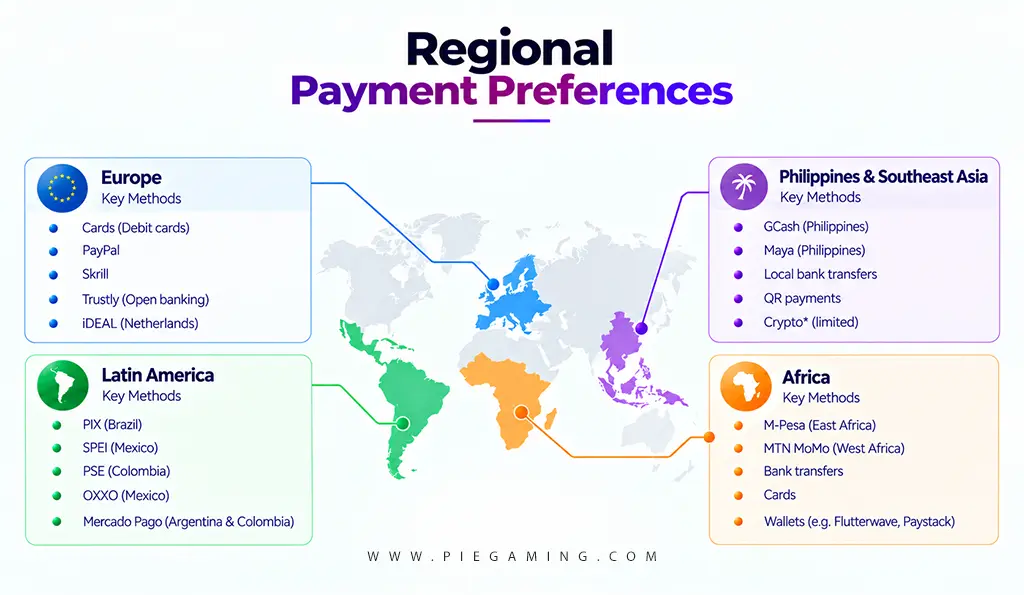
Preferencias de pago regionales
Las preferencias de pago varían considerablemente según el país. Un sistema de pago que no admita los métodos locales habituales ni los procesos KYC (Conozca a su cliente) conformes a la normativa puede reducir significativamente la conversión de depósitos, incluso cuando el producto y la estrategia de captación son sólidos.
Europa
Las tarjetas de débito son de uso generalizado, pero los métodos de pago locales entre cuentas son muy importantes en algunos mercados. En Gran Bretaña, los operadores con licencia no pueden aceptar tarjetas de crédito para apuestas. La prohibición abarca las apuestas en línea, los casinos y el bingo, con algunas excepciones para la lotería.
PayPalSkrill y Neteller son opciones reconocidas de monederos electrónicos, aunque su relevancia varía según el mercado. La banca abierta cobra cada vez más importancia en la región. Trustly opera en más de 30 países. iDEAL gestiona alrededor del 70 % de los pagos en línea en los Países Bajos y es el método estándar en el país.
Alemania añade una capa de cumplimiento normativo fundamental. El límite de depósito mensual de 1,000 € se aplica por jugador en todos los proveedores con licencia alemana a través de LUGAS, no por plataforma. Solo se permiten límites superiores bajo estrictas condiciones regulatorias.
Filipinas y el sudeste asiático
Casino online GCash En Filipinas, lidera con 94 millones de usuarios. Maya es otra importante plataforma de billetera digital y banca en el mismo mercado. El comportamiento de pago en el sudeste asiático está muy fragmentado. Las billeteras locales, las transferencias bancarias nacionales y los sistemas de pago con código QR suelen ser más relevantes que los sistemas de tarjetas internacionales, dependiendo del país. Si bien las criptomonedas pueden estar presentes en algunos ecosistemas extraterritoriales, no se debe asumir que estén disponibles legalmente en mercados regulados.
América Latina
Brasil opera con un marco de pagos restringido. PIX admite transferencias casi instantáneas las 24 horas del día, los 7 días de la semana, y es uno de los métodos principales permitidos, pero no el único. También se permiten las transferencias TED, las tarjetas de débito y prepago, y ciertas transferencias entre la misma institución. Las tarjetas de crédito, las criptomonedas, el efectivo y los boletos están prohibidos para las apuestas reguladas.
En México, SPEI es el sistema estándar de transferencias interbancarias y OXXO ofrece pagos en efectivo a usuarios no bancarizados. En Colombia, PSE es el método de transferencia bancaria más utilizado, junto con tarjetas y opciones de pago en efectivo como Efecty y Baloto. Mercado Pago es una billetera digital importante en Argentina y Colombia, aunque su función varía según el país.
África
El dinero móvil es fundamental en África Oriental y algunas zonas de África Occidental, mientras que las tarjetas, las transferencias bancarias y las transferencias electrónicas instantáneas siguen siendo importantes en otros lugares. M-Pesa lidera en Kenia y Tanzania. MTN MoMo es importante en Ghana y otros mercados de MTN. Nigeria cuenta con una combinación fragmentada de transferencias bancarias, tarjetas, USSD y monederos electrónicos, con Flutterwave y Paystack como canales de pago locales. En Sudáfrica, las tarjetas, Ozow para transferencias electrónicas instantáneas y los métodos vinculados a bancos son las opciones habituales.
Resumen regional
PieGaming Incluye tu plataforma de pago ya integrada.
PieGaming, software de casino de marca blanca Incluye integración de pagos ya implementada. Los operadores lanzan sus sistemas con una plataforma de pagos compatible y válida en múltiples mercados, sin el coste ni la demora de desarrollarla desde cero.
Qué incluye la caja:
- Métodos de pago locales: UPI, PIX, GCash, M-Pesa y más, con cobertura en los principales mercados de Asia, Latinoamérica y África.
- Compatibilidad global con tarjetas y monederos electrónicos: Visa, Mastercard, PayPal, Skrill, Neteller y otros métodos de uso común.
- Compatibilidad con criptomonedas y stablecoins: Bitcoin, Ethereum, USDT y USDC para operadores que buscan mercados favorables a las criptomonedas.
Conclusión
Los jugadores buscan depósitos rápidos, retiros sencillos y un método confiable. Los operadores necesitan cobertura local, altas tasas de autorización y un flujo de pagos que cumpla con la normativa.
Elegir los mejores métodos de pago de casino en línea para tus mercados objetivo y crear una plataforma que cumpla con ambos requisitos es lo que diferencia a las plataformas que retienen jugadores de las que los pierden al momento del pago.

Contáctenos
Preguntas Frecuentes
-
¿Las plataformas de casino admiten múltiples métodos de pago para casinos en línea?
Sí. La mayoría de las plataformas de casino modernas integran múltiples métodos a través de API o proveedores de servicios de pago, que abarcan tarjetas, monederos electrónicos, transferencias bancarias, sistemas de pago locales, dinero móvil y, en algunos casos, opciones de criptomonedas compatibles.
-
¿Qué métodos de pago de casino presentan el menor riesgo de contracargos para los operadores?
Las transferencias bancarias, los pagos mediante banca abierta, las transferencias instantáneas entre cuentas y las billeteras electrónicas verificadas generalmente conllevan un menor riesgo de contracargo que los pagos con tarjeta. La vigilancia del fraude, los controles KYC (Conozca a su cliente) y la revisión de las transacciones siguen siendo esenciales independientemente del método.
-
¿Cuántos métodos de pago debería ofrecer un casino en línea en su lanzamiento?
Lo suficiente para cubrir la demanda local. Esto generalmente implica tarjetas, una o dos billeteras digitales de uso común, una opción de transferencia bancaria y la principal red ferroviaria local en cada mercado objetivo. Priorice la confiabilidad, la facilidad de retiro y el cumplimiento normativo por encima del volumen.
-
¿Cómo varían las preferencias de métodos de pago en los distintos mercados de juegos en línea regulados?
Se diferencian por el acceso a los servicios bancarios, la infraestructura local, la regulación y los hábitos de los jugadores. Los jugadores del Reino Unido prefieren las tarjetas de débito y las billeteras electrónicas. Los jugadores holandeses usan iDEAL. Los jugadores brasileños realizan transacciones principalmente a través de PIX. Los jugadores kenianos confían en M-Pesa. No existe una única estrategia que funcione en todas partes.
-
¿Qué papel desempeñan los métodos de pago locales en la expansión del mercado de los casinos en línea?
Los métodos locales reducen las fricciones en los depósitos, mejoran la conversión, admiten monedas locales y llegan a jugadores que no tienen acceso a tarjetas internacionales ni monederos electrónicos. Además, ayudan a los operadores a cumplir con los requisitos de cumplimiento normativo y protección del jugador específicos de cada país, aspectos cada vez más importantes a medida que los mercados se regulan.

Palak Madan lleva escribiendo sobre la industria del iGaming desde 2024. Se centra en ayudar a operadores y fundadores a comprender sus opciones al lanzar un casino online, desde elegir el proveedor de software adecuado hasta calcular los costes y los requisitos de cumplimiento en diferentes mercados. PieGamingEn sus escritos, aborda temas como soluciones de casino de marca blanca, selección de plataformas y entrada al mercado, transformando información compleja del sector en consejos prácticos para quienes desarrollan negocios de iGaming. Además, sigue de cerca los cambios en las licencias y la normativa, en particular cómo las nuevas reglas influyen en la forma en que los operadores entran y crecen en diferentes jurisdicciones.

El marketing de influencers para casinos implica la colaboración entre sitios web de casinos con licencia e influencers en plataformas como YouTube, Kickstarter, Twitch, TikTok y Telegram, quienes comparten juegos de casino mediante enlaces rastreables y códigos promocionales. Los creadores reciben una tarifa fija, CPA, participación en los ingresos o una modalidad híbrida, y su remuneración se basa en los resultados obtenidos por FTD, NGR y retención. Las campañas deben cumplir con las normas locales de publicidad, divulgación y las regulaciones para mayores de 18 años.

Este blog explora formas y plataformas para encontrar y asociarse con los mejores afiliados de apuestas deportivas para hacer crecer el negocio de iGaming.

Este blog explica cómo el software de marketing de afiliados de iGaming ayuda a los operadores a aumentar sus ingresos a través del seguimiento inteligente, la automatización, la prevención del fraude y un mejor control de campañas.

El software de afiliados es fundamental para gestionar las colaboraciones y realizar un seguimiento del rendimiento en el sector del iGaming. Esta guía ofrece una visión general de numerosos proveedores de software de afiliados para iGaming y de las funciones que los operadores pueden utilizar para gestionar un programa de marketing de afiliados eficaz.
Este artículo habla sobre los mejores casinos en línea que admiten GCash en Filipinas, además de la variedad de juegos, los bonos y la atención al cliente que brindan.
Los principales proveedores de aplicaciones de pago para soluciones de pago en iGaming cuentan con un alto volumen de transacciones, sólidos marcos de cumplimiento normativo y pagos rápidos para los jugadores. Elegir al proveedor adecuado es clave para lograr altas tasas de autorización, prevenir el fraude y una integración perfecta con su plataforma de apuestas en línea.

Un programa de afiliados de casino es un modelo de marketing basado en el rendimiento, donde los afiliados promocionan las marcas del casino y obtienen comisiones por la captación de jugadores cualificados. Esta guía explica cómo funcionan los programas de afiliados de casino, explora los modelos de comisión, destaca las métricas clave de rendimiento y presenta estrategias para crear y escalar un canal de captación rentable.

¡Nos vemos pronto en tu bandeja de entrada!

Manténgase a la vanguardia del juego. Suscríbete para exclusivo
¡Contenido, actualizaciones y información privilegiada!