
La integración de la API del casino es una solución de software que conecta tu plataforma con juegos, pasarelas de pago, monederos electrónicos, herramientas KYC y otras soluciones de terceros. Permite el intercambio de datos entre sistemas en tiempo real. De esta forma, puedes lanzar juegos más rápidamente, automatizar tareas y ofrecer una experiencia de juego fluida.
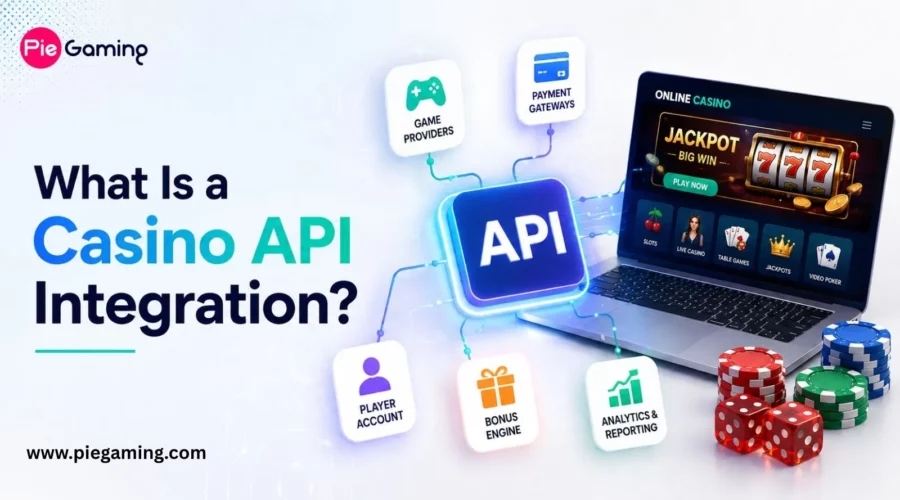
Probablemente hayas notado lo fluido que es. software de casino en línea Funciona. Explora los juegos, realiza depósitos y juega; no hay fallos ni esperas. Pero esta experiencia fluida no es casualidad.
Funciona gracias a la integración de API de casino. Una API es básicamente un puente que permite la comunicación entre diferentes sistemas de software. En la industria de los casinos, conecta la biblioteca de juegos, los procesadores de pago y las herramientas del operador para que funcionen conjuntamente como una única plataforma unificada.
Sin ella, tendrías sistemas aislados que no podrían compartir datos ni trabajar juntos. ¿Y con ella? Tus jugadores disfrutarán de una experiencia rápida, fiable y sin complicaciones.
Comprender la integración de la API del casino
La integración de la API del casino es la forma en que conectas tu plataforma con sistemas externos. Proveedores de software de iGamingEn lugar de construirlo todo desde cero, se utilizan API para intercambiar datos con servicios de terceros en tiempo real.
Una API de casino se encarga del trabajo pesado en múltiples áreas:
- Conectar proveedores de juegos y añadir sus bibliotecas de juegos a tu plataforma.
- Sincronización de la información de la cuenta del jugador en diferentes sistemas de juego.
- Procesamiento de depósitos, retiros y verificación de pagos.
- Realizar campañas de bonificación, promociones y programas de fidelización.
- Seguimiento de datos de juego, apuestas, ganancias, pérdidas y transacciones.
- Fomentar el juego responsable y el desarrollo de herramientas para el cumplimiento normativo.
Esto es lo que sucede en realidad. Un jugador inicia un juego de tragamonedas. Tu plataforma envía una solicitud API al proveedor del juego. El proveedor autentica al jugador, carga la sesión de juego, registra las apuestas y envía los datos de la partida. Todo esto ocurre en segundos y sin que el jugador se dé cuenta.
La mayoría de los casinos modernos no dependen de una sola API. Una sesión de un solo jugador puede usar simultáneamente una API de juego, una API de pago, una API de verificación KYC y una API de gestión de clientes. Esta configuración ofrece ventajas reales: puedes añadir más juegos con mayor rapidez, implementar nuevas funciones sin necesidad de rediseñar la plataforma y mantener todo funcionando sin problemas a medida que creces.
¿Por qué es importante la integración de la API de casino para los operadores de casinos en línea?
La integración de API te permite lanzar tu negocio y competir rápidamente. Para no crear ninguna funcionalidad y concentrarte en las que impulsan el crecimiento de tu negocio, recurres a servicios especializados de terceros. He aquí por qué es importante:
1. Lanzamientos más rápidos
Se conectan juegos prefabricados, pasarelas de pago y gestión de cuentas de jugadores Sistemas en lugar de pasar meses construyéndolos. Vives más rápido.
2. Más opciones de juego
Las API te permiten agregar ranuras, vivir los juegos de casino dealerJuegos de mesa y premios instantáneos de diferentes proveedores, todo a través de una sola plataforma.
3. Expansión más sencilla
Agregar nuevos métodos de pago, monedas, idiomas o contenido regional no requiere reconstruir su plataforma. Simplemente integre lo que necesite.
4. Menores gastos generales operativos
Comunicación en tiempo real entre juegos, pagos, CRM y back office. Se reducen las tareas manuales y el papeleo.
5. Espacio para escalar
Cuando aumenta la demanda del juego, puedes añadir más juegos y servicios sin tener que destruir tu infraestructura y reconstruirla.
Piénsalo de esta manera. Quieres agregar un nuevo proveedor de crupieres en vivoEse contenido se integra en días, no en meses, gracias a una sólida integración de API. Así, te mantienes competitivo, puedes adaptarte más rápido a los cambios del mercado y seguir mejorando la experiencia del jugador sin agotar tu presupuesto de desarrollo.
Cómo funciona la integración de la API del casino
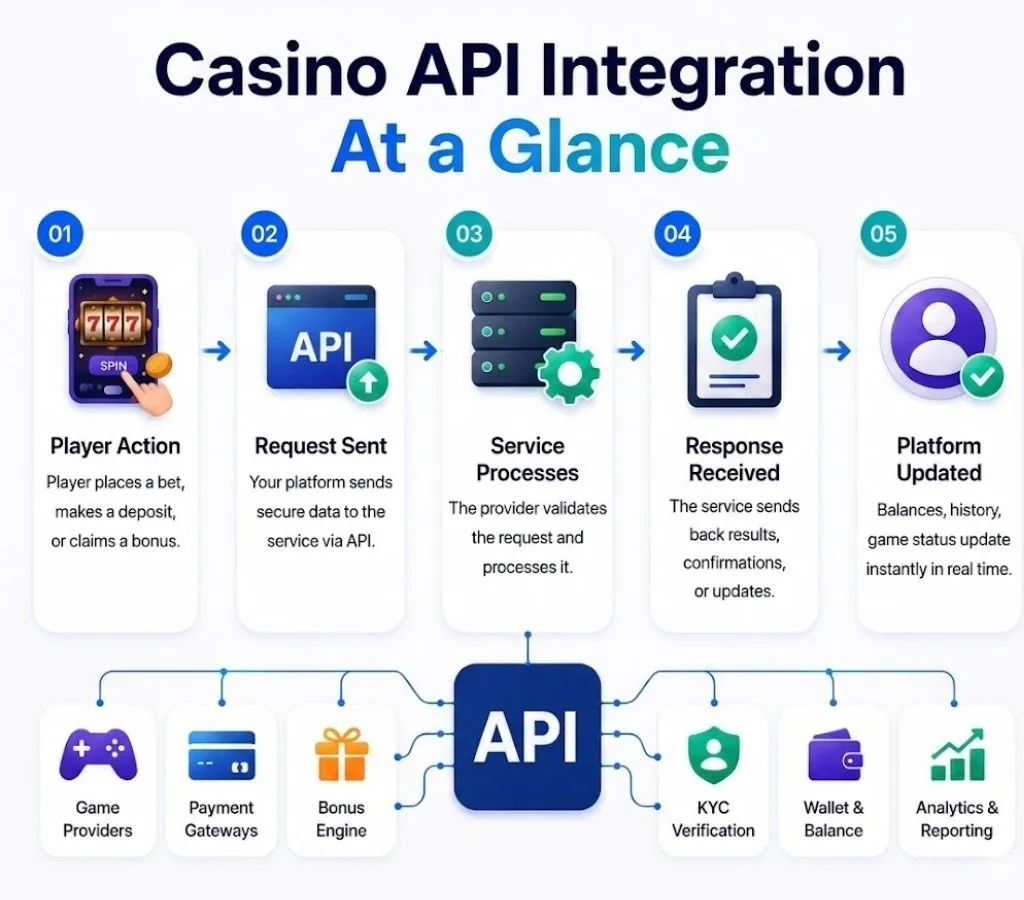
Flujo de trabajo de integración de la API del casino
Al integrar una API de casino con tu plataforma, puedes habilitar la comunicación en tiempo real entre tus servicios y tu plataforma. Imagínalo como una conversación bidireccional entre tu casino, proveedores de juegos, procesadores de pago, sistemas KYC y herramientas de gestión de jugadores. El proceso real es el siguiente:
1. El jugador realiza una acción.
Lanzaron un juego de tragaperrasRealiza una apuesta, deposita fondos o reclama un bono.
2. Tu plataforma envía una solicitud
Transmite los datos del jugador y de la transacción al servicio conectado a través de un punto final de API seguro.
3. El servicio externo lo procesa
El proveedor del juego, el procesador de pagos o el sistema de verificación valida la solicitud y realiza las acciones necesarias.
4. Recibes una respuesta.
El proveedor envía los resultados de los juegos, las confirmaciones de pago, las actualizaciones de saldo o el estado de verificación.
5. Tu plataforma se actualiza al instante.
Las cuentas de los jugadores, el historial de transacciones, los saldos de las carteras y las sesiones de juego se sincronizan al instante.
La mayoría de los operadores gestionan todo mediante middleware y pasarelas API. La pasarela reenvía las solicitudes al servicio correspondiente, autentica a los usuarios, supervisa el flujo de tráfico y mantiene la uniformidad de los formatos de datos. Es más limpio y eficiente que conectar todo individualmente.
Esto se traduce en un flujo de datos en tiempo real entre el juego, los pagos y la información del jugador. Todo permanece sincronizado. Sin interrupciones, sin sustituciones, sin malentendidos. Tanto tú como tus jugadores disfrutaréis de una experiencia impecable.
Tipos de ecosistemas de API de casino
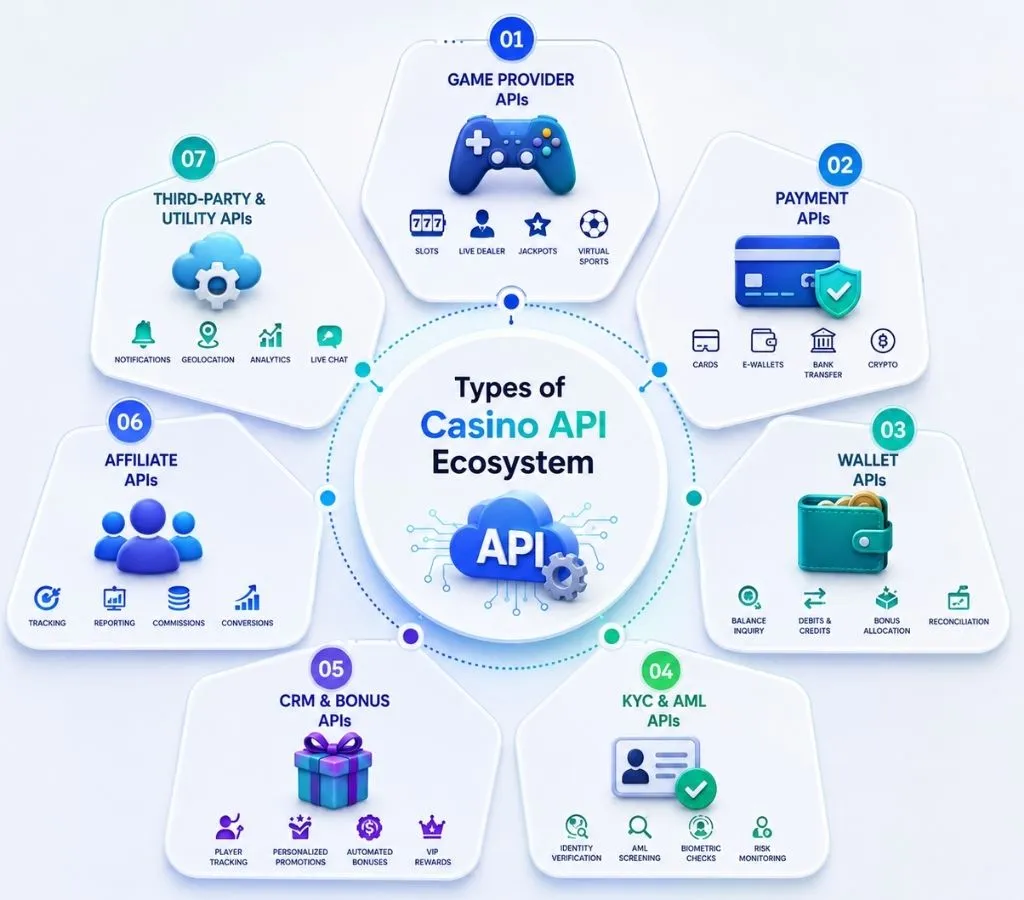
Diferentes tipos de API de casino
Desde la velocidad de lanzamiento de tu casino hasta la complejidad de tus operaciones, todo depende del ecosistema de API que crees a su alrededor. Veamos rápidamente algunos de los tipos de API más importantes que puedes usar.
API de proveedores de juegos
Las conexiones reales a los juegos se realizan mediante las API de los proveedores de juegos. Conectan su plataforma con los proveedores de contenido y entregan tragamonedas, mesas con crupier en vivo, jackpots, deportes virtuales y mucho más en un único punto de integración.
Estas API se encargan del lanzamiento de juegos, la autenticación de jugadores, las apuestas y la generación de informes de resultados en tiempo real. La API intercambiará información de sesión entre tu plataforma y el servidor del juego, y registrará todas las apuestas y pagos cuando un jugador inicie una partida de tragamonedas.
La mayoría de los operadores integran múltiples proveedores, lo que les permite ofrecer una biblioteca de juegos diversa sin tener que gestionar infraestructuras de juego separadas.
API de pago
Las API de pago te permiten aceptar depósitos y retiros de forma segura desde cualquier método de pago. No necesitas conectarte directamente con cada procesador de pagos; te conectas a través de API con tarjetas de crédito, transferencias bancarias, monederos electrónicos, cupones prepago y plataformas de criptomonedas.
Estas API se utilizan para la autorización de transacciones, el estado de los pagos, la conversión de divisas y la detección de fraudes. Una buena API de pago permite a los jugadores depositar dinero rápidamente y ayuda a minimizar los fallos de pago y las transacciones abandonadas.
Las API de CRM y de bonos están diseñadas para ayudarte a captar y fidelizar jugadores a gran escala. Monitorizan la actividad, los depósitos, la selección de juegos y los hábitos de apuestas, lo que permite automatizar promociones personalizadas.
API de billetera
Las API de monedero crean un sistema de saldo unificado para todos tus juegos y proveedores. Sin él, los jugadores terminan con saldos separados para diferentes proveedores de juegos. Eso genera inconvenientes. Una API de monedero lo elimina al mantener un único saldo de cuenta, independientemente de dónde apueste el jugador.
Estas API procesan consultas de saldo, débitos y créditos, asignación de fondos de bonificación y conciliación de transacciones al instante. Son esenciales cuando se gestionan cientos o miles de juegos de múltiples proveedores.
API de KYC y AML
Conoce a tu cliente Las API de verificación de identidad (KYC) y de lucha contra el blanqueo de capitales (AML) automatizan la verificación y el cumplimiento normativo de los jugadores. Durante el registro, estas API validan los documentos de identidad, verifican las direcciones, realizan comprobaciones biométricas y cotejan a los jugadores con bases de datos de sanciones o de personas políticamente expuestas (PEP).
Las API AML también supervisan las transacciones en tiempo real, detectando patrones sospechosos como depósitos y retiros rápidos o comportamientos de apuestas inusuales. La verificación automatizada agiliza el proceso de incorporación y garantiza el cumplimiento de los requisitos de licencia.
API de CRM y bonificaciones
Las API de CRM y de bonos te permiten automatizar la interacción y retención de jugadores a gran escala. Registran la actividad, los depósitos, las preferencias de juego y los patrones de apuestas para que puedas activar promociones personalizadas automáticamente. ¿Un jugador realiza su primer depósito? La API le otorga giros gratis.
¿Llevas semanas sin ver jugadores inactivos? La API activa una campaña de reembolso. ¿Has alcanzado un determinado volumen de apuestas? Las recompensas VIP se activan automáticamente. Conecta estos datos con tus herramientas de marketing y ofrece promociones personalizadas que mejoran la retención y el valor de vida del jugador.
API de afiliados
Las API de afiliados ofrecen seguimiento en tiempo real e informes para los socios de marketing. Registran los registros, los depósitos, las apuestas y la asignación de ingresos para cada campaña de marketing de afiliados.
Los paneles de control de la API permiten a los afiliados ver datos de rendimiento en tiempo real, cálculos de comisiones y otras métricas de conversión sin tener que esperar informes manuales. Existen dos opciones comunes para la integración de contenido de casino: la integración directa mediante API o la API de un agregador de juegos de casino.
Leer blog – Descubre qué es el software PAM en iGaming.
Integración directa de API frente a API de agregador de casino
En lo que respecta a la integración de contenido de casino, existen dos opciones comunes: la integración directa mediante API o la integración mediante API de agregador de casino.
Ambas plataformas ofrecen juegos y servicios de juego, pero difieren considerablemente en cuanto a control, implementación, coste y escalabilidad. Es importante elegir la más adecuada según los requisitos de tu plataforma y recursos.
¿Qué es la integración directa de API?
Integración directa de API Esto implica conectar tu plataforma individualmente a cada proveedor de juegos. Firmas acuerdos comerciales por separado, te encargas de las integraciones técnicas individuales y gestionas tú mismo los requisitos específicos de cada proveedor.
¿La ventaja? Tienes el control. Accedes a funciones exclusivas del proveedor, personalizas la experiencia de juego, negocias acuerdos directos de reparto de ingresos y creas campañas promocionales únicas. Pero cada nuevo proveedor implica más desarrollo, pruebas, certificación y mantenimiento continuo. Y eso se acumula rápidamente.
¿Qué es una API de agregador de casinos?
Una API de agregador de casinos actúa como intermediaria entre usted y múltiples proveedores de juegos. En lugar de integrar cada proveedor por separado, usted se conecta a una sola API y desbloquea el acceso a una amplia red de juegos.
Esto reduce significativamente la complejidad del desarrollo y acelera el lanzamiento. Los nuevos juegos y proveedores suelen activarse a través del backend del agregador sin necesidad de programación por tu parte. Por eso, las startups y los operadores que buscan una salida al mercado más rápida suelen optar por esta vía.
Integración directa de API: ventajas y desafíos
Ventajas
- Relaciones directas con los proveedores de juegos.
- Mayor control sobre la configuración del juego y las herramientas de promoción.
- Acceso a funciones y contenido exclusivos del proveedor.
- Márgenes y condiciones comerciales potencialmente mejores.
Desafíos
- Múltiples integraciones para desarrollar y gestionar.
- Plazos de implementación más largos.
- Mayor carga de trabajo técnica y operativa.
- Mantenimiento continuo para cada conexión de proveedor.
API de agregadores de casinos: ventajas y desafíos
Ventajas
- Integración de API única.
- Acceso instantáneo a múltiples proveedores de juegos.
- Tiempo de comercialización más rápido.
- Reducción de los trabajos de desarrollo y mantenimiento.
- Es más fácil ampliar tu contenido.
Desafíos
- Menor flexibilidad de personalización.
- Dependencia de la infraestructura del agregador.
- Tarifas adicionales o costos de participación en los ingresos.
- Acceso limitado a funciones exclusivas del proveedor.
Factores clave de comparación
| Factor | Integración API directa | API de agregador de casinos |
| Hora de comprar | Más lento debido a las múltiples integraciones. | Más rápido a través de una sola conexión |
| Esfuerzo de desarrollo | Alto | Bajo a moderado |
| Costos Iniciales | Más alto | Más Bajo |
| Escalabilidad organizacional | Se vuelve más complejo a medida que se añaden proveedores. | Fácil de escalar con nuevos proveedores. |
| Mantenimiento | Múltiples sistemas para gestionar | Centralizado a través de un único proveedor. |
| Gestión de proveedores | Contratos individuales y equipos de apoyo | Único punto de contacto |
| Potencial de ingresos | Oportunidades de mayor margen | La comodidad puede conllevar cargos adicionales. |
¿Qué modelo es adecuado para usted?
Si eres una empresa emergente, una nueva marca de casino o un operador que busca un lanzamiento rápido, agregador de casinos Generalmente, usar una API es la opción más lógica. Simplifica todo, reduce costes y te permite llegar al mercado más rápido.
La integración directa mediante API funciona mejor para operadores consolidados con equipos técnicos especializados. Requiere más recursos, pero ofrece mayor control, opciones de personalización y una mayor flexibilidad comercial a largo plazo.
Principales ventajas de la integración de la API del casino
La integración de la API del casino va más allá de simplemente conectarse a los sistemas de software. Influye directamente en la rapidez con la que puedes lanzar, escalar y generar ingresos con tu plataforma.
Tiempo de comercialización más rápido
Las API listas para usar significan que no tienes que crear las funciones principales del casino desde cero. Conectas rápidamente a los proveedores de juegos, Soluciones de pago para iGamingy herramientas de cumplimiento en su lugar. Los plazos de desarrollo se reducen de meses a semanas. Las nuevas marcas entran al mercado más rápido y comienzan a generar ingresos antes.
Escalabilidad organizacional
A medida que tu casino crece, las API simplifican la expansión sin necesidad de modificar tu infraestructura actual. Añade nuevos proveedores de juegos, métodos de pago o servicios regionales mediante conexiones API adicionales. No es necesario reconstruir tu sistema backend. Crece manteniendo la complejidad técnica bajo control.
Experiencia de jugador mejorada
Las API de los casinos ofrecen una experiencia más fluida. Los juegos se inician más rápido; los saldos se actualizan en tiempo real; los depósitos y retiros se procesan al instante. Los jugadores pueden cambiar entre juegos de diferentes proveedores con una sola cuenta y una misma billetera. Esta consistencia los mantiene enganchados.
Eficiencia operacional
Las API automatizan las tareas rutinarias. El procesamiento de pagos, la verificación de jugadores, la distribución de bonos y la elaboración de informes se ejecutan sin intervención manual. Tu equipo realiza menos tareas repetitivas, se reducen los errores y controlas todo desde una única plataforma en lugar de gestionar múltiples sistemas.
Crecimiento ingresos
Más catálogos de juegos, promociones personalizadas, múltiples opciones de pago: las integraciones API te permiten ofrecerlo todo. Los jugadores interactúan más, permanecen más tiempo y tienes oportunidades de venta cruzada. Juegos de casino en vivo, apuestas deportivas y programas VIP. Más productos, más fuentes de ingresos.
¿Cuánto cuesta la integración de la API del casino?
Los costos de integración de la API de un casino varían considerablemente. Dependen de la escala de su operación, la cantidad de proveedores que conecte, los requisitos regulatorios y la complejidad de la plataforma.
Una startup puede comenzar con un presupuesto modesto, pero las empresas medianas y grandes suelen invertir cientos de miles de dólares en integraciones, cumplimiento normativo, infraestructura y mantenimiento. La siguiente tabla detalla los gastos previstos para 2026.
| Componente de costo | Gama baja / Inicio | Operador de nivel medio | Alto tráfico / Premium |
| Tarifa de configuración única | 5,000 dólares (o entre 250 y 300 dólares para API económicas) | $15,000 | $40,000–$100,000+ |
| Cuota mínima mensual | Ninguna | $3,000 | $ 10,000-$ 20,000 |
| Participación en los ingresos (GGR) | 5% | 10% | 15% |
| Tarifa de integración | $ 1,000-$ 8,000 | $ 8,000-$ 20,000 | $ 20,000-$ 50,000 |
| Integración de pasarela de pago | $5,000 | $10,000 | $ 20,000 + |
| API de casino en vivo | ~ $ 1,200 | ~ $ 2,400 | ~$3,600+ |
| Integración KYC/AML | $5,000 | $10,000 | Más de 20,000 dólares + cuotas mensuales |
| Certificación del juego (por proveedor) | $ 2,000-$ 5,000 | $ 5,000-$ 10,000 | $ 10,000-$ 15,000 |
| Certificación RNG (Anual) | $15,000 | $25,000 | $ 35,000 + |
| Mantenimiento y actualizaciones mensuales | $ 2,000-$ 5,000 | $ 5,000-$ 12,000 | $ 8,000-$ 20,000 |
| Infraestructura (Alojamiento/CDN) | $ 1,000– $ 3,000 / mes | $ 3,000– $ 8,000 / mes | $ 8,000– $ 25,000 / mes |
| Transmisión en vivo con crupier | Variable | $ 3,000– $ 8,000 / mes | $ 10,000– $ 30,000 / mes |
| Complemento de soporte para criptomonedas | +$3,000 de instalación | +$8,000 de instalación | +$15,000+ instalación |
| Configuración de la API de apuestas deportivas | $10,000 | $25,000 | $ 40,000-$ 120,000 |
| Comisiones de afiliados | 25% de los ingresos netos | 30% de los ingresos netos | 35-40% de los ingresos netos |
| Costos por Transacciones | 1–2% por transacción | 2–3% por transacción | 3–5% por transacción |
| Costo total del primer año | $ 35,000-$ 80,000 | $150,000–$350,000+ | $400,000–$1,000,000+ |
Descargo de responsabilidad: Estas estimaciones de costos se basan en datos del sector y pueden variar significativamente según las necesidades de su plataforma, proveedores, jurisdicción y acuerdos con los proveedores. Consulte siempre directamente con los proveedores para obtener precios adaptados a sus requisitos.
Tus mayores gastos son la integración de juegos, las licencias y el cumplimiento normativo, la infraestructura de pagos y el mantenimiento continuo. Si utilizas una API de agregador de casinos, reduces los costes iniciales de desarrollo. Si optas por la integración directa, invertirás más al principio, pero obtendrás un mayor control y, potencialmente, márgenes más sólidos a largo plazo.
Requisitos técnicos para una integración exitosa de la API del casino
La integración exitosa de la API de un casino requiere una base técnica estable, segura y escalable. Tu plataforma procesa miles de transacciones de juegos, actualizaciones de saldo y solicitudes de pago en tiempo real. Tu infraestructura debe manejar ese volumen sin problemas.
Las tecnologías principales en las que te basarás incluyen:
- API REST para lanzamientos de juegos, gestión de cuentas de jugadores, procesamiento de pagos e informes
- WebSockets para interacciones en tiempo real como juegos con crupier en vivo, confirmaciones de apuestas, actualizaciones de botes y sincronización instantánea de saldos.
- Puertas de enlace API para gestionar el enrutamiento del tráfico, la limitación de velocidad, la validación de solicitudes y la comunicación entre múltiples proveedores.
- Autenticación OAuth 2.0 y JWT para verificar de forma segura a los usuarios, las aplicaciones y las solicitudes de API, protegiendo al mismo tiempo los datos del jugador.
- Claves API cifradas para controlar el acceso entre su plataforma y los proveedores de terceros
Además de conectar todo, necesitas datos coherentes en todos tus sistemas integrados.
Requisitos operativos clave:
- Webhooks para recibir notificaciones en tiempo real sobre depósitos, retiros, activaciones de bonos y resultados de juegos.
- Data Mapping para sincronizar los ID de los jugadores, los saldos de las carteras, las monedas, los fondos de bonificación y los registros de transacciones entre proveedores.
- Lógica de billetera unificada para mantener la precisión de las actualizaciones de equilibrio en todos los proveedores de juegos.
Si omites una monitorización y gestión de infraestructura adecuadas, te arriesgas a tener problemas. Incluso las interrupciones menores en la API perjudican la jugabilidad, provocan fallos en los pagos y te hacen perder jugadores.
Desafíos comunes en la integración de API de casinos
Las API de casino agilizan el desarrollo, pero conllevan desafíos técnicos y operativos. Si no se tienen en cuenta, se corre el riesgo de sufrir problemas de rendimiento, incumplimiento normativo y una peor experiencia para el jugador.
Complejidad de integración
Los casinos modernos se conectan a múltiples proveedores de juegos, procesadores de pago y servicios de cumplimiento normativo. El problema radica en que cada proveedor utiliza diferentes estructuras de API, métodos de autenticación y formatos de informes. Esto significa que integrar y mantener todas estas conexiones requiere muchos recursos. Si además se añaden más contenidos y servicios, la complejidad se dispara.
Problemas de sincronización de la billetera
Mantener la precisión de los saldos de los jugadores en múltiples proveedores de juegos es complicado. Las respuestas lentas de la API, las transacciones fallidas o los errores de comunicación pueden generar discrepancias en los saldos entre tu plataforma y los servidores del juego. Sin una conciliación adecuada, los jugadores pierden la confianza y tus informes financieros se vuelven confusos.
Cuellos de botella de rendimiento
Tus API gestionan miles de solicitudes en tiempo real: lanzamientos de juegos, apuestas, pagos y actualizaciones de saldo. La alta latencia, los servidores sobrecargados o las integraciones mal optimizadas ralentizan el juego, interrumpen las sesiones de casino en vivo y retrasan las transacciones. Los jugadores lo notan de inmediato.
Riesgos de seguridad
Cada conexión API representa una posible superficie de ataque. Una autenticación débil, claves API expuestas o puntos finales no seguros pueden dar lugar a accesos no autorizados, cuentas comprometidas y filtraciones de datos.
Desafíos de cumplimiento
Debes mantener las integraciones de API en cumplimiento con las regulaciones locales, los requisitos KYC/AML y las políticas de juego responsable. Gestionar esto en múltiples Jurisdicciones de juegos de azar en línea Se complica rápidamente.
Cómo elegir el proveedor de API de casino adecuado
Elegir el proveedor de API adecuado para tu casino es una decisión empresarial a largo plazo. Afecta a la estabilidad de tu plataforma, las opciones de contenido, el cumplimiento normativo y la capacidad de escalabilidad. No te centres solo en el precio y evalúa los factores técnicos y operativos que realmente importan.
Confiabilidad
La infraestructura de tu proveedor debe soportar altos volúmenes de transacciones, sesiones de juego y solicitudes de pago sin interrupciones. Revisa sus garantías de disponibilidad, su historial de estabilidad del sistema, sus medidas de redundancia y su historial de interrupciones durante las horas pico. Necesitas un socio que cumpla cuando más importa.
Portafolio de juegos
La calidad de la API depende de la calidad de los juegos que ofrece. Evalúa cuántos proveedores de juegos han integrado, la variedad de tragamonedas, juegos con crupier en vivo, botes progresivos y deportes virtuales. ¿Con qué frecuencia añaden nuevos lanzamientos? Un catálogo más amplio te ayuda a atraer y fidelizar a diferentes tipos de jugadores.
Calidad de la documentación
Una buena documentación de la API reduce significativamente el tiempo de integración. Los puntos de acceso claros, los entornos de prueba, las guías de implementación y un soporte técnico eficaz para desarrolladores agilizan el lanzamiento y facilitan el mantenimiento.
Soporte de cumplimiento
Tu proveedor debe cumplir con las regulaciones de tus mercados objetivo. Esto incluye compatibilidad con licencias, informes de auditoría, integraciones KYC/AML, herramientas para el juego responsable y soporte para la certificación en jurisdicciones reguladas. No pases por alto este aspecto.
Escalabilidad y soporte técnico
A medida que creces, la API debe poder gestionar más proveedores, mercados y volúmenes de transacciones sin necesidad de grandes cambios en la infraestructura. Es fundamental contar con gestores de cuenta dedicados, tiempos de respuesta rápidos y soporte 24/7. Cuando surgen problemas, necesitas respuestas inmediatas antes de que los jugadores se den cuenta.
| La alternativa más sencilla a las integraciones de múltiples API
¿Para qué complicarse con múltiples integraciones de API cuando todo puede funcionar a través de una única plataforma? PieGaming Te brinda acceso instantáneo a juegos, pagos, monederos, verificación de identidad (KYC), gestión de relaciones con el cliente (CRM) y gestión de afiliados en un ecosistema unificado. Reduce la complejidad del desarrollo, disminuye los costos operativos y lanza tu casino en línea más rápido con una infraestructura diseñada para escalar a medida que tu negocio crece. |
Conclusión
La integración de la API del casino no es solo una configuración técnica. Es tu ventaja competitiva. Te permite lanzar tu plataforma más rápido, escalar a menor costo y ofrecer mejores experiencias de juego sin tener que empezar desde cero. Ya sea que elijas la integración directa o un agregador, el socio de API adecuado acelera tu crecimiento y garantiza el buen funcionamiento de tu plataforma. La inversión se traduce en velocidad, estabilidad e ingresos.

Preguntas frecuentes (FAQ)
-
¿Por qué su casino necesita la integración de API?
La integración de API te conecta con miles de juegos al instante. Disfrutarás de una experiencia de usuario fluida, actualizaciones de juegos más rápidas y acceso a múltiples proveedores sin necesidad de crear código personalizado para cada uno.
-
¿Cómo funciona realmente la integración de la API del casino?
Tu plataforma envía solicitudes al servidor del proveedor a través de la API. Recibes los datos del juego (tragamonedas, resultados, saldos) en tiempo real mediante JSON o XML. No es necesario negociar contratos por separado con cada proveedor.
-
¿Qué juegos se pueden añadir mediante una API?
Tragamonedas, juegos con crupier en vivo, póker, bingo, botes progresivos, apuestas deportivas. Agregadores como Slotegrator te dan acceso a más de 30 000 títulos de más de 270 proveedores mediante una sola integración.
-
¿Cuánto tiempo tarda la integración?
La configuración básica suele tardar entre 3 y 7 días para operadores pequeños. Las integraciones complejas con lógica de monedero personalizada o múltiples proveedores pueden tardar entre 2 y 4 semanas.
-
¿Es posible conectar varios proveedores de juegos con una sola API?
Sí. Los agregadores de juegos te dan acceso mediante una única API a más de 30 000 juegos de más de 270 proveedores. Así evitas la molestia de firmar contratos separados con cada uno.
-
¿La integración de la API del casino es realmente segura?
Sí. Las API modernas utilizan conexiones HTTPS cifradas, tokens de autenticación y procesamiento de pagos compatible con PCI. Los proveedores añaden detección de fraude y verificación KYC.
-
¿Qué presupuesto debería destinar a los costes de integración?
La instalación tiene un costo de entre $5,000 y $40,000. Los mínimos mensuales oscilan entre $0 y $10,000. La participación en los ingresos es del 5 al 15% de los ingresos brutos del juego (GGR). El costo total del primer año es de entre $35,000 y $400,000 o más, dependiendo del tamaño de su empresa.


Palak Madan lleva escribiendo sobre la industria del iGaming desde 2024. Se centra en ayudar a operadores y fundadores a comprender sus opciones al lanzar un casino online, desde elegir el proveedor de software adecuado hasta calcular los costes y los requisitos de cumplimiento en diferentes mercados. PieGamingEn sus escritos, aborda temas como soluciones de casino de marca blanca, selección de plataformas y entrada al mercado, transformando información compleja del sector en consejos prácticos para quienes desarrollan negocios de iGaming. Además, sigue de cerca los cambios en las licencias y la normativa, en particular cómo las nuevas reglas influyen en la forma en que los operadores entran y crecen en diferentes jurisdicciones.

La gamificación en los casinos consiste en la inclusión de objetivos, niveles, recompensas y otros elementos propios de los videojuegos en torno al juego. Descubra cómo los operadores pueden utilizar la gamificación en los juegos online para crear experiencias de juego más atractivas y, al mismo tiempo, optimizar los costes.

Stake.Us, PlayFame, McLuck, MegaBonanza y Zonko son plataformas de casino social que ofrecen juegos gratuitos con monedas virtuales. Estas plataformas ofrecen cientos de tragamonedas, juegos de mesa y juegos de premios instantáneos, además de monedas gratis diarias, torneos y bonificaciones.
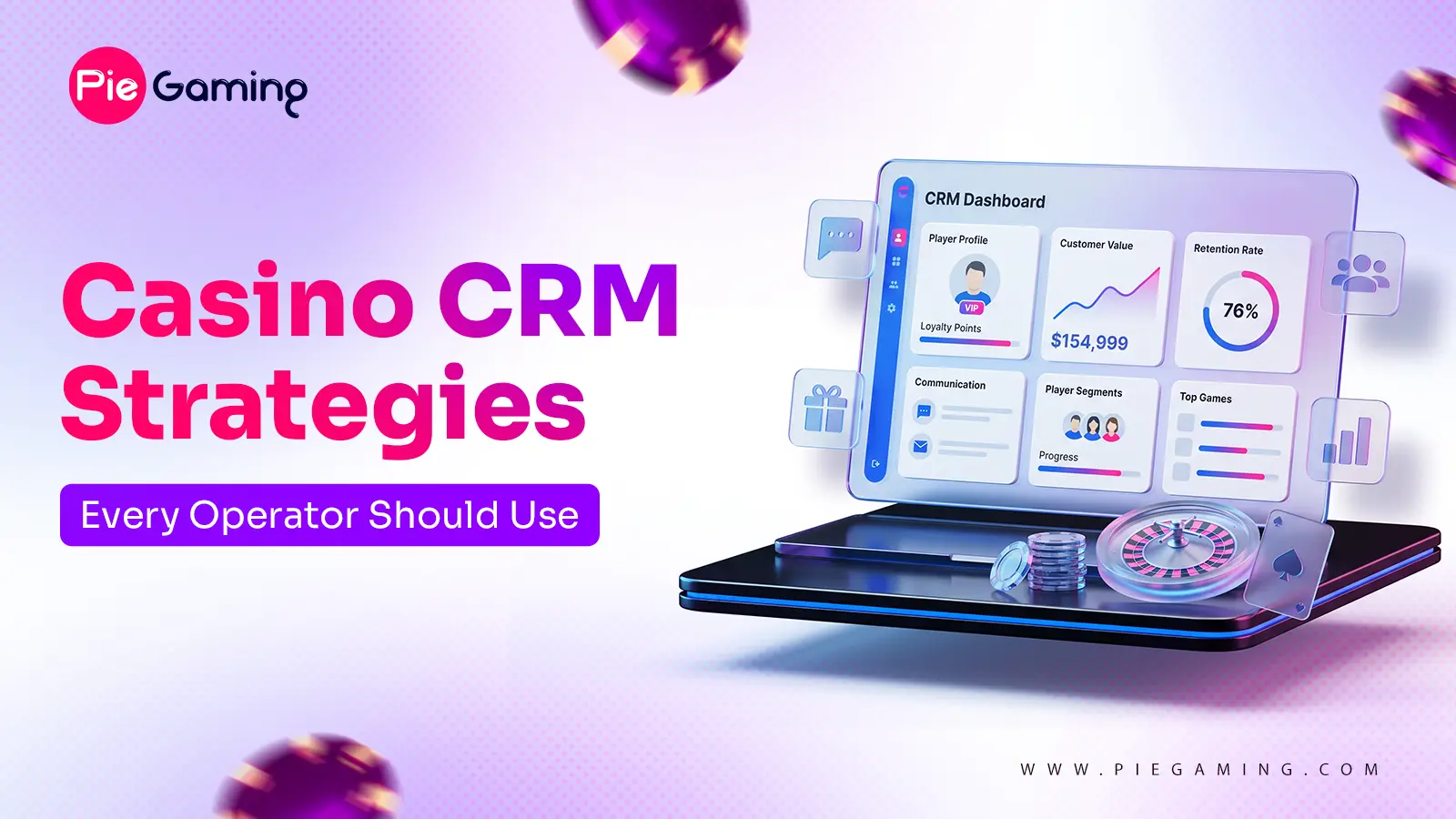
Las estrategias de CRM para casinos ayudan a los operadores a personalizar las campañas, mejorar la retención de jugadores, reducir la tasa de abandono y maximizar el valor del jugador a lo largo de su vida útil.

La ventaja de la casa es la ventaja matemática inherente a los juegos de casino en línea y a todas las demás formas de apuestas. Determina las probabilidades, influye en las ganancias y pérdidas, y constituye la piedra angular de la estrategia financiera general de cualquier casino en línea o casa de apuestas deportivas.

El juego de casino Hi-Lo es un sencillo juego de cartas donde los jugadores predicen si la siguiente carta será mayor, menor o igual que la actual. Esta guía explica cómo funciona el Hi-Lo, sus reglas, opciones de apuesta, pagos, dinámica de juego y estrategias que los jugadores pueden usar al hacer predicciones.

El software CRM para casinos es una plataforma especializada para operadores de juegos de azar en línea y presenciales que realiza un seguimiento del comportamiento de los jugadores, automatiza las promociones dirigidas, gestiona la fidelización de clientes VIP y facilita el cumplimiento de la normativa.

El software de gestión de botes es un programa informático que se utiliza para organizar la creación, el seguimiento y el pago de los botes en un casino online. Los operadores ahora pueden ejecutar las campañas en tiempo real, interactuar con los jugadores, alargar el tiempo de juego y generar más ingresos por apuestas en la plataforma sin tener que participar directamente en la gestión de las campañas.

¡Nos vemos pronto en tu bandeja de entrada!

Manténgase a la vanguardia del juego. Suscríbete para exclusivo
¡Contenido, actualizaciones y información privilegiada!