
Matatizo ya kasino mtandaoni yanaweza kuathiri waendeshaji katika kila hatua, kuanzia kuingia sokoni na malipo hadi kubaki kwa wachezaji, teknolojia, na faida. Jifunze changamoto muhimu na njia za vitendo za kuzishughulikia.
The online casino industry is lucrative, offering operators an exciting opportunity to grow their business. But every opportunity comes with a lot of challenges. Operators face numerous challenges like licensing & compliance, fraud and bonus abuse, higher player acquisition cost, weak player retention, game content gaps, and technology limitations.
In fact, the challenges become more complex when operators expand across jurisdictions. The key is not simply identifying problems but planning for them before they affect operations.
Whether you’re a startup or an established operator, challenges in the online casino business can put you behind in the competition. So, let’s learn about common online casino problems operators face and how to solve them.
Common Online Casino Operator Challenges from Pre-Launch to Scale
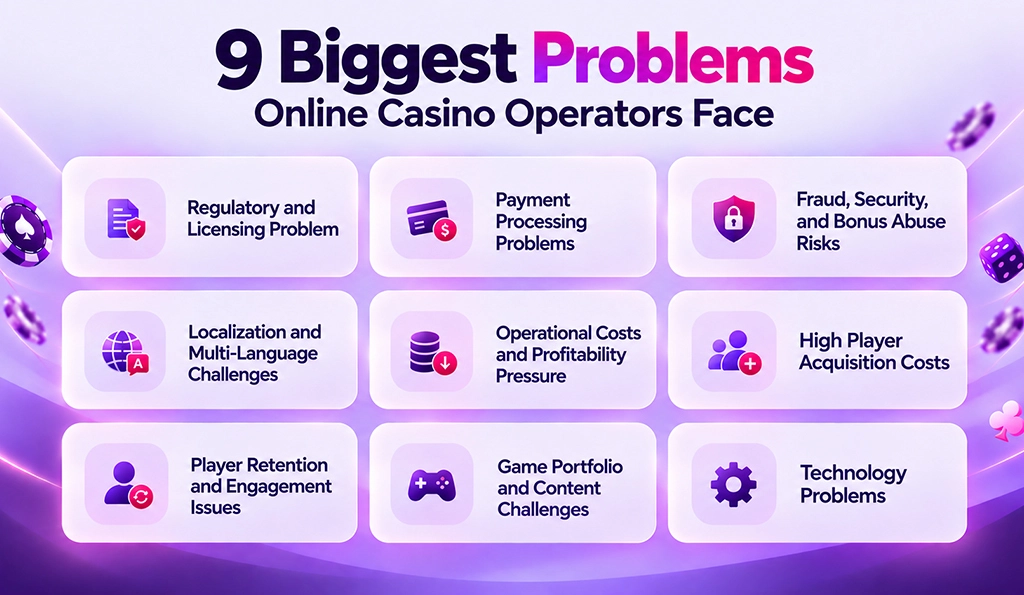
Problems Online Casino Operators Face
While entering the sekta ya casino mtandaoni, every operator faces challenges (familiar or unfamiliar); knowing these challenges and overcoming them is crucial to running casino operations seamlessly. Let’s understand these challenges.
1. Regulatory and Licensing Problems in Online Casinos
Licensing is one of the first challenges to be addressed by an operator. The requirements can be different for each jurisdiction, including matters of licensing, mchezo wa kuwajibika, KYC, AML, customer funds, advertising, and reporting.
There is a total of 195 countries in the world, and among them, 77 countries are iGaming-friendly. Each country has different laws and regulations, and constant regulatory changes mean compliance is an ongoing task (even within Europe or the U.S.). What challenges do operators face here?
- Masasisho ya mara kwa mara ya udhibiti
- Gharama kubwa za mapema
- Mchakato mrefu wa idhini
- Sheria za KYC/AML
- Utekelezaji wa sera za ulinzi wa wachezaji
Solutions:
- Waendeshaji wanapaswa kufuatilia sheria mpya na kuzoea kufuata sheria
- Tenga muda na pesa ili kudhibiti gharama za leseni na mchakato wa kuidhinisha
- Tekeleza sheria zote za ulinzi wa mchezaji ili kuepuka adhabu kali
- Monitor regulatory changes after launch
- Work with qualified legal and compliance professionals for jurisdiction-specific advice
Responsible gambling and player protection: Regulators are now requiring operators to go beyond licensing. In some cases, they must provide deposit and loss limits, chaguzi za kujitenga, reality checks, and identity and age verification tools, as well as staff training on spotting risky behaviors. All of these have an impact on the design and implementation of bonuses, VIP programs, and retention strategies, which is why they must be considered at the conceptual stage and integrated into the product and marketing strategies.
2. Payment Processing Problems for Online Casinos
Payments can directly impact the player’s journey. Failed deposits, slow withdrawals, a limited range of njia za malipo, transaction friction, and disputes can all contribute to additional support overhead and a poor user journey.
Operators need to consider the risk of PSP (Payment Service Provider) termination or account restrictions. A payment provider can impose restrictions or terminate the operator’s account based on risk assessments, contractual requirements, compliance with regulations, or the markets and transaction types that the operator is operating in. Having dependency on one provider can put operators at risk.
In Great Britain, for example, casino operators can only accept a set of customer payments through qualifying payment service providers, and the Gambling Commission has raised concerns over third-party funding and open-loop processes.
Ufumbuzi:
- Offer payment methods relevant to the target market
- Avoid unnecessary concentration on a single PSP
- Monitor deposit failure, withdrawal processing time, declines and chargebacks
- Carry out appropriate customer and payment-method checks
- Make the deposit and withdrawal process clear to customers before launch
3. Fraud and Bonus Abuse Risks
Fraud is not limited to stolen card details. It can involve identity fraud, money laundering, bonus abuse, account takeover, and payment fraud. According to Sumsub’s State of Identity Verification in the iGaming Industry 2025 report, 41.9% of surveyed operators identified deposits as their primary fraud flashpoint, with 23.8% selecting onboarding/registration and 22.9% selecting withdrawals.
Further, Poor registration and onboarding UX also create unnecessary friction. If players face unclear verification requirements, they may leave the platform before completing registration.
The operators identified identity fraud, money laundering, and bonus abuse as their most pressing fraud threats. The operators’ primary fraud dilemma involves the balance between the friction in the customer journey and the level of verification and control needed to prevent fraud.
Solutions:
- Applying risk-based KYC and verification processes
- Monitoring suspicious deposits, withdrawals, and account activity
- Detecting pattern frauds such as multiple accounts and bonus abuse
- Transaction and risk monitoring combined with customer verification
- Periodic fraud rule reviews due to the dynamic nature of abuse patterns.
4. Localization and Multi-Language Challenges
Launching in a new market involves more than translating website content. Giving a localized feel to their players is key to this business. Operators must consider registration flows, customer expectations, payment preferences, game preferences, support, and local market requirements.
A multinational business should offer language-specific support and make sure the processes for payments, account management, verification, and bonuses are well-documented and localized.
Solutions:
- Simplify the account opening and onboarding processes.
- Test the mobile version’s performance in the targeted markets.
- Ofa ya kazi usaidizi wa lugha nyingi
- Review player behavior by market and adjust the experience accordingly
- Localize payment methods and currencies as per each targeted market.
5. Operational Costs and Profitability Pressure
Waendeshaji wengi wanaamini kwamba kuendesha kasino mtandaoni ni uwekezaji wa mara moja, jambo ambalo si sahihi kabisa. Kuendesha kasino mtandaoni is a continuous investment that can eat into profits. For instance, maintenance costs, marketing, and affiliate expenses put profitability pressure on operators. Operators forget about maintenance costs and don’t spare money, due to which they face cash flow problems.
Gaming taxes and license fees also cut into margins, and the rates and structure (for example, a percentage of gross gaming revenue) vary significantly by jurisdiction, so operators should take them into account when selecting a market to operate in.
Solutions:
- Search for budget-friendly casino models like studio nyeupe casino programu
- Boresha uuzaji kwa kutumia mikakati inayolenga ROI
- Jenga njia za uuzaji wa ndani ili kupunguza utegemezi kwa washirika
- Wekeza katika programu ya uaminifu na ofa maalum ili kuboresha faida
- Diversify revenue stream via sports betting, michezo ya muuzaji moja kwa moja, and VIP programs
6. High Player Acquisition Costs and Marketing Challenges
Kupata wachezaji wapya ni mojawapo ya matatizo ya kawaida ya kasino mtandaoni kwa waendeshaji. Kwa nini? Kwa sababu matangazo au njia za uuzaji zimewekewa vikwazo vingi. Kwa mfano, masoko ya kamari mtandaoni barani Ulaya au Marekani yamejaa, jambo ambalo hula gharama kubwa za matangazo.
Some iGaming industry data suggest that acquiring new players can cost 250-500. Further, many casinos rely on affiliate partners to bring in traffic, who often demand 30-50% of new revenue share. These commissions eat significantly into margins.
Solutions:
- Tumia njia za kikaboni za kupata data kama vile blogu, miongozo, na kurasa za kulinganisha.
- Run geo-focused campaigns to target emerging markets like Asia and LATAM, where permitted by local regulations and where CAC is often lower than in the EU/US.
- Wekeza katika uuzaji wa mzunguko wa maisha kama vile barua pepe, SMS, na arifa za kusukuma, kwani ni nafuu kuliko matangazo yanayolipiwa.
- Jenga ndani ya nyumba mipango ya ushirika
- Wekeza katika mbinu za kujenga chapa na utangazaji asilia
7. Player Retention and Engagement Issues
Kupata wachezaji wapya ni nusu ya vita; kuwabakiza ni vigumu sana. Tovuti ya wastani ya kasino hupoteza wachezaji wengi wapya karibu mara moja. Kulingana na baadhi ya wataalamu wa iGaming, waendeshaji wa kasino wanaweza kupoteza zaidi ya 90% ya usajili mpya ndani ya wiki moja ikiwa watashindwa kuwashirikisha.
Some case studies conducted on online casino operators reveal that personalized rewards can boost engagement by 20%, but operators fail to implement these engagement tools on the platform.
Solutions:
- Offer instant rewards on first deposit, first bet, and first win
- Wachezaji wa sehemu kulingana na tabia na thamani
- Tekeleza ubinafsishaji unaoendeshwa na AI
- Jenga mkakati imara wa VIP na mchezaji mwenye thamani kubwa kupitia manufaa ya kipekee
- Tumia ushiriki wa omnichannel
8. Game Portfolio and Content Challenges
Jukwaa la kasino linajulikana kwa kuwa na aina mbalimbali za michezo ya kasino maarufu. And some operators choose to compromise with a game library. Having limited games on the casino platform, operators may face issues with player acquisition, engagement, and retention.
Some operators prefer integrating high-demand casino games like poker, slots, michezo ya ajali, live dealers, scratch cards, etc., and they face integration issues. Leading casino platforms partner with numerous gaming studios.
Solutions:
- Kutumia wakusanyaji wa michezo ya kasino kurahisisha ujumuishaji badala ya kuunganisha kila mtoa huduma mmoja mmoja.
- Ongeza michezo mipya mara kwa mara (matoleo ya kila wiki/kila mwezi)
- Feature “New Arrivals” and “Trending Games” sections
- Endelea kupata taarifa mpya kuhusu mitindo ya soko na matoleo ya washindani
- Tekeleza mapendekezo yanayotegemea akili bandia (Michezo Unayoweza Kuipenda)
- Epuka michoro nzito, ambayo hupunguza kasi ya uchezaji
9. Technology Problems Faced by Online Casinos
Chagua kulia programu ya kasino mkondoni ni muhimu, kwani tatizo lolote la kiufundi katika programu linaweza kuathiri utendaji kazi usiku kucha. Ukiamua kufanya kazi na mtoa huduma wa programu asiye na uzoefu, huenda wasisasishe mifumo yako haraka au kurekebisha hitilafu mara moja.
Also, if a platform doesn’t let you do easy UI customization or quick feature changes, it will limit marketing or product strategies. Many operators face issues with adding new game providers or localizing content, which leads to heavy deployment.
Solutions:
- Shirikiana na mtoa huduma wa programu anayeaminika na mwenye uzoefu
- Tumia jukwaa linaloweza kupanuliwa na tayari kwa siku zijazo
- Pata usanifu wa moduli au unaoendeshwa na API
- Boresha matumizi ya mtumiaji (UX) kwenye vifaa vyote
- Chagua jukwaa kulingana na mapendeleo ya wachezaji na mitindo ya soko
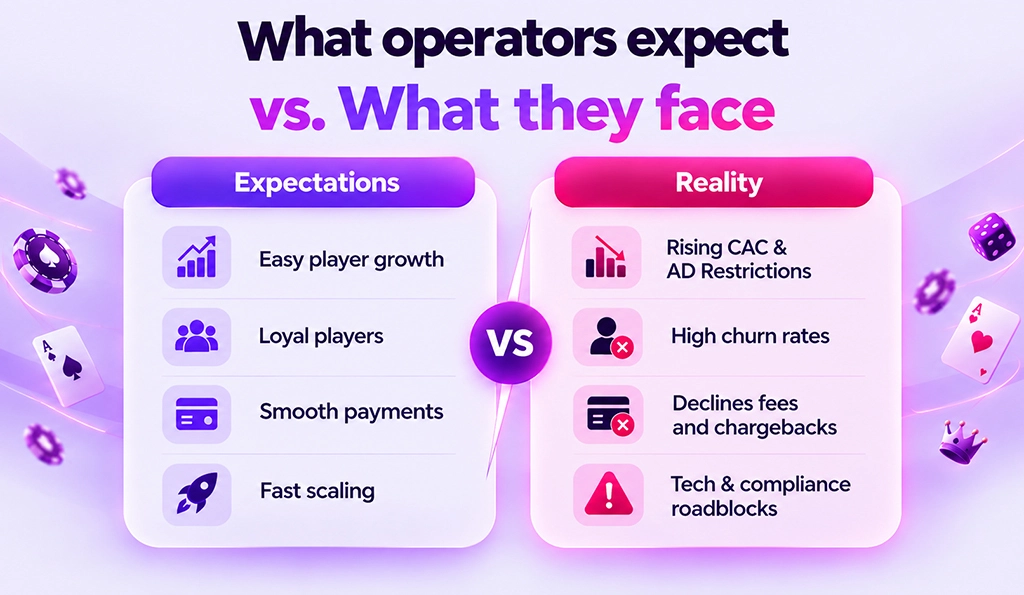
Casino operators’ problems
Mistakes Online Casino Operators Should Avoid
Below are the common mistakes that operators should avoid making.
Choosing software on price alone
The cheapest software option may not offer the required payment integrations, PAM capabilities, game coverage, reporting, scalability, and support.
Badala yake: balance the operational requirements and long-term costs before selecting a provider.
Not planning for scalability and load before launch
A system that works under low traffic may experience issues as the number of registrations, transactions, games, and markets increases.
Badala yake: estimate the expected traffic, transaction volumes, integrations, and market expansion before launch.
Depending on a single payment provider or platform vendor
A single-provider dependency can expose the operator to risks in the event of downtime, restrictions, or termination by the provider.
Badala yake: understand the alternatives and the integration requirements for each provider.
Launching without KPIs, a baseline, and unit economics targets
Without predefined targets, operators may realize that revenue is growing, but acquisition and retention are not being driven profitably.
Badala yake: set targets for CAC, LTV, conversion, retention, churn, GGR & NGR, and payment performance.
No support process before go-live
Payment, verification, account, and bonus queries can begin as soon as the casino launches.
Badala yake: establish customer support channels, escalation procedures, FAQs, and ownership before the first player joins.
Choosing a business model without understanding licensing
White-label, turnkey, and other models can have significantly different levels of customization, control, and responsibility. The business model should therefore also be balanced against the regulatory requirements of the target market.
Badala yake: understand the licensing requirements and responsibilities before choosing the operating and marketing model.
Jinsi PieGaming Helps Operators Address Common Online Casino Problems?
No software can remove regulatory challenges, but it can definitely reduce operational complexities in areas that operators manage every day. That’s what PieGaming software does.
Payment challenges → payment integrations
PieGaming’s casino software offers miunganisho ya malipo that let operators connect relevant payment options for their target markets.
Player management → PAM
The Mfumo wa Usimamizi wa Akaunti ya Mchezaji can help operators manage registration, player accounts, wallets, payments, KYC-related workflows, player activity, segmentation, and other player-management processes.
Retention → CRM/Segmentation
The software’s CRM and segmentation capabilities can help operators organize player data and deliver more personalized engagement based on player behavior.
Operational management → Back office
The zana za ofisi ya nyuma can provide operators with a central environment to manage operational activities, reporting, configurations, and other administrative functions.
Game availability → Pre-integrated game providers
Upatikanaji wa pre-integrated game providers can help reduce the operational burden of sourcing and connecting individual game suppliers.
Hitimisho
Most online casino issues come from decisions made before launch — what markets to enter, which license to obtain, what payment processors and software to use, and what metrics to track. Operators who make the right choices before launching avoid most of the issues affecting their growth and profitability.
Some problems never go away. For instance, regulations, fraudulent schemes, and acquisition and retention strategies require constant attention. The best way to approach such operators’ issues is to have them on the radar at all times and respond promptly.
In particular, prior to launch, operators should research and comply with the licensing requirements in all target jurisdictions, select a reliable platform able to scale with the business, integrate multiple payments processors, and set up a customer support system.
At launch, operators should optimize the onboarding and KYC procedures, localize the product for each market, and prepare an appropriate game catalog.
Post-launch activities should involve analyzing such metrics as customer acquisition cost (CAC), lifetime value (LTV), retention rates, and payment performance, reviewing and updating anti-fraud measures, and adapting to regulatory and market changes.
Wasiliana Nasi
Maswali Yanayoulizwa Mara Kwa Mara
-
Is starting an online casino profitable in 2026?
Profitability depends on various factors like the target market, licensing and operating costs, player acquisition costs, retention, game content, revenue per player, etc.
-
Why do so many online casinos fail within the first two years?
Online casino businesses can struggle because of high acquisition costs, poor retention, unsuitable software, regulatory issues, payment problems, weak fraud controls, underestimating ongoing costs, insufficient market research, etc.
-
Turnkey vs. white-label online casino: which has fewer operational problems?
White label software generally uses a more standardized setup, which enables faster deployment. Whereas a turnkey solution allows greater customization and control over the technology and integrations. The operational technologies depend on the provider, business model, and target jurisdiction.
-
What is the biggest operational mistake new online casino operators make after launch?
One common mistake is focusing too much on player acquisition while overlooking the operational systems. Payment issues, weak customer support, poor onboarding, limited game choice, and the lack of clear KPIs can quickly affect player experience and operating costs.
-
How can online casino operators reduce player churn and increase retention?
Operators can reduce player churn by identifying changing player behavior and responding with relevant, timely engagement. CRM and player segmentation can help operators personalize promotions and communication.


Monika Gola ni mtaalamu wa maudhui ya iGaming katika PieGamingTangu 2020, amekuwa akitafiti na kutengeneza maudhui yanayohusu uteuzi wa programu, kanuni za kamari za kasino na michezo mtandaoni, na mikakati ya ukuaji wa waendeshaji. Utafiti wake unajumuisha kuchambua fursa za soko katika maeneo kama vile Ulaya, Afrika, na Asia ya Kusini-mashariki, pamoja na kutathmini mifumo ya udhibiti na vikwazo vya kuingia. Anafuatilia kikamilifu mitindo ya tasnia, masasisho ya kufuata sheria, na mahitaji yanayobadilika ya wachezaji katika masoko ya kimataifa ya iGaming ili kuwasaidia waendeshaji kupitia tasnia hii kwa urahisi.
Kuanzisha kasino ya mtandaoni yenye mwelekeo wa kubadilika kunamaanisha kupata jukwaa lililotengenezwa tayari lenye programu iliyoundwa tayari na michezo iliyounganishwa tayari lakini kuibadilisha chapa kulingana na chaguo lako. Hatua muhimu ni kufanya utafiti kwenye soko kuamua bajeti ya kuchagua washirika wanaopata leseni ya michezo ya kubahatisha, kuanzisha njia za kulipa na zaidi.
Kenya ina soko linalokua la kamari mtandaoni linaloungwa mkono na kuongezeka kwa matumizi ya intaneti na mifumo ya malipo ya simu. Mwongozo huu unafafanua hatua na itifaki unazoweza kufuata kwa kuanzisha biashara ya kasino mtandaoni nchini Kenya, ikiwa ni pamoja na kanuni na mahitaji ya leseni.

Vipengele muhimu vya kuongeza watumiaji wa kasino mtandaoni vinaweza kufupishwa katika maeneo manne. Njia sahihi za ununuzi, kutoa ushirikishwaji wa kibinafsi, kutengeneza programu za uaminifu, na kufanya maamuzi yanayotegemea data. Kuunda uzoefu wa simu, kudumisha ushirikishwaji wa wachezaji na masoko ya kutafsiri unayotaka kuvutia yote ni muhimu vile vile kwa ukuaji endelevu.

Blogu hii inaangazia mikakati muhimu ya waendeshaji wakuu wa iGaming mwaka wa 2026 na jinsi unavyoweza kukua kama wao kama kiongozi wa soko. Endelea kufuatilia hadi mwisho.

Kuanzisha kasino mtandaoni kunasikika kuwa jambo la kusisimua. Lakini waendeshaji wengi wapya hushindwa ndani ya miezi michache kutokana na makosa yanayoweza kuepukika. Hapa kuna makosa 10 bora ambayo lazima uyaepuke.

Jifunze jinsi ya kuanzisha kasino mtandaoni nchini Uturuki mwaka wa 2026. Pata vidokezo rahisi kuhusu sheria, leseni, malipo, na mengineyo ili kuendesha biashara yako vizuri.
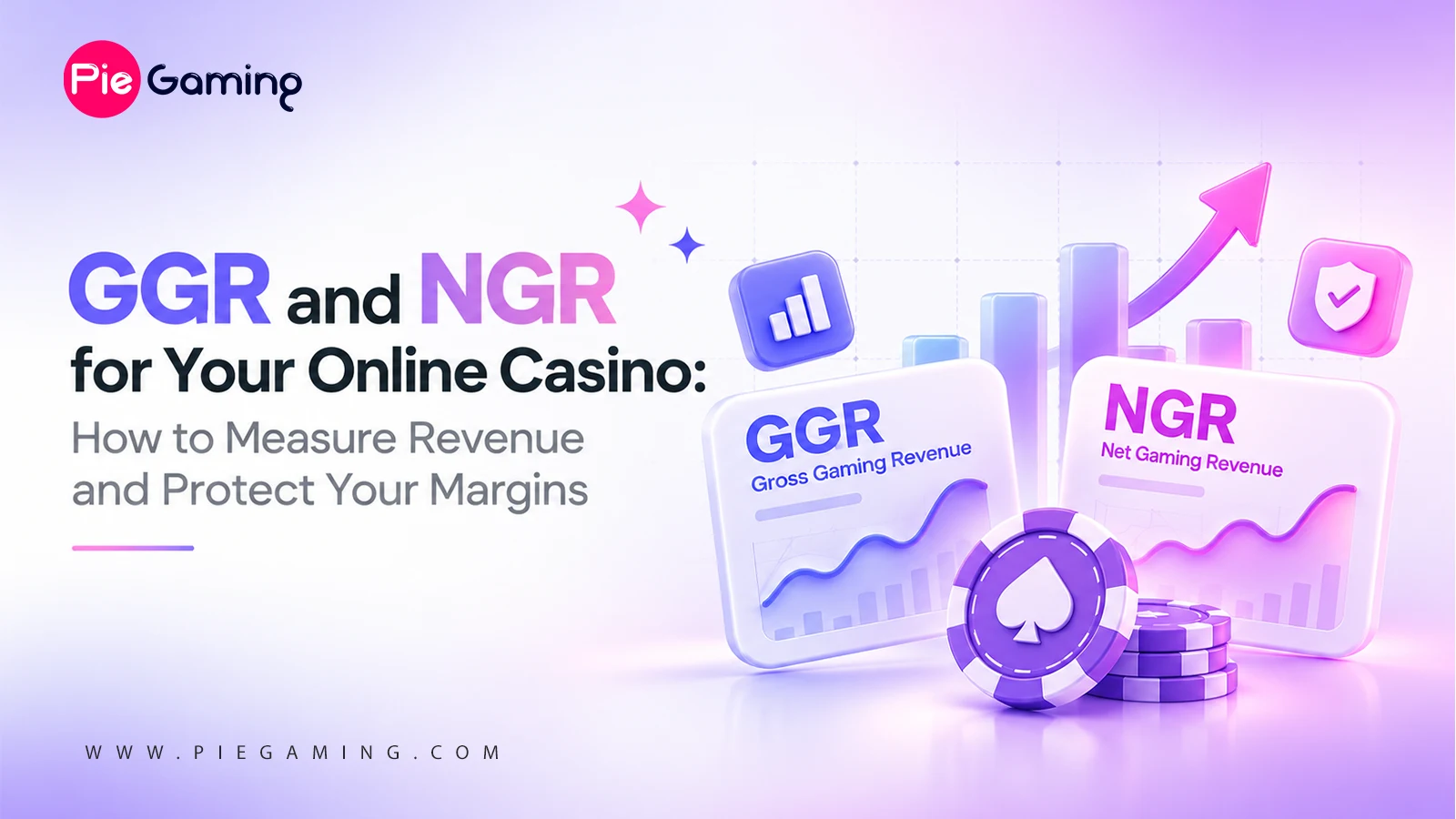
GGR dhidi ya NGR ni vipimo viwili vya mapato ambavyo kila mhudumu wa kasino anahitaji kufuatilia. GGR ni jumla ya dau ukiondoa malipo ya mchezaji, ikionyesha utendaji wa michezo kabla ya makato yoyote. NGR ni GGR baada ya bonasi, kodi, ada za malipo, mirabaha ya mtoa huduma, na marejesho ya malipo kukatwa. Pengo kati ya hizo mbili linaonyesha shinikizo la margin linapoongezeka.

Tutaonana kwenye kikasha chako hivi karibuni!

Endelea mbele ya mchezo. Jisajili kwa ajili ya kipekee
maudhui, masasisho, na watu wa ndani!