
GGR dhidi ya NGR ni vipimo viwili vya mapato ambavyo kila mhudumu wa kasino anahitaji kufuatilia. GGR ni jumla ya dau ukiondoa malipo ya mchezaji, ikionyesha utendaji wa michezo kabla ya makato yoyote. NGR ni GGR baada ya bonasi, kodi, ada za malipo, mirabaha ya mtoa huduma, na marejesho ya malipo kukatwa. Pengo kati ya hizo mbili linaonyesha shinikizo la margin linapoongezeka.

Kasino yako inaweka $60,000 katika GGR kwa mwezi, lakini NGR yake inaweza kupata $25,000 ya chini mara tu bonasi, kodi za michezo ya kubahatisha, ada za malipo, marejesho ya pesa, michango ya jackpot, na gharama za muuzaji zinapokatwa.
GGR ni kipimo kikuu cha biashara, lakini haionyeshi kile ambacho biashara inacho ili kufidia gharama za uendeshaji au kupata faida. Michezo ya kibiashara ya Marekani ilizalisha $78.72B katika GGR mwaka wa 2025, lakini hiyo kasino KPI pekee haisemi chochote kuhusu faida ya mwendeshaji. Kipande hiki kinaelezea maana ya kila kipimo, jinsi ya kuhesabu, na pengo linaloongezeka kati ya hizo mbili linaweza kuashiria nini.
GGR (Mapato Jumla ya Michezo ya Kubahatisha) ni nini?
Maana ya GGR ni kiasi ambacho kasino huhifadhi baada ya kulipa ushindi wa mchezaji. Ikiwa wachezaji wataweka dau la $1,000,000 kwa pamoja na kuondoka na malipo ya $940,000, mwendeshaji huweka $60,000. Hiyo $60,000 ndiyo GGR.
| Kiwango cha eneo | kiasi |
| Jumla ya dau | €1,000,000 |
| Malipo ya wachezaji | €940,000 |
| GGR | €60,000 |
Ni kipimo cha kawaida cha utendaji wa michezo ya kubahatisha, si kipimo cha faida. GGR inakuambia ni kiasi gani mchezo ulishinda, si kiasi gani biashara ilipata.
Hesabu hiyo inahusisha mambo mawili tu: jumla ya dau za mchezaji zilizowekwa, na jumla ya malipo ya mchezaji yaliyotolewa kutoka kwa dau hizo. Kila kitu kingine kiko nje ya GGR. Gharama zifuatazo hazijapunguzwa katika hatua hii:
- Gharama za bonasi.
- Ada za usindikaji wa malipo.
- Tume za washirika.
- Ada na mirabaha ya mtoa huduma.
- Kodi na gharama za leseni.
- Warudishaji malipo.
Zote hizo hutoka baadaye, iwe katika hatua ya NGR au zaidi chini ya P&L. Mgawanyiko huo ndio unaofanya GGR kuwa muhimu. Kwa sababu huondoa miundo ya gharama na mipango ya kibiashara, inakuwa nambari inayolingana na inayolingana katika michezo, masoko, na vipindi vya wakati.
Uthabiti huo ndio maana GGR hufanya kazi kama lugha ya kawaida katika tasnia nzima:
- Operators itumie kupima utendaji wa michezo ya kubahatisha katika michezo na masoko, ikitenga utendaji wa bidhaa bila kujali gharama.
- Wasanifu kutumia GGR kama msingi wa ushuru wa ushuru wa michezo ya kubahatisha katika maeneo mengi, ingawa matibabu halisi hutofautiana kulingana na soko, na waendeshaji wanapaswa kurejelea mifumo ya ndani kila wakati.
- Wasambazaji na watoa huduma za jukwaa Kwa kawaida hupanga mikataba ya mgao wa mapato na mrabaha karibu na GGR, na kuzipa pande zote mbili nambari safi na inayoweza kukaguliwa ya kufanya kazi.
- Programu za washirika inaweza pia kufanya kazi kwa kutumia mifumo ya kamisheni inayotegemea GGR, ingawa mikataba ya NGR ni sawa kulingana na kile kilichokubaliwa katika mkataba.
Mapato Halisi ya Michezo ya Kubahatisha (NGR) ni nini?
NGR ikimaanisha kile kinachobaki baada ya gharama za moja kwa moja za michezo ya kubahatisha kutolewa kutoka GGR. Pale ambapo GGR hupima ni kiasi gani cha michezo ilishinda, NGR hukaribia kile ambacho biashara inacho kabla ya gharama kubwa kama vile mishahara, masoko, na teknolojia kuanza kutumika. Sio takwimu ya faida, lakini ni idadi ya mapato ya uaminifu zaidi kuliko GGR pekee.
Hakuna fomula ya NGR ya jumla. Makato hutofautiana kulingana na opereta, mamlaka, na makubaliano ya kibiashara. Kwa mfano,
Makato ya Opereta A: bonasi + kodi ya michezo ya kubahatisha → NGR = $42,000
Makato ya Opereta B: bonasi + kodi ya michezo ya kubahatisha + mirabaha ya mtoa huduma + ada za malipo → NGR = $36,000
GGR sawa ($60,000). NGR tofauti. Zote ni halali — seti ya makato ndiyo inatofautiana.
Uingereza inaweka wazi hatari hizo. Tume ya Kamari ya Uingereza iliripoti mapato ya jumla ya kamari ya Pauni bilioni 16.8 kwa mwaka hadi Machi 2025 , imeongezeka kwa 7.3% mwaka hadi mwaka, huku mtandaoni ikichangia pauni bilioni 7.8. Kwa kiwango hicho, hata tofauti ndogo ya asilimia kati ya GGR na NGR hutafsiriwa kuwa mapato makubwa, ndiyo maana hasa kuelewa vipimo vyote viwili ni muhimu.
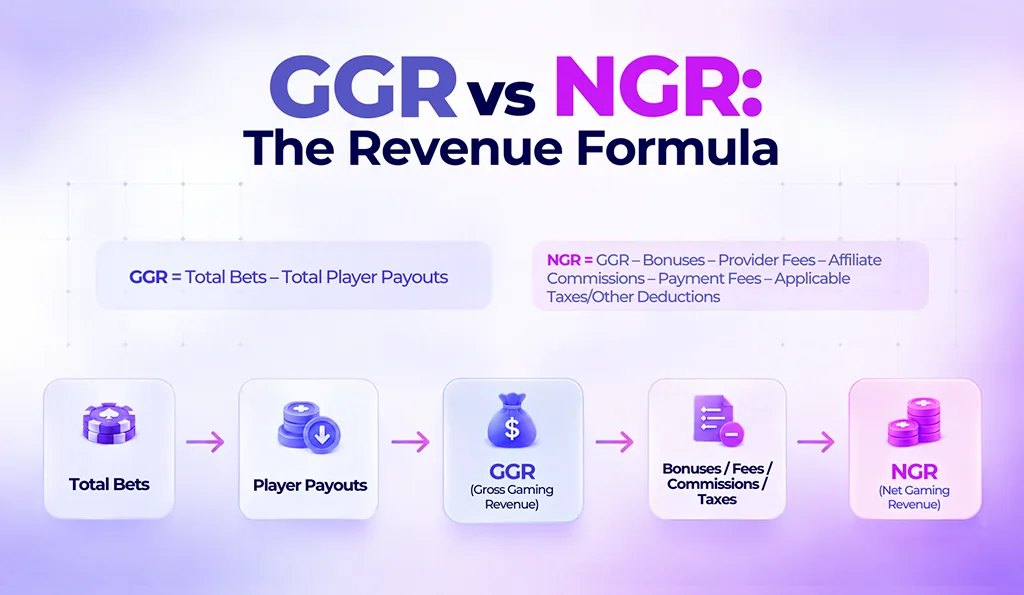
GGR dhidi ya NGR: Fomula ya Mapato
GGR dhidi ya NGR — Ulinganisho wa Maporomoko ya Maji
GGR na NGR hazishindani kwa vipimo. Zipo katika sehemu tofauti katika maporomoko ya mapato yaleyale, na kuzisoma pamoja husimulia hadithi ambayo hakuna hata moja inayoweza kusimulia peke yake.
Uwiano wa NGR/GGR ni mojawapo ya viashiria muhimu zaidi vya afya ya kiwango cha juu ambacho mtoa huduma anaweza kufuatilia. Ikiwa GGR inakua lakini uwiano unapungua, kuna uwezekano biashara ina tatizo la muundo wa gharama badala ya tatizo la mahitaji ya juu. Pengo kati ya vipimo viwili linaongezeka, na kitu maalum kinasababisha:
- Bonasi kubwa na matumizi ya matangazo yanachangia mapato yaliyohifadhiwa.
- Ununuzi wa wachezaji ghali zaidi unaongeza makato yanayohusiana na uuzaji.
- Kuongezeka kwa viwango vya mrabaha wa mtoa huduma huku mikataba ya kibiashara ikijadiliwa upya.
- Upungufu wa ufanisi wa safu ya malipo au ukuaji wa urejeshaji wa pesa, na kuongeza gharama za msuguano.
- Shinikizo la kodi kutokana na kuongezeka kwa soko hadi masoko mapya yanayodhibitiwa yenye viwango vya juu vya ushuru.
- Mabadiliko katika mchanganyiko wa wachezaji kuelekea sehemu za kiwango cha chini ambapo makato ni mazito zaidi kwa uwiano.
Kutambua ni nani kati ya hawa anayehusika kunahitaji kutazama zaidi ya nambari za kichwa cha habari, lakini harakati ya GGR-to-NGR ndiyo inayoonyesha kwamba kitu kinahitaji kuzingatiwa hapo awali.
| Kiini | GGR | NGR |
|---|---|---|
| Inapima nini | Utendaji wa jumla wa michezo (dau - ushindi) | Mapato baada ya makato yaliyobainishwa kutoka GGR |
| Sehemu ya kuanzia | Jumla ya dau za wachezaji | GGR |
| Malipo ya mchezaji yamepunguzwa? | Ndiyo (kukokotoa GGR) | Tayari imeondolewa katika GGR |
| Bonasi zimekatwa? | Hapana | Ndiyo (pale inapokubaliwa) |
| Gharama za mtoa huduma zimepunguzwa? | Hapana | Ndiyo (pale inapokubaliwa) |
| Gharama za ushirika zimepunguzwa? | Hapana | Wakati mwingine (inategemea mkataba; mara nyingi hukaa chini ya NGR) |
| Gharama za malipo zimepunguzwa? | Hapana | Ndiyo (pale inapokubaliwa) |
| Kodi zilizopunguzwa? | Hapana | Kwa kawaida ndiyo kwa majukumu ya michezo ya kubahatisha; mamlaka kamili ya matibabu - na inategemea mkataba |
| Matumizi ya msingi | Utendaji wa hali ya juu na upimaji wa viwango | Uchambuzi wa kiwango cha juu, uchumi wa kitengo, na mikataba ya kibiashara |
Kile Kipengo cha GGR/NGR Kinachokuambia — Utambuzi wa Opereta
Pengo kati ya GGR na NGR si tofauti ya uhasibu tu. Jinsi nambari mbili zinavyosogea kuhusiana na kila moja inaonyesha matatizo tofauti sana, na kila mchanganyiko unahitaji jibu tofauti.
GGR Ni Chini + NGR Ni Chini
Hili ni tatizo la kupata mapato. Wachezaji hawapotezi pesa za kutosha kwa ajili ya nyumba ikilinganishwa na dau, kumaanisha kuwa muundo wa gharama unaweza kuwa sawa. Suala liko juu zaidi.
Waendeshaji wanapaswa kuchunguza utendaji wa ununuzi na uhifadhi, mchanganyiko wa mchezo, na kama bidhaa hiyo ina ushindani katika masoko inayofanya kazi. Kupunguza gharama pekee hakutarekebisha hili. Mstari wa juu unahitaji kufanyiwa kazi.
GGR Ni ya Juu + NGR Ni ya Chini
Hili ni tatizo la kuokoa gharama. Mapato yanafika lakini yanatumika kabla hayajafikia kiwango cha chini. Michezo inafanikiwa, lakini makato ni mengi mno.
Uchunguzi unapaswa kuzingatia sheria na masharti ya bonasi, viwango vya mrabaha vya mtoa huduma, ada za usindikaji wa malipo, Tume Affiliate (kulingana na mkataba na matibabu ya P&L), na mzigo wa jumla wa kodi. Kila moja ya haya iko kati ya GGR na NGR, na moja au zaidi huenda ikawa mbele ya mahali inapopaswa kuwa.
GGR Inakua + Uwiano wa NGR/GGR Unashuka
Ukuaji unapungua ufanisi. GGR inaelekea upande sahihi, lakini uwiano unakuambia kwamba makato yanaongezeka kwa kasi zaidi kuliko mapato. Kipaumbele ni kubaini ni mstari gani wa makato unaopanuka kwa kasi zaidi ukilinganisha na GGR.
Kuongezeka kwa thamani katika masoko mapya yanayodhibitiwa ni mojawapo ya sababu za kawaida, kwani viwango vya juu vya ushuru na gharama za kufuata sheria huwa vinapunguza uwiano haraka kadri soko linavyokua.
GGR na NGR Zote Zinakua + Uwiano Ni Imara
Huu ndio mchanganyiko wenye afya zaidi na unaashiria njia ya ukuaji ambayo haibadilishi pembezoni mwake. Hata hivyo, uthabiti wa uwiano bado unaweza kuficha mgandamizo wa msingi ikiwa mchanganyiko wa wachezaji unahamia kimya kimya kuelekea sehemu za pembezoni za chini.
Waendeshaji wanapaswa kufuatilia uchumi wa kitengo kwa kiwango na kufuatilia NGR kwa kila soko ili kupata mabadiliko yoyote ya kiwango cha sehemu kabla ya kusogeza uwiano wa jumla.
Kwa Nini GGR Yako Inakua Lakini NGR Yako Haikua?
Makato yanapokua haraka kuliko mapato ya jumla ya michezo ya kubahatisha, GGR huongezeka huku NGR ikikwama. Pengo hutofautiana kulingana na mwendeshaji, soko, na mkataba. Hapa ndipo pa kuangalia.
Matumizi Mabaya ya Bonasi na Matangazo Yaliyoundwa Vibaya
Gharama za ofa zinaweza kupunguza NGR haraka, hasa wakati ofa hazilengiwi vizuri au zinakabiliwa na matumizi mabaya. Pitia utoaji wa bonasi, ukombozi, na gharama iliyopatikana kando badala ya kuchukulia matumizi ya bonasi kama mstari mmoja.
Mahitaji ya kuweka dau kwa uwiano, sheria zilizo wazi za michango ya mchezo, na mgawanyo wa thamani ya mchezaji vyote vinaweza kuboresha ufanisi wa matangazo. Masharti yote lazima yazingatie mahitaji ya ulinzi wa watumiaji wa ndani na uuzaji wa kamari. Kwa mfano, nchini Uingereza, mahitaji ya kuweka dau hayawezi kuzidi mara kumi, na masharti ya motisha lazima yawe wazi, ya uwazi, na ya haki.
Kutegemea Zaidi Maudhui ya Mchezo wa Gharama Kubwa
Maudhui ya premium au ya mahitaji makubwa yanaweza kuhusisha ada za juu za wasambazaji, viwango vya mapato, dhamana ya chini kabisa, au michango ya jackpot ambazo huharibu NGR kimya kimya kwa kiwango. Kupitia gharama inayofaa ya kila mtoa huduma na cheo, na kulinganisha miunganisho ya moja kwa moja dhidi ya mipangilio ya wakusanyaji, kunaweza kujitokeza mahali ambapo shinikizo kubwa zaidi linatoka.
Vikusanyaji vya Michezo inaweza kuboresha ufanisi wa upatikanaji na ujumuishaji, lakini ada na masharti yao ya kimkataba yanapaswa kujumuishwa katika ulinganisho wowote wa gharama badala ya kudhaniwa kuwa ya bei nafuu kiotomatiki.
Ufanisi wa Rafu ya Malipo
Ada za usindikaji, uelekezaji mbaya wa data, hasara za ulaghai, na urejeshaji wa pesa zinaweza kupunguza kiasi kinachobaki baada ya shughuli za michezo ya kubahatisha. Kupitia viwango vya idhini, gharama bora ya miamala, na utendaji wa urejeshaji wa pesa kwa soko na njia ya malipo ndio mahali pa kuanzia.
Wenyeji njia za malipo na uelekezaji bora zaidi unaweza kusaidia kuziba pengo, lakini matokeo hutegemea bei, hatari, na masharti ya malipo maalum kwa kila soko.
Kodi ya Kisheria na Gharama za Leseni
Upanuzi wa soko unaodhibitiwa unaweza kuongeza ushuru wa michezo ya kubahatisha, ada za leseni, gharama za kufuata sheria, na mahitaji ya kuripoti, ingawa muundo na kiwango hutofautiana kulingana na mamlaka. Waendeshaji walio wazi zaidi wanaiga mfano wa kuingia sokoni kwenye makadirio ya GGR bila kuhesabu miundo ya kodi ya ndani.
Kujenga mfumo maalum wa soko kabla ya kuzinduliwa, huku GGR, gharama za matangazo, kodi, gharama za malipo, gharama za wasambazaji, na gharama za kufuata sheria zikipangwa kando, kunatoa picha halisi ya kile ambacho kila soko litaleta.
GGR dhidi ya NGR katika Mikataba ya Ushirika na Ugavi wa Mapato
Tofauti ya GGR/NGR ni muhimu sana katika mikataba ya washirika. Fomula isiyoeleweka ya tume inaweza kusababisha migogoro na kupunguza faida inayotarajiwa ya pande zote mbili, haswa wakati wa vipindi vizito vya matangazo au wakati wa kuingia katika masoko ya kodi kubwa. Kwa sababu NGR haijafafanuliwa sawa katika programu zote, kukubaliana na mbinu ya hesabu kabla ya kusaini ni nafuu sana kuliko kutatua migogoro baada ya suluhu.
Kwa Nini Waendeshaji na Washirika Wanaweza Kupendelea Mifumo Tofauti
Waendeshaji na washirika mara nyingi huwa na vipaumbele tofauti wanapojadili msingi wa tume, ingawa hakuna upendeleo wowote unaopatikana kwa wote.
Mara nyingi washirika hupendelea mikataba inayotegemea GGR kwa sababu GGR kwa kawaida hubeba makato machache na ni rahisi kutabiri. Hata hivyo, mkataba wa NGR uliofafanuliwa wazi unaweza pia kuvutia ikiwa orodha ya makato ni nyembamba, wazi, na inayoweza kukaguliwa. Makato mapana au yasiyo na kikomo ndiyo hufanya mikataba ya NGR kuwa vigumu kutabiri, si kipimo chenyewe.
Waendeshaji mara nyingi hupendelea mikataba inayotegemea NGR kwa sababu mfumo unaweza kuhesabu gharama za moja kwa moja zilizokubaliwa kama vile matumizi ya ofa, kodi za michezo ya kubahatisha, ada za malipo, na malipo yaliyothibitishwa.
Hii hupunguza hatari ya kulipa kamisheni kwenye mapato ambayo tayari yametumika kwa gharama hizo. Matokeo halisi ya kibiashara yanategemea kiwango cha kamisheni na makato maalum ambayo makubaliano yanaruhusu.
Jinsi Waendeshaji Wanavyopaswa Kufuatilia GGR na NGR Katika Kasino Yao Yote
Jumla ya GGR na NGR ni muhimu kwa vipimo vya mstari wa juu, lakini vinaweza kuficha mahali shinikizo la pembezoni linapokua. Thamani iko katika uchanganuzi, na uchanganuzi huo unahitaji ufafanuzi thabiti wa upunguzaji kabla ya dashibodi au ripoti yoyote kujengwa kuizunguka.
Orodha kwa Soko na Mamlaka
GGR na NGR zinapaswa kuripotiwa na nchi, sarafu, chapa, na leseni tangu uzinduzi. Soko linalochangia sehemu kubwa ya GGR linaweza kutoa NGR kidogo sana mara tu makato katika mfumo wa opereta yanapotumika, iwe ni bonasi, kodi za michezo ya kubahatisha, gharama za malipo, au gharama zingine zilizokubaliwa.
Kuripoti gharama za kodi, ushuru, na udhibiti kando kando ya mtazamo wowote wa NGR kunatoa picha wazi zaidi ya hesabu na gharama ya msingi inayosababisha pengo.
Fuatilia Utendaji kwa Mchezo na Mtoa Huduma
Katika kiwango cha mchezo, mtoa huduma, na mkusanyaji, waendeshaji wanapaswa kufuatilia dau, GGR, gharama ya bonasi, gharama za mtoa huduma, mchango baada ya gharama za moja kwa moja za michezo ya kubahatisha, na uwiano wa NGR/GGR.
Watoa Mchezo Ada inaweza kupangwa kama sehemu ya mapato, ada zisizobadilika, dhamana za chini kabisa, au mikataba ya kiwango cha kwingineko, kwa hivyo njia ya mgao inapaswa kuandikwa badala ya kudhaniwa. GGR kali kutoka kwa hati miliki haimaanishi kiotomatiki mchango mkubwa ikiwa muuzaji au gharama za uendelezaji zinaenda juu dhidi yake.
Uchumi wa Upataji wa Orodha Mwisho hadi Mwisho
Uhusiano wa ushirikiano data inapaswa kuunganishwa kuanzia kubofya au kampeni hadi usajili, amana ya kwanza, kuweka dau, GGR, na NGR iliyokubaliwa.
Njia inayozalisha GGR imara bado inaweza kutoa michango dhaifu au hasi baada ya gharama za uendelezaji na ununuzi kutumika. Kutumia ufafanuzi thabiti wa mchezaji, kundi, eneo la saa, na sarafu katika mifumo yote ndiko hufanya mwonekano huu kuwa wa kuaminika badala ya wa mwelekeo.
Weka Vizingiti vya Ndani vya Arifa za Uwiano wa NGR/GGR
Arifa za wakati halisi zinaweza kusaidia kutambua mabadiliko muhimu katika uwiano wa NGR/GGR kabla ya kuzidi katika kipindi chote cha kuripoti, lakini matokeo yanapaswa kuchukuliwa kama ya muda hadi gharama na marekebisho yaliyocheleweshwa yatakapowekwa.
Kushuka kwa asilimia tano kwa kipindi cha siku saba ni kizingiti kinachofaa cha kuanzia ndani, si kipimo cha sekta. Arifa zinapaswa kupimwa kulingana na soko, bidhaa, kundi, na tete ya kihistoria, huku vizingiti vya chini vya ujazo vikitumika ili kuepuka kuguswa na sampuli ndogo.
Patanisha Kila Chanzo cha Kuripoti
Programu ya kasino mkondoni data, ripoti za watoa huduma, data ya wasindikaji wa malipo, na data ya jukwaa la washirika inapaswa kulinganishwa kwa ratiba iliyoainishwa kwa kutumia vipindi vya kuripoti vinavyofanana, maeneo ya saa, sarafu, na ufafanuzi wa kipimo.
Tofauti kati ya vyanzo si mara zote huelezewa kwa makato. Pia zinaweza kuakisi matukio yaliyokosekana, rekodi zinazorudiwa, makosa ya ugawaji, malipo ya kuchelewa, dau zilizobatilishwa, ubadilishaji wa sarafu, au muda wa malipo. Kutambua chanzo kabla ya kufikia hitimisho ndiko kunakotenganisha upatanisho muhimu na kelele.
Inamaliza ...
GGR inakuambia jinsi michezo inavyofanya kazi. NGR inakuambia biashara ina nini hasa. Kufuatilia moja bila nyingine huacha alama zisizoonekana ambazo huzidi polepole baada ya muda.
Iwe unapanga mikataba ya washirika, unaingia katika masoko mapya, au unapitia gharama za watoa huduma, pengo la GGR dhidi ya NGR ni pale ambapo faida inapopatikana au kupotea. Jua kinachoiendesha, ifuatilie kwa sehemu, na uchukue hatua kabla ya kuhamia kwenye mstari wa mwisho.

Wasiliana Nasi
Maswali Yanayoulizwa Mara Kwa Mara
-
GGR ni nini katika michezo ya kubahatisha na unawezaje kuhesabu GGR kwa kasino ya mtandaoni?
Mapato ya Jumla ya Michezo ya Kubahatisha (GGR) ni kiasi ambacho kasino huhifadhi baada ya kulipa ushindi wa mchezaji. Fomula ni rahisi: GGR = jumla ya dau ukiondoa jumla ya malipo. Hakuna bonasi, kodi, au gharama za uendeshaji zinazokatwa katika hatua hii. Ni kipimo cha utendaji wa michezo ya kubahatisha, si faida.
-
GGR dhidi ya NGR: Tofauti halisi ni ipi?
GGR hupima mapato kabla ya makato yoyote kutumika. NGR ni kile kinachobaki baada ya makato yaliyokubaliwa kama vile bonasi, kodi, ada za malipo, na kamisheni za washirika kutolewa. GGR inakuambia jinsi michezo inavyofanyika. NGR inakuambia kile ambacho biashara ilihifadhi.
-
GGR na NGR zinahusianaje na faida ya kasino?
GGR inaonyesha mapato yanayotokana na shughuli za mchezaji. NGR inaonyesha kile kinachobaki baada ya gharama za moja kwa moja za michezo ya kubahatisha kupunguzwa. Kwa pamoja, huwapa waendeshaji mtazamo wazi wa faida, ufanisi wa uuzaji, na ambapo gharama zinashinikiza kabla ya gharama kubwa za uendeshaji kuingia kwenye picha.
-
NGR ni nini katika michezo ya kubahatisha na unawezaje kuhesabu NGR kwa kasino ya mtandaoni?
Mapato Halisi ya Michezo ya Kubahatisha (NGR) ni GGR baada ya makato yaliyokubaliwa kutumika. Fomula ni: NGR = GGR ukiondoa bonasi, kodi, ada za malipo, na gharama nyingine zozote zinazoruhusiwa zilizoainishwa katika sera ya uhasibu ya mwendeshaji au makubaliano ya kibiashara. Seti halisi ya makato hutofautiana kulingana na mwendeshaji, mamlaka, na mkataba.
-
Kwa nini kasino ya mtandaoni hufuatilia GGR na NGR?
GGR hupima jinsi michezo inavyofanya vizuri. NGR hupima ni kiasi gani cha utendaji huo ambacho biashara inahifadhi. Kufuatilia yote mawili kwa pamoja kunaonyesha ambapo makato yanaongezeka, ambapo shinikizo la faida linaongezeka, na kama ukuaji unaleta mapato ambayo mtoa huduma anaweza kufanya kazi nayo.


Palak Madan amekuwa akiandika kuhusu tasnia ya iGaming tangu 2024. Analenga kuwasaidia waendeshaji na waanzilishi kuelewa chaguzi zao wanapozindua kasino mtandaoni, kuanzia kuchagua mtoa huduma sahihi wa programu hadi kubaini gharama na mahitaji ya kufuata sheria katika masoko tofauti. PieGaming, anashughulikia mada kama vile suluhisho za kasino zenye lebo nyeupe, uteuzi wa majukwaa, na kuingia sokoni, akibadilisha taarifa tata za tasnia kuwa mwongozo wa vitendo kwa watu wanaojenga biashara za iGaming. Pia anafuatilia kwa karibu mabadiliko ya leseni na udhibiti; hasa jinsi sheria mpya zinavyounda jinsi waendeshaji wanavyoingia na kukua katika mamlaka tofauti.

Kuanzisha kasino ya mtandaoni yenye mwelekeo wa kubadilika kunamaanisha kupata jukwaa lililotengenezwa tayari lenye programu iliyoundwa tayari na michezo iliyounganishwa tayari lakini kuibadilisha chapa kulingana na chaguo lako. Hatua muhimu ni kufanya utafiti kwenye soko kuamua bajeti ya kuchagua washirika wanaopata leseni ya michezo ya kubahatisha, kuanzisha njia za kulipa na zaidi.

Matatizo ya kasino mtandaoni yanaweza kuathiri waendeshaji katika kila hatua, kuanzia kuingia sokoni na malipo hadi kubaki kwa wachezaji, teknolojia, na faida. Jifunze changamoto muhimu na njia za vitendo za kuzishughulikia.

Kenya ina soko linalokua la kamari mtandaoni linaloungwa mkono na kuongezeka kwa matumizi ya intaneti na mifumo ya malipo ya simu. Mwongozo huu unafafanua hatua na itifaki unazoweza kufuata kwa kuanzisha biashara ya kasino mtandaoni nchini Kenya, ikiwa ni pamoja na kanuni na mahitaji ya leseni.

Vipengele muhimu vya kuongeza watumiaji wa kasino mtandaoni vinaweza kufupishwa katika maeneo manne. Njia sahihi za ununuzi, kutoa ushirikishwaji wa kibinafsi, kutengeneza programu za uaminifu, na kufanya maamuzi yanayotegemea data. Kuunda uzoefu wa simu, kudumisha ushirikishwaji wa wachezaji na masoko ya kutafsiri unayotaka kuvutia yote ni muhimu vile vile kwa ukuaji endelevu.

Blogu hii inaangazia mikakati muhimu ya waendeshaji wakuu wa iGaming mwaka wa 2026 na jinsi unavyoweza kukua kama wao kama kiongozi wa soko. Endelea kufuatilia hadi mwisho.

Kuanzisha kasino mtandaoni kunasikika kuwa jambo la kusisimua. Lakini waendeshaji wengi wapya hushindwa ndani ya miezi michache kutokana na makosa yanayoweza kuepukika. Hapa kuna makosa 10 bora ambayo lazima uyaepuke.

Jifunze jinsi ya kuanzisha kasino mtandaoni nchini Uturuki mwaka wa 2026. Pata vidokezo rahisi kuhusu sheria, leseni, malipo, na mengineyo ili kuendesha biashara yako vizuri.

Tutaonana kwenye kikasha chako hivi karibuni!

Endelea mbele ya mchezo. Jisajili kwa ajili ya kipekee
maudhui, masasisho, na watu wa ndani!