
GGR ve NGR, her kumarhane işletmecisinin takip etmesi gereken iki gelir ölçütüdür. GGR, toplam bahis tutarından oyuncu ödemeleri çıkarıldıktan sonra kalan tutardır ve herhangi bir kesinti yapılmadan önceki oyun performansını yansıtır. NGR ise GGR'den bonuslar, vergiler, ödeme ücretleri, sağlayıcı telif hakları ve geri ödemeler düşüldükten sonraki tutardır. İkisi arasındaki fark, kar marjı baskısının nerede arttığını gösterir.
Kumarhaneniz ay için 60,000$ brüt oyun geliri (GGR) açıkladı, ancak bonuslar, oyun vergileri, ödeme ücretleri, ters ibrazlar, jackpot katkıları ve tedarikçi maliyetleri düşüldükten sonra net oyun geliri (NGR) 25,000$ daha düşük olabilir.
GGR (Brüt Brüt Brüt Gelir) temel bir gösterge olsa da, işletmenin faaliyet maliyetlerini karşılamak veya kar elde etmek için ne kadar kaynağa sahip olduğunu göstermez. ABD'de ticari kumar sektörü 2025 yılında 78.72 milyar dolar brüt oyun geliri (GGR) elde etti.ancak ki kumarhane KPI'si Tek başına bu iki değer, işletmenin karlılığı hakkında hiçbir şey söylemez. Bu yazıda, her bir ölçütün ne anlama geldiği, nasıl hesaplandığı ve ikisi arasındaki farkın genişlemesinin neye işaret edebileceği açıklanmaktadır.
GGR (Brüt Oyun Geliri) nedir?
GGR, bir kumarhanenin oyuncu kazançlarını ödedikten sonra elinde tuttuğu miktardır. Oyuncular toplamda 1,000,000 dolar bahis yapıp 940,000 dolar ödeme alırlarsa, işletmeci 60,000 doları elinde tutar. Bu 60,000 dolar GGR'dir.
| metrik | Ücret |
| Toplam bahisler | €1,000,000 |
| Oyuncu ödemeleri | €940,000 |
| GGR | €60,000 |
Bu, oyun performansının standart bir ölçüsüdür, kârın bir ölçüsü değildir. GGR, oyunun ne kadar kazandırdığını gösterir, işletmenin ne kadar kazandığını değil.
Hesaplama yalnızca iki şeyi dikkate alır: oyuncuların yatırdığı toplam bahisler ve bu bahislerden oyunculara yapılan toplam ödemeler. Geri kalan her şey GGR'nin dışında kalır. Aşağıdaki maliyetler bu aşamada düşülmez:
- Bonus maliyetleri.
- Ödeme işlem ücretleri.
- Ortaklık komisyonları.
- Hizmet sağlayıcı ücretleri ve telif hakları.
- Vergiler ve lisanslama maliyetleri.
- Ters ibrazlar.
Bunların hepsi daha sonra, ya NGR aşamasında ya da kar ve zarar tablosunun daha alt aşamalarında ortaya çıkar. Bu ayrım aslında GGR'yi kullanışlı kılan şeydir. Çünkü maliyet yapılarını ve ticari düzenlemeleri ortadan kaldırdığı için, oyunlar, pazarlar ve zaman dilimleri boyunca tutarlı ve karşılaştırılabilir bir sayı haline gelir.
Bu tutarlılık, GGR'nin sektör genelinde ortak bir dil olarak işlev görmesinin nedenidir:
- Operatörler Bu aracı, oyunlar ve pazarlar genelinde oyun performansını karşılaştırmak ve ürün performansını maliyetlerden bağımsız olarak belirlemek için kullanın.
- Denetleyiciler Birçok yargı bölgesinde kumar vergileri için vergi matrahı olarak GGR (Brüt Oyun Geliri) kullanılmaktadır, ancak kesin uygulama pazara göre değişmekte olup, işletmeciler her zaman yerel çerçevelere başvurmalıdır.
- Tedarikçiler ve platform sağlayıcıları Genellikle gelir paylaşımı ve telif hakkı anlaşmalarını brüt gelir artışı (GGR) üzerinden yapılandırırlar; bu da her iki tarafa da denetlenebilir, net bir rakam sunar.
- Affiliate programları Ayrıca GGR bazlı komisyon modelleriyle de çalışabilirler, ancak sözleşmede kararlaştırılanlara bağlı olarak NGR anlaşmaları da aynı derecede yaygındır.
Net Oyun Geliri (NGR) nedir?
NGR, GGR'den doğrudan oyun maliyetleri düşüldükten sonra kalan miktarı ifade eder. GGR, oyunlardan elde edilen kazancı ölçerken, NGR ise maaş, pazarlama ve teknoloji gibi daha geniş giderler devreye girmeden önce işletmenin gerçekte sahip olduğu miktarı daha doğru bir şekilde gösterir. Bu bir kar rakamı değildir, ancak yalnızca GGR'den daha dürüst bir gelir rakamıdır.
Evrensel bir NGR formülü yoktur. Kesintiler operatöre, yargı yetkisine ve ticari anlaşmaya göre değişir. Örneğin
Operatör A şunları düşer: bonuslar + kumar vergisi → Net Bahis Geliri (NGR) = 42,000 $
Operatör B şunları keser: bonuslar + oyun vergisi + sağlayıcı telif hakları + ödeme ücretleri → Net Oyun Geliri (NGR) = 36,000 $
Aynı GGR (60,000$). Farklı NGR. İkisi de geçerli; farklı olan kesinti miktarı.
Birleşik Krallık, riskleri doğru bir perspektife oturtuyor. Birleşik Krallık Kumar Komisyonu, kumar gelirlerinin brüt rakamlarını açıkladı. Mart 2025'e kadar olan yıl için 16.8 milyar sterlin. Yıllık bazda %7.3 artış gösteren çevrimiçi satışların 7.8 milyar sterlinlik payı bulunuyor. Bu ölçekte, brüt satış hacmi (GGR) ile net satış hacmi (NGR) arasındaki mütevazı bir yüzdelik fark bile önemli bir gelir anlamına geliyor; işte bu yüzden her iki metriği de anlamak büyük önem taşıyor.
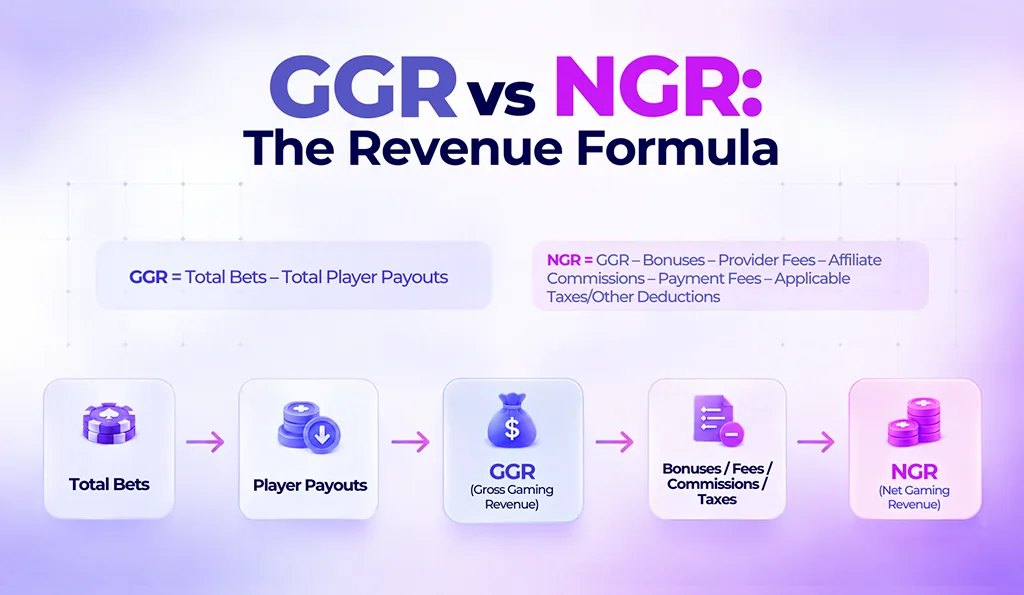
GGR ve NGR: Gelir Formülü
GGR ve NGR Karşılaştırması — Şelale Yöntemi
GGR ve NGR, ölçütler açısından rekabet etmiyor. Aynı gelir şelalesinin farklı noktalarında yer alıyorlar ve birlikte okunduklarında, tek başlarına anlatamayacakları bir hikaye ortaya koyuyorlar.
NGR/GGR oranı, bir işletmenin takip edebileceği en kullanışlı kar marjı sağlık göstergelerinden biridir. Eğer GGR artıyor ancak oran daralıyorsa, işletmenin muhtemelen gelir artışı sorunundan ziyade maliyet yapısı sorunu vardır. İki metrik arasındaki fark genişliyor ve bunu tetikleyen belirli bir şey var:
- Yüksek prim ve promosyon harcamaları, elde tutulan geliri azaltıyor.
- Oyuncu edinme maliyetlerinin artması, pazarlama ile ilgili kesintileri de artırıyor.
- Ticari anlaşmalar yeniden müzakere edilirken, hizmet sağlayıcıların telif oranlarında artış yaşanıyor.
- Ödeme süreçlerindeki verimsizlik veya geri ödeme oranlarındaki artış, sürtünme maliyetlerini yükseltiyor.
- Daha yüksek vergi oranlarına sahip yeni düzenlenmiş pazarlara açılmanın getirdiği vergi baskısı.
- Oyuncu profillerinde, kesintilerin orantılı olarak daha yüksek olduğu, daha düşük kar marjlı segmentlere doğru bir kayma yaşanıyor.
Bu faktörlerden hangisinin sorumlu olduğunu belirlemek için manşetlerdeki rakamların ötesine bakmak gerekiyor, ancak GGR'den NGR'ye geçiş hareketi, bir şeylerin dikkat gerektirdiğini gösteren ilk işarettir.
| faktör | GGR | NGR |
|---|---|---|
| Neyi ölçer | Brüt oyun performansı (bahisler – kazançlar) | Brüt Brüt Gelirden (GGR) tanımlanmış kesintiler yapıldıktan sonraki gelir |
| Başlangıç noktası | Toplam oyuncu bahisleri | GGR |
| Oyuncu ödemeleri kesildi mi? | Evet (GGR'yi hesaplamak için) | GGR'de zaten hariç tutulmuştur. |
| Bonuslar kesildi mi? | Yok hayır | Evet (anlaşıldığı takdirde) |
| Hizmet sağlayıcının masrafları düşüldü mü? | Yok hayır | Evet (anlaşıldığı takdirde) |
| İştirak maliyetleri düşüldü mü? | Yok hayır | Bazen (sözleşmeye bağlı olarak; genellikle NGR'nin altında yer alır) |
| Ödeme masrafları düşüldü mü? | Yok hayır | Evet (anlaşıldığı takdirde) |
| Vergiler kesildi mi? | Yok hayır | Genellikle evet, kumar vergileri için geçerli; kesin uygulama yargı yetkisine ve sözleşmeye bağlıdır. |
| Birincil kullanım | En üst düzey performans ve kıyaslama | Kar marjı analizi, birim ekonomisi ve ticari anlaşmalar |
GGR/NGR Farkı Gerçekte Ne Anlatıyor? — Operatör Tanılamaları
Brüt büyüme oranı (GGR) ile net büyüme oranı (NGR) arasındaki fark sadece bir muhasebe farkı değil. İki sayının birbirine göre hareket etme şekli çok farklı sorunlara işaret ediyor ve her kombinasyon farklı bir yanıt gerektiriyor.
GGR Düşük + NGR Düşük
Bu bir gelir elde etme sorunu. Oyuncular bahis miktarlarına kıyasla kumarhaneye yeterince para kaybetmiyorlar, bu da maliyet yapısının aslında uygun olabileceği anlamına geliyor. Sorun daha üst kademelerde yatıyor.
İşletmeciler, müşteri edinme ve elde tutma performansını, oyun çeşitliliğini ve ürünün faaliyet gösterdiği pazarlarda rekabetçi olup olmadığını araştırmalıdır. Sadece maliyet düşürme tek başına bu sorunu çözmeyecektir. Gelir tablosunda iyileştirmeler yapılması gerekiyor.
GGR Yüksek + NGR Düşük
Bu bir maliyet tasarrufu sorunu. Gelir elde ediliyor ancak net kâr hanesine yansımadan önce tüketiliyor. Oyunlar iyi performans gösteriyor, ancak kesintiler çok yüksek.
Soruşturma, bonus şartları ve koşulları, sağlayıcı telif oranları, ödeme işlem ücretleri gibi konulara odaklanmalıdır. Ortaklık komisyonları (sözleşme ve kar-zarar tablosu uygulamasına bağlı olarak) ve genel vergi yükü. Bunların her biri GGR ve NGR arasında yer alır ve bir veya daha fazlasının olması gerekenden daha yüksek seyretmesi muhtemeldir.
GGR Artıyor + NGR/GGR Oranı Düşüyor
Büyüme verimliliği azalıyor. Brüt Büyüme Oranı (GGR) doğru yönde ilerliyor, ancak oran, indirimlerin gelirden daha hızlı büyüdüğünü gösteriyor. Öncelik, GGR'ye göre hangi indirim kaleminin en hızlı büyüdüğünü belirlemektir.
Yeni düzenlenmiş pazarlara açılmak en yaygın nedenlerden biridir, çünkü daha yüksek gümrük vergisi oranları ve uyumluluk maliyetleri, pazar payı büyüdükçe oranı hızla düşürme eğilimindedir.
GGR ve NGR'nin her ikisi de artıyor + Oran istikrarlı
Bu en sağlıklı kombinasyondur ve kendi kar marjlarını baltalamayan bir büyüme yörüngesine işaret eder. Bununla birlikte, oyuncu karışımı sessizce daha düşük kar marjlı segmentlere doğru kayıyorsa, oran istikrarı yine de altta yatan sıkışmayı gizleyebilir.
İşletmeciler, toplam oranı etkilemeden önce segment düzeyindeki sapmaları tespit etmek için, birim ekonomisini büyük ölçekte izlemeli ve NGR'yi pazar bazında takip etmelidir.
GGR'niz artarken NGR'niz artmıyor, bunun sebebi ne?
Kesintiler brüt oyun gelirinden daha hızlı arttığında, brüt oyun geliri (GGR) yükselirken net oyun geliri (NGR) durgunlaşır. Bu fark operatöre, pazara ve sözleşmeye göre değişir. İşte bakmanız gereken yer.
Bonus Suistimali ve Kötü Tasarlanmış Promosyonlar
Promosyon maliyetleri, özellikle teklifler kötü hedeflenmiş veya suistimale açık olduğunda, net brüt geliri (NGR) hızla düşürebilir. Bonus harcamalarını tek bir kalem olarak ele almak yerine, bonus dağıtımını, kullanımını ve gerçekleşen maliyeti ayrı ayrı inceleyin.
Orantılı bahis şartları, net oyun katkı kuralları ve oyuncu değeri segmentasyonu, promosyon verimliliğini artırabilir. Tüm şartlar, yerel tüketici koruma ve kumar pazarlama gerekliliklerine uygun olmalıdır. Örneğin, Büyük Britanya'da bahis şartları on katı geçemez ve teşvik şartları açık, şeffaf ve adil olmalıdır.
Yüksek Maliyetli Oyun İçeriğine Aşırı Bağımlılık
Premium veya yüksek talep gören içerikler, daha yüksek tedarikçi ücretleri, gelir paylaşım oranları, minimum garantiler veya ikramiye katkıları Bu durum, NGR'yi sessizce ve büyük ölçekte aşındırıyor. Her sağlayıcının ve tapunun etkin maliyetini gözden geçirmek ve doğrudan entegrasyonları toplayıcı düzenlemeleriyle karşılaştırmak, en ağır baskının nereden geldiğini ortaya çıkarabilir.
Oyun Toplayıcıları Erişim ve entegrasyon verimliliğini artırabilirler, ancak ücretleri ve sözleşme koşulları, otomatik olarak daha ucuz oldukları varsayımı yerine, herhangi bir maliyet karşılaştırmasına dahil edilmelidir.
Ödeme Yığınında Verimsizlik
İşlem ücretleri, kötü yönlendirme, dolandırıcılık kayıpları ve ters ibrazlar, oyun faaliyetlerinden sonra elde kalan miktarı azaltabilir. Onay oranlarını, etkin işlem maliyetini ve ters ibraz performansını piyasa ve ödeme yöntemine göre incelemek başlangıç noktasıdır.
Yerel ödeme yöntemleri Daha akıllı rota belirleme yöntemleri bu açığı kapatmaya yardımcı olabilir, ancak sonuç her pazarın kendine özgü fiyatlandırma, risk ve ödeme koşullarına bağlıdır.
Yargısal Vergi ve Lisanslama Maliyetleri
Düzenlenmiş pazar genişlemesi, oyun vergileri, lisans ücretleri, uyumluluk giderleri ve raporlama gerekliliklerini beraberinde getirebilir; ancak yapı ve ölçek yargı yetkisine göre değişir. En çok risk altında olan operatörler, yerel vergi yapılarını hesaba katmadan brüt oyun geliri (GGR) tahminlerine dayalı olarak pazara giriş modellemesi yapmaktadır.
Piyasaya sürülmeden önce, brüt satış geliri (GGR), tanıtım maliyetleri, vergiler, ödeme maliyetleri, tedarikçi ücretleri ve uyumluluk maliyetlerini ayrı ayrı haritalandırarak, pazara özgü bir model oluşturmak, her pazarın gerçekte ne kadar getiri sağlayacağına dair gerçekçi bir tablo sunar.
İştirak ve Gelir Paylaşımı Anlaşmalarında GGR ve NGR Karşılaştırması
İştirak sözleşmelerinde GGR/NGR ayrımı büyük önem taşır. Belirsiz bir komisyon formülü, özellikle yoğun promosyon dönemlerinde veya yüksek vergili pazarlara girerken anlaşmazlıklara yol açabilir ve her iki tarafın beklenen getirisini azaltabilir. NGR tüm programlarda aynı şekilde tanımlanmadığı için, imzalamadan önce hesaplama yöntemi üzerinde anlaşmak, anlaşma sonrasında ortaya çıkabilecek anlaşmazlıkları çözmekten çok daha ucuzdur.
Operatörler ve İştirakler Neden Farklı Modelleri Tercih Edebilir?
Operatörler ve iştirakçiler, komisyon tabanını müzakere ederken genellikle farklı önceliklere sahip olurlar, ancak bu tercihlerden hiçbiri evrensel değildir.
İştirakler genellikle GGR tabanlı anlaşmaları tercih eder çünkü GGR genellikle daha az kesinti içerir ve tahmin edilmesi daha kolaydır. Bununla birlikte, kesinti listesi dar, şeffaf ve denetlenebilir ise, açıkça tanımlanmış bir NGR anlaşması da cazip olabilir. Geniş veya sınırsız kesintiler, NGR anlaşmalarını tahmin etmeyi zorlaştıran şeydir, ölçütün kendisi değil.
Operatörler genellikle NGR tabanlı anlaşmaları tercih eder çünkü bu model, promosyon harcamaları, oyun vergileri, ödeme ücretleri ve onaylanmış geri ödemeler gibi kararlaştırılmış doğrudan maliyetleri hesaba katabilir.
Bu, halihazırda bu maliyetler tarafından tüketilmiş gelir üzerinden komisyon ödeme riskini azaltır. Gerçek ticari sonuç, komisyon oranına ve anlaşmanın izin verdiği özel kesintilere bağlıdır.
İşletmeciler Kumarhanelerinde Brüt Oyun Geliri (GGR) ve Net Oyun Gelirini (NGR) Nasıl Takip Etmelidir?
Toplam GGR ve NGR, genel göstergeler için faydalı olsa da, marj baskısının nerede geliştiğini gizleyebilirler. Değer, ayrıntılı dökümdedir ve bu dökümün etrafında herhangi bir gösterge paneli veya rapor oluşturulmadan önce tutarlı kesinti tanımlarına sahip olması gerekir.
Pazar ve Yetki Alanına Göre Takip Et
GGR ve NGR, piyasaya sürüldüğü tarihten itibaren ülke, para birimi, marka ve lisans bazında raporlanmalıdır. GGR'ye büyük katkı sağlayan bir pazar, operatör modelindeki kesintiler (bonuslar, oyun vergileri, ödeme maliyetleri veya diğer kararlaştırılmış ücretler) uygulandıktan sonra önemli ölçüde daha düşük NGR sağlayabilir.
Vergi, harç ve düzenleyici maliyetlerin NGR görünümüyle birlikte ayrı ayrı raporlanması, hem hesaplama hem de aradaki farka neden olan temel maliyet hakkında daha net bir tablo sunar.
Oyun ve Sağlayıcıya Göre Performans Takibi
Oyun, sağlayıcı ve toplayıcı düzeyinde, operatörler bahisleri, brüt oyun gelirini (GGR), bonus maliyetini, sağlayıcı ücretlerini, doğrudan oyun maliyetlerinden sonraki katkı payını ve net oyun geliri/brüt oyun geliri oranını izlemelidir.
Oyun Sağlayıcıları Ücretlendirme, gelir paylaşımı, sabit ücretler, minimum garantiler veya portföy düzeyinde sözleşmeler şeklinde yapılandırılabilir; bu nedenle tahsis yöntemi varsayılmak yerine belgelenmelidir. Bir yayından elde edilen yüksek brüt brüt gelir, tedarikçi veya tanıtım maliyetleri yüksekse, otomatik olarak güçlü bir katkı anlamına gelmez.
Satın Alma Ekonomisini Baştan Sona Takip Edin
Bağlı pazarlama Veriler, tıklama veya kampanyadan başlayarak kayıt, ilk para yatırma, bahis, GGR ve kararlaştırılan NGR'ye kadar bağlantılı olmalıdır.
Güçlü brüt oyun geliri (GGR) üreten bir kanal, tanıtım ve edinim maliyetleri uygulandıktan sonra bile zayıf veya negatif katkılar üretebilir. Sistemler genelinde tutarlı oyuncu, kohort, zaman dilimi ve para birimi tanımlarının kullanılması, bu görüşü yönlendirici olmaktan ziyade güvenilir kılan şeydir.
NGR/GGR Oranı Uyarıları için Dahili Eşik Değerleri Belirleyin
Gerçek zamanlıya yakın uyarılar, NGR/GGR oranındaki önemli değişimlerin tam bir raporlama dönemi boyunca birikmeden önce belirlenmesine yardımcı olabilir, ancak sonuç, gecikmeli maliyetler ve düzeltmeler kaydedilene kadar geçici olarak değerlendirilmelidir.
Yedi günlük bir zaman diliminde yüzde beş puanlık bir düşüş, sektör standardı değil, makul bir dahili başlangıç eşiğidir. Uyarılar, piyasa, ürün, kohort ve geçmiş oynaklığa göre kalibre edilmeli ve küçük örneklemelere tepki vermekten kaçınmak için minimum hacim eşikleri uygulanmalıdır.
Tüm Raporlama Kaynaklarını Uzlaştırın
Çevrimiçi kumarhane yazılımı Veriler, sağlayıcı raporları, ödeme işlemcisi verileri ve bağlı kuruluş platformu verileri, tutarlı raporlama dönemleri, saat dilimleri, para birimleri ve ölçüt tanımları kullanılarak tanımlanmış bir program dahilinde uzlaştırılmalıdır.
Kaynaklar arasındaki farklılıklar her zaman çıkarımlarla açıklanamaz. Bunlar ayrıca eksik olayları, mükerrer kayıtları, atıf hatalarını, geç yapılan geri ödemeleri, geçersiz bahisleri, para birimi dönüşümünü veya ödeme zamanlamasını da yansıtabilir. Sonuçlara varmadan önce nedeni belirlemek, faydalı mutabakatı gürültüden ayıran şeydir.
Toplanıyor…
GGR size oyunların nasıl performans gösterdiğini söyler. NGR ise işletmenin gerçekte ne kadar kar elde ettiğini gösterir. Birini diğerinden ayrı takip etmek, zamanla sessizce büyüyen kör noktalar bırakır.
İş ortaklığı anlaşmaları yapılandırırken, yeni pazarlara girerken veya tedarikçi maliyetlerini incelerken, brüt gelir (GGR) ile net gelir (NGR) arasındaki fark, kar marjının kazanıldığı veya kaybedildiği noktadır. Bu farkı neyin tetiklediğini bilin, segment bazında izleyin ve net karınızı etkilemeden önce harekete geçin.

İletişim
SSS
-
Oyun sektöründe GGR nedir ve çevrimiçi bir kumarhane için GGR nasıl hesaplanır?
Brüt Oyun Geliri (GGR), bir kumarhanenin oyuncu kazançlarını ödedikten sonra elinde kalan miktardır. Formül basittir: GGR = toplam bahisler eksi toplam ödemeler. Bu aşamada bonuslar, vergiler veya işletme maliyetleri düşülmez. Bu, kâr değil, oyun performansının bir ölçüsüdür.
-
GGR ve NGR: Gerçek fark nedir?
GGR, herhangi bir kesinti uygulanmadan önceki geliri ölçer. NGR ise, bonuslar, vergiler, ödeme ücretleri ve ortaklık komisyonları gibi kararlaştırılan kesintiler çıkarıldıktan sonra kalan miktardır. GGR, oyunların nasıl performans gösterdiğini gösterir. NGR ise işletmenin gerçekte ne kadar kazandığını gösterir.
-
GGR ve NGR'nin kumarhane karlılığıyla bağlantısı nedir?
GGR, oyuncu aktivitesinden elde edilen geliri yansıtır. NGR ise doğrudan oyun maliyetleri düşüldükten sonra kalan tutarı gösterir. Birlikte, operatörlere daha geniş işletme giderleri devreye girmeden önce kar marjları, pazarlama verimliliği ve maliyetlerin nerede baskı oluşturduğu konusunda daha net bir bakış açısı sunarlar.
-
Oyun sektöründe NGR nedir ve çevrimiçi bir kumarhane için NGR nasıl hesaplanır?
Net Oyun Geliri (NGR), kararlaştırılan kesintiler uygulandıktan sonraki GGR'dir. Formül şu şekildedir: NGR = GGR eksi bonuslar, vergiler, ödeme ücretleri ve operatörün muhasebe politikasında veya ticari anlaşmalarında tanımlanan diğer izin verilen maliyetler. Kesin kesinti miktarı operatöre, yetki alanına ve sözleşmeye göre değişir.
-
Çevrimiçi bir kumarhane neden hem GGR (Brüt Bahis Oranı) hem de NGR'yi (Net Bahis Oranı) takip eder?
GGR, oyunların ne kadar iyi performans gösterdiğini ölçer. NGR ise bu performanstan işletmenin ne kadarını gerçekten elde tuttuğunu ölçer. Her ikisini birlikte takip etmek, kesintilerin nerede arttığını, kar marjı baskısının nerede oluştuğunu ve büyümenin işletmecinin gerçekten kullanabileceği bir gelire dönüşüp dönüşmediğini ortaya koyar.


Palak Madan, 2024 yılından beri iGaming sektörü hakkında yazılar yazmaktadır. Çevrimiçi bir kumarhane kurarken operatörlerin ve kurucuların seçeneklerini anlamalarına yardımcı olmaya odaklanmaktadır; doğru yazılım sağlayıcısını seçmekten, farklı pazarlardaki maliyetleri ve uyumluluk gereksinimlerini belirlemeye kadar. PieGamingKendisi, beyaz etiketli kumarhane çözümleri, platform seçimi ve pazara giriş gibi konuları ele alarak, karmaşık sektör bilgilerini iGaming işletmeleri kuran kişiler için pratik bir rehbere dönüştürüyor. Ayrıca, lisanslama ve düzenleyici değişiklikleri, özellikle de yeni kuralların operatörlerin farklı yargı bölgelerine giriş ve büyüme biçimlerini nasıl şekillendirdiğini yakından takip ediyor.

Anahtar teslimi bir çevrimiçi kumarhane kurmak, önceden tasarlanmış yazılım ve entegre oyunlara sahip hazır bir platform edinmek ve bunu kendi tercihinize göre yeniden markalamak anlamına gelir. Önemli adımlar arasında pazar araştırması yapmak, bütçe belirlemek, ortaklar seçmek, oyun lisansı almak, ödeme yöntemlerini kurmak ve daha fazlası yer almaktadır.

Çevrimiçi kumarhane sorunları, pazara giriş ve ödemelerden oyuncu tutma, teknoloji ve karlılığa kadar operatörleri her aşamada etkileyebilir. Başlıca zorlukları ve bunlarla başa çıkmanın pratik yollarını öğrenin.

Kenya'da internet kullanımının ve mobil ödeme sistemlerinin artmasıyla desteklenen, büyüyen bir çevrimiçi kumar pazarı bulunmaktadır. Bu kılavuz, Kenya'da çevrimiçi kumarhane işletmesi kurmak için izleyebileceğiniz adımları ve protokolleri, düzenlemeler ve lisanslama gereksinimleri de dahil olmak üzere açıklamaktadır.

Çevrimiçi kumarhane kullanıcı sayısını artırmanın temel bileşenleri dört alanda özetlenebilir: Doğru edinim kanalları, kişiselleştirilmiş etkileşim sunma, sadakat programları geliştirme ve veriye dayalı kararlar alma. Mobil deneyim oluşturmak, oyuncu etkileşimini sürdürmek ve hedeflediğiniz pazarları hedeflemek de sürdürülebilir büyüme için aynı derecede önemlidir.

Bu blog, 2026 yılındaki en iyi iGaming operatörlerinin temel stratejilerini ve sizin de onlar gibi bir pazar lideri olarak nasıl büyüyebileceğinizi açıklıyor. Sonuna kadar takipte kalın.

Çevrimiçi bir kumarhane başlatmak heyecan verici geliyor. Ancak birçok yeni operatör kaçınılmaz hatalar nedeniyle birkaç ay içinde başarısız oluyor. İşte uzak durmanız gereken en önemli 10 hata.

2026'te Türkiye'de bir çevrimiçi kumarhanenin nasıl açılacağını öğrenin. İşinizi sorunsuz bir şekilde yürütmek için yasalar, lisanslar, ödemeler ve daha fazlası hakkında kolay ipuçları alın.

Yakında gelen kutunuzda görüşürüz!

Oyunun ilerisinde kalın. Ayrıcalıklı abone olun
içerik, güncellemeler ve içerdekiler!