Casino gamification refers to the inclusion of goals, levels, rewards, and other video game elements around the core gambling area. Learn how operators can use gamification in igaming to create more engaging player journeys while managing costs.
Keeping players engaged after their first deposit is one of the biggest challenges online casino operators face. While bonuses are an effective way to attract new customers, they rarely motivate them to return to the platform. Meanwhile, offering a larger variety of games makes it harder for the operator to differentiate their product.
That is why gamification in casino presents a valuable opportunity to reengage players. By introducing missions, challenges, levels, points, tournaments, and rewards, operators can give players more reasons to accomplish various additional tasks apart from simply playing a game.
With the help of reward-based gamification strategies in casinos, operators can create a longer player journey.
In this blog, we will walk you through everything about gamification in casino and how it helps in player engagement and retention.
What is Gamification in Casino?
Gamification in casino means applying game-inspired mechanics to the online casino for better player engagement. Online casino gamification mechanics include challenges, missions, levels, leaderboards, etc. The purpose is to drive engagement, influence player behavior, and help in retention and player lifetime value (LTV).
For instance:
Traditional promotion: Deposit $50 and receive a bonus.
Gamification: Complete two/three eligible challenges → earn points → progress to the next level → unlock a reward → continue.
The difference is not just simply rewarding the player. But gamification in casinos is more about adding structures, progression, feedback, and interaction around the activity. It sets clear objectives and rules for isolated actions such as one-off bets (single bet), single spins, or short sessions.
That’s why gamification in iGaming shouldn’t be treated as a replacement for bonuses or loyalty programs. It serves as an additional engagement layer that works alongside them. Further, it gives players direction and supports a more intentional decision-making process.
Why Gamification Matters for Online Casino Operators
Gamification in iGaming is crucial for online casino operators for the following reasons.
Unique Branding
Many operators offer access to similar products (games) from the same key providers. But what is built around those games plays a critical role in differentiation.
Missions, progression, tournaments, and personal challenges can give the operator more control over the player’s interactions as opposed to the nature of the game itself. Today, creating an eye-catching and recognizable brand is the backbone of lasting success.
Understanding Player Behavior
Gamification provides the operator with additional players’ data and insights. It becomes possible to track which challenges were taken and completed, where players dropped off, and what rewards were accepted and/or claimed.
When combined with CRM and player-management data, this can provide a powerful view to drive relevant content for each player. Not every player will respond to the same gamified mechanics. A given segment may show a preference for tournaments, whereas another would be more reactive to a segmented mission or progression system.
Gamification can be tied to segmentation, so that an operator is able to better personalize its campaigns and offerings to different categories of players. Not only does it help in supporting player retention but also ensures smart personalization and more engagement of players.
Support responsible and compliant engagement
While delivering positive experiences to players, gamification must integrate with the responsible-gambling and promotional framework relevant to the target markets. In Great Britain, for example, the Gambling Commission’s rules now require that any scheme in relation to incentives and rewards must have clear, transparent, fair and easily accessible terms.
Core Casino Gamification Mechanics
To better understand gamification in casino platforms, online casino operators must know the key gamification mechanics used in casinos.
- Missions + Challenges
Missions give players a defined objective to complete. Challenges are used for shorter or more specific tasks. Operators can use missions and challenges to structure campaigns around activities like exploring selected games, completing milestones, and participating in a tournament.
- Rewards
Rewards are the returns provided to players for completing a specific action, attaining a level, or finishing a challenge. It could be points, bonuses, cashbacks, prizes, badges, or other rewards depending on the jurisdiction and the operator’s preferences.
They should be easy to understand and proportional to the action and clearly defined.
- Levels
Levels give players a physical sense of progression. Players can move through predefined stages based on points, completed missions, or other qualifying activities.
- Points
Points are a cost-effective way for player engagement and retention for operators. They can be accumulated by completing various actions and then exchanged for rewards. As an operator engagement tool, points give flexibility since they allow designing a reward structure without having to define individual rewards for each action.
- Tournaments
Tournaments are competitions that have a clear start and end date and a set of rules. They can be utilized to drive engagement via a short-term competition around a particular game, series of games, or other conditions.
- Leaderboards
Leaderboards display the players’ position within a competition based on a particular metric – points, XP, or another metric. They can add competitive elements to the game, but the operators must be aware of the rules and fairness and have appropriate responsible gambling tools in place.
- Achievements + Badges
Usually, achievements do not have a reward, whereas badges serve as an indicator of progress. They could be incorporated into a game to recognize a player’s accomplishments. Achievements and badges serve as a progression tool and are given for both small and big milestones.
- Streaks
Streaks are awarded to players who remain consistent with the game. However, operators should be mindful of potential risks associated with streaks and responsible gambling considerations.
Basic Features vs. Casino Gamification: Core Differences
Rewards like bonuses and perks are commonly used in online casino platforms. However, the difference lies in their purpose and structure. The basic features provide access, functionality, or a reward. Gamification in iGaming adds an extra layer of goals, progression, and interaction around the experience.
How to Implement Gamification in Your Casino Software?
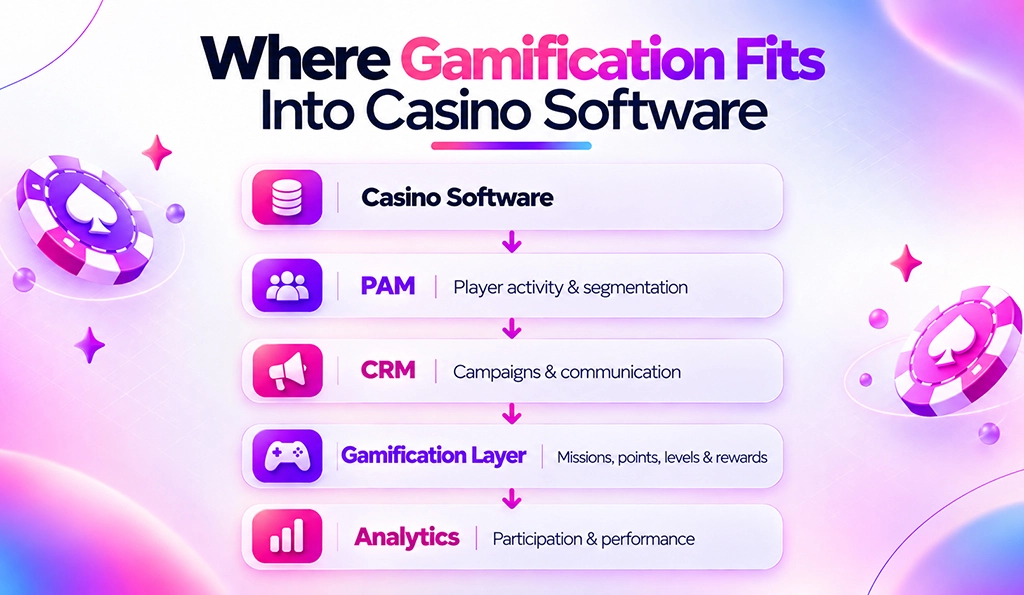
Implement Gamification in Your Casino Software
Every online casino operator must implement gamification in their turnkey online casino software. It will help them boost player engagement. Here are the steps to implement gamification in casino platforms.
Step 1: Define Business Goals
When starting a gamification campaign, always define the ultimate objective. Firstly, operators need to know which aspect of player behavior they want to influence. It could be anything like boosting player activity, increasing player base for casinos, live games and sportsbook. However, the long-term focus will be on the retention and lifetime value of the player.
Step 2: Select Relevant Gamification Tools
Based on your objective, select the relevant mechanics and features. For instance, you may want to use tournaments to drive competition or missions to boost game discovery or campaign engagement. Avoid using mechanics for the sake of mechanics.
Step 3: Set Player Protection Rules
Compliance should be considered while implementing gamification mechanics. Operators must review eligibility criteria and reward structures, as well as all related communication, to ensure compliance with local regulations. Having transparent and well-structured player protection rules ensures safeguards against player disputes.
Step 4: Design the Reward Structure
Operators need to set clear rules for eligibility, progress, reward type, and expiry. You need to keep the reward structure simple and make sure the cost fits within the campaign budget. Here you can define:
- How players qualify
- How progress is calculated
- When rewards are unlocked
- What rewards are available
- Any expiry or eligibility conditions
Keep the rules simple enough for players to understand before participating.
Step 5: Integrate With Casino Software and CRM
Gamification works better when it can access the data and systems already supporting the player’s journey. Based on the casino software, it can include the following:
- PAM for player and account data
- CRM for segmentation and communication
- CMS for campaign presentation
- Bonus or reward system
- Analytics for campaign reporting
Step 6: Launch, Analyze, and Optimize
Once everything is done, consider the first campaign as a test rather than a finished product. You need to monitor participation, reward usage, completion, and player behavior. If players enter the challenge but rarely finish it, the issue could be difficulty, rules, visibility, or reward rather than a lack of interest in gamification itself. Also, focus on actionable KPIs.
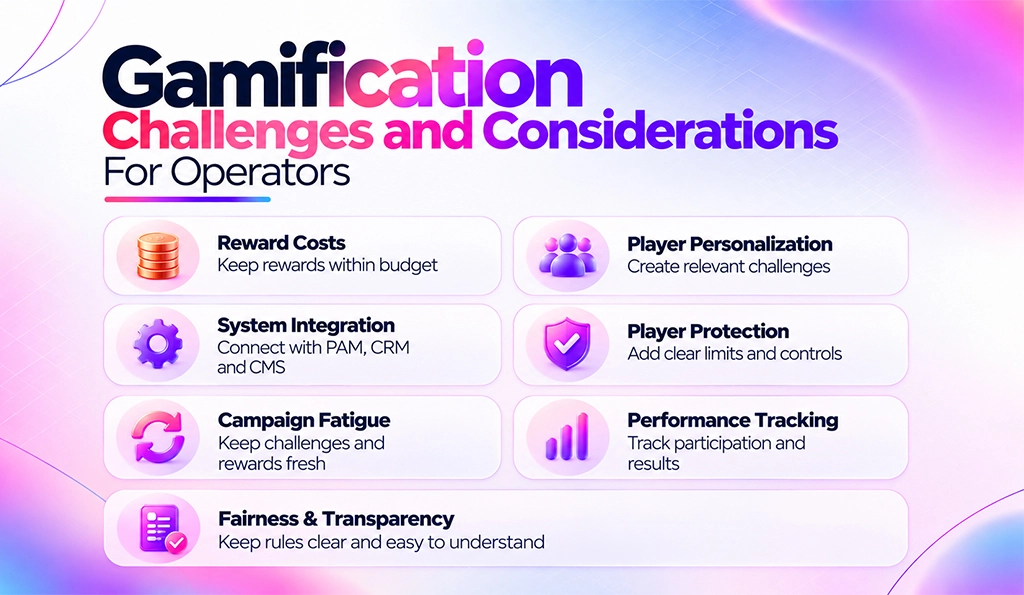
online casino gamification challenges
How to Measure Casino Gamification Performance
Implementing gamification doesn’t reap your results if you don’t measure its performance. Therefore, operators must evaluate gamification using a blend of engagement, player behavior, and financial metrics.
Note: One useful benchmark is to compare gamified campaigns with non-gamified campaigns. It gives operators a better indication of incremental value instead of attributing every change in player behavior to gamification.
The Future of Gamification in iGaming
As technology doesn’t stop evolving, similarly gamification in casinos will also not stop evolving. The industry trends are so promising that they suggest digital gambling will keep getting immersive.
AI-driven personalization
AI is an integral part of the iGaming industry because it allows operators to process and analyze data about customers’ behaviors and spot trends that could be used to inform segmentation, timing, and the nature of challenges and rewards.
Real-time missions
Instead of relying solely on set campaigns, operators can take advantage of building experiences that can evolve in response to player activity and campaigns in real-time.
Dynamic rewards
Reward systems can be more dynamic, enabling operators to change the reward type or progression path based on pre-defined rules and eligible segments.
More sophisticated loyalty systems
Gamification and loyalty are becoming intrinsically linked. Instead of looking at loyalty as a separate points program, operators could embed progression, achievements, missions, and rewards within an overarching player’s lifecycle.
In simple terms, it can be said that gamification isn’t about individual features but more about how those features work together across the player’s journey.
Conclusion
Online casino gamification isn’t just a tool for operators, but it is a long-term retention strategy. For online casino operators, it is an opportunity to diversify and differentiate their game offerings. But gamification in casinos should be treated as a measurable product feature, not a shortcut to retention. Operators must control reward costs, maintain reliable integrations, monitor performance, and build player protection requirements. To conclude, gamification is a powerful way to boost player experience by making it more exciting, interactive, and rewarding.
Contact Us
FAQ's
-
How does online casino gamification differ from traditional loyalty programs?
A loyalty program usually focuses on rewarding qualifying activity through points, tiers, and benefits. Whereas gamification includes loyalty mechanics. But it also adds interactive features like missions, challenges, achievements, levels, badges, etc.
-
Why do some casino gamification campaigns fail to improve retention?
The addition of gamification does not guarantee retention. There is a high risk of campaigns’ underperformance due to complicated rules, inappropriate rewards for the target audience, and recurring challenges.
-
What KPIs should operators track after launching a gamification module?
Essential KPIs are comprised of a challenge completion rate, participation, reward redemption, repeat participation, segment-level engagement, level progression, retention, and campaign ROI.
-
Is gamification software priced per player, per transaction, or as a flat license fee?
Pricing of online casino gamification software depends on the provider and product setup. Operators can see various commercial models, which include fixed platform fees, player-based pricing, usage-based pricing, or a customized enterprise agreement.
-
Which gamification providers integrate best with existing casino CRM and CMS systems?
The right provider depends on the operator’s existing technology stack. Operators should assess API availability, PAM, CRM compatibility, segmentation, campaign management, reward fulfilment, reporting scalability, and support for target jurisdiction.
-
What should operators look for when choosing a gamification provider for igaming?
Operators must look for flexible campaign creation, player segmentation, reliable integration, progression and reward management, scalability, real-time reporting, etc.

Monika Gola is an iGaming content specialist at PieGaming. Since 2020, she has been researching and developing content around software selection, online casino & sports betting regulations, and operator growth strategies. Her research includes analyzing market opportunities in regions like Europe, Africa, and Southeast Asia, as well as evaluating regulatory frameworks and entry barriers. She is actively monitoring industry trends, compliance updates, and evolving player demands across global iGaming markets to help operators navigate this industry seamlessly.
Stake.Us, PlayFame, McLuck, MegaBonanza and Zonko are social casino platforms that are free-to-play casino games using virtual coins. These platforms offer hundreds of slots, tables, and instant-win games with daily free coins, tournaments, and bonus features.
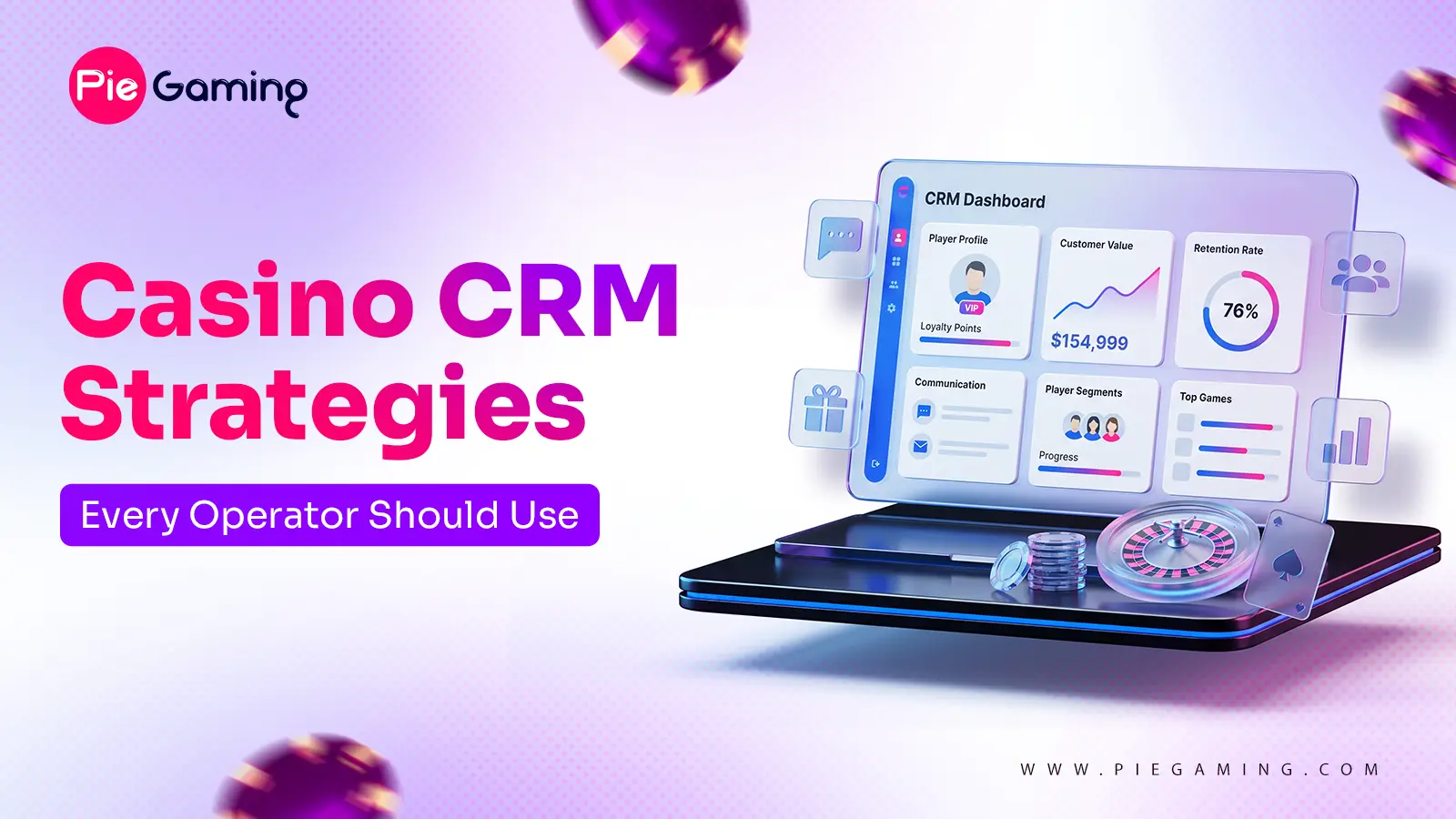
Casino CRM strategies help operators to personalize campaigns, improve player retention, reduce churn rate, and maximize player lifetime value.
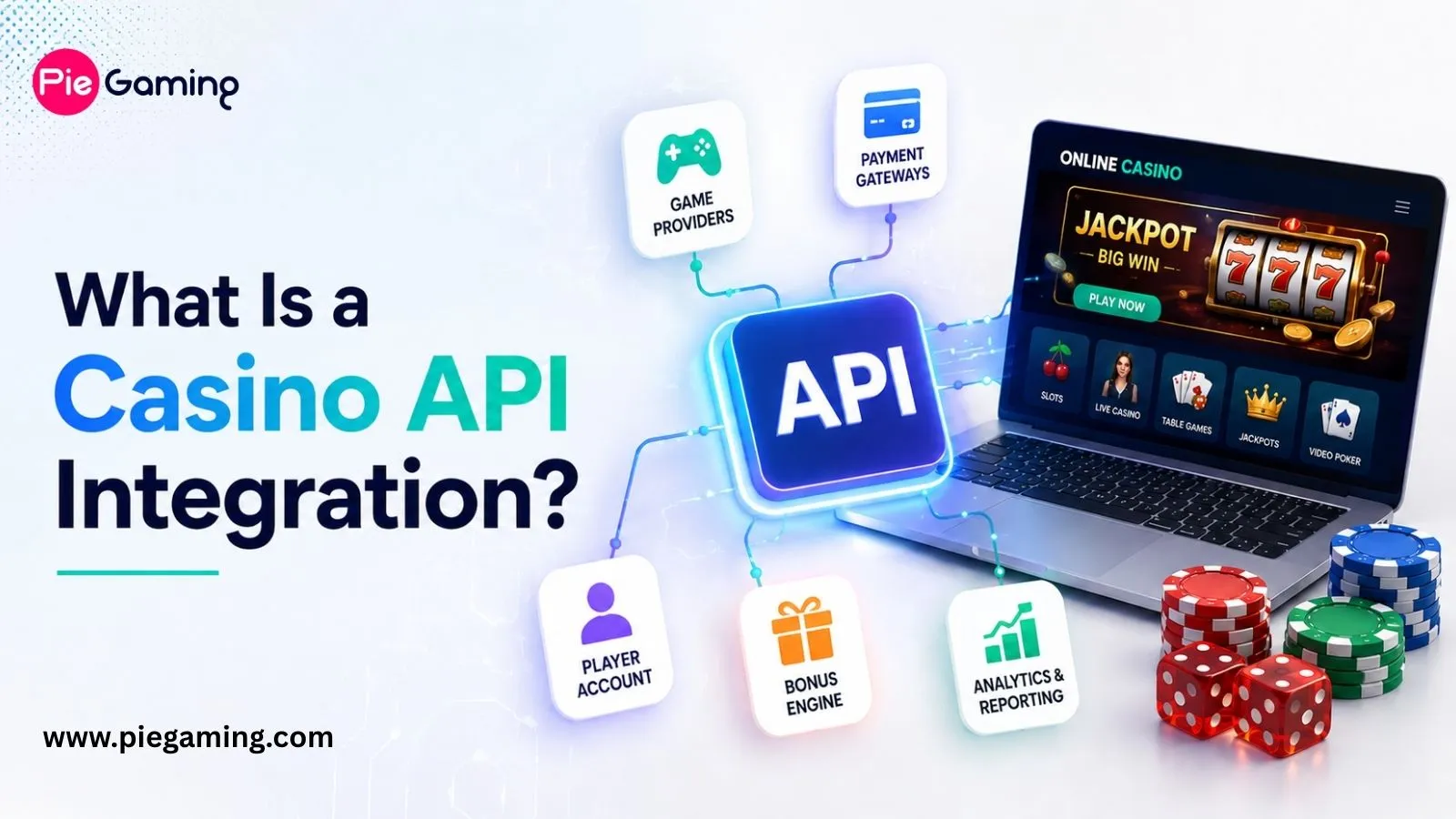
A casino API integration is a software solution that connects your platform with games, payment gateways, wallets, KYC tools and other third-party solutions. It allows data to be exchanged between systems in real-time. This way you can launch quicker, automate tasks, and provide a smooth playable experience.
House Edge is the mathematical advantage built into online casino games and all other forms of gambling. It shapes the odds, influences your winnings and losses, and constitutes the cornerstone of any online casino or sportsbook operator’s overall financial strategy.
The Hi-Lo casino game is a simple card game where players predict whether the next card will be higher, lower, or equal to the current card. This guide explains how Hi-Lo works, its rules, betting options, payouts, gameplay, and strategies players can use when making predictions.
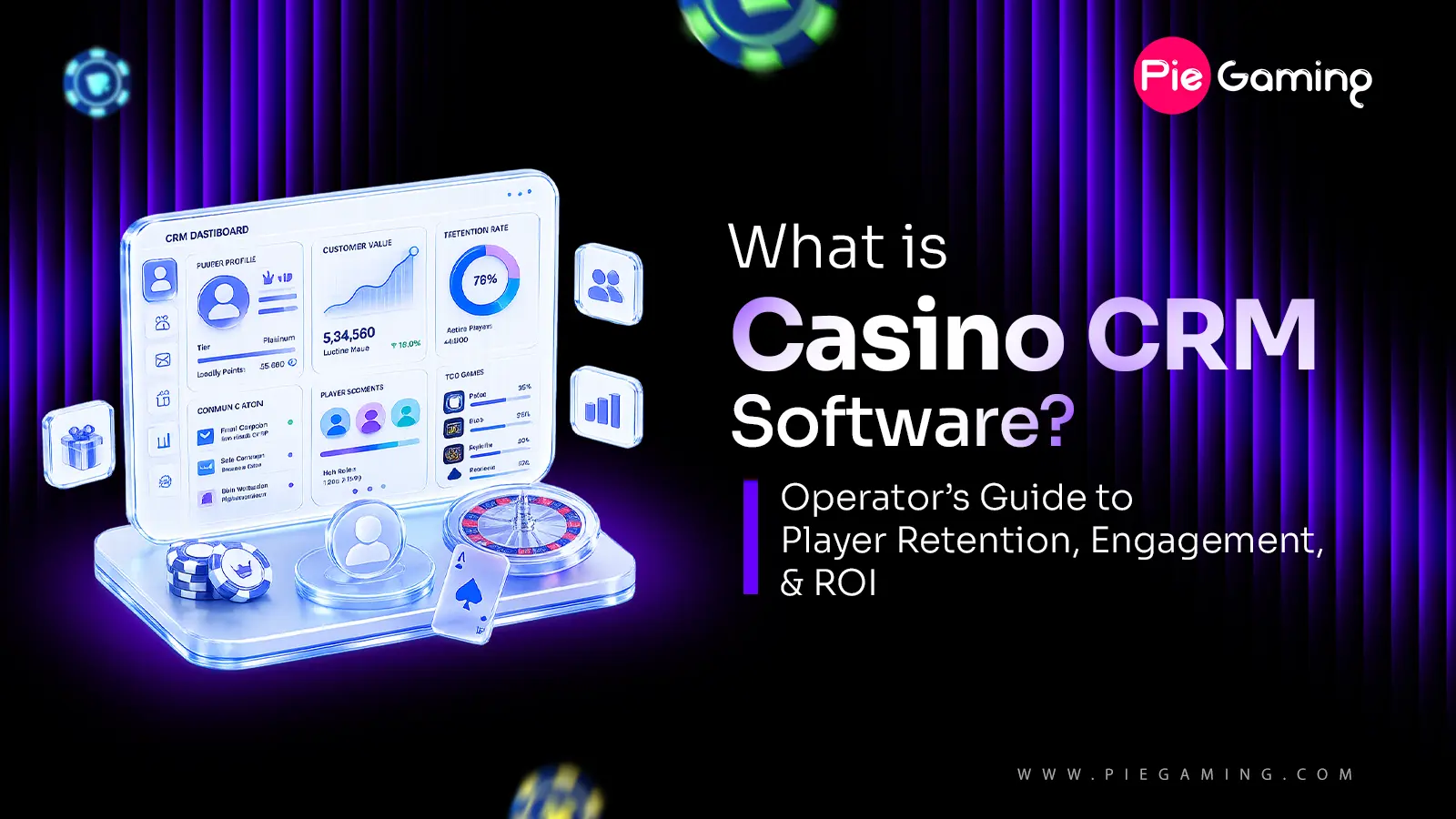
Casino CRM software is a specialized platform for online and land-based gambling operators that tracks player behavior, automates targeted promotions, manages VIP loyalty and supports regulatory compliance.

Jackpot management software is a computer program used to organize how jackpots are created, tracked, and paid out in an online casino. The operators can now execute the campaigns in real-time, interact with the players, lengthen the playing time, and generate more wagering revenues on the platform without having to be directly involved in the management of the campaigns.

See you in your inbox soon!

Stay ahead of the game. Subscribe for exclusive content, updates, and insiders!